Fuchsia watering and fertilizing methods: water when dry, stop fertilizing in summer
Fuchsia blooms very profusely, and if watering and fertilizing are not done properly after each bloom, it will not bloom again the next time. If it is not watered or fertilized for a long time, the leaves will turn yellow and the plant will die. So how do you water and fertilize fuchsia? Let me tell you the specific method.
How to fertilize fuchsia
I. What fertilizer to use for fuchsia
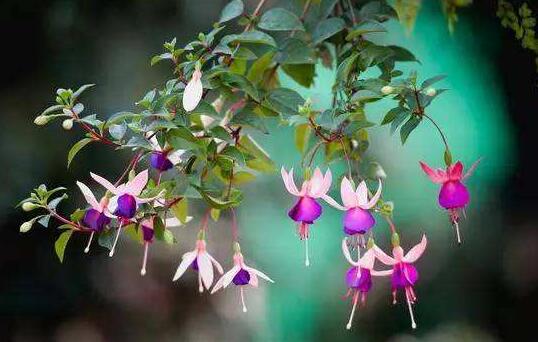
When fertilizing fuchsia, the fertilizers used include decomposed cake fertilizer powder, urea, calcium phosphate or potassium dihydrogen phosphate, and so on. The cake fertilizer powder is used as a base fertilizer, applied into the soil at planting time, while the other fertilizers are used according to the growth situation.
II. Fertilizing steps for fuchsia
1. Early spring. This is the period when fuchsia resumes growth. At this time, fertilize 1-2 times a month, mainly with nitrogen fertilizer, in order to promote the growth of branches and leaves and to make it sprout more flowering branches before the flowering period.
2. May. At this time the temperature is most suitable for fuchsia growth, so it enters its vigorous growth period and flowering period at this time. Before the flowering period, apply a compound fertilizer mainly of nitrogen, phosphorus and potassium, so that side branches sprout and the flower colors are vivid.
3. Summer. Summer temperatures are relatively high, and fuchsia enters a period of slow growth. At this time, how do you water and fertilize fuchsia? The answer is to stop fertilizing. After the temperature drops below 30 degrees in September, start applying 1-2 applications of phosphorus and potassium fertilizer.
4. Winter. In winter the temperature gradually decreases, and fertilizing should also stop, because fuchsia enters a dormant period and its fertilizer requirements are relatively low.
How to water fuchsia
1. Spring. Keep the soil moist. Water according to the principle of watering when dry, and water thoroughly when you do water. When watering, do not pour the water on the leaves, but water the soil, so that every part of the soil can absorb moisture.
2. Summer. Although the temperature is relatively high at this time and watering can help lower the temperature, you should not water frequently in summer; rather, you should reduce watering, because if the soil is too moist during the flowering period it will cause flower and leaf drop.
3. Autumn. Watering in autumn also requires a certain amount of skill. At this time, how do you water and fertilize fuchsia? Generally water once every 2-3 days. When watering, you can spray a small amount of water on the leaf surface to keep the air from being too dry.
4. Winter. Just like fertilizing, watering also needs to be reduced in winter, keeping the soil slightly dry. But you cannot go the whole winter without watering at all, so when the sunlight is abundant and it is relatively warm, you can pour in a small amount of water to avoid the soil becoming compacted.
How to water and fertilize fuchsia
How to fertilize fuchsia
Fuchsia likes fertilizer. After the plant grows in spring, apply a nitrogen fertilizer once every half month to promote the growth of branches and leaves; by May, the plant begins to enter the vigorous period of growth and flowering, and at this time you can apply a fertilizer combining nitrogen, phosphorus and potassium to fuchsia once every half month, to promote the plant to produce more side branches and bloom continuously; in the hot summer no fertilizing is needed; in September you can apply phosphorus and potassium fertilizer twice as a top dressing and stop applying nitrogen fertilizer; in winter fertilizing should stop.
Also note that before fertilizing you must ensure the potting soil is dry, and after fertilizing you can spray water once to prevent the leaves from being stained with fertilizer water and rotting. At the same time, try to avoid applying only nitrogen fertilizer; you may apply nitrogen fertilizer alone when the plant is obviously deficient in fertilizer and the leaves are yellow, thin and small.
How to water fuchsia
Fuchsia likes a moist soil environment and is not tolerant of drought. When watering, grasp the principle of "water when dry, water when wet" - water when it is dry, and water thoroughly when you do water.
In spring, when the weather is dry, you can spray water on the branches and leaves once or twice a day to avoid excessive watering causing water accumulation in the potting soil. In summer, place the plant under a shade shed, frequently spray water on the leaf surface or sprinkle water on the ground, and strengthen ventilation. In winter, watering needs to be strictly controlled so that the potting soil does not become too wet. After each fertilizing and watering, loosen the soil in time to let air in.
In daily care, water the leaf surface and around the flower pot in the morning and evening; at midday when the temperature is high, do not spray water directly on the leaf surface, but spray more water around the flower pot. In the plum rain season in the south, it needs to be placed indoors to avoid root rot and death.
After reading this, you have learned how to water and fertilize fuchsia, right!
What fertilizer is good for fuchsia, and the fertilizing methods for fuchsia
Fuchsia is what we know in daily life as the lantern flower; its hanging flowers are deeply loved by people. Fuchsia not only has very bright flower colors, but also has good growth habits, making it suitable for care at home. What fertilizer should be applied when cultivating fuchsia? What fertilizer is good for fuchsia? Today I will guide you through the fertilizing methods for fuchsia.
What fertilizer is good for fuchsia, and the fertilizing methods for fuchsia
Fuchsia grows rapidly in spring and autumn. During the flowering period, water 1-2 times a day, preferring moisture over dryness. Along with loosening the soil, apply a thin cake fertilizer water once every 7-10 days. In summer, in July-August, when the temperature is high, fuchsia generally enters a semi-dormant state, so fertilizing should be reduced, and when the potting soil is dry, water slightly with clear water. From September to December, water with decomposed cake fertilizer water once every 10-15 days, so that it continues to bloom one after another.
From late June to early July, the leaves of fuchsia should be cut off to let it gradually become dormant and pass the summer safely. In early autumn after dormancy, along with repotting, the long branches can be cut back. Because the stems are slender and drooping, if they are too dense they need pinching and shaping to encourage new branches.
When pinching fuchsia, pay attention to the direction of the retained buds and the length of the small branches, keeping the plant full and well-proportioned. Half a month after pinching, the new shoots that grow can bloom again, so pruning and shaping is the key to ensuring that fuchsia blooms more.
Now that you understand the fertilizing methods for fuchsia, let us learn how to water fuchsia.
Water fuchsia when it is dry, and water thoroughly, but never let water accumulate. In summer, the potting soil is better kept on the drier side, but pay attention to spraying water on the leaf surface and the ground. In summer, to let fuchsia pass safely, you must prevent heatstroke and lower the temperature. After summer begins, it is best to place it in a well-ventilated doorway or under the eaves, or on a north-facing balcony, and frequently sprinkle water around it. Even so, in the midsummer season it will stop growing and be in a semi-dormant state; water less, and do not water unless it is completely dry, and do not prune either. After the autumn cools, then cut it back all over.
What fertilizer is good for fuchsia, and the fertilizing methods for fuchsia, are briefly introduced here. When the flowers of fuchsia are in full bloom, hanging in the air like bright lanterns, they are both festive and lovely, very beautiful. When cultivating fuchsia, note that it likes a warm, humid and cool environment; in summer avoid excessively high temperatures and direct strong light, and in winter keep it warm, not below 5°C.