Does pothos and spider plant absorb formaldehyde? Detailed explanation of their effects, functions and medicinal uses
It's unclear when it started, but keeping a potted plant indoors has become increasingly popular, especially in newly renovated homes, where several pots of pothos and spider plant are placed, said to absorb formaldehyde. So do pothos and spider plant absorb formaldehyde? We can understand this through the effects and functions of pothos and spider plant; not only are they attractive, they are also said to have medicinal uses~
I. Pothos and spider plant absorb formaldehyde
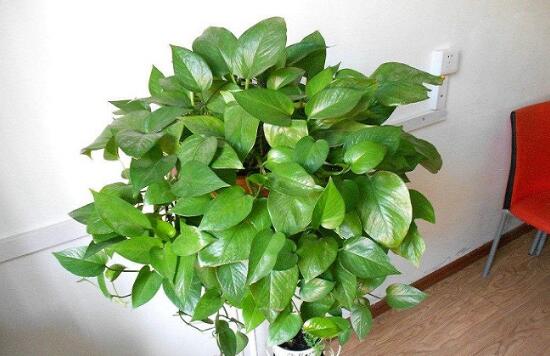
In daily life, in newly renovated homes, people often place several pots of pothos and spider plant, said to be for absorbing formaldehyde. So do pothos and spider plant absorb formaldehyde? According to the editor's research, pothos and spider plant do have a certain formaldehyde-removing effect. Not only that, pothos and spider plant have many other effects, such as ornamental and medicinal uses. Let's read on.
II. Effects and functions of pothos and spider plant
1. Ornamental value
When it comes to the effects and functions of pothos and spider plant, the first thing everyone thinks of is naturally its ornamental value. As shown in the picture above, pothos and spider plant is a plant with well-developed aerial roots and strong twining ability. It can be placed in entrance halls and hotels, or trained into a hanging form for placement in studies and on windowsills. It is a highly ornamental flower suitable for indoor placement.
2. Air purification
For ordinary plants, they should be kept away from the kitchen, otherwise they die quickly. But pothos and spider plant is just the opposite, because it can not only be placed in the kitchen, but also absorb harmful substances there. It is understood that pothos and spider plant can open the stomata on its leaves and absorb 70% of harmful gases, keeping indoor air clean.
3. Absorbing formaldehyde
Back to the main topic, the formaldehyde absorption of pothos and spider plant is absolutely the most praiseworthy. According to expert testing, one pot of pothos and spider plant in a room of 8-10 sq m is equivalent to an air purifier, and can effectively absorb harmful gases in the air such as formaldehyde, benzene and trichloroethylene, so it is very suitable for placement in newly renovated rooms.
4. Medicinal value
In addition to the above points, the effects and functions of pothos and spider plant are also reflected in its medicinal value:
① Pothos and spider plant has a significant therapeutic effect on diabetes, coronary heart disease, high blood pressure, high blood lipids and various vascular inflammations;
② Pothos and spider plant has a very good auxiliary therapeutic effect on fatty liver, obesity and various vascular inflammations;
③ Pothos and spider plant can also play a very good health-care role for the eyes and liver.
Is Alocasia macrorrhizos toxic, can it absorb formaldehyde, effects and functions of Alocasia macrorrhizos
Is Alocasia macrorrhizos toxic? Can it absorb formaldehyde? Many friends who like Alocasia macrorrhizos have such questions. With these questions, let's look at the knowledge compiled by Xiao Qi about whether Alocasia macrorrhizos is toxic and whether it can absorb formaldehyde.
Is Alocasia macrorrhizos toxic
Alocasia macrorrhizos, also called, belongs to the Araceae family. Both its corm and leaves have medicinal value, and its sap is toxic. Contact with the skin can cause redness and itching; if ingested by mistake, it can cause throat pain and so on. In fact, many plants cultivated in homes have a certain degree of toxicity, so when growing toxic ornamental plants and flowers, one should keep an appropriate distance, not play with or stroke them at will, and certainly not hold their branches, leaves or fruits in the mouth.
The white sap in the stem of Alocasia macrorrhizos is indeed toxic, and the water it drips is also toxic. Once the sap is accidentally touched or ingested, it will cause discomfort in the throat and mouth, and in severe cases can cause suffocation, leading to cardiac paralysis and death. After human skin comes into contact with its sap, itching or strong irritation will also occur. If the eyes come into contact with its sap, it may cause severe conjunctivitis and even blindness. Therefore, everyone should minimize contact with Alocasia macrorrhizos, and families with children had best not grow this kind of plant. So relevant experts believe that the proper attitude toward toxic plants such as Alocasia macrorrhizos should be: keep a certain distance from them, do not play with or stroke them at will, and even more so do not hold their fruits in the mouth.
Does Alocasia macrorrhizos absorb formaldehyde
Alocasia macrorrhizos absorbs part of formaldehyde, but the effect is not obvious! Those with obvious formaldehyde absorption effects include peace lily, spider plant, aloe, Agave americana, snake plant and so on. It is said that English ivy has the best formaldehyde absorption effect. If the home has a newly renovated house, you can try English ivy to absorb formaldehyde! See whether its formaldehyde absorption effect is obvious?
Effects and functions of Alocasia macrorrhizos
The toxicity of Alocasia macrorrhizos is only one side of it. Everything has two sides, and it also has a side of value to humans, that is, the effects of Alocasia macrorrhizos. The Alocasia macrorrhizos plant makes an outstanding contribution to indoor air purification, has the effect of relieving eye fatigue, and also has the effect of increasing air humidity.
As a Chinese herbal medicine, Alocasia macrorrhizos also has its special therapeutic effects. According to ancient documents such as "Sichuan Traditional Chinese Medicine Records" and "Compendium of Materia Medica", it is claimed that Alocasia macrorrhizos can treat toxic swellings, hemorrhoids, malignant sores and all kinds of swelling and toxicity diseases. Everyone should have seen that this is the so-called theory of using poison against poison.
The above isIs Alocasia macrorrhizos toxic、Does Alocasia macrorrhizos absorb formaldehydeand an introduction to the effects and functions of Alocasia macrorrhizos. If you have Alocasia macrorrhizos at home, be sure to read carefully.
Recommended reading:
① How to grow Alocasia macrorrhizos: cultivation methods and precautions
② Can pothos be placed in the bedroom: cultivation methods and precautions for pothos
③ Is hyacinth toxic: cultivation methods and precautions for hyacinth
④ Is poinsettia toxic: cultivation methods and propagation methods for poinsettia
⑤ Is the indoor plant peace lily toxic: cultivation methods and precautions for peace lily
Effects and functions of tuberose: ornamental, medicinal and disease-treating when still, and its floral fragrance can also repel mosquitoes
Tuberose, also called night-blooming jasmine and scent under the moon, is a beautiful flower that blooms at night. Its flower shape is beautiful, and its floral fragrance can repel mosquitoes, making it deeply loved by flower lovers. In daily life, many people keep a pot of tuberose at home for its beauty. However, if it were only beautiful, then you would be underestimating tuberose too much, because tuberose has many effects and functions, such as medicinal disease treatment. Let's take a look together.
I. Effects and functions of tuberose
1. Ornamental value
When it comes to the effects and functions of tuberose, the first thing that comes to mind is naturally its ornamental value. As shown in the picture, tuberose has emerald leaves and plain stems, and its flower shape is as elegant as jasper. What is more special is that it blooms at night, with a subtle fragrance spreading everywhere, making people forget the summer heat in July and feel relaxed and happy. With such a plant, if you keep it at home, when it blooms, your eyes will be dazzled.
2. Beautifying the home
According to the editor's knowledge, in southern China, tuberose is often used to decorate homes and courtyards. It has slender branches and can bloom in summer and autumn, with yellow-green flowers and an elegant color. Matching beautiful tuberose with some home furnishings instantly makes the indoor environment much more beautiful.
3. Air purification
Keeping tuberose indoors can also reflect the common nature of plants: absorbing carbon dioxide and releasing oxygen. In addition, tuberose also has a very good purifying effect. It can absorb harmful gases such as formaldehyde and carbon monoxide. Although it is not as good as pothos, spider plant, aloe and so on, having it is still better than not having it.
4. Mosquito-repelling effect
Among the effects and functions of tuberose, the most noticed may be its mosquito-repelling effect. Tuberose blooms in summer. Although its floral fragrance is not good for the human body, it is quite effective in repelling mosquitoes. I think this is also one of the reasons many people grow it!
5. Medicinal value
Tuberose is very beautiful, which makes many people ignore its medicinal value. It is understood that the flowers and leaves of tuberose can be used as medicine, with the effect of clearing the liver and improving eyesight, and have a good effect on symptoms such as red and swollen eyes, measles dermatitis and corneal inflammation. In addition, tuberose can also be used externally, and can treat inflammation and erosion of external injuries.
6. Edible value
In addition to the above points, the effects of tuberose are also reflected in its edible value. According to research, tuberose is a semi-wild vegetable whose flowers and flower buds can be eaten. In southern China, its flowers are taken and stir-fried with meat as a dish. Overall, the edible value of tuberose is good. As for how to eat it, there is a detailed introduction in the edible methods of tuberose, so we will not say more here.