What to Do When Schefflera Leaves Turn Yellow and Drop? Four Tips to Prevent Premature Leaf Loss
If the schefflera (umbrella tree) is kept in a suitable environment with the right care, its leaves should stay green all year round. However, some plant lovers encounter yellowing and premature leaf drop when growing it, which is heartbreaking for them. What causes schefflera leaves to turn yellow and fall off? How should it be solved? Let's find out together.
Causes of Yellowing and Dropping Schefflera Leaves
1. Too much watering
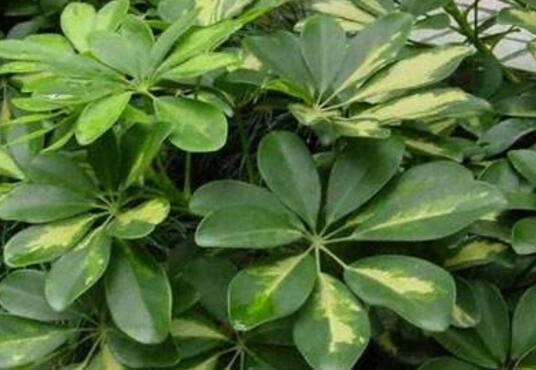
Schefflera is a relatively drought-tolerant plant. Except in summer, it does not need frequent watering in other seasons. Too much watering can cause root rot, and root respiration will also be affected, which then causes the leaves to turn yellow and drop prematurely.
2. Harsh sun exposure
Schefflera can adapt to many kinds of light environments. In spring and winter it can grow under full sun, but in summer it must not be placed in direct sunlight, because harsh sun exposure will cause the leaves to turn scorched yellow, looking as if they have been burned.
3. Compacted soil
If the soil becomes compacted, air, water, fertilizer and so on cannot get into the soil interior, and the roots do not have enough space to grow, resulting in poor root development and stunted growth, and premature leaf drop will occur.
4. Pest and disease infection
Pathogens or insect eggs can spread in many ways. For example, aphids spread with the wind, and they can also carry pathogens that cause the plant to be infected with leaf blight and so on. Therefore, pests and diseases are one of the main causes of yellowing and dropping schefflera leaves.
What to Do When Schefflera Leaves Turn Yellow
1. Water in the right amount. Before each watering, first check how moist the soil is. If it is slightly moist, you can choose not to water. The principle is to prefer dry over wet, and only water when the soil can no longer be squeezed into a ball. For the method, you can refer to the detailed introduction in how to water schefflera.
2. Provide shade in summer. In spring, autumn and winter, schefflera can grow in a half-day sun environment, but in summer it must not be placed in direct sunlight and should be properly shaded.
3. Change the potting soil regularly. Even if the soil chosen is of very good quality, the potting soil should still be changed every 1-2 years, otherwise compaction and other problems will occur. The best solution is to change the soil and the pot.
4. Prevent pests and diseases. Pests and diseases are mainly about prevention, and the way to prevent them is to keep the environment ventilated, the temperature moderate, the light sufficient, and so on. As long as the environment is suitable, pathogens and insect eggs have nowhere to survive.
What Are the Effects and Functions of Schefflera Leaves?
Summary: Schefflera, also known as goose-foot tree and duck-foot tree, belongs to the garden tree species and has the advantages of foliage and flowers. In addition, the plant can also be used directly as medicine, with remarkable effects. The plant is recorded in the Araliaceae family and was already a medicinal plant species in ancient times. The content this article brings you today is the effects and functions of schefflera leaves.
[Effects and Functions of Schefflera Leaves]
Schefflera is suitable for growing in moist, semi-shaded environments, and in the country it is mostly distributed in the north, as well as in a small number of areas in the south.
▍Morphological characteristics
Schefflera belongs to the tree species, and the plant height can reach more than 2 m, and at most it can grow to 15 m.
Schefflera leaves are mostly papery and can grow into various shapes such as elliptical and oblong. The plant is about 9 cm long and 3 cm wide. When young it is covered with hairs, which gradually fall off later.
▍Main components
Schefflera leaves are evergreen all year round and have good shade-forming properties, and are the main element in the formation of the schefflera plant.
Schefflera leaves are rich in chemical components, such as betulinic acid, glucopyranose, rhamnopyranose and so on, all of which can be used in today's clinical medicine. Pure chemical elements can be extracted and formulated into medicines for the treatment of many diseases, and because schefflera leaves are rich in chemical components, their research value is higher.
▍Medicinal basis
Schefflera leaves are cold in nature, bitter in taste and slightly astringent, and can be taken internally as medicine.
Schefflera leaves were once recorded in "Commonly Used Chinese Herbal Medicines of Guangxi," and their medicinal use can be internal or external.
Internal use: directly add water to schefflera and decoct it. The decoction can be taken internally and can also be used to wash the affected area. Schefflera leaves can also be directly processed, crushed into powder and then made directly into pills for internal use. Each dose of schefflera leaves should not exceed 15 g.
External use: for external use, fresh schefflera leaves can be chosen directly, mashed, mixed with medicinal wine, and applied to the affected area, or directly mixed with egg white and applied to the injured area. Processed schefflera leaves can be directly dry-fried with clear wine, and the medicinal effect is remarkable.
▍Main therapeutic effects
1. Schefflera leaves, used directly as medicine, are suitable for patients with wind-heat cold and those with excessive dampness in the body, and have strong detoxifying and blood-activating effects.
2. Schefflera leaves can be used for people with sore, swollen throat, or patients with dryness and inflammation, and can be taken directly internally.
3. If symptoms such as traumatic infection or traumatic itching occur, schefflera leaves can be mashed and applied externally to the affected area.
4. For conditions such as lower limb ulcers, skin burns, rheumatic rash and so on, treatment can also be carried out directly with schefflera leaves, likewise mixed with egg white and applied to the affected area.
5. Schefflera leaves have a certain hemostatic effect. When trauma occurs, schefflera leaves can be used to stop bleeding, with a very strong effect.
Summary: Schefflera leaves are slightly toxic and are not suitable for medicinal use by pregnant women. In addition, when using schefflera leaves externally, it is recommended to mash them directly and take the juice, applying it to the affected area with a cotton swab, and to avoid letting schefflera leaves come into direct contact with the skin of the affected area, so as to avoid causing wound irritation.
Schefflera Leaves: How to Grow Schefflera (Heptapleurum) in Water
How to Grow Schefflera in Water
Method 1: Water-cultured cuttings
Cut a 10 cm semi-lignified branch from the schefflera plant, with 2-3 or more leafy branches. Remove the lower branches and leaves, keeping only 1-2 palmately compound leaves. Then insert 2/3 of the branch into water and place it in a sunny spot.
Keep the ambient temperature above 15°C. Usually after about 10 days, white callus tissue will form at the cut, and after a few more days, adventitious roots will form.
After about 45 days, the water-propagated schefflera will grow roots of about 6 cm, and at this point it can be managed normally.
Method 2: Soil-grown plant root-washing water culture method
Take the soil-grown schefflera out of the soil, wash the soil off the roots, and place the plant in a glass bottle filled with clear water (tap water needs to be left to stand for 2-3 days).
In the early stage of water culture, change the water once every 2-3 days, keep the temperature above 15°C, supplement light appropriately, and add a few drops of nutrient solution to the water when changing it.
How to Care for Water-Grown Schefflera
Change the water in time
Water-grown schefflera needs the water changed once a week. Each time you change the water, add a few drops of nutrient solution to make the schefflera roots stronger. The water level in the water culture container should not be too high, and should not cover the trunk.
Control the temperature
The suitable growth temperature for schefflera is 15-25°C, and it can also grow normally above 30°C. In winter the temperature must not be lower than 5°C, otherwise it will cause the leaves to drop.
Sufficient light
Schefflera needs sufficient light to grow, and abundant sunlight can make its leaves bright. But schefflera leaves are shade-tolerant and can also maintain dark green leaf color in semi-shade. However, water-grown schefflera should be put in the sun regularly, but in summer it needs moderate shading.