Reasons for Yellowing Leaves on Pyracantha and How to Fix Them, Repotting Can Help
When growing pyracantha, improper care can easily cause problems, and yellowing leaves are one of them. So what causes pyracantha leaves to turn yellow? What are the solutions for yellowing pyracantha leaves? Below, we have summarized a few points. Friends troubled by this can read on to learn more.
I. What Causes Yellowing Leaves on Pyracantha
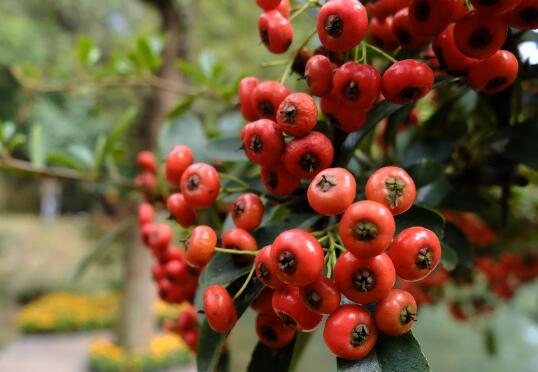
To know what to do about yellowing pyracantha leaves, we first need to understand what is causing it. Improper soil choice, too little fertilizer, pests and diseases, and other issues can all cause this phenomenon. As for how to solve it, the details are below. Let's take a look.
II. Solutions for Yellowing Leaves on Pyracantha
1. Soil Problems
When growing pyracantha, if the chosen soil is on the alkaline side, it will affect its normal growth and can also cause the leaves to turn yellow.
Solution: If the yellowing leaves are caused by a soil problem, we need to repot in good time. For the soil, we should choose a fairly fertile humus soil, which has good drainage and aeration and allows pyracantha to absorb nutrients better.
2. Improper Fertilizing
During the growth of pyracantha, fertilizer is one of its main sources of nutrients. Improper fertilizing can easily cause yellowing leaves, so everyone must pay special attention to this.
Solution: Once pyracantha enters its growing season, its demand for fertilizer is very high, and it basically needs fertilizing once every 10 days. Before fertilizing, however, remember to dilute the fertilizer with water first so it can be absorbed better. Applying concentrated fertilizer directly can easily burn the plant.
3. Improper Pruning
When repotting pyracantha, if we prune its roots too heavily, the leaves can also turn yellow after repotting, because at that point the roots can no longer absorb nutrients from the potting soil.
Solution: When repotting and pruning pyracantha, never prune its main root. Just trim the excess roots, and that is enough. Everyone should remember this point.
4. Improper Watering
Pyracantha is a light-loving plant, so it needs to grow in sunlight for long periods, which means water evaporates quickly. If we water too little, pyracantha can easily develop yellowing leaves from lack of water.
Solution: If the yellowing leaves are caused by watering too little, we need to increase the watering frequency and the amount of water. But do not water too much either; watering thoroughly is enough. If too much water causes waterlogging, the roots can easily rot.
5. Pests and Diseases
When growing pyracantha, improper care can easily lead to pests and diseases. These problems are extremely harmful to the plant, not only causing yellowing leaves but, in severe cases, even causing the plant to wither and die.
Solution: If pyracantha develops pests or diseases, we must deal with them promptly. The specific treatment methods are described in detail in our article on pest and disease control for pyracantha, so we will not repeat them here.
Summary: After reading the above, you should now have some understanding of the causes of yellowing pyracantha leaves. That is all for our introduction to the solutions for yellowing pyracantha leaves. We hope it brings some help to your growing efforts.
How to Grow Pyracantha: Cultivation Methods and Precautions for Pyracantha Bonsai / Plenty of Light Is Needed
Pyracantha is a fairly common plant in people's lives and is highly ornamental, so many people want to grow one at home. However, there are many things to pay attention to if you want to grow it well. So how do you grow pyracantha? What are the cultivation methods and precautions for pyracantha bonsai? Below, we will guide you through it.
I. How to Grow Pyracantha
To know how to grow pyracantha, we first need to understand its growth habits. It is a light-loving plant, so the more light it gets during cultivation, the better it will grow. In addition, watering and fertilizing must not be neglected. The specific pyracantha growing techniques are described in detail below. Let's continue reading.
II. Cultivation Methods and Precautions for Pyracantha Bonsai
1. Soil Selection
Pyracantha is not too demanding about soil during growth, but different soils still have a certain effect on its growth. It is best to choose a fairly loose humus soil, which has good drainage and aeration and allows pyracantha to absorb nutrients better.
2. Temperature Control
Pyracantha is a plant with strong vitality and has good resistance to both high heat and severe cold. It can grow normally even at temperatures as low as 0°C. However, growing in a suitable environment makes it more vigorous, so when growing it we should ideally keep the temperature between 20-30°C.
3. Fertilizing Requirements
Fertilizer is one of the main sources of nutrients during the growth of pyracantha, especially during its growing season, when its demand for fertilizer is very high. It basically needs fertilizing once every 10 days. Before fertilizing, however, be sure to dilute the fertilizer first, otherwise it can easily burn the plant and cause yellowing leaves. So everyone should remember this point.
4. Watering Management
Pyracantha is fairly drought-tolerant, so when watering it we should follow the principle of “do not water until dry, and water thoroughly when you do”. Never water too much. If too much water causes waterlogging, the roots can easily rot, so any standing water must be cleared away promptly.
5. Light Management
Among the cultivation methods and precautions for pyracantha bonsai, light is very important to it. Pyracantha is a light-loving plant and especially likes strong light. It can be said that the stronger the light, the better it grows and the more fruit it produces. So when growing it, we should ideally place it in direct sunlight.
6. Regular Pruning
Under natural growth conditions, the branches of pyracantha sometimes grow in a messy, irregular way, so we need to prune it regularly. This not only maintains the plant's shape but also promotes the growth of new branches. At the same time, pruning overly dense branches can also reduce nutrient consumption.
7. Pest and Disease Control
During the growth of pyracantha, improper care can easily lead to pests and diseases. These problems are extremely harmful to pyracantha, not only affecting its ornamental value but, in severe cases, even causing its death. So when such problems occur, they must be dealt with promptly. The specific treatment methods are described in our article on pest and disease control for pyracantha, so we will not repeat them here.
Summary: After reading the above, you should now have some understanding of how to grow pyracantha. As long as you follow the guidance above, your pyracantha will surely grow with lush branches and leaves. That is all for our introduction to the cultivation methods and precautions for pyracantha bonsai. We hope it brings you some help.
Pyracantha Cultivation and Pruning, and How to Make Pyracantha Bonsai
Pyracantha, also known as firethorn, is a plant in the genus Pyracantha of the rose family (Rosaceae). It is an evergreen shrub or small tree, with oblong leaves and spherical fruit that turns deep red when ripe. Horticultural cultivation includes yellow and orange-yellow fruiting
varieties. Native to China, China, it likes a warm, slightly dry climate and plenty of light, and is slightly shade-tolerant. The optimum growing temperature is 15-25°C.
1. Placement
When the fruit is red, the whole tree turns red like fire, with lush branches and leaves, making it excellent material for bonsai. The bonsai is best placed alone on a flower stand.
2. Four-Season Cultivation
(1) In spring, it is suitable for placement on east-, south-, and west-facing balconies. Pyracantha is a bonsai grown for both flowers and fruit, and is generally repotted every 1-2 years. Pyracantha is extremely adaptable to soil and not demanding about it. The potting soil should ideally be fertile, loose loam. The new soil should be mixed with a little decomposed cow manure and bone meal to meet the nutrition pyracantha needs for flowering and fruiting. When repotting, the soil must be pressed firm. Pyracantha grows robustly and is highly adaptable. In spring, ensure plenty of light and keep the soil moist. During the flowering period, prevent the soil from drying out and fertilize appropriately.
(2) In summer, it is suitable for placement on east-, south-, west-, and north-facing balconies. Pyracantha likes plenty of light and can tolerate high temperatures in summer. However, under high temperatures and strong light, its leaves easily turn yellow, so when high temperatures come with strong light in summer, the bonsai should be moved to a semi-shaded spot. Growing it in semi-shade can also reduce water evaporation from pyracantha and reduce the frequency of watering. In late summer, the bonsai should be moved to a spot with plenty of light. In summer, pay attention to water management to prevent drought.
(3) In autumn, it is suitable for placement on east-, south-, west-, and north-facing balconies. September to November is the season when the fruit turns red and also the best viewing season. It can be placed on a sunny east-, south-, or west-facing balcony, or on a brightly lit north balcony. Keep the potting soil moist.
(4) In winter, it is suitable for placement on east-, south-, and west-facing balconies. Pyracantha goes dormant in winter and is extremely tolerant of low temperatures, but pyracantha bonsai should overwinter indoors at around 0°C. Water alternately between dry and moist, and ensure a certain amount of light. With proper winter care, the fruit-viewing period can be extended into the following spring.
3. Pruning
Pyracantha has strong sprouting ability and tolerates pruning. Pyracantha mostly flowers on short branches, so longer branches, also called vegetative branches, can be cut back to leave 1-2 nodes so they become fruiting branches; this way there will be more flowers and dense branches. When shaping, you can cut off leggy branches, parallel branches, crossing branches, diseased and pest-infested branches, and suckering branches. When branches grow too densely, some can be thinned out appropriately.
4. Making Pyracantha Bonsai
(1) Characteristics of pyracantha bonsai: Pyracantha has lush branches and leaves. After autumn sets in, strings of red fruit hang all over the branches and do not fall for a long time, like coral berries, dazzling to the eye. Its branches and trunk also tolerate pruning and wiring, making it easy to shape.
(2) Sourcing material: Pyracantha is generally propagated and grown by oneself. It can be propagated by cuttings or sowing, and pyracantha cuttings grow quickly. Thick, sturdy pyracantha for shaping can also be purchased on the market. It is best to buy potted seedlings, because pyracantha has a taproot, and transplanting it makes survival difficult, especially bare-root seedlings, which are even harder to keep alive. When buying potted seedlings, it is best if they come with a root ball. You can also buy rough stock with a basic shape for further work.
(3) Common styles of pyracantha bonsai: Pyracantha has lush branches and leaves, evergreen foliage, and red fruit hanging on the branches in autumn, festive and fiery, lasting through winter without falling. Its branches and trunk also tolerate pruning and wiring, so it can be made into many bonsai forms, such as forest style, curved-trunk style, straight-trunk style, and slanting-trunk style.
(4) Shaping methods for pyracantha bonsai: Pyracantha branches are fairly hard and brittle and break easily. Because of its strong sprouting ability, shaping mostly uses the Lingnan school's “grow branches and cut the trunk” method, achieving curved branches through pruning. Bonsai made this way have branches with angled curves and dense branching, with a firm, iron-like character. Wire can also be used for wiring to make the branches form flat pads, and its natural form can also be used to create a forest-style bonsai.