What to Do When White Orchid Tree Leaves Turn Yellow? Master the Timing for Pruning, Watering and Shading
The white orchid tree (Michelia alba) is an ornamental flowering plant originating from Indonesia, and today it can be seen in countries around the world. However, if you are not careful enough during cultivation, it is very prone to the undesirable problem of yellowing leaves. So what should you do when white orchid tree leaves turn yellow? When is the best time to prune the white orchid tree? Let us take a look below.
1. What to Do When White Orchid Tree Leaves Turn Yellow: Watering and Shading
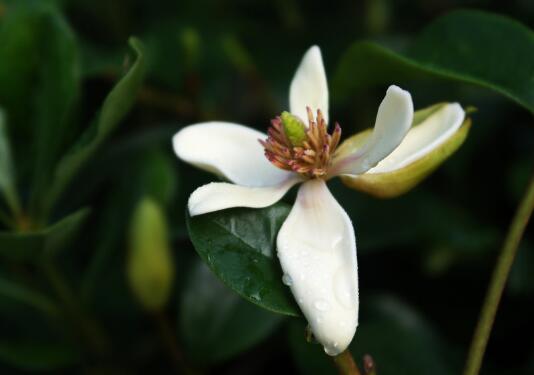
To know what to do when white orchid tree leaves turn yellow, we first need to understand what is causing it. Only by finding the cause can we deal with it in a targeted way. The details are introduced below, and those troubled by this problem can take a look.
1. Improper Fertilizing
During the growth of the white orchid tree, fertilizer is one of its main nutrients. If fertilizing is improper, it is very easy for the problem of yellowing leaves to appear, so everyone must pay special attention to this.
Solution: After the white orchid tree enters its growing season, its demand for fertilizer is very high, and it needs fertilizing once every half month. However, before fertilizing, remember to dilute the fertilizer with water first so it can be absorbed better. If you apply concentrated fertilizer directly, it can easily burn the plant and cause yellowing leaves.
2. Too Little Watering
The white orchid tree is a plant that likes to grow in a warm and moist environment, so its water requirements are quite high. If you water too little during cultivation, it will cause the white orchid tree's leaves to turn yellow, and if the method is not changed for a long time, it can even cause the plant to wither and die.
Solution: If the yellowing leaves are caused by too little watering, then we need to appropriately increase the watering frequency. When watering, remember to water thoroughly each time, and be sure not to cause waterlogging, otherwise it can easily lead to root rot.
3. Too Much Light
The white orchid tree is a light-loving plant, but it is not tolerant of strong light. In spring and autumn, we can let it receive light all day, because the light in these two seasons is not too intense. However, in summer, if it is still kept outdoors receiving all-day light for a long time, it will cause the white orchid tree's leaves to turn yellow, because summer light is too intense.
Solution: When the summer sun is intense, especially at noon, we should best move the white orchid tree indoors to a semi-shaded place for cultivation. This way it will not lack light, nor will it develop yellowing from overly strong light.
4. Pests and Diseases
During the process of cultivating the white orchid tree, if cultivation is improper, problems such as pests and diseases can easily appear. These problems are extremely harmful to the plant, not only causing the white orchid tree's leaves to turn yellow, but in severe cases even causing the plant to wither and die directly.
Solution: If problems such as pests and diseases appear on the white orchid tree, we must deal with them in a timely manner. The specific treatment methods have been introduced in detail in the article on pest and disease control for the white orchid tree, so I will not repeat them here.
2. When to Prune the White Orchid Tree
As for when to prune the white orchid tree, there is actually no specific time. During growth, whenever we see yellow leaves or dead branches appear, pruning is needed. Timely pruning can not only maintain its shape but also stimulate the growth of new branches.
Summary: After reading the above, I believe everyone now knows how to solve the problem of yellowing leaves on the white orchid tree. That is all for the introduction on pruning the white orchid tree, and I hope it can be of some help to everyone.
When to Prune Rose
The Timing for Pruning Rose
Rose generally needs to be pruned many times each year, so as to promote more and better blooming and better plant growth.
Generally, pruning should be done once each year in December, when the rose leaves fall. At this time it is heavy pruning, keeping only 15 cm of the plant, and at the same time cutting off diseased branches and so on.
Next is pruning after flowering. Generally, after the first bloom, pruning can be done in May. After the second bloom, pruning is done in June or July. After the third bloom, pruning is done in August. When flower buds grow, they also need to be removed at the right time so that flowering has sufficient nutrients and can bloom in batches.
Notes on Pruning Rose
Winter pruning of rose is very important. Note that the pruning time cannot be too early, because if it is too early, the branches can easily sprout.
When pruning, note the degree of pruning depends on what kind of tree shape you want. Different plants have different needs, and different pruning methods, light pruning or heavy pruning, all depend on the plant's needs.
White Orchid Tree Pruning Methods
1. Branch bending.
This can be done all year round, mainly on side branches or small branches on side branches. By bending the branches to open the branch angle (70 to 90) and change the branch direction, new branches and flower bud formation are stimulated.
2. Branch snapping.
During its vigorous growth period, for relatively upright side branches, start from the base of the branch and bend it by hand toward a position with more space, until there is a slight crack on the back of the branch. Repeat once after a week.
3. Breaking the tip.
During the vigorous growth period, puncture or cut the young tender terminal bud of a vigorously growing branch with a needle or blade, or pinch it by hand, or simply pull out the growing tip.
4. Pruning.
If pruning is truly necessary, it should be done in summer during vigorous growth, choosing a position where new shoots have grown 3 cm to 5 cm, and after pruning, immediately seal the wound with a mud ball mixed with fungicide (such as Dicloran) and growth hormone (naphthalene acetic acid), then wrap it tightly with a small plastic film.
5. Chemical control method.
During the peak growth period, spray the whole plant with 1500 ppm paclobutrazol.
Depending on the situation, the above methods can be used alone or in combination, such as bending branches after breaking the tip; bending branches after treatment with paclobutrazol; or using branch bending, pruning and branch snapping together. Practice has proven that, combined with daily management, using the above methods for branch training and shaping can produce white orchid trees with a full, well-formed shape.