What to do when the leaves of potted Dendrobium officinale turn yellow? Repot the soil, control watering, and shade it to remedy the situation
As the most useful of the Dendrobium varieties, Dendrobium officinale has strong efficacy. Not only are its flowers beautiful, but it also inherits the medicinal value of Dendrobium and can treat various human diseases. However, during cultivation, many flower enthusiasts often encounter a problem, and that is yellowing leaves. So what should be done when the leaves of potted Dendrobium officinale turn yellow? Today the editor will solve this problem.
1. What to do when the leaves of potted Dendrobium turn yellow, find the cause
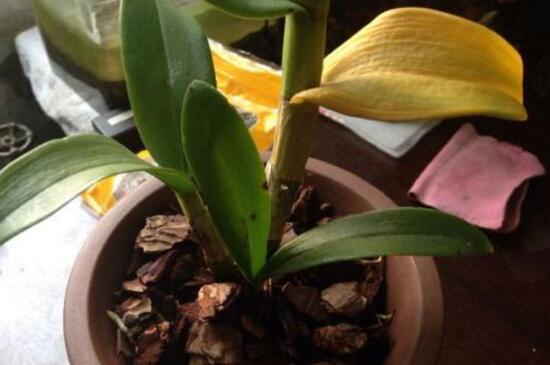
As a potted plant, Dendrobium officinale is not easy to grow. Once we are slightly negligent, for example if we do not care for it according to the cultivation methods for Dendrobium officinale, its leaves may show signs of yellowing. By then, flower enthusiasts must be very anxious. To solve this problem, the editor has summarized 5 causes of yellowing leaves in Dendrobium officinale and attached solutions. Let us continue reading.
2. Causes of yellowing leaves in Dendrobium officinale and solutions
1. Unsuitable soil
When it comes to the causes of yellowing leaves in Dendrobium officinale, there are actually many, but the first thing everyone should consider is the soil problem. As for the soil problem, it can be divided into two situations, as follows:
(1) Soil is unsuitable
Dendrobium officinale has high requirements for soil. If the soil is unsuitable, the root system will lose activity, causing aerial roots to be exposed in the air. Over time, problems will arise, and the symptom is yellowing leaves in Dendrobium officinale.
Solution: Replace the potting soil. Place large stones at the bottom of the flower pot, spread a layer of water-permeable gravel on top, and then spread a mixture of fermented pine bark and sawdust on top of the gravel. Note that the mixture needs to be crushed, sterilized, and fermented.
(2) Too many miscellaneous bacteria in the soil
Even if the soil is well chosen, if it is not disinfected and there are too many miscellaneous bacteria in the soil, the symbiotic bacteria of the Dendrobium officinale root system will be less competitive, and the result may be symptoms of yellow leaves.
Solution: Dry the soil, that is, the mixture, in the sun, then use phoxim for insecticidal treatment to kill remaining pests and insect eggs in the soil. After a period of time, Dendrobium officinale will recover its health.
2. Improper watering
Besides soil, improper watering is also one of the causes of yellowing leaves in Dendrobium officinale. The watering problem also has two situations: one is watering too much, and the other is watering too little, as follows:
(1) Watering too much
Dendrobium officinale likes a moist environment, so we should water frequently to keep the potting soil moist. But once too much water is given and the soil becomes too wet, the root system of Dendrobium officinale will rot, and the result may be yellowing leaves.
Solution: If the stems and rhizomes of Dendrobium officinale have not died, they can sprout again after warm spring arrives, but watering should be controlled: water once every one or two weeks. After watering thoroughly, usually use misting.
(2) Watering too little
Watering too much is not good, and too little is also not good. It can also cause yellowing leaves in Dendrobium officinale. Once watering is too little or not thorough, the potting soil will dry out, and the leaves will show symptoms of yellowing due to insufficient water absorption.
Solution: Water with suitable slightly acidic to neutral water. In spring, summer, and early autumn, sufficient water is required. After mid-autumn, watering should be reduced until it is stopped completely. Before the leaves of Dendrobium officinale turn yellow, begin reducing watering, reduce it further as the leaves yellow and fall, and stop watering when the leaves have completely fallen.
3. Fertilizer problems
After watering, let us talk about fertilizing. It is also one of the causes of yellowing leaves in Dendrobium officinale. Dendrobium officinale needs fertilizer, but once fertilizing is improper or too little, such symptoms will appear: the leaves first begin to yellow from the leaf tips, then the whole leaf yellows and then falls off.
Solution: In the above situation, this may be caused by a lack of potassium, so it is also easy to solve. Just spray an appropriate amount of potassium fertilizer.
4. Light is too strong
Dendrobium officinale likes moist, semi-shaded places. Although it needs light, it should be diffused light. Once the light is too strong, the Dendrobium will feel dry, which is not good for its aerial root respiration, and the result may be yellow leaves.
Solution: While keeping sufficient light for Dendrobium officinale, it should be properly shaded. For example, in spring, summer, and autumn, control the shading amount between 30% and 50%. In winter, when light is weak, the pot can be moved outside to bask in the sun.
5. Temperature is too high
Dendrobium officinale is very sensitive to problems. It is neither cold-tolerant nor heat-tolerant. Once the temperature is too high, it may cause leaves to turn yellow and even cause flower buds to fall off.
Solution: Dendrobium officinale does not like too high temperatures, so in the hot summer it should be placed in a well-ventilated place. If the temperature is too high, cooling measures should be taken.
Overall, Dendrobium officinale is not easy to grow, and many flower enthusiasts are beginners, so symptoms of yellow leaves are unavoidable. However, after reading the whole article, I believe everyone has a better idea now. If yellow leaf problems appear, just follow the methods above. That is all the editor will introduce about yellowing leaves in Dendrobium officinale, hoping it can help everyone.
How to care for potted Dendrobium officinale: How to grow Dendrobium officinale at home?
Dendrobium officinale is not only cultivated on a large scale as a rare medicinal herb, but has also been developed into bonsai and can be grown at home; the grown Dendrobium officinale can not only be used for ornamental purposes and purifying the air, but can also be produced and eaten at home. However, due to the harsh requirements of its growing environment, growing Dendrobium officinale at home also has many particularities. So how should Dendrobium officinale be grown at home? Below the editor will introduce it to everyone.
To grow Dendrobium officinale at home, you first need to understand its main growth patterns:
Usually potted Dendrobium officinale will sprout new buds at the end of March and the beginning of April, old stems will produce some flowers from May to June, and in winter the leaves will gradually turn yellow and fall off. Moreover, the biggest characteristics of Dendrobium officinale are: it likes sunlight but fears sunburn, likes moisture but fears waterlogging; it is an aerial-root plant, and the growing environment must have good air permeability.
In addition to the above growth patterns, the main things to pay attention to are the following:
First, be sure to choose a shaded place.
Because this plant, Dendrobium, does not like places with abundant sunlight and prefers semi-shaded places. If there is abundant sunlight in spring and summer, it should be shaded by about 60% to 70%; if it is winter, it also needs some sunlight. At this time, it can be shaded by between 20% and 30%, or it does not need to be shaded at all.
Second, also pay attention to heat preservation.
This plant likes a cool and highly humid environment. The nighttime temperature should be around 10°C or a bit lower. Generally, around 10 to 15°C is fine. If the temperature difference is small, it will affect its growth, and in the end it will also affect its flowering effect.
Third, during cultivation, it is necessary to spray water appropriately.
The purpose of doing this is to increase air humidity. Dendrobium officinale likes an environment with more moisture, but this degree must be well controlled. If the temperature is too high, it will also affect growth, and if the humidity is too high, root rot may occur, so water must be sprayed appropriately.
Fourth, pay attention to reasonable fertilization
Generally, fertilizing once every seven to ten days is enough. If it is in the dormant period, you can also skip fertilizing.
Fifth, pay attention to preventing and controlling pests and diseases
For potted Dendrobium officinale, diseased leaves should be cleaned up in time, and manual pest removal is recommended. The use of pesticides should be avoided so that Dendrobium officinale can grow vigorously. At the same time, do a good job of ventilation to reduce the probability and frequency of pests and diseases.
Sixth, finally let us talk about the particularities of watering
When watering Dendrobium officinale, it must be watered enough and thoroughly at one time. Moreover, season and weather are both major influencing factors.
[Spring] Usually water again when the surface of the substrate is dry. On sunny days, water once in the morning and once in the evening. The suitable watering time is between 10 and 12 a.m., when the temperature rises to around 25°C, and the water temperature should preferably be above 15°C.
[Summer] On sunny days, water once in the morning and once in the evening every day. On cloudy and rainy days, supplement water appropriately according to the humidity of the substrate or do not water. In summer, the temperature is relatively high, and the suitable watering time is early morning or evening.
[Autumn] On sunny days, water once every 1 day or every 2 to 3 days. On cloudy and rainy days, supplement water according to the humidity of the substrate or do not water. The suitable watering time is between 10 and 12 a.m., when the temperature rises to around 25°C, and the water temperature should preferably be above 15°C.
[Winter] Water once every 2 to 3 days. When watering, it must be done enough and thoroughly at one time. In winter, the temperature is relatively low, and the substrate moisture should be dry rather than wet, so watering should not be excessive.
The above is the planting method for potted Dendrobium officinale introduced by Duorou Huapu. We hope it is helpful to everyone. Welcome to continue following Duorou Huapu to learn more about the care methods for orchids.
Introduction to the propagation methods and cultivation management points of potted Dendrobium officinale
Dendrobium officinale is also called black-joint grass, Yunnan iron bark, iron bark dou, etc. It is a herbaceous plant of the genus Dendrobium in the orchid family. Its stems are erect and cylindrical. Racemes often emerge from the upper part of old stems that have lost their leaves. The column is yellow-green. The flowering period is from March to June. The stems are used as medicine and belong to the yin-tonifying medicines among tonic medicines. They benefit the stomach and promote fluid production, nourish yin and clear heat. Now let us take a look at how to grow potted Dendrobium officinale!
Ecological habits of Dendrobium officinale
Dendrobium officinale likes warm, humid, and semi-shaded environments and is not cold-tolerant. The suitable growth temperature is 18 to 30°C, with 16 to 21°C being more suitable during the growing period, 16 to 18°C during the dormant period, and 10 to 13°C at night. The best temperature difference is maintained at 10 to 15°C. Daytime temperatures above 30°C have little effect on growth. In winter, the temperature should not be lower than 10°C, and seedlings are prone to freezing below 10°C. It avoids dryness and fears water accumulation. It relatively likes light. In summer and autumn, 50% shading is suitable, and in winter and spring, 30% shading is suitable. If the light is too strong, the stems will swell and turn yellow, and the leaves will be yellow-green, but sufficient sunlight produces good flowering and a large number of flowers. The soil should use well-drained, breathable crushed fern roots, sphagnum moss, charcoal chips, broken tiles, perlite, etc., mainly crushed fern roots and sphagnum moss.
Propagation methods of Dendrobium officinale
1. Division: When dividing Dendrobium officinale, select 1-year-old or 2-year-old plants with tender green color, robustness, many sprouts, well-developed roots, and no pests or diseases as stock plants. Cut off dead branches, broken branches, old branches, and overly long fibrous roots. Cut the clump apart and divide it into small clumps, each with 5 to 7 leafy stems, and then they can be planted.
2. Cuttings: For Dendrobium officinale cuttings, select pseudobulbs that have not flowered and are fully grown, cut them from the base, then cut them into sections with 2 to 3 nodes each, and insert them directly into peat moss or wrap the base of the cuttings with sphagnum moss. Keep them moist at a room temperature of 18 to 22°C. After 30 to 40 days, they can take root. Once the roots are 3 to 5 cm long, plant them in pots.
3. Tissue culture: Tissue culture propagation of Dendrobium officinale often uses stem tips and leaf tips as explants, but before planting tissue-cultured seedlings, they should first undergo 14 to 21 days of hardening. The specific measure is to move the tissue-cultured seedlings to a hardening room so that they gradually adapt to the natural environment in an open and changing environment. When the leaves of the tissue-cultured seedlings are dark green, they can be taken out of the bottles and planted.
How to grow potted Dendrobium officinale?
1. Flower pot: For potted Dendrobium officinale, choose a flower pot with a slightly larger mouth and holes at the bottom or around the sides, requiring good air permeability and good drainage. You can also skip the flower pot and directly fix the Dendrobium on rotten wood.
2. Medium: Dendrobium officinale cannot be grown in soil. It is best to use media with good water retention and ventilation, such as sphagnum moss, gravel, peanut shells, moss, coconut husk, pine bark, wood chips, charcoal, and wood blocks.
3. Environment: Dendrobium officinale is suitable for growing in a cool, humid, and well-ventilated environment, so we should not place it directly in the sun for care like other flowers and plants. Pay attention to shading.
4. Planting: When planting Dendrobium officinale, try not to bury the stem part of the seedling into the substrate. It is enough for the substrate to cover most of the roots. After planting, water thoroughly.
5. Care: After planting Dendrobium officinale, place the potted plant in a well-ventilated, semi-shaded environment, such as a windowsill with good light, a balcony without direct sunlight, or inside a shade shed.
Note: When the environment for potted Dendrobium is an open environment, the Dendrobium should always be placed below large-leaved plants on the balcony. The large-leaved plants block overly strong light for the Dendrobium. The grower usually only needs to water. In cloudy and rainy weather, new buds of the Dendrobium grow rapidly.
Pest and disease control of Dendrobium officinale
1. Soft rot: Soft rot is prone to occur in high-temperature and high-humidity environments and develops quickly. In severe cases, the whole plant rots and disintegrates into a wet rot state. In the early stage of the disease, using 77% copper hydroxide 101 wettable powder at 2000 mg/kg has the best control effect. After spraying, the control effect can reach more than 78% after 12 days. At the same time, strengthen management in the shed, pay attention to ventilation and light transmission, and reduce humidity in the shed.
2. Black spot: Black spot harms leaves and causes them to wither, generally occurring from March to May. It can be sprayed 2 to 3 times with 50% carbendazim 1000-fold solution.
3. Anthracnose: Anthracnose harms leaves and fleshy stems. Affected leaves develop brown or black spots, generally occurring from January to May. It can be sprayed 2 to 3 times with 50% carbendazim 1000-fold solution or 50% thiophanate-methyl 1000-fold solution.
4. Snails: Snails are common pests and damage young stems, tender leaves, flower buds, and young fruits. They can be controlled by manual capture, poisoned bait trapping, or spreading lime or tea seed cake.
5. Fiorinia scale: Fiorinia scale parasitizes the edges or backs of plant leaves and sucks sap. Late May is the peak hatching period of damage. It can be controlled by spraying 40% dimethoate emulsifiable concentrate 1000-fold solution or 50% malathion 1000-fold solution to kill the insects, or by burning the old branches where Fiorinia scale is concentrated.
6. Red spider mite: Red spider mite can be controlled by clearing weeds in the surrounding environment or spraying 800 to 1000-fold low-toxicity acaricide, such as 40% dicofol.