Can Clivia be grown hydroponically? Master the method and change the water every three to five days
Since ancient times, Clivia has been a beloved plant, with its broad, emerald-green leaves and bright, beautiful flowers, kept in many homes. Most flower enthusiasts grow Clivia in soil, but compared to soil culture, hydroponics looks cleaner and easier to maintain, so can Clivia be grown hydroponically? Today the editor will introduce how to grow Clivia hydroponically.
I. Can Clivia be grown hydroponically? Yes
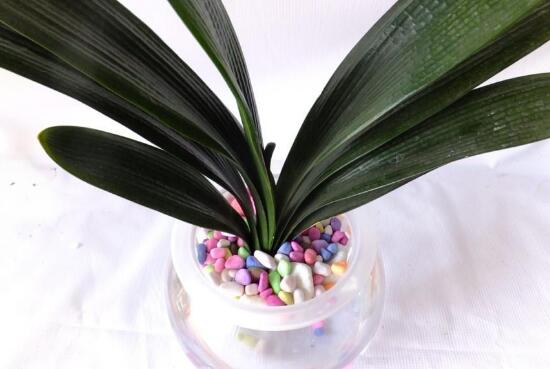
According to the editor's research, Clivia is a plant that loves moist environments and can also tolerate shade and low temperatures, so can Clivia be grown hydroponically? Clearly it can, and compared to the common soil cultivation, hydroponics is cleaner, simpler, easier to manage and operate, requiring only adequate light, suitable temperature and clean water.
II. Methods for growing Clivia hydroponically
(1) Preparation before hydroponics
1. Container selection
Before learning the methods for growing Clivia hydroponically, we need to do the preparatory work, such as choosing a good hydroponic container. Generally speaking, for indoor hydroponics, flower enthusiasts had best choose a transparent glass container, which is not only attractive but also makes it easy to observe its growth; besides that, if growing a single seedling, just a glass jar will do.
2. Nutrient solution
For the plant to grow healthily, nutrient solution is indispensable, and for hydroponic Clivia, generally two kinds are used: inorganic and organic. Among them, organic fertilizer has rich components but low nutrient content, so it only needs to be applied once every 5 days; inorganic fertilizer has relatively simple components but strong fertilizer effect and quick results, requiring application once a week. However, to make up for each other's shortcomings, you can use the two in combination.
3. Use aged water
For hydroponic Clivia, it is best to use aged water, that is, tap water that has been sunned for 3-5 years. The reason for this is that tap water contains chlorides such as bleaching powder, which can harm Clivia's roots, but after exposure to sunlight, they will settle out. After the aged water is prepared and changed, the water level covering the roots must not cover the pseudobulb, but it should not be too shallow either.
(2) Hydroponic method
Once the above preparations are done, you can formally begin growing Clivia hydroponically. Take a robust 2-3 year old Clivia, wash the roots, soak them in potassium permanganate solution for 10 minutes, then rinse with clean water. After that, grow it in tap water that covers one fifth of the root system, changing the water about once every three days.
Before hydroponics, everyone must be sure to prune Clivia's rotten roots and old roots. After 10-15 days, new roots will sprout from the base of the pseudobulb, and at this point add water to cover 1/2 to 1/3 of the root system; when the new roots grow to about 5 cm, switch to nutrient solution for cultivation. After flowering, cut off the spent flowers and spray potassium dihydrogen phosphate solution, which can make the plant develop fully and promote flower bud differentiation.
(3) Precautions for hydroponic Clivia
1. Oxygen
In the process of growing Clivia hydroponically, there are a few points everyone needs to pay attention to, and the first is to frequently check whether the oxygen in the water is sufficient. Method: put a small fish in the hydroponic container; if it is fine, then the water is not lacking oxygen, and vice versa. Once you find the water is lacking oxygen, you must replenish it, and there are two methods: one is to change the water, and the other is to use a small oxygen pump to supply oxygen to the water.
2. Light
Clivia is a semi-shade, semi-sun plant, and even in hydroponics it still needs light. However, in summer, avoid direct strong sunlight and let it receive scattered light. In addition, Clivia leaves have a light-seeking characteristic, so to make the leaves receive light evenly, everyone should adjust the light angle once every two or three days.
3. Temperature
For hydroponic Clivia, in terms of temperature management, mature plants should be kept at a room temperature of 11-25°C; seedlings can be slightly higher, 20-35°C is fine. When growing orchids in water, you must master the day-night temperature difference; in winter, keep it around 20°C during the day and no lower than 15°C at night.
How to grow Clivia hydroponically, methods for hydroponic Clivia
Recently, Clivia has become widely loved by everyone for its extremely high ornamental value. Clivia loves to live in moist environments and cannot be exposed to high temperatures and sun. Summer has arrived, and as temperatures continue to rise, how should Clivia be cared for? Many friends have adopted hydroponic methods, but if the hydroponic method is not done properly, it can also kill Clivia. How to grow Clivia hydroponically? Below, the editor will introduce the hydroponic methods for Clivia.
Hydroponic methods for Clivia
For hydroponic Clivia, you cannot directly use tap water; you must use "aged" water. So-called "aged" water means putting tap water in a container and sunning it for 3-5 days, so that chlorides such as bleaching powder that are harmful to Clivia's roots settle out. In "aged" water, from its appearance, the sediment changes from strip-shaped to clump-shaped, and the water color is best when green. After the water is "aged," the water level covering the roots must not cover the pseudobulb. If the water level is too shallow, Clivia cannot get a sufficient water supply; if the water level is too deep (covering the pseudobulb), it will cause root rot.
During cultivation, pay attention to observing changes in water quality. If you find the roots have turned somewhat yellow or black, it means the water is both lacking oxygen and low in nutrients, and you must change the water immediately. Whether air, sunlight and temperature can be properly handled for the aeration of hydroponic orchid roots is the key to success or failure in hydroponics. After a period of cultivation, a layer of green algae will grow on the roots of hydroponic orchids, and when the green algae becomes too thick it will seriously affect root respiration and corrode the nutrient solution. At this time, you need to use a soft, clean brush to gently brush away the green algae layer on the roots (there is no need to brush it very clean, because a small amount of green algae on the roots has little effect).
In addition, you should frequently check whether the oxygen in the water is sufficient. The checking method is: put two or three small fish into the hydroponic box; if the small fish swim around freely in the water, it means the water is not lacking oxygen; if the small fish always float to the surface, with mouth and gills exposed to breathe, it means the water is lacking oxygen. Once you find the water is lacking oxygen, you must replenish it, and there are two methods: one is to change the water, and the other is to use a small oxygen pump to supply oxygen to the water. In terms of sunlight management, Clivia is a semi-shade, semi-sun plant, so pay attention to light; especially in summer, avoid direct strong sunlight and let it receive scattered light.
In addition, according to the light-seeking characteristic of Clivia leaves, pay attention to making the leaves receive light evenly; otherwise the leaves will be of uneven length and their growth direction will also be staggered front and back, so generally adjust the light angle once every two or three days. In terms of temperature management, the environmental temperature for mature Clivia is best at 11°C-25°C, and seedlings can be slightly higher, 20°C-35°C is fine. When growing orchids in water, you must master the day-night temperature difference; in winter, keep it around 20°C during the day and no lower than 15°C at night.
Container selection: For hydroponic Clivia, you must choose a good container. Generally speaking, a transparent glass container is preferred; if growing a single seedling, just a glass jar will do. If you want to grow a large number hydroponically, you can use thin iron wire to weave a metal mesh with openings of one cm, and make a glass hydroponic box slightly smaller than the metal mesh; or use a goldfish tank instead. Then cover the hydroponic box with the metal mesh, insert the Clivia seedlings through the mesh openings into the nutrient solution respectively, with the depth of the flower roots in the nutrient solution limited to not exceeding the pseudobulb at the root.
Nutrient solution preparation. Nutrient solution is divided into inorganic and organic types. Inorganic nutrient solution can be prepared in the following ratio: calcium 1.5 g, ferrous sulfate 0.01 g, urea g, potassium dihydrogen phosphate 1 g, magnesium sulfate 0.5 g; after these 5 inorganic salts are all prepared, dissolve them in 1000 g of water and it is ready to use. Organic nutrient solution is prepared as follows: fried hemp seed meal 100 g, bone meal (made from unsalted fresh bones) 100 g, soybean cake meal 150 g, cooked sesame powder 50 g, then dissolve in 1000 g of water. Comparing the above two nutrient solutions, organic fertilizer has rich components but low nutrient content, while inorganic fertilizer has relatively simple components but strong fertilizer effect and quick results. To make up for each other's shortcomings, the two can be used in combination. If used alone, inorganic fertilizer is applied once a week, and organic fertilizer once every 5 days.
When caring for Clivia, everyone must pay attention to temperature, humidity and water replenishment, so that Clivia grows in a good environment. The above is the editor's introduction on how to grow Clivia hydroponically and the hydroponic methods for Clivia. I hope the editor's sharing is helpful to everyone.
Hydroponic methods for Clivia
Hydroponic methods for Clivia
1. Take a robust 2-3 year old Clivia, wash the roots, soak in potassium permanganate solution for 10 minutes, then rinse with clean water, and grow it in tap water that covers one fifth of the root system, changing the water about once every three days.
2. Be careful to prune rotten roots and old roots; after 10-15 days, new roots can sprout from the base of the pseudobulb, then add water to cover one half to one third of the root system; when the new roots grow to about 5 cm, switch to nutrient solution for cultivation.
3. After flowering, cut off the spent flowers and spray potassium dihydrogen phosphate solution, which can make the plant develop fully and promote flower bud differentiation.
Clivia's ecological habits
It likes a warm-in-winter and cool-in-summer environment, and avoids direct strong light, so it should be shaded in summer. Placing it in low temperature and weak light during the flowering period can extend the flowering period by half a month. Its growth room temperature is 15-25°C, and it can tolerate a low temperature of 0°C.
Placement position
Often placed in the living room or study, it has quite the demeanor of a gentleman or a great general.
Flower language
Missing you, nobility, and the demeanor of a gentleman.