It is very difficult to get Cymbidium orchids to bloom a second time; a year-round care method teaches you how to rebloom them
Cymbidium orchids are world-famous new stars among orchids, and their huge flowers and vivid colors leave a deep impression; reblooming is probably familiar to flower lovers too, and it means getting a plant to bloom a second time, so how do you get a Cymbidium orchid to rebloom? In everyday life, very few people can successfully get it to rebloom, so today let us learn together about the methods for getting Cymbidium orchids to rebloom.
1. How to get Cymbidium orchids to rebloom: water, fertilizer, light, temperature
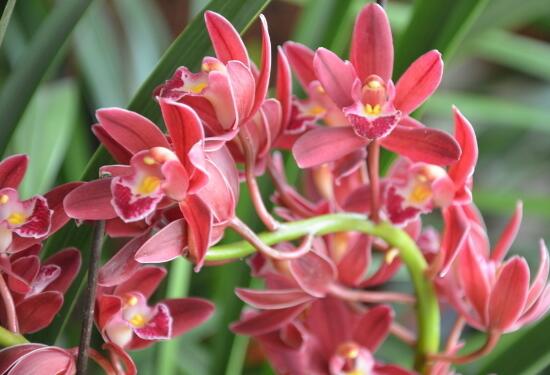
In everyday life, many people grow Cymbidium orchids, but they all say that getting a Cymbidium orchid to rebloom is somewhat difficult, which is quite frustrating. In response, the editor checked various sources and found that even if everyone cares for them strictly according to Cymbidium orchid cultivation methods, it is still hard for them to bloom a second time because of seasonal changes and different environments. So how do you get a Cymbidium orchid to rebloom? The editor believes everyone should do the following four things:
1. Watering
For getting Cymbidium orchids to rebloom, watering is very important. Depending on the potting soil, in summer you can water 1-2 times a day, and in other seasons you can water once every 3 or 4 days. More details are given in the Cymbidium orchid watering method, so you may want to take a look. Besides normal watering, you should also frequently spray the leaves and the surrounding area, preferably as a mist, which both humidifies the air and prevents Cymbidium orchid leaves from turning yellow.
2. Fertilizing
To get Cymbidium orchids to rebloom, besides watering, you also need to pay attention to fertilizing. Fertilize normally during the growing period, but note that the fertilizer must not be too concentrated; better dilute than concentrated. Apply fertilizer once before flowering, and by all means pause fertilizing during the flowering period and in summer.
3. Light
Cymbidium orchids like light but dislike strong light, so apart from needing appropriate shading in summer, in other seasons they can be placed directly in the sunlight to grow.
4. Temperature
Most importantly, to get Cymbidium orchids to rebloom, everyone needs to pay attention to the winter temperature; it must not be too high, especially the indoor temperature in the north, which is comparable to summer temperatures and is very unfavorable for reblooming. Everyone should keep the room temperature between 10-25°C. Once the above conditions are in place, reblooming is not difficult. In fact, if grown directly outdoors, reblooming is easier, but if outdoor growing is not convenient, then try to choose a place with good ventilation and plenty of sunlight for growing.
2. Year-round care methods for Cymbidium orchids
Cymbidium orchids have many varieties, vivid colors, and beautiful flower shapes, and many people keep them at home, so many people want their Cymbidium orchids to rebloom. As for how to get Cymbidium orchids to rebloom, doing the above points well should about do it, but you also need to care for them carefully in normal times. For this, let us look again at the year-round care methods for Cymbidium orchids. How should they be cared for?
1. Spring care for Cymbidium orchids
Cymbidium orchids need ample light to grow. In spring, it is recommended that everyone move the pots to a balcony for care. After the spring flowering period of Cymbidium orchids ends, apply a diluted decomposed liquid fertilizer once a week, or a special orchid fertilizer, to provide enough nutrients for their growth.
2. Summer care for Cymbidium orchids
Summer temperatures are very high, which affects flower bud differentiation and the quality of the next year's blooms, so everyone should pay attention to ventilation and cooling, and shade them in time to avoid sunscald. In addition, in summer you should pay attention to timely watering and fertilizing. It is recommended to apply a diluted decomposed liquid fertilizer once a week.
3. Autumn care for Cymbidium orchids
After autumn arrives, the temperature gradually drops. At this time, watering should be reduced, but be careful to keep it moist. For autumn fertilizing, it is recommended to fertilize once every two to three weeks.
4. Winter care for Cymbidium orchids
In winter, when the temperature turns lower, Cymbidium orchids should be moved indoors for growing, and the room temperature should be kept above 3°C. In addition, fertilizing should be stopped in winter, and fertilizer should only be applied after the spring flowering period ends.
How to grow Cymbidium orchids so they bloom: 5 kinds of care to make Cymbidium orchids bloom
How to grow Cymbidium orchids so they bloom: Cymbidium orchids are very beautiful when in bloom, and flower lovers surely all hope their Cymbidium orchids will bloom beautifully. Below are 5 daily care points to help Cymbidium orchids bloom better.
How to grow Cymbidium orchids so they bloom 1. Light controlCymbidium orchids like sunlight, and ample light helps them bloom. Of course, in midsummer they must not be placed directly in the sun, as they are easily sunburned, so to make Cymbidium orchids bloom well, flower lovers should control the light well in daily care.
2. Suitable temperatureThe growing temperature for Cymbidium orchids is 10-25°C, and a nighttime temperature of around 10°C is better. If the temperature is around 15°C, the leaves are green and even have an emerald gloss, and the flower buds will suddenly elongate, which helps the Cymbidium orchid bloom well.
3. Watering requirementsCymbidium orchids like higher humidity, so flower lovers need to water them in time, and can spray water around them to raise the environmental humidity. After Cymbidium orchids bloom, they have a short dormancy, during which watering should be reduced, and during the vigorous spring and summer growing period they must not be left dry.
4. Sufficient nutritionCymbidium orchids are large plants and grow luxuriantly, so they need more nutrients. Flower lovers can mix fermented cake fertilizer, chicken manure, etc. with 1/3 clay, then add water and make it into balls about 2 cm in diameter, dry them in the sun, and keep them for later use. A sufficient nutrient supply is more helpful for Cymbidium orchids to bloom well.
5. How flower lovers should care for thema. After Cymbidium orchids bloom, flower lovers need to cut off the flowering plants, and move the Cymbidium orchids to a place with ample light for care. After the temperature warms up, repot them into a slightly larger pot and continue growing them.
b. When fertilizing Cymbidium orchids, it is recommended to apply sufficient slow-release fertilizer, and regularly spray 0.1% potassium dihydrogen phosphate and urea 1-2 times a week. If the Cymbidium orchid plants are fairly dense, they can be repotted to give the Cymbidium orchids ample space to grow.
Cymbidium orchid cultivation methods and flowering time!
Cymbidium orchids have long, emerald-green leaves, and their flowers are rugged, bold, and magnificent, making them world-famous "new stars of orchids." Cymbidium orchids have the subtle fragrance and elegance of Chinese orchids, as well as the richness and variety of foreign orchids, and they sell very well in the international flower market, deeply loved by flower enthusiasts. Today I will briefly introduce the cultivation methods, flowering period, and price of Cymbidium orchids.
Cymbidium orchid cultivation methods: soil requirements:
The cultivation medium for Cymbidium orchids can be moss, fern roots, bark chunks, charcoal, palm bark, coconut shell, crushed brick, tiles, gravel, etc. When planting, first put the orchid seedling into the pot, then fill it with the potting material. You can also tie the roots of the Cymbidium orchid onto a section of wood with bark, and the new roots will grow around the bark, and it will likewise grow well.
Temperature conditions:
The suitable growing temperature for Cymbidium orchids is 10-25°C. When the winter temperature is below 5°C, the leaves turn slightly yellow and the flowering period is delayed, and the flower stems are short. When the overwintering temperature exceeds 15°C, although the plant's leaves are green and glossy, the flower stems will suddenly elongate, flowering is advanced, and the flower stems are soft and unable to stand upright, so they must be supported with stakes.
Light conditions:
Cymbidium orchids need ample scattered light to grow, and in summer and autumn a shade net should be used to shade about 50% of the light. On cloudy days or in winter and spring when the sunlight is soft, open the shade net to let the Cymbidium orchids receive direct light. However, during the flowering period, the plants should be placed in a place with weak light so that they bloom brightly and can be enjoyed by people.
Watering method:
In summer, watering must be sufficient, and spray water on the leaves to lower the temperature and raise the humidity. The swollen pseudobulbs of Cymbidium orchids have a water-storing function, so they have a certain drought tolerance. But if watering is insufficient, the swollen pseudobulbs will shrivel, which is unfavorable for their growth. In addition, watering should be reduced during the flowering period, otherwise the flowers will develop brown spots.
Reasonable fertilizing:
Cymbidium orchids need a fair amount of fertilizer, and during the vigorous growing period, a diluted fertilizer solution should be applied about every 10 days. During the seedling stage and in low-temperature seasons, organic fertilizer should be applied less or not at all, and a nitrogen-phosphorus-potassium compound fertilizer in a ratio of 7:6:19 can be used for foliar spraying, with very good results. If nutrients are insufficient, the leaves of Cymbidium orchids will turn yellow and fall off, and the flowers will become smaller.
Pest and disease control:
The main diseases of Cymbidium orchids include leaf spot and gray mold, while the main pests include aphids, red spider mites, and scale insects. In the early stage of disease onset, a 1000-fold solution each of fenitrothion and omethoate emulsifiable concentrate can be used to control aphids, and a 800-**** fold solution of dicofol or dichlorvos can be used to control red spider mites, sprayed once every 15 days, with very obvious results.
How many years until Cymbidium orchids bloom
Cymbidium orchids like warm winters and cool summers, and like high humidity and strong light, with a suitable growing temperature of 10-25°C. A nighttime temperature of around 10°C is appropriate; below 10°C they are prone to cold damage. During the flowering period, keeping the temperature at 5-15°C can extend the flowering period of Cymbidium orchids by more than 3 months.
Cymbidium orchids bloom every year, provided they are well cared for. The flower bud formation period of Cymbidium orchids is long, taking about 6 months, so if you want them to bloom on time, you must start increasing phosphorus and potassium fertilizer 6 months in advance, prompting the flower buds to begin differentiating after 2 months, to successively send up flower buds after 4 months, and to successively bloom after about 6 months.
Cymbidium orchid market prices
Speaking of the price of Cymbidium orchids, according to people in the know, for Cymbidium orchids with slightly more flowers, the wholesale price is estimated at 150-200 yuan per pot; for those with an average number of flowers, the wholesale price is also 100-150 yuan per pot; and for those with the fewest flowers, it is also 50-90 yuan per pot.
Cymbidium orchids have different prices at different growth stages. Generally, those with flowers are the most expensive, those with unopened buds are average in price, and small seedlings are the cheapest. Jiuzi Cymbidium orchids sell for 150-200 thousand RMB per pot, which can be said to be a luxury item among flowers.