How to grow passionflower? The key points of planting techniques are sufficient sunlight and moderate water and fertilizer
Passionflower, also called dahlia, has huge blooms and rich colors, making it a highly ornamental plant. Not only that, passionflower can also be processed into juice with an excellent taste. Such a plant naturally attracts countless people to grow it, so how do you grow passionflower? In response, the editor will bring you passionflower planting techniques from aspects such as soil, sunlight, water and fertilizer. Friends who want to grow it must take a look~
1. How to grow passionflower: understand its habits
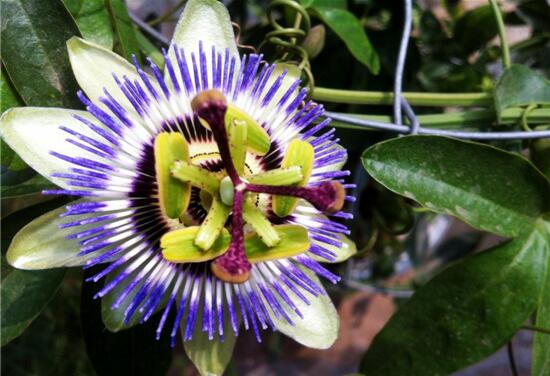
Growing passionflower indoors is not the same as outdoors; sunlight, moisture and so on all need to be created by us, so for how to grow passionflower, first understand its growth habits, then simply meet its normal growth needs. In response, the editor will bring you very detailed passionflower planting techniques from methods such as soil, sunlight, water and fertilizer. Let's continue reading below.
2. Passionflower planting techniques
1. Soil
To grow passionflower at home, you first need to choose the soil it likes. It is understood that passionflower has good adaptability and does not have high soil requirements; ordinary soil is enough. However, if you want passionflower to grow well, it is best to prepare soil with a deep layer, rich in humus, loose and breathable, and with good drainage
2. Sunlight
In passionflower planting techniques, sunlight is extremely important. Because passionflower is a tropical and subtropical plant, it likes light and warm environments. When growing it at home, it is best to place it in a balcony, courtyard lamp, or other place with sufficient sunlight. On cloudy days, it can be moved to a south-facing windowsill for care.
3. Watering
For how to grow passionflower, one step is indispensable, and that is watering. Passionflower likes moisture and is not tolerant of waterlogging, so it has high water requirements; too much or too little watering is both bad. Therefore, during care, everyone needs to strictly control the frequency and amount of watering.
In response, in passionflower planting techniques, the requirements for watering are as follows: in summer, water promptly when the soil is dry; in the rainy season, when there is too much water accumulation in the soil, pay attention to timely drainage, and usually ensure the soil does not turn white. In addition, when passionflower blooms and fruits, the soil moisture content must be kept at maximum, otherwise it will lead to small fruit, reduced quality and fruit drop.
4. Fertilizing
After watering, let's look at fertilizing, which also plays a crucial role in the growth of passionflower. Passionflower blooms and fruits, so appropriate fertilization is very necessary, and it is best to apply thin fertilizer frequently: during the growth period, apply more decomposed organic fertilizer; during the flowering period, apply more urea; during the fruiting period, apply more cake fertilizer.
Note: To make passionflower bloom and fruit more, appropriate fertilization is very necessary, but note that when fertilizing, apply as little nitrogen fertilizer as possible, otherwise it is easy to cause excessive vegetative growth in passionflower.
5. Pruning
To grow passionflower well, in addition to the above must-dos, everyone should also pay attention to pruning. When passionflower has luxuriant branches and leaves, it needs to be pruned, promptly cutting off some non-fruiting branches or dead old branches; in addition, after pruning some leggy branches, overly dense branches, or diseased and pest-infested branches, this will help the healthy growth of passionflower.
Key points of passion fruit planting techniques
[Common questions] Key points of passion fruit planting techniques
[Expert answer]
Image: passion fruit
1. Soil:Passion fruit has strong adaptability and does not have high soil requirements. Sandy loam, red loam, kaolin soil and other flat or sloping land with good drainage and irrigation can all be planted, but it must never be planted in places with long-term low-lying water accumulation. For large-scale production, it is best to plant it in places with fertile soil, loose soil and good drainage; irrigated and drained paddy fields are best. The most suitable soil pH for passion fruit is 5.5-6.5.
2. Planting:Passion fruit produces fruit in the same year it is planted, and it is suitable to plant from February to March each year. The planted passion fruit is a vine fruit tree, and its branches and vines extend, so for trellis cultivation, a row spacing of 3 m and a plant spacing of 3-3.5 m are suitable. Generally, the economic cultivation period of passion fruit is 4-5 years. After harvesting in the 5th year, cut off the old plants and completely renew them. Because passion fruit is a tropical fruit, continuous cropping is very easily infected by viruses, reducing yield and quality. To reduce the harm of viral infection to passion fruit, it is best to renew and plant with virus-free healthy seedlings every year. For the planting method, according to the predetermined row and plant spacing, dig planting trenches 60 cm wide and 20-30 cm deep, first put in mixed compost or other farmyard manure, and at the same time add 0.25 kg phosphorus + 0.15-0.25 kg compound fertilizer per plant, then plant on raised mounds. After planting and survival, remove axillary buds at any time, keep only the terminal bud of the main vine, and tie the vine to the support so that the plant climbs onto the trellis as soon as possible.
3. Setting up trellises:During passion fruit cultivation, trellises must be set up to facilitate management and harvesting. There are many forms of trellis setup. At present, horizontal trellises and single-line hedge trellises are mainly used. The single-line hedge trellis has columns 2.3 m high, erected between plants, inserted about 30 cm into the ground, and each column is strung with 2 lines of No. 12 wire.
4. Water management:Passion fruit is relatively drought-tolerant, but if drought occurs, irrigation is still needed. If the soil is too dry, it will affect the development of vines and fruit. In severe cases, branches appear withered, fruit does not develop, and fruit drop occurs. In the rainy season, drain accumulated water in time.
5. Sunlight:Passion fruit likes sufficient sunlight to promote vine growth and nutrient accumulation. If sunlight is insufficient, growth is slow, there are many leggy branches, growth is slow, and it may even cause fruit shrinkage and dropping. Passion fruit is a long-day plant and has a photoperiodic effect, that is, long-day conditions (sunshine duration above 12 hours) can promote flower bud formation and flowering. Generally, if water, fertilizer and other cultivation management work are done well after planting in early spring, it can continuously bloom and bear fruit in the same summer.
6. Temperature:The temperature requirements of passion fruit are basically the same as those of ordinary tomatoes. It has wide adaptability and can adapt to planting in both the north and south (in the north it should overwinter in greenhouses; in the south, above 1400 m altitude, it must be covered for cold protection before the frost period to overwinter safely, otherwise the upper part of the main stem and side branches will mostly be frozen and withered, or even the whole plant will freeze to death).
7. Training and pruning:After passion fruit is planted, supports should be inserted during the seedling stage to guide the main vine onto the trellis. When the main vine is 1 m high, cut off the terminal bud to let it grow side vines. Keep 2 side vines per side and let them grow toward both sides. When the side vines grow to 2 m, cut off the tops of the side vines to promote the growth of secondary side vines. If cultivated on a horizontal trellis, wait until the main vine reaches the trellis, then keep side vines growing evenly in all directions. Passion fruit dislikes heavy pruning, and there is no need for strong pruning every year. Excessive pruning easily causes the main vine to gradually wither, and in severe cases the whole plant dies. Generally, after each batch of fruit is harvested, shorten each side vine by leaving 3-4 nodes to encourage it to regrow side vines. At the same time, every summer, thin out overly dense branches, or cut off branches hanging down and trailing on the ground about 20-30 cm above the ground, to maintain good ventilation.
8. Fertilizing:The fertilization principle for passion fruit is preferably a nitrogen, phosphorus and potassium ratio of 2-1-4.
9. Pest and disease control:Passion fruit has strong stress resistance and relatively few pests and diseases. When pests such as aphids, red spider mites, leafhoppers, scarab beetles and yellow ants, as well as powdery mildew, are found, control them promptly.
Powdery mildew: agricultural antibiotics can be used, such as agricultural penicillin-streptomycin, "carbendazim" and others sprayed as a 200-400 ml diluted solution, once every 4-5 days, for a total of three sprays.
Red spider mite: the mite body is small and difficult to see with the naked eye. The damage symptoms are yellowing and shrinking leaves. Once such symptoms appear, carefully check the back of the leaves. If there are red spider mites the size of needle tips, spray pesticide promptly for control. "Dimethoate", "omethoate" and "insecticidal phosphorus" can be used for spraying. When spraying, spray the front and back of the leaves evenly. Spray once every 5 days, for a total of three times.
Aphids: pirimicarb, dimethoate, dichlorvos and others can be used for control.
Note: The above pesticides are prohibited from use 30 days before fruit harvest, otherwise they are harmful to human health after eating.
10. Artificial supplementary pollination:Passion fruit blooms around 11 a.m. every day. After flowering, carry out artificial pollination promptly and complete the pollination work before 4 p.m. There are two methods of artificial pollination: (1) use a writing brush to evenly spread pollen onto the three stigmas of the pistil; (2) use tweezers to collect pollen sacs into an average clean cup, then add water so that the pollen dissolves into the water, then use a sprayer to spray the pollen water onto the stigmas of the pistil. Carrying out artificial pollination can increase the fruit-setting rate.
11. Timely harvesting:After passion fruit matures, it naturally falls to the ground and should be picked up promptly. The time for picking up fallen fruit is best not to exceed three days, otherwise the fruit will be exposed to sun and rain and rot quickly.
[Editor's summary]
Passion fruit is also called foreign pomegranate and purple passionflower. It is a herbaceous vine of the genus Passiflora in the family Passifloraceae. It is planted in Guangdong, Guangxi, Fujian, Hainan and other areas of China. Passion fruit is rich in nutrients. It can be eaten raw or processed into beverages, and the seeds can also be pressed for oil, giving it high economic value. The editor of First Agricultural Economics introduces the key points of passion fruit planting techniques in this article, hoping it will be helpful to you.
How to grow dahlia: cultivation methods for dahlia
Dahlia is also called xiaolihua, passionflower and so on. It is a shorter variant of dahlia. Its flower colors are brilliant, dazzling and varied in form. It also has a long flowering period and is one of the world's famous flowers. The plant type is short, and the flower colors are colorful. Its full flowering period coincides with National Day, making it most suitable for household pot cultivation
Dahlia cultivation method 1. Soil selectionPotted dahlia needs a suitable medium. Garden soil, coal cinder and fine sand can be mixed to make the medium, and some leaf mold can also be added. Place broken tiles at the bottom of the flowerpot as a drainage layer, then put in the medium, and appropriately add some base fertilizer.
2. Sufficient sunlightThe growth of dahlia needs sufficient sunlight. It is best if daily sunlight is not less than 6 hours, and it must not be overly shaded, so as to avoid poor growth. In spring, autumn and winter, dahlia can be given direct sunlight, but in the high-temperature summer, try to avoid direct sunlight and place it in a bright place for care. In terms of temperature, dahlia likes a cooler environment and is relatively afraid of heat. In summer, when temperatures are high and sunlight is strong, properly shade it or spray water to cool it down. It is also not tolerant of frost and cold. When the temperature drops below 10°C, it enters dormancy. The suitable growth temperature for dahlia is between 15°C and 28°C.
3. Temperature controlDahlia likes cool conditions and fears heat. The temperature in northern China is relatively suitable, and it will bloom from summer to autumn, while in the Yangtze River basin, summer temperatures are high and it is in a semi-dormant state, so leaf shading and water spraying for cooling must be carried out.
4. Large watering amountDahlia has luxuriant branches and leaves and consumes a lot of water. If it lacks water and is exposed to strong light, at best the leaf edges scorch and wither, and at worst the leaves fall. If there is too much water, the tuberous roots rot easily, so the potting soil should be neither dry nor wet. During the flowering period and in summer, watering should be more; in spring and autumn, less; on cloudy and rainy days, prevent water accumulation by raising the flowerpot, and before harvesting the tubers in early autumn, water less or not at all.
5. Water and fertilizer managementDahlia likes fertilizer. In addition to sufficient base fertilizer, during the growth period, except in midsummer, apply 10% cake fertilizer water every 10-15 days. After budding, apply 1-3% potassium dihydrogen phosphate to promote brilliant flower color. Dahlia does not have high water and fertilizer requirements. Generally, water more in summer and less in spring and autumn, keep the potting soil neither dry nor wet, avoid water accumulation in the pot, and pay attention to drainage in the rainy season. When fertilizing, apply sufficient base fertilizer at planting. During the growth period, apply a thin liquid fertilizer every 10-15 days. When flowering, apply some 1%-3% potassium dihydrogen phosphate to promote flowering.
Notes on dahlia cultivation 1. Branch pruningDuring the cultivation of dahlia, pruning can be carried out to control the flower shape and promote flowering. During growth, frequent pinching can make dahlia branch more and have dense branches. During growth, some dead leaves and diseased leaves can be cut off to promote healthy growth of dahlia.
2. Pest and disease controlPests and diseases of dahlia are not common, but there can be harm from powdery mildew, brown spot, viral disease and moth larvae, which need to be discovered in time and controlled early.