How do you grow white orchids? Master the cultivation methods and precautions, and control the watering amount well
White orchid is a highly ornamental flowering plant, and it can be seen in many regions of our country. However, if we want it to be ornamental, the premise is that we must grow it well. So how do you grow white orchids? What are the cultivation methods and precautions for white orchids? Below, the editor will take everyone through an introduction.
I. How to grow white orchids
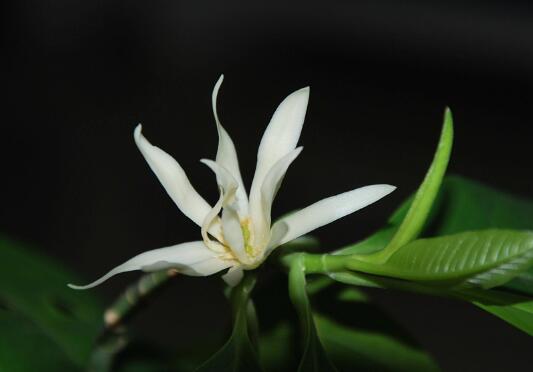
II. Cultivation methods and precautions for white orchids
1. Soil selection
Among the cultivation methods and precautions for white orchids, choosing soil is the first step and also the step of laying a good foundation. We had best choose humus soil with relatively high looseness. This kind of soil has good drainage and air permeability, and it will be of great help to the growth of white orchids.
2. Fertilization requirements
Fertilizer is one of the main nutrients in the growth process of white orchids, especially during the growing period, when its demand for fertilizer is very high. Generally, it needs to be fertilized once every half month. In terms of fertilizer, we can choose a nitrogen, phosphorus, and potassium compound fertilizer, applying 2-6 grams each time. Before fertilizing, we need to dilute it with water so that white orchids can absorb it better.
3. Temperature control
Among the cultivation methods and precautions for white orchids, temperature control is a relatively important point. White orchids do not have much resistance to high temperatures or cold, so when growing them, it is best to keep them at a suitable temperature. At night, it is best not to let the temperature fall below 5°C, while during the day it is best to keep it above 12°C. Only in this way can it grow healthily.
4. Watering requirements
Watering is also a key step in growing white orchids well. When watering, we should maintain the principle of "do not water until dry, and water thoroughly when watering." Remember not to water frequently. If waterlogging is caused, it can easily lead to root rot in white orchids, so everyone should remember this point.
5. Regular pruning
In the process of growing white orchids, we need to prune them regularly, because during the growth process, white orchids will more or less grow some dead branches and rotten leaves. At this time, we need to prune them. After pruning, not only can the plant shape be maintained, but the growth of new branches can also be promoted. It can be seen that among the cultivation methods and precautions for white orchids, pruning is a very important step.
6. Light requirements
White orchid is a light-loving plant, but it is not tolerant of strong light, so attention should also be paid to light. In spring and autumn, the light is relatively suitable, and we can let it receive light all day. If the sunlight is too strong in summer, we need to move it indoors to a semi-shaded place for cultivation, so as to avoid yellowing and withering of leaves caused by too strong light.
7. Pest and disease control
In the cultivation process of white orchids, if they are not grown properly, problems such as pests and diseases can easily appear. Such problems are extremely harmful to white orchids. They not only affect the ornamental value, but in severe cases can also cause death. Therefore, when such problems appear, they must be dealt with promptly. The specific treatment methods are introduced in detail in the article on pest and disease control for white orchids, and everyone can take a look.
Summary: After reading the above, I believe everyone has gained a certain understanding of how to grow white orchids. As long as you grow them according to the above requirements, your white orchids will surely grow vigorously. The editor will introduce the cultivation methods and precautions for white orchids here, and I believe it can bring some help to everyone's cultivation process.
How do you grow white orchids? Cultivation methods and precautions for potted white orchids
White orchids have a rich fragrance and a long flowering period, blooming from June to October. Put one in your pocket, or place a few in a room, and the fragrance can last for more than ten days without fading. Even after they have dried and shriveled and turned brown, using them to make tea is still very fragrant. For home cultivation of white orchids, you need a relatively large balcony and courtyard, and sufficient sunlight, because it is a sunlight-loving flowering plant, otherwise it cannot be grown well.
How do you grow white orchids?
1. White orchids are neither tolerant of drought nor tolerant of moisture. In summer and autumn, the weather is hot, evaporation is fast, and water demand is high, so watering should be timely. The pot soil should be kept slightly moist as appropriate. Its roots are thick and fleshy, and it is most afraid of waterlogging, so the pot soil should use humus soil with good drainage. During the plum rain season, do not let it get rained on. If the pot soil stays wet for a long time and does not dry out, the roots will rot, causing leaves to turn yellow and fall off and leading to death, which is very difficult to save. This point should be especially noted for white orchids that are brought indoors to overwinter and go dormant, because large white orchids planted in jars have glazed walls that do not allow air through. In addition, at this time the plant's evaporation is low, the surface soil in the jar dries easily, and the inner soil is hard to dry. If you water just because the surface looks white, the pot soil will remain constantly wet and the plant will die. Most cases of people killing white orchids by cultivation come from this problem. Therefore, in winter the pot soil should be slightly dry. Do not water until the center of the jar is dry too; by no means should you water.
2. White orchids like fertilizer, but avoid concentrated fertilizer. In addition to applying enough base fertilizer when repotting every 2-3 years, generally after the plant blooms, apply once every 7-10 days a fully decomposed soybean cake water or fishy water. Master the principles of diluted application, frequent application, and application in the evening. Stop fertilizing after the cool autumn.
3. White orchids are afraid of cold and like sunlight, and should have more than 10 hours of sunlight every day. Even when brought indoors for dormancy in winter, they cannot be kept in long-term shade, otherwise flowering the next year will be affected. It is even more afraid of cold than jasmine. It should be brought indoors to overwinter in early November, and only in mid-April of the following year can it be brought out for care.
4. White orchids are not tolerant of pollution. In addition to not growing them in pots in factory areas, home care should also not place them in the kitchen to overwinter, so as to avoid oil smoke pollution.
Precautions for growing potted white orchids
1. White orchids have fleshy roots and are most afraid of waterlogging. The potting soil must be well-drained acidic soil. Place 3-4 cm thick granular furnace cinder or broken tiles at the bottom of the pot as a water layer.
2. In midsummer, sunlight is strong. Around noon, appropriate shading should be provided, or from June to August they can be moved under tree shade for care. During the peak growing season (May-September), apply liquid fertilizer once every 1-2 weeks, and at the same time keep the pot soil moist frequently. In summer, it is also necessary to frequently spray and wash the leaf surfaces and sprinkle water on the ground to make the environment humid.
3. In winter, it should be kept indoors for care. During the day, the room temperature should be kept at around 12°C, and at night the minimum should not be lower than 5°C. When just brought indoors, watering should not be too little. Around the winter solstice, white orchids enter dormancy, so watering needs to be controlled, fertilizing should be stopped, and attention should be paid to appropriate ventilation.
4. During cultivation, if yellow leaves are found, promptly spray a 0.2% ferrous sulfate solution 2-3 times, which can gradually turn the leaves from yellow to green. Avoid applying concentrated fertilizer. When repotting every 2-3 years, sufficient base fertilizer must be applied. After flowering, apply once every 10 days in the evening a thin, fully decomposed soybean cake water and fishy water. Stop fertilizing after the weather turns cool in autumn. More than 10 hours of light are needed every day. During winter dormancy, it should also be placed in a place with weak light or scattered light indoors, avoiding oil smoke pollution. When overwintering in winter, by no means should white orchids be moved into the kitchen. Yellow leaves on white orchids can occur in two situations - iron-deficiency chlorosis and root rot caused by excessive water.
① Chlorosis: mainly caused by the pot soil being alkaline.
② Symptoms of root rot: the root system turns black and rots, and the leaves wilt, yellow, and fall off, leading to the death of the whole plant. Therefore, usually water only when the surface of the pot soil turns white, and loosen the soil frequently.
5. Spring care and management. When the flowers fade, promptly cut back to about 3-4 stem nodes below the faded flowers, and at the same time thin out some old stems and overly dense stem nodes, so as to facilitate ventilation and adapt to the home balcony environment. After flowering in March, there is a short dormant period, during which fertilizing and watering should be stopped.
6. Summer care. Schlumbergera can grow slowly at 15°C, and grows faster at around 25°C when the air is also relatively humid. When the temperature exceeds 30°C, keep it in a shaded environment.
7. Autumn and winter care. In early autumn, the temperature is still high, so spraying the leaf surfaces and sprinkling water on the environment should continue. Starting in September, Schlumbergera gradually resumes growth. In mid-to-late September, as the temperature drops, sunlight can be seen in the morning and evening. In mid-to-late October, it should receive full sun to promote flower bud differentiation and produce more buds. By early-to-mid November, as the temperature turns colder, Schlumbergera should be brought indoors to overwinter, and when brought indoors it should also be placed in a place with sufficient sunlight. However, during the flowering period, direct sunlight should be avoided to prolong the flowering period. Watering in autumn should be appropriate, and the pot soil should still be kept moist, neither dry nor waterlogged. Excessive dryness, excessive moisture, a sudden drop in temperature, or too large a difference between day and night temperatures can all cause flowers and buds to drop.
8. In winter, the temperature is low, and the evaporation of Schlumbergera is reduced accordingly. Watering should be done with care. There are often cases of root rot and death due to excessive watering in winter. Autumn and winter are the period when Schlumbergera buds and blooms. Apply a phosphorus-rich topdressing once every 7-10 days, and stop fertilizing during the flowering period. Winter temperatures change easily, so heat preservation and ventilation should be done well. When the room temperature drops to 5°C, protect against freezing. In some homes in Jiangnan, growing Schlumbergera is common. When the room temperature cannot be kept at around 15°C, even with a pot full of flower buds, it is difficult for them to open.
White orchids can be exposed to the sun
White orchids like warmth and sunlight, and need enough sunlight all year round. In winter dormancy, when protecting against cold and keeping warm, they should receive a little sunlight. In summer and autumn during the growth and flowering period, there should be even more sufficient light. With enough light, they grow well, bloom more, and the flowers are fragrant; with insufficient light, the branches and leaves grow thin and weak, bloom less, and the fragrance is poorer. In addition, water when the pot soil is dry, especially in summer and autumn when temperatures are high, and water enough and thoroughly. Water when the pot soil is dry. If the pot soil is too dry for too long, it will cause leaves to turn yellow and fall off, affecting growth. However, note that the pot soil drainage must be unobstructed to prevent waterlogging, otherwise roots and leaves will also rot. The fertilization method can be the same as for Milan and jasmine, adopting the method of "light fertilizer applied frequently."
White orchids drop a large number of leaves in winter
Whenever white orchids overwinter indoors or in a greenhouse in winter, they often encounter the phenomenon of dropping a large number of leaves, especially when the greenhouse is sometimes hot and sometimes cold, this situation is even more likely to occur. The reasons are: first, improper dryness and moisture of the pot soil, alternating dry and wet, which the fleshy roots cannot bear, causing leaf moisture to flow backward, resulting in leaf drop. Second, the room temperature rises, the environment is stuffy and hot, and ventilation is not timely, which can also cause the same situation. There is also another reason, which is being subjected to cold.
In order to prevent white orchids from dropping a large number of leaves during winter, after the pot soil dries, the amount of water used for one-time watering should not be too much. Keep the room temperature between 5-10°C, not too high or too low. Increase environmental humidity and indoor ventilation, and maintain air circulation. In this way, the leaf drop phenomenon of white orchids can be reduced somewhat. In addition, after leaf drop, as long as the terminal buds are still healthy, white orchids will grow new leaves again after spring warms up and they are brought outside.
How do white orchids overwinter
When potted white orchids are brought indoors to overwinter, they often drop leaves. First, small brown spots and dry tips appear on the leaves, then they fall off. After new leaves grow, they soon fall off again. The main reason is that the room temperature is too high. When the temperature exceeds 15°C, the orchid, which has entered relative dormancy, sprouts again. After new buds appear, due to the physiological phenomenon of metabolism, the old leaves also fall off accordingly. However, these newly grown leaves and new shoots, because indoor conditions such as light and temperature are insufficient, are weak, and the new leaves very easily turn yellow and fall.
For home potted white orchids, bring them indoors after the "Autumn Equinox." The room temperature should not be too high; around 10°C is more suitable. Pay attention to indoor air circulation, but do not directly open windows to blow cold wind. Potted flowers should be placed in a place with sufficient light, watering should be controlled, and fertilizing is prohibited.
After the "Start of Winter," if the temperature drops, a plastic canopy can be made to cover the white orchids. This not only ensures relatively stable temperature, but also ensures a certain temperature and prevents smoke and dust pollution. Note that the canopy should have ventilation openings to avoid excessive humidity, which would cause mold to develop. When the room temperature is too high in early spring, try to lower the temperature.
Around the "Qingming" period, at noon on a clear and windless day, they can be moved outside and placed in a wind-sheltered, sunny place, and water can be sprayed on the leaf surfaces. At night or when a cold wave occurs, they should be moved back indoors. After transitioning this way for a period, when the temperature stabilizes above 10°C, they can be maintained normally outdoors.
How do you grow white orchids? Cultivation methods and precautions for white orchids
Speaking of white orchids, I believe many people know them. White orchid is a very common flower. When white orchids are in full bloom, they are very beautiful, so they are very popular. White orchid is one of the common plants in home courtyards. But do you know how to grow white orchids, and the cultivation methods and precautions for white orchids? Below, the editor from (3456.TV) tells you.
Cultivation methods and precautions for white orchids 1. Soil:White orchids like acidic soil, and the soil pH requirement is 5.5-6.3. It is best to use fertile, loose, well-drained culture soil. It can be prepared with 5 parts pine needle leaf mold, 2 parts coarse chaff ash, 2 parts coarse sand, and 1 part decomposed manure. Avoid using fine sandy soil or heavy clay soil with poor air permeability.
2. Sunlight:White magnolia is a sun-loving flower and needs sufficient sunlight. During the growing period, it should be maintained in a sunny place with long sunshine duration and strong light, especially during the flowering period. Daily sunlight must not be less than 6 hours. If placed in a shaded place for care, it will only grow leaves and not bloom, or bloom very little, with slender branches, pale leaf color, thin leaves, and no luster, which is unfavorable for growth. However, in summer, direct sunlight should be avoided. From 9 a.m. to 4 p.m., shading should be provided, and at the same time water should be sprayed on the leaf surfaces and the ground to increase air humidity.
3. Temperature:White orchids like warmth and fear cold, so special attention must be paid to protect them so they can overwinter safely. Generally, move them indoors in late October and place them in a sunny place. The room temperature is best kept at around 10°C, and must not be lower than 5°C.
4. Watering:White orchids have fleshy roots. If the pot soil is too wet, the leaves will wither, yellow, and fall off, and even the roots will rot and cause death. If too dry, the leaf tips will wither and the leaves will curl. It is a flower that fears both waterlogging and drought. During the flowering period, if the petals open too widely, it indicates insufficient water; when water is suitable, they remain in a bud-like state. When the surface of the pot soil looks dry and the soil is hard and cracked, water immediately. Watering requires that the water temperature and soil temperature must be consistent, and cold or hot water must not be poured suddenly. In spring and autumn, watering once a day is generally enough. In summer, when it is hot, evaporation is high, and growth is vigorous, the frequency and amount of watering can be appropriately increased. When moved indoors to overwinter in winter, watering should be controlled.
5. Fertilizing:White orchids have a long flowering period and like fertilizer. If fertilizer is insufficient, they bloom less. Untimely fertilization will lead to excessive growth of branches and leaves and poor flowering. From February to March, before new buds sprout, apply decomposed cake fertilizer as base fertilizer. During the flowering period, apply thin human manure and urine, or use liquid fertilizer made from fermented and rotted soybean cake, tea seed cake, and fish bones, mixed with 9 parts water, applying once every 3-4 days. Stop fertilizing half a month before bringing them indoors to overwinter.
6. Pruning:During the growth process of white orchids, the plant should be shaped and pruned, cutting off diseased and dead branches and excessive-growth branches, and removing some lower leaves, so as to suppress the plant's growth vigor and promote more flower buds and more flowering.
7. Pests:The main pests and diseases of white orchids include chlorosis, anthracnose, red spiders, scale insects, and so on. For anthracnose, use a 50% carbendazim wettable powder 500-fold solution, or a 50% thiophanate wettable powder 500-fold solution, spraying once every 5-10 days for control. Once red spiders and scale insects are found, they can be scraped off with a bamboo piece. For red spiders, use a 20% tetradifon 1000-fold solution, or a 50% trithion 1000-fold solution, spraying for control.
The above are the cultivation methods and precautions for white orchids shared by the editor. I believe that after reading the editor's sharing, everyone knows how white orchids should be grown!