How to prune four o'clocks? The choice of method and timing is crucial
Four o'clocks (Mirabilis jalapa) is a relatively fast-growing plant. When grown in pots, the branches sometimes gradually cross each other, which affects its appearance and also causes some branches and leaves to lack light and grow poorly. The solution to this problem is pruning. So how do you prune four o'clocks? Let me tell you the pruning method.
How to prune four o'clocks
I. Pruning time
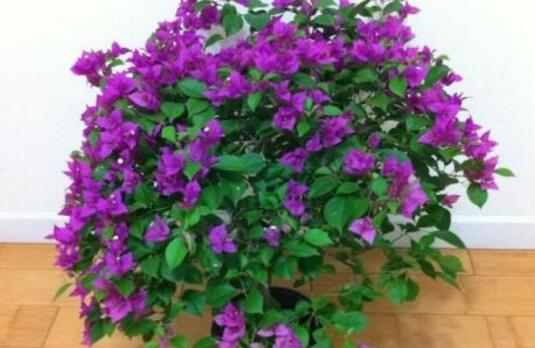
Usually, pruning needs to be done in spring and autumn. In addition, two more prunings are needed during the growing period and the dormant period. Besides this, you can also prune when diseased leaves and dead branches appear, which helps prevent pests and diseases.
II. Pruning methods
1. Pruning during the growing period
When the seedlings grow to 8-10 cm, you need to pinch back the four o'clocks. How do you prune four o'clocks at this point? The answer is to cut off the buds and branches at the top to encourage new shoots to sprout. When the new shoots are growing vigorously, a second pinching is needed when they reach 10 cm.
2. Pruning during the dormant period
The dormant period is usually at the start of winter. At this time, weak branches, leggy branches, and pest- and disease-affected branches need to be cut off, to prevent some insect eggs and pathogens from overwintering on these branches. Pruning weak branches is very necessary. Although it may not look as attractive after pruning, it helps the plant sprout quickly the following year.
3. Pruning after the flowering period
The flowers of four o'clocks are very beautiful, which is also one of the main benefits and uses of four o'clocks, but its flowers gradually fade after blooming for one day. At this point, these spent flowers and flower stems need to be cut off to reduce nutrient consumption.
4. Pruning when repotting
When repotting or propagating, the four o'clocks plant needs to be dug out of the soil. How do you prune four o'clocks at this point? The answer is to cut off the fibrous roots that are growing too densely, and also cut off some diseased roots and rotted roots, so that the roots grow more smoothly after the four o'clocks is replanted.
Precautions for pruning four o'clocks
1. Watering after pruning. Water promptly after pruning. Keeping the soil moist allows new shoots to sprout faster, but when watering, be careful not to pour water on the leaf surface, and do not let the wounds come into excessive contact with water.
2. Handling of pruned branches. The cut branches should be disposed of together. Weak branches, diseased branches, and so on can be burned together. Do not stick the cut branches back into the soil, as this easily breeds pathogens and pests.
Introduction to common pruning methods for woody plants
Flower pruning is crucial in the process of flower growth, especially for woody flowering plants. A slight mistake in letting them grow unchecked can very likely ruin a good plant. As for how to prune, I have sorted out the following.
There are many kinds of woody plants, including those grown for flowers (Chaenomeles speciosa, Malus halliana, cherry blossoms, etc.), those grown for fruit (ornamental pomegranate, Pyracantha), and fruit trees (peach, apple, pear, apricot, fruiting pomegranate, etc.).
For mature woody plants, the whole plant generally has two types of branches:
Long branches, which are vegetative branches, are generally used to develop the main framework of the plant. When pruning, they can be shortened, removed, or kept as appropriate according to the actual situation.
Short branches, which are generally fruiting branches, are important flowering and fruiting branch groups. They are very common in woody plants that bloom in early spring, such as peach, apple, pear, and crabapple.
In woody plants that bloom abundantly in summer, the flowering branches include both types, such as pomegranate (some flower buds appear on short branches, while some flower buds appear at the very top of the branch), crape myrtle (mainly long branches bloom), and jasmine.
Pruning principles for woody plants:
1. Shape the plant according to personal preference and the plant's growth characteristics. This is suitable for bonsai shaping, but ventilation and light penetration should also be considered (suitable for fruit trees).
2. For diseased and weak branches, it is recommended to remove them all; for vegetative branches with useful value, keep them as appropriate and prune them moderately according to the situation.
3. For parallel and overlapping branch groups, you can refer to the plant shape and purposefully prune and keep them to achieve the effect of ventilation and light penetration (in fruit tree pruning, even more attention should be paid to this).
Common pruning methods.
1. Not pruning the whole plant.
Not pruning, that is, letting it grow freely, is also a pruning method. It is relatively suitable for plants in the young tree stage and in the initial stage of shaping.
There is also shoot twisting, which uses external force on young branches in the early growth stage to make them soft, thereby changing their growth direction and adjusting their position.
Branch bending: for thick one-year-old branches, wire needs to be used, and wooden stakes need to be driven into the ground, to control their growth direction. This is suitable for field-grown plants and is commonly used in the young tree stage.
2. Light pruning.
Topping (pinching): this means removing the tender branch at the very top of a branch along with 3~4 small leaves. The purpose is to make it branch more. It is suitable for growing vegetative branches. Be sure to note that only pinching the branch works; pinching only the leaves without pinching the branch will not be effective (for plants that originally have compound leaves, be sure to note this).
Short cutting: for a one-year-old growing branch, the degree of pruning is between topping and heavy pruning. After pruning, retain more than 1/2 of the branch, which can activate the growth of some buds in the upper part of the branch and also achieve the effect of making it branch more.
Heavy pruning: for a one-year-old growing branch, after pruning, retain less than 1/2 of the branch. After pruning, it can activate dormant buds in the lower part of the branch and make them grow. The activated dormant buds may later form new long branches or may become short branches (fruiting branch groups).
Renewal cutting: for a long branch more than two years old, when pruning, remove all of the part that grew in the previous year. This can achieve the purpose of replacing branch groups and promoting more branching. This is very useful for fruit trees, as it can effectively control the fruiting position so that it no longer extends outward year by year.
3. Heavy pruning:
The first two basically will not affect the overall tree shape after pruning, but this kind of pruning is different. After pruning, the original tree shape may become completely changed.
Examples include pollarding and top grafting for replacing the crown. This is suitable for renewing old trees; at the same time, it can also be combined with grafting. Different kinds of plants may have different requirements.
A brief introduction to pruning timing:
1. For woody plants that bloom in early spring (such as Malus halliana, wintersweet, winter jasmine, forsythia, etc.), the overall plant shape needs to be determined before midsummer. After all, summer and autumn are the period of flower bud differentiation for them. Pruning too late may cut off branches that have already formed flower buds, which will affect flowering and fruiting the following year. Generally, do one concentrated reshaping after flowering or after fruit harvest; before midsummer, overly vigorous branches can be controlled by topping or short cutting; in winter pruning, some long branches can be shortened or kept as appropriate (suitable for fruit trees).
2. For woody plants that bloom in summer and autumn, it depends on the specific species and its ability to sprout branches.
For example, jasmine, which has strong branch sprouting ability, can be heavily pruned once after sprouting in spring. Normally, after each flowering, it should be lightly pruned (at the position of 1~2 pairs of leaves below the flower).
Rose: heavily prune once each year during winter dormancy. Normally, after each flowering, lightly trim once.
Pomegranate: after leaf drop and dormancy in autumn, do one concentrated reshaping of the whole plant, but the degree should not be too great. If pruned too severely, it may affect next year's flowering. Normally, you can prune appropriately according to the tree shape and personal preference. After all, pomegranate also has relatively strong branch sprouting ability and is easy to manage.
This section may be supplemented in detail in the future (specifically for a certain species).
Flower planting methods
A collection of some flower planting methods
Jasmine
I. Prune often! Don't be reluctant to prune! In jasmine production areas, many plants are heavily pruned to bare stubs of 10-20 cm for overwintering, or even cut down to 3-5 cm above the ground!
1. Branches that have already flowered must be pruned off! Cut off 2-3 nodes. Jasmine flower buds are all on new branches
2. Branches that are too long must be pruned off! To maintain a suitable plant shape
3. Branches that are too thin and weak must be pruned off! Branches with a diameter below 1 mm are basically unable to flower. The thicker and stronger the branch, the better!
II. Give it plenty of sun - jasmine that cannot be killed by sun! There is a saying about flowers: "Jasmine that cannot be killed by sun, zhulan that cannot be killed by shade"
III. Jasmine likes fertilizer, commonly known as "meaty jasmine"
During the flowering period from April to October, fertilize often. You can apply more monopotassium phosphate, superphosphate (can be mixed with weakly acidic organic fertilizer), etc., and supplement nitrogen fertilizer appropriately
Principle: apply thin fertilizer frequently, apply fertilizer and water alternately, and when fertilizing, be sure to wait until the soil is dry before applying. Monopotassium phosphate can also be sprayed on the leaves. In all cases, be sure to dilute according to the instructions!!! Superphosphate can be mixed with organic fertilizer as a base fertilizer, or applied in holes as a top dressing. If the leaves get bigger and bigger, on one hand it is due to overwatering, and on the other hand it is due to too much nitrogen fertilizer. More phosphorus fertilizer should be applied, and sunlight must be sufficient. The more sun, the better it grows. Too much shade makes the leaves large, thin, and tender, which leads to weak growth, fewer flowers, or even no flowers.
(Also: rice-washing water can be sealed and fermented for two weeks, then diluted and used as fertilizer. It is a very good phosphorus fertilizer. Adding soybean cake for fermentation is even better.)
IV. Loosen the soil often, and the soil air permeability must be good. It is best to mix in coarse sand, furnace slag, ceramsite, small stones, etc. Avoid powdery mountain soil (not that all mountain soil is unusable), furnace ash, etc.
V. Avoid waterlogging, but when the leaves begin to droop and the soil becomes dry, water thoroughly!
VI. About pruning: jasmine is a typical evergreen plant, so in the south there is no need for high-intensity pruning. In order to reduce winter consumption, most people carry out moderate pruning and at the same time control the plant's shape. High-intensity pruning is not good for the plant's growth the following year. However, in the north, it cannot overwinter smoothly without high-intensity pruning. So the above-ground part should all be pruned, leaving only a stub, and covered with straw and other insulating materials so it can overwinter smoothly.
Anthurium andraeanum (pink)
I. Form: one leaf and one flower, which is called the spathe. The red part is the leaf. A so-called "flower" is composed of one leaf and one spadix, so it is called one leaf and one flower. After this flower fades, that leaf will not produce a second flower.
II. Fertilization: monopotassium phosphate, once a week. It likes sun but fears direct blazing sun. It likes a high-temperature and humid environment and is not cold-tolerant. Below 13°C, cold damage occurs. During the leaf growth period, spray frequently to maintain humidity. Avoid strong light. In summer, place it on a north windowsill; in other seasons, place it on a south windowsill. To bloom, phosphorus and potassium fertilizer is the key (monopotassium phosphate).
III. About root rot in water culture: if Anthurium andraeanum (pink) is infected with bacteria, first clean away the rotten roots, then place it in potassium permanganate solution for disinfection. If you do not have that, salt water can be used instead. The most critical thing is that the vase must also be disinfected. If there is no potassium permanganate at home, use a diluted cephalosporin solution instead. Dissolve half a cephalosporin capsule in a small basin of water, then soak the flower's roots in it, and afterward the water can be changed once a week. I. About changing water, it is not suitable to change it too frequently. On average, change it once a week. II. After root rot appears, take the flower out of the water and place it in a ventilated place. The rotted roots must be thoroughly removed
Flowers such as Anthurium andraeanum and Anthurium andraeanum (pink) have a waxy layer on the leaf surface, so unlike other flowers they cannot absorb through the leaves. Water is very hard to dry, and if it forms droplets, strong light can easily burn the leaves, so please do not spray water on the leaf surface.
Wisteria
About flowering: for seed-grown plants, generally speaking, they can only bloom after five or six years. In addition, they must undergo low-temperature vernalization before they will form buds and bloom. If in the south, it must be placed outdoors in winter. Just move it indoors during cold waves. Otherwise, it definitely will not bloom.
This is the same as hyacinth, Phalaenopsis, and so on. Low temperature is an important condition for flower bud differentiation.
Black beauty
It likes a warm, humid, semi-shaded environment with air circulation. It is not tolerant of blazing sun exposure. Bright scattered light is best. The root system is semi-fleshy. It likes water but is not tolerant of waterlogging, and avoids standing water. Do not water on a fixed schedule. If grown in a ceramic pot, water thoroughly once after about 2 cm of the soil surface has dried. On clear days, you can often spray water on the leaves, and pay attention to ventilation. During the growing period (spring and summer), a small amount of complete compound fertilizer can be used once about every 3 weeks, and pay attention to the amount.Too much water causes yellow leaves in mild cases and root rot in severe cases
For yellow leaves, it is recommended to first thoroughly cut off the withered and yellow parts of the leaves. If the same problem still appears within a week, it is recommended to buy a broad-spectrum fungicide such as thiophanate-methyl, dilute it with water at 500 times, and apply it into the soil along with watering, using the medicine once every other watering, 3 times in a row.
RhododendronWhat kind of growing medium is suitable?
I.The choice of soil is crucial to the growth and development of rhododendrons. There are many ways to mix growing medium for cultivating rhododendrons, varying by cultivar, but the following conditions must be met: loose, well-drained, well-aerated, acidic soil, rich in humus, and with sufficient base fertilizer. Rhododendrons usually grow vigorously only in acidic loam. If in alkaline soil, they soon turn yellow, decline, and die. Rhododendrons are regarded as indicator plants for acidic soil. Leaf mold is generally acidic, and pine needle humus is the best, making it a relatively ideal growing medium for planting rhododendrons. You can dig it from under pine and cypress forests in mountainous areas, or take soil from the ground under many pine and cypress trees planted in courtyards. Before use, add an appropriate amount of sulfur powder and alum to increase its acidity, then use it. Soil with high humus content is most suitable for rhododendron growth. With more humus, it can promptly supplement nutrients in the soil, improve soil structure, and make the soil retain water, retain fertilizer, aerate, absorb heat, and keep warm. It can also reduce the harm of toxic substances in the soil and promote the rhododendron root system to spread in all directions.
II. When watering rhododendrons, pay special attention to water quality. Tap water is softened water that has undergone purification treatment and contains chemical agents such as bleaching powder, liquid chlorine, and alum. If this kind of water is used for a long time, the alkalinity in the potting soil will gradually increase, which is not good for rhododendron growth. Every 10-15 days, water once with an aqueous solution containing 0.5%-1% edible vinegar. For watering, you can also use tap water and well water after standing and treating.
III. Fertilization: rhododendron is a flower that does not need heavy fertilizer. If fertilizer is applied too much or too concentrated, it will instead be harmful to its growth. But this is not to say that no fertilizer should be applied. To make it bloom more and bloom large, it still needs timely and appropriate fertilizer. Therefore, flower-growing experts have summarized fertilization experience in 8 words: "apply dry fertilizer sparingly, apply liquid fertilizer thinly." After the Beginning of Autumn, rhododendrons will begin a second period of vigorous growth. During this short period, 1-2 applications of dilute liquid phosphorus fertilizer such as superphosphate can be applied to meet the needs of plant growth and bud formation. After each fertilization, water once with clean water 2 days later, and also loosen the potting soil once to fully aerate it. After winter begins, as the weather gradually turns cold, the plant stops growing, and fertilization should also stop immediately. If fertilization does not stop and the plant sprouts tender leaves, it will instead make it harder for the rhododendron to overwinter. Never be careless about this.
IV. Care after flowering: after rhododendrons bloom, their spent flowers often remain for a long time, which consumes a lot of nutrients. To avoid wasting nutrients in vain, the spent flowers should be removed promptly so nutrients can be supplied for sprouting new branches. In addition, the shorter summer azaleas have many side branches. Every spring, many small branches sprout from the branches and trunk near the roots. To concentrate nutrients for supplying the main branches and flowers and let them grow faster and larger, these small branches should also be cut off promptly.
Iron deficiency~~~~~~~~~~Old leaves are green but new leaves turn yellow while the veins are still green~~~~~~~This is a typical symptom of iron deficiency~~~~~~~~~~~~~~~~~
The simplest care method is: after flowering, remove the spent flowers and flower bases, buy some soybean flour, sprinkle a small handful in the flowerpot, sprinkle some more after a month, and then sprinkle once more in October. During this period, water thoroughly whenever the soil looks dry. In addition, prune the branches appropriately so there is a beautiful tree shape. Do not spray water on the petals, as it will cause rust spots.
Golden pothos
1. Add water only to half of the bottle, leaving half of the roots exposed to the air. (Some fibrous roots have already grown out)
2. Put a rusty iron nail in the water. (It is said to supplement ferrous sulfate, but note that rust will seep into the glass bottle and the surrounding stones, so it is recommended to put in a small one or use isolation measures)
3. Every 3 or 4 days, wipe the leaves with diluted milk. (My milk concentration is not high, so there is no need to wipe again with clean water. Diluted beer has the same effect)
4. Change the water once every 3 or 4 days. (Cold boiled water is better than tap water)
5. Sufficient scattered light is enough; it cannot be exposed to the sun.