What to do when the leaves of the four-season osmanthus dry up and fall off? Pay attention to these points
Four-season begonia is a fairly common flowering plant in people's lives, with high ornamental value, but if you want it to be ornamental, then the care process requires extra care; if cared for improperly, it is very easy for some adverse effects to appear, such as yellowing leaves, drying up, and so on. So what should be done when the leaves of the four-season osmanthus dry up and fall off? Below, the editor will walk everyone through it.
What to do when the leaves of the four-season osmanthus dry up and fall off
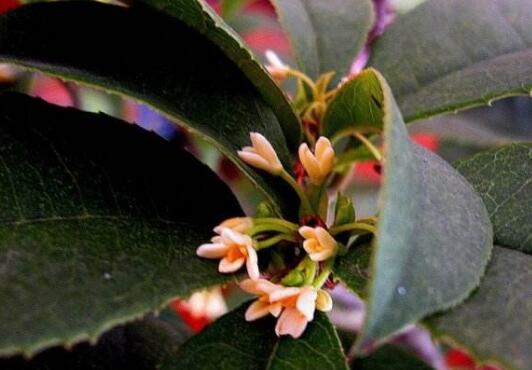
If you want to know what to do when the leaves of the four-season osmanthus dry up and fall off, first we need to know what causes it. There are many causes of this phenomenon, such as soil that is too acidic, improper watering, and too strong light, all of which can cause the leaves to dry up. The methods for dealing with this kind of phenomenon are given below, so let us take a look.
1. Soil that is too acidic
The four-season osmanthus plant prefers slightly acidic soil, which can help its growth, but if the soil is too acidic, it will also cause some adverse reactions in the plant, such as the leaves of the four-season osmanthus drying up and falling off, and in severe cases it can even cause the plant to wither and die.
Treatment method: When this kind of phenomenon appears, we need to change the soil in time. In choosing the soil, we can choose relatively fertile sandy soil; this kind of soil has relatively good drainage and aeration, and can let the four-season osmanthus absorb nutrients better.
2. Improper watering
Although water is a relatively important nutrient in the growth process of the four-season osmanthus, if you water too much, it will also cause the leaves of the four-season osmanthus to dry up and fall off, so everyone should pay attention to this point.
Treatment method: When watering the four-season osmanthus, we should maintain the principle of “do not water if not dry, and water thoroughly when watering”; if water accumulates, we should drain the excess water at the first opportunity.
3. Applying concentrated fertilizer
When cultivating the four-season osmanthus, if you want it to grow vigorously, then fertilizing is an indispensable step, but fertilizing also has its particularities; if fertilizing is improper, it will also cause the leaves of the four-season osmanthus to dry up and fall off.
Treatment method: When fertilizing the four-season osmanthus, we need to dilute the fertilizer with water first so that it can be absorbed better. If concentrated fertilizer is applied directly, it is very easy to burn the plant, so everyone must remember this point.
4. Light that is too strong
The four-season osmanthus is a light-loving plant, so during cultivation it should receive sufficient light. In spring and autumn, we can let it receive light all day, but in summer this is not possible, because the sunlight in summer is too intense; if exposed to the sun for a long time, it is very easy for water to evaporate too quickly and for the phenomenon of the four-season osmanthus leaves drying up and falling off to appear.
Treatment method: When the sunlight in summer is too intense, we can move the four-season osmanthus indoors to a semi-shaded place for cultivation; this can prevent it from receiving direct strong light and developing adverse reactions.
5. Pests and diseases
Pests and diseases are also one of the main causes of the leaves of the four-season osmanthus drying up and falling off. When this kind of problem appears, it has an enormous impact on the ornamental value of the plant, and in severe cases it can even cause the plant to wither and die.
Treatment method: When problems such as pests and diseases appear on the four-season osmanthus, we need to deal with them in time. For specific treatment methods, everyone can refer to the article on pest and disease control for the four-season osmanthus; the editor will not repeat them here.
Summary: After reading the above content, I believe everyone has gained a certain understanding of the problem of the leaves of the four-season osmanthus drying up and falling off. In fact, this kind of problem is mainly caused by improper care, so when you have time, you can read more of the article on cultivation methods for the four-season osmanthus, which contains detailed care instruction.
What to do when the leaves of the four-season osmanthus fall off
1. Observe from the growth habits of the four-season osmanthus whether its growing environment is good
The four-season osmanthus likes warmth, and a temperature of 18℃-25℃ is most suitable; it likes fertile, well-drained, weakly acidic soil; it likes humid air; adult four-season osmanthus likes sufficient sunlight. Based on these preferences, observe the growing environment of the four-season osmanthus whose leaves are falling off, and if there is anything inconsistent, it must be changed.
2. Pay attention to the details of daily care
The four-season osmanthus likes a growing environment with sufficient sunlight and good ventilation, but according to the editor's past observations, when one side of the four-season osmanthus is close to a wall or two trees overlap each other, the side close to the wall or the overlapping part will quickly become dull in color and sparse in leaves; therefore, in ordinary care we should evenly take care of every part of it. Also, it must not be placed in an environment polluted by smoke and dust, and its roots must not be allowed to have standing water.
3. Prevent and control pests
Besides the problems mentioned above, another possibility for causing the leaves of the four-season osmanthus to fall off is the occurrence of leaf spot disease. In the early stage of leaf spot disease, small white spots appear on the leaves of the four-season osmanthus, and then gradually become larger; leaf spot disease often occurs in environments with high heat and poor ventilation. Therefore, be sure to prevent and control leaf spot disease early!
When the four-season osmanthus shows leaf fall, look at the above three points, find the cause, and then prescribe the right remedy, and the problem can be solved, letting your four-season osmanthus burst forth with vigorous vitality again!
You put so much thought into growing the four-season osmanthus well, so what value does the four-season osmanthus actually have?
How to care for a potted four-season osmanthus, and the cultivation methods and precautions for the four-season osmanthus
The four-season osmanthus is a flowering plant with high ornamental value, and it is also an excellent variety of osmanthus, but there are many points to note in the process of cultivating it. Regarding how to care for a potted four-season osmanthus, and the cultivation methods and precautions for the four-season osmanthus, the editor will walk everyone through it below.
1. How to care for a potted four-season osmanthus
2. Cultivation methods and precautions for the four-season osmanthus
1. Soil selection
When cultivating the four-season osmanthus, we first need to choose the soil. Generally, it is best to choose relatively fertile sandy soil, because this kind of soil has relatively good drainage and aeration and can let the four-season osmanthus absorb nutrients better. Be sure not to choose alkaline soil, otherwise after two or three months of cultivation the plant will basically wither and die.
2. Fertilization requirements
Fertilizer is one of the main nutrients in the growth process of the four-season osmanthus, especially during its growing period, when the demand for fertilizer is relatively high; basically it needs to be fertilized once about every 10 days so that it can grow vigorously. However, when fertilizing, everyone should note that the fertilizer should first be diluted with water so that it can be absorbed better.
3. Watering requirements
Water is an indispensable nutrient in the growth process of a plant, and the four-season osmanthus is no exception. When cultivating the four-season osmanthus, we should water frequently, and it is best to keep the soil at a certain humidity so that it can also grow better. However, be sure not to water too much and cause water accumulation; if water accumulates, it is very easy for the four-season osmanthus to develop root rot.
4. Light requirements
The four-season osmanthus is a light-loving plant, and in the cultivation process of the four-season osmanthus the demand for light is still relatively high. In spring and autumn, when the sunlight is suitable, we can let it receive light all day, but in summer, when the sunlight is too intense, it is best to move it indoors to a semi-shaded place for cultivation, so as to avoid scorching the plant and causing the leaves to turn yellow.
5. Regular pruning
In the cultivation process of the four-season begonia, we also need to prune it regularly; this can encourage it to branch more and bloom more. If the work of pinching and pruning is neglected, the plant is very easy to grow thin and tall, the plant shape will also be less attractive, and it will bloom less, so everyone should pay attention to this point.
6. Disease control
In the growth process of the four-season osmanthus, if it is cared for improperly, problems such as pests and diseases are very easy to appear. This kind of problem is extremely harmful to the plant; it not only greatly affects its appearance, but if not dealt with in time it will also cause the plant to wither and die. For treatment methods for this kind of problem, everyone can refer to the article on pest and disease control for the four-season osmanthus; the editor will not repeat them here.