How to grow a firethorn (Pyracantha) bonsai and the points to note: it needs plenty of light
Firethorn is a fairly common plant in people's daily lives and has high ornamental value, so many people want to grow one at home. However, there are many things to pay attention to if you want to grow it well. So how do you grow firethorn? What are the cultivation methods and points to note for a firethorn bonsai? Below, the editor will walk you through it.
1. How to grow firethorn
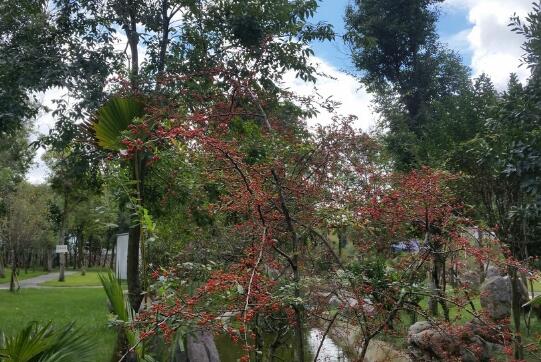
To know how to grow firethorn, we first need to understand its growth habits. It is a light-loving plant, so the more light it receives during cultivation, the better it will grow. In addition, watering, fertilizing and other aspects cannot be neglected either. The specific firethorn cultivation techniques are described in detail below, so let's read on.
2. Cultivation methods and points to note for a firethorn bonsai
1. Soil selection
During the growth of firethorn, the requirements for soil are not too high, but different soils still have a certain influence on its growth. It is best to choose a relatively loose humus soil, as this kind of soil has good drainage and aeration, allowing firethorn to absorb nutrients better.
2. Temperature control
Firethorn is a plant with strong vitality and has good resistance to both high temperatures and severe cold. It can grow normally even at temperatures as low as 0°C, but growing in a suitable environment allows it to be more robust, so during cultivation it is best to keep the temperature between 20-30°C.
3. Fertilization requirements
Fertilizer is one of the main nutrients during the growth of firethorn. Especially during its growing season, the demand for fertilizer is very high, and it basically needs fertilizing once every 10 days. However, before fertilizing, be sure to dilute the fertilizer first, otherwise it is very easy to burn the plant and cause yellowing leaves, so everyone should remember this point.
4. Watering management
Firethorn is a relatively drought-tolerant plant, so when watering it we should follow the principle of "don't water until dry, and water thoroughly when you do." Remember never to water too much. If there is too much water and firethorn becomes waterlogged, it can easily lead to root rot, so any standing water must be cleaned up promptly.
5. Light management
Among the cultivation methods and points to note for a firethorn bonsai, light is very important to it. Firethorn is a light-loving plant and especially likes strong light. It can be said that the stronger the light, the better it will grow and the more fruit it will bear, so when growing it we should best place it in a spot with direct sunlight.
6. Regular pruning
Under natural growth conditions, the branches of firethorn sometimes grow in a messy and irregular way, so we need to prune it regularly. This not only maintains the plant's shape but also promotes the growth of new branches. At the same time, pruning overly dense branches can also reduce nutrient consumption.
7. Pest and disease control
During the growth of firethorn, if we cultivate it improperly, problems such as pests and diseases can easily occur. Such problems are extremely harmful to firethorn, not only affecting its ornamental value but in severe cases even causing its death, so when encountering such problems they must be dealt with promptly. The specific treatment methods are introduced by the editor in the article on firethorn pest and disease control, so I won't repeat them here.
Summary: After reading the above content, I believe everyone has gained a certain understanding of how to grow firethorn. As long as everyone follows the above for cultivation, your firethorn will surely grow with luxuriant branches and leaves. That's all from the editor on the cultivation methods and points to note for a firethorn bonsai. I hope it can be of some help to everyone.
How to grow a firethorn bonsai: firethorn bonsai cultivation methods
Because a firethorn bonsai has emerald-green leaves in all four seasons and a graceful tree shape, and you can enjoy its leaves, flowers and fruit, it is very suitable for placing at home, and is therefore much loved by people. Next, let's talk about the cultivation methods for a firethorn bonsai.
1. Watering:
For a newly potted firethorn stump, water once at 8 a.m. and once at 6 p.m. every day, and each time wet all the branches. After new shoots grow to 5cm-6cm, water once a day, and be careful not to let the potting soil get too wet, so as not to affect the normal growth of new roots. After new shoots grow to 8cm-10cm, the new roots have basically formed by then, and you can water only when the surface of the potting soil is dry, and water thoroughly until water flows out of the bottom of the pot.
2. Fertilizing:
Because the space in a pot is limited, with little soil and insufficient nutrients, it is impossible to make a potted firethorn grow vigorously without fertilizer, but the timing and amount of fertilizing must be well controlled. In order to give full play to the effectiveness of the fertilizer and meet the growth needs of the firethorn stump, generally no fertilizing is done for new stumps from March to April; from May to June, spray the potting soil and leaves once every 10 days with a 0.2% urea solution; from July to September, fertilize once every 10 days with rapeseed cake water; from October to December, fertilize once every 15 days with 10% diluted chicken manure; and stop fertilizing from January to February of the following year.
With the above fertilizing method, the new branches of the same year can grow 1cm-1.5cm thick, and a firethorn bonsai that has already taken shape will also bloom and bear fruit every year, with abundant, large and glossy fruit, fully demonstrating its ornamental effect.
3. Repotting:
A firethorn bonsai bears fruit every year and consumes nutrients quickly, so generally a large, deep pot needs its soil changed once every two years, while a small, shallow pot needs its soil changed once a year. The best time for repotting is from late February to before Qingming. Before the new shoots have sprouted, remove the leaves and fruit, and repot using nutrient soil containing phosphorus and potassium fertilizer. When repotting, take the plant out of the pot, then use a small trowel or bamboo strip to remove one third of the old roots and old soil around the sides and bottom, then when putting it back in the pot, first place a gauze net or broken tile pieces over the drainage hole in the pot to facilitate aeration and drainage.
Spread a layer of nutrient soil, then place the plant in, and while filling with soil, tamp the soil firm with a small wooden stick or bamboo strip. The soil must be 1cm-2cm lower than the rim of the pot to facilitate daily watering. After the soil change, water thoroughly the first time, and then manage normally afterward. A firethorn bonsai that has been repotted should not be moved frequently, so as not to harm the growth of new roots and change the orientation of the plant, affecting the ornamental effect.
4. Pruning:
Prune promptly to promote the growth of fruiting branches, which is very important for the plant to bear fruit the following year. Firethorn's branches grow very fast and must be pruned promptly to promote the growth of small fruiting branches. Especially in autumn, the branches must be pruned properly to maintain a good tree shape, because the following year as soon as new branches grow they will bloom and bear fruit. If you don't prune in autumn, the following year's flowers will bloom on the branch tips at the front, and further pruning would then mean cutting off the fruiting branches.
Therefore, the tree shape in late autumn is basically the tree shape for fruiting the following year. After the branch tips bear fruit, any new branches that grow can be cut off at any time to keep the plant's crown spread unchanged, and the fruit will all be on the outer layer of the crown spread, giving the best ornamental effect once the fruit ripens.
5. Disease and pest control:
Due to environmental factors, firethorn is prone to powdery mildew, which harms the leaves, young branches, flowers and fruit. This is caused by insufficient light, poor ventilation and long periods of shading. It can be controlled by spraying Bordeaux mixture, lime sulfur mixture or carbendazim. There are mainly two kinds of pests that harm firethorn's growth: the first is the piercing-sucking scale insect, which can cause the stump to decline and even die entirely. Scale insects have a waxy layer on their body surface, making it difficult for chemicals to enter the insect's body.
Control methods:
Observe frequently, and if scale insects are found, immediately remove them with wire, a wooden stick or a small knife. As for chemicals, you can use 0.1% machine oil emulsion and spray the tree body, and bury carbofuran at 1‰ of the potting soil to kill the insects through internal absorption. The second is aphids, which generally occur easily in spring and autumn. Aphids harm the stump by causing new shoots and tender leaves to twist and deform, and the excrement excreted by aphids falls on the leaves and fruit to form small black spots, affecting the ornamental effect of the firethorn bonsai. Using a 1000-fold dilution of 40% omethoate, or an 800-1000-fold dilution of 80% dichlorvos, sprayed twice in succession, can kill all the aphids.
The above are the firethorn bonsai cultivation methods introduced for everyone. I hope it can help you. For more home knowledge, please stay tuned.
How to grow a firethorn bonsai? Firethorn bonsai care
How to grow a firethorn bonsai? Firethorn bonsai care
Firethorn, also known as torch fruit, life-saving grain, Chiyangzi, Doujinliang and Shuicuizi, belongs to the rose family (Rosaceae), genus Pyracantha. The plant is one to three meters tall, with obovate, bright green leaves and compound corymbose inflorescences with white flowers. The fruit is round, and the ripe fruit is bright red. It does not wither after frost, with red fruit hanging on the branches until it finally falls the following spring.
In summer, under the scorching sun, the snow-white flowers bloom in full glory. In a courtyard or a room, the snow-and-jade-like firethorn flowers add a touch of coolness.
In winter, with snow everywhere, the firethorn has green branches and leaves, and its fruit is red like fire, warm and lovely.
The roots, trunk, branches, flowers and fruit of firethorn all have extremely high ornamental value. It is an excellent plant for viewing flowers in spring and enjoying fruit in winter.
Firethorn is distributed in China's Shaanxi, Jiangsu, Zhejiang, Fujian, Hubei, Hunan, Guangxi, Sichuan, Yunnan, Guizhou and other provinces and regions. The genus has 10 species in total, 7 of which are native to China, and many fine cultivated varieties have been bred abroad.
Methods for making and cultivating a firethorn bonsai:
1. Seedling sources.
The seedling sources for a firethorn bonsai can be propagated by sowing and cuttings. For sowing, you can sow in early spring after forcing the seeds to sprout. For cuttings, in February-March of spring, choose one- or two-year-old thick branches, cut 10-15cm long sections as cuttings, and insert them as you cut. You can also do softwood cuttings during the plum rain season, as this makes it easier to survive. Seedlings grown this way generally take 3-4 years to bear fruit. To make them bear fruit and take shape as quickly as possible, you can use hard branches bearing fruit for cuttings; cuttings with fruit are usually done in summer. Use vermiculite, sand or wood shavings as the medium, and disinfect before inserting.
2. Styling.
For a firethorn bonsai, the styling method of coarse wiring and fine pruning should be adopted, generally carried out in autumn. First use wire or palm fiber to roughly bend the trunk into different forms such as slanting trunk or lying trunk, cultivate it for a period, then prune and shape the layers of the stump bonsai according to the design, so that the whole tree shape has distinct layers and a spirit and charm.
The choice of pot for firethorn is very particular. To set off its red fruit, generally light-colored and cool-colored bonsai pots such as white, light blue, light green or pale yellow are used as the matching pot.
3. Care.
Firethorn likes moisture and fertilizer, and likes a climate environment with sufficient light, good ventilation and warmth and humidity. Firethorn is tolerant of poor soil, and temperatures can drop to 0°C-5°C or lower. Firethorn has a well-developed root system, sprouts branches quickly, grows rapidly, and is tolerant of pruning and wiring.
For the soil of a firethorn bonsai, relatively fertile garden soil or surface soil from mountain forests is best, and you can also use decomposed base fertilizer, fine sand and culture soil.
It is best to repot firethorn once a year. Choose late autumn or early spring for repotting, that is, after new shoot growth stops or before new shoots begin to grow. For firethorn that has not borne fruit, the pot and soil can be changed in all four seasons. No matter when you change the soil, you must retain some of the original soil, cut off long roots, avoid root balling, and pot it quickly so as not to affect growth.
A firethorn bonsai is especially afraid of drying out and is easily attacked by pests and diseases. Diseases mainly come from external invasion or the potting soil, mainly fungal infection, black rot and powdery mildew, with powdery mildew being especially severe.
For control methods, use fungicides such as carbendazim and thiophanate-methyl as the main treatment, mainly spraying the branches and leaves and drenching the roots. Usually place it in a ventilated and clean environment with sufficient light; vigorous growth can reduce the incidence of disease.
The most common pest of firethorn is aphids. The control method is to promptly spray trichlorfon, emulsified omethoate, etc. Generally spray in the afternoon, at least once every three days; three or more times can achieve a complete cure, and you can also spray as soon as they are found.
Cultivation and management of a firethorn bonsai
Firethorn belongs to the rose family (Rosaceae), genus Pyracantha. It is an evergreen shrub with thorny branches, alternate simple leaves, small white flowers, and red or yellow fruit. It is distributed along the Yangtze River basin and in the provinces to its south. Firethorn is loved by bonsai enthusiasts and viewers for its tolerance of poor soil, tolerance of pruning, ease of survival, quick shaping, evergreen nature in all four seasons, and long fruit-bearing period.
1. Collecting
There are generally three sources of stump material for a firethorn bonsai, namely sowing, cuttings and collecting from the wild. Stump material from sowing and cuttings takes shape relatively slowly and requires early preparation, while old stumps collected from the wild are simple and unsophisticated, gnarled and twisted, natural and quick to take shape. Here we only discuss the method of making a bonsai from old stumps collected from the wild. Firethorn can be collected in all four seasons, with spring being best. When collecting, choose stumps that are short and sturdy, with many curves and changes, good branching, naturally tapering tips after being cut by people and trampled by livestock, and beautiful root claws. Old stumps with grayish-white bark that are not robust are not easy to survive, so try not to dig them. When collecting, keep as many fibrous roots as possible; robust stump material can survive even without soil. The roots and branches of the stump should be left with an extra section on the mountain to prevent bumping and damaging the cut surfaces during transport, and then be cut to the final position before planting. Stumps collected in dry weather should be kept moist; stumps without soil can also be soaked in clean water for a few hours before planting.
2. Growing the stump
Before planting, the large cut surfaces on the roots and branches of the stump should be smeared with clean yellow mud mixed with auxin. After smearing, the branch cut surfaces should be wrapped with black plastic film to promote wound healing, prevent moisture evaporation and prevent cracking from sun exposure later. When planting, use slightly acidic, loose and breathable leaf mold or garden soil. Clay pots, purple clay pots or cement pots are all fine; choose a pot that is appropriately larger and deeper, and after it takes shape, transplant it into a suitable ornamental pot. After planting, water thoroughly once to settle the roots. Those collected in summer should be kept in a shaded place for care, while those collected in spring, autumn and winter should be kept in a wind-sheltered, sunny place for care. Cover the whole thing, stump and pot together, with a transparent plastic bag to retain moisture, check the potting soil once every so often to ensure it stays moist, and when the temperature inside the bag is relatively high on sunny days, shade and cool it appropriately to prevent burning the new shoots. When the new shoots have grown to more than one cun (about 3.3 cm) and new shoots have emerged wherever new branches are needed, choose a time with several consecutive days of rain, uncover the plastic bag to harden the seedlings, and on dry sunny days shade it and spray water on the stump to retain moisture to prevent the shoots from shrinking back. After the new stump has survived, do not rush to remove the buds; more new shoots means more water evaporation, which can promote root growth of the stump. Wait until after autumn when the new stump has fully survived, then remove the excess buds.
3. Pruning and wiring
For firethorn, in the first two years wiring is the main method, and after it takes shape pruning becomes the main method. Do not prune the new branches of a new stump in the same year. For particularly vigorous branches, to prevent them from breaking during later wiring, they can be bent according to the styling requirements. When pruning the following year, first wire the branch tips according to the styling requirements and then prune; branches that need to thicken and lengthen should not be pruned after bending, and should be left to grow for another year. One point to note when keeping branches on a new stump is that a branch with a relatively large cut surface cannot have new branches on only one side, to prevent the large branch from gradually dying due to having no branch on one side, leading to branch shrinkage. The styling of firethorn should consider the characteristics of the stump material and the traits of firethorn. The branches kept cannot be too dense; if too dense, light cannot pass through and neither can air. Firethorn takes shape quickly, generally basically taking shape in 3-4 years. Firethorn grows new branches in spring, summer and autumn. In order to keep the crown spread of the bonsai basically unchanged, it must be pruned and have its buds pinched frequently. When pruning a plant that has not borne fruit in autumn, cut off vigorous water shoots, weak branches and overly dense branches, keep the branch tips that can bloom and bear fruit, and ensure that the fruiting branches can enjoy sufficient light. The tree shape after late-autumn pruning is the tree shape for fruiting the following year, because the following year as soon as new branches grow they will bloom and bear fruit. If you don't prune in autumn, the following year's flowers will bloom on the branch tips at the front, and further pruning would then mean cutting off the fruiting branches. After the branch tips bear fruit, any new branches that grow can be cut off at any time to keep the plant's crown spread unchanged, and the fruit will all be on the outer layer of the crown spread, giving the best ornamental effect once the fruit turns red.
4. Care
How can you make firethorn have green leaves and beautiful fruit with a good ornamental effect? Mastering firethorn's growth characteristics and caring for it scientifically and carefully is very important.
1. Light: Firethorn is a sun-loving tree species, and whether a firethorn bonsai can be grown well is directly related to the length of time it receives light. Therefore, the plant must be kept in a full-sun position for care all year round, especially in autumn it needs sufficient light to make the plant robust and form flower buds. The care location cannot be too damp; a rooftop is a good place to care for a firethorn bonsai.
2. Thinning flowers and fruit: When a plant that has not taken shape blooms, thin out the flower buds and do not let it bear fruit; after bearing fruit, the plant's growth slows down, which will prolong the time for the plant to take shape. When firethorn blooms, prevent attacks from strong wind and torrential rain; once the flower buds are damaged, the number of fruit set will be reduced. If not affected by external factors, generally as many flowers as bloom, so many fruits will set. If there is too much fruit, appropriately thin out some of the fruit to ensure the plant is robust and to make the needed fruit plump and large
3. Changing soil: Firethorn grows fast and consumes a lot of water after bearing fruit, and the care location is also in a place with long sunlight hours, so the roots grow very quickly and the nutrients in the potting soil are consumed quickly too. If the soil is not changed for a long time, the roots will fill the pot and the nutrients in the potting soil will be exhausted or become one-sided, causing poor plant growth. The solution is to change the soil twice every 1-2 years depending on the amount of potting soil and the plant's growth. Choose late spring to early autumn for changing the soil; too early will affect flowering and fruiting, and too late means the plant will not grow many new roots before winter, which will also affect the plant's flowering. When changing the soil, the potting soil should not be too wet. After taking the plant out, cut off the roots and rotten roots along the pot rim and bottom, remove two thirds of the old soil, and replace it with loose, breathable and fertile leaf mold or garden soil, then water thoroughly once.
4. Fertilizing: Firethorn blooms a lot, has a long fruit-bearing period and bears relatively much fruit, so nutrients are consumed quickly. Starting from spring when it sprouts, fertilize once every 15-30 days. In autumn the fruit gradually ripens and the fertilizer requirement increases. Plants that have not borne fruit also need an increased amount of fertilizer to lay the foundation for fruiting the following year, so the fertilizing frequency in autumn should be appropriately increased, fertilizing once every 10-20 days. After autumn, as long as the plant has not stopped growing, fertilize appropriately. The fertilizer should mainly be organic fertilizer containing much phosphorus and potassium, with less inorganic fertilizer applied.
5. Watering: Firethorn is drought-tolerant but not moisture-tolerant. When watering, basically follow the method of not watering until dry and watering thoroughly when you do. Newly repotted plants have few roots and must keep the potting soil moist, not too dry. In summer and autumn, water according to how much fruit the plant has set; those with much fruit cannot be too dry, as too dry easily causes fruit drop, but you should also water alternately wet and dry. Plants that have not borne fruit can be kept a bit drier, but do not let it get so dry that the tender branches wilt; too dry will cause a large number of leaves to drop, resulting in a poor ornamental effect.
6. Pest and disease control: The pests harming firethorn include scale insects, aphids, etc., and the diseases include powdery mildew, sooty mold, etc. For scale insects, bury carbofuran into the potting soil for control; for aphids, spray-kill with a 1000-fold dilution of 40% omethoate; for powdery mildew and sooty mold, use Bordeaux mixture or carbendazim for control.
Quick production of miniature firethorn bonsai
In early summer the white flowers are dense, and in autumn the fruit is red like fire and dazzling. It is a famous fruit-viewing tree and also a good material for making bonsai. Generally, making a large firethorn bonsai takes a long time, takes shape slowly, and is time-consuming and labor-intensive. But using fruiting firethorn branches for cuttings to make a miniature bonsai saves a great deal of manpower and material resources, and the time is short, requiring only three or four months, with quick results and relatively high economic benefits. The key to the process lies in the cutting propagation of fruiting firethorn branches, and the specific operation method is as follows:
1. Mother plant selection: After choosing a good mother plant, do not prune it in winter each year, and strengthen care and management to promote lush growth and dense flowers and fruit.
2. Cutting time: In June and July, the firethorn fruit has already formed. Cutting at this time, with high temperature and high humidity, is easy to manage and easy to root.
3. Cutting selection and cutting: Cut the cuttings according to the shape of the small or miniature bonsai to be made. For example, to make a single-trunk or double-trunk style, use two-year-old sturdy branches with branching; for a forest style, use soft branches of the current year for cuttings; both need to bear fruit. The cuttings vary in length from 5-15cm. Remove the leaves from the lower 1/3-1/2 of the branch, and keep all the leaves on the upper part.
4. Seedbed preparation: Because two-year-old branches are relatively difficult to root, they should as far as possible be inserted into a cutting bed equipped with full-sun automatic misting equipment. Because soft branches grow vigorously and have strong healing ability and root quickly, the cutting bed is relatively simple, and rice chaff ash, clean river sand or culture soil can all be used.
5. Cutting method: First make holes in advance with a bamboo strip slightly thicker than the cutting to prevent damage to the cortex at the base of the cutting. When inserting, it is appropriate to insert 1/3-1/2 of the length of the cutting into the soil, then press it firm slightly and water thoroughly once.
6. Post-cutting management: Because the temperature is relatively high in June and July and there is sufficient light, shade frames should be set up at the beginning, and attention should be paid to watering and spraying water on the leaves to increase the humidity of the cutting medium and the air. The Nanjing region is in the plum rain season at this time, with a long rainy period and excessive rainfall, so plastic film must be added over the cutting bed to prevent excessive rain from causing the base of the cuttings to rot. After about half a month, the bamboo curtain can be removed to receive morning and evening sunlight, and it still needs to be covered at noon. After about 40-50 days, the cuttings root, and when the roots are 2-4cm long, fertilize once every ten days with light liquid fertilizer. During this period the cuttings sprout new shoots, and they should be continuously pinched and their tips broken off. In early October they can be planted in pots, wired and pruned, and shaped according to your own requirements. In late October the fruit begins to turn red until it ripens. In this way, a small and exquisite miniature firethorn bonsai with red fruit and green leaves is successfully made. Placed in the palm of your hand, on a desk or on a stand, it is quite distinctive and really lovely.
How a firethorn bonsai can safely overwinter
Firethorn likes light and is adapted to heavy fertilizer and heavy water, and it dislikes waterlogging. It can overwinter in the open ground under temperate and subtropical climate conditions. However, its root system can only withstand low temperatures (below 0°C) for a short time, so in winter plant death due to frozen roots easily occurs. Freeze damage is not obvious at the time, and after spring begins the new shoots wither and the branches shrivel, ultimately leading to death.
In winter, because the plant's growth is in a semi-dormant state, transpiration of water is greatly reduced. If watered too much, a large amount of water accumulates in the pot, and as the temperature changes it easily freezes inside the pot, causing the plant to die. Therefore, choose acidic sandy soil with good drainage and aeration, and control the amount of watering, so that firethorn can safely overwinter.
In winter, never place a firethorn bonsai in a heated room, because under such temperature conditions the plant will sprout early, consume nutrients, and leave the plant without sufficient nutrients to overwinter safely.
If using a shallow pot, considering overwintering, you can use the method of a large pot enclosing a small pot (shallow pot), filling the space between the two pots with insulation material or soil, so as to maintain the temperature in the small pot.
In addition, during the autumn growing period, strengthen water and fertilizer management, increase the plant's nutrient reserves, make its vitality more vigorous, and improve its cold resistance.
Key points for cultivating a firethorn bonsai
A firethorn bonsai is evergreen in all four seasons, with a compact plant shape and luxuriant branches and leaves. You can enjoy its leaves and flowers as well as its fruit, so it is deeply favored by bonsai enthusiasts. To cultivate a firethorn bonsai well, you must grasp the following key elements.
First, you must understand firethorn's physiological characteristics and growth conditions. Firethorn likes moisture and fertilizer, and likes a climate environment with sufficient light, good ventilation and warmth and humidity. It has a well-developed root system, likes heavy fertilizer and heavy water, sprouts branches quickly, grows rapidly, and is tolerant of pruning and wiring; it has abundant flowers and much fruit, the fruit is green at first then yellow, and red when ripe, and the whole red fruit can almost cover all the leaves, and it does not drop throughout winter and spring, with the fruit-viewing period lasting as long as half a year. Therefore, you need to ensure appropriate water and fertilizer, alternating dry and wet, sufficient sunlight and good ventilation, so that the firethorn bonsai can grow normally.
Second, the seasonal management of cultivating a firethorn bonsai. After winter dormancy, because of characteristics such as bearing much fruit, a long fruiting period and early sprouting, the firethorn plant needs timely fruit picking and fertilizer supplementation. Picking the fruit is a necessary condition for abundant flowers and much fruit the following year. If the fruit is left on the plant, it can even remain until May or June of the year after fruiting without dropping, which not only consumes a large amount of the plant's own nutrients but is even more unfavorable for blooming and fruit set that year. And timely replenishment of nutrients is another condition for robust spring buds and vigorous growth.
Generally, in summer, apply fertilizer mainly based on phosphorus and potassium fertilizer in good time. Better wet than dry. Even if it dries out once, the branches and leaves lose water severely, which can cause the plant to die and all previous efforts to be wasted. In autumn, continue to apply phosphorus and potassium fertilizer to promote fruit ripening and coloring. In winter it can be viewed indoors, requiring ventilation; the temperature must not be too low and must not be too high, with sufficient sunlight, otherwise it will drop leaves, sprout winter buds or die from excessive water loss. For fertilizing, it is best to apply solid fertilizer on the surface of the pot. If overwintering outdoors, avoid dry wind attacks that cause damage. As long as the potting soil is appropriately dry and wet, a low temperature of about -10°C will not cause damage.
Third, maintaining the form of the firethorn bonsai. For a finished firethorn bonsai, spring is the beginning of another growth cycle, and letting it grow wildly is very necessary. Only with luxuriant branches and leaves in spring will it better carry out photosynthesis, better promote the growth and development of roots, so as to absorb nutrients, promote growth and metabolism, and thus make the whole plant thriving and full of vitality.
Otherwise the plant will suffer severe malnutrition, have poor resistance, become severely aged, and even die. From late spring to early summer and even autumn, pruning and tip pinching are the main tasks. Pruning and tip pinching are mainly to maintain the original plant shape, and in individual cases you can add your own creativity. Autumn is another growth peak, so nitrogen fertilizer is prohibited, and tip pinching is best done by removing the apical dominance. Avoid autumn shoots consuming nutrients and bringing disadvantages to overwintering and fruit set.
Fourth, repotting the firethorn bonsai. To grow it well, the fertilizer must be good. The potting soil is the medium on which the firethorn bonsai depends for survival and from which it absorbs nutrients; it must be fertile, slightly acidic and relatively loose. For the soil, disinfected, pest-free and relatively fertile garden soil or surface soil from mountain forests is best, and you can mix in decomposed base fertilizer, fine sand and culture soil. The potting soil can be used continuously for one to two years.
It is best to repot once a year or even twice a year. It is best to choose late autumn or early spring, that is, after new shoot growth stops or before new shoots begin to grow. For vegetative-growing plants that have not borne fruit, the pot and soil can be changed in all four seasons. No matter when you change the soil, you must retain some of the original soil, cut off long roots, avoid root balling, and pot it as soon as it is taken out, quickly, so as not to affect the plant's growth. Under shade and greenhouse conditions, repotting can be done throughout the year; under natural conditions, the dormant period is better.
Fifth, pest and disease control. Although the firethorn bonsai has many advantages, it also has quite a few disadvantages. Being afraid of drying out is one of its typical disadvantages. The next is being easily attacked by pests and diseases. Diseases mainly come from external invasion or the potting soil, mainly fungal infection, black rot and powdery mildew, with powdery mildew being especially severe. For control, use fungicides such as carbendazim and thiophanate-methyl as the main treatment, mainly spraying the branches and leaves or drenching the roots.
Usually place it in a ventilated and clean environment with sufficient light; vigorous growth can greatly reduce the incidence of disease. The most common pest is aphids. You can promptly spray trichlorfon, emulsified omethoate, etc. Generally spray in the afternoon, at least once every three days; three or more times can achieve a complete cure; you can also spray as soon as they are found. The effects are all good.
Making a firethorn bonsai bloom abundantly and bear plentiful fruit
Firethorn is an excellent tree species for making bonsai, and the ornamental value of its roots, trunk, branches, leaves, flowers and fruit is all very high. How can a firethorn bonsai achieve abundant flowers and plentiful fruit? After nearly 20 years of practice in its cultivation and production, I have a few personal experiences, and now I would like to exchange and discuss them with fellow enthusiasts in the bonsai field.
1. Sunlight: Firethorn likes a warm and humid climate and an environment with sufficient sunlight. Placing it in a wind-sheltered, sunny place allows for extensive management; there is no need to shade it even in the heat of summer, and it will still grow well in severe winter. But in order to achieve the goal of more flowers and more fruit, spring, summer and autumn must have direct light conditions, and no less than 4 to 5 hours of exposure per day.
2. Soil: Firethorn grows rapidly, has strong sprouting ability, and has many and dense roots. Although it can adapt to poor soil, it prefers fertile soil with good fertility, and is best suited to breathable, slightly acidic sandy soil or leaf mold plus vegetable garden soil, etc. Generally, replacing two thirds of the old soil of the bonsai once a year is enough.
3. Watering: A firethorn bonsai needs even more attention during the flowering and fruit-setting periods. Try to keep the soil moist but not waterlogged. In autumn and winter it can be appropriately drier. If the bonsai becomes waterlogged it will cause root rot, leaf drop and even death. In short, be conscientious and careful, and the principle is the old saying: don't water until dry, and water thoroughly when you do.
4. Fertilizing: Firethorn likes fertilizer. During the periods of sprouting, blooming and fruit setting in spring, summer and autumn, fertilizer and water must be guaranteed. From March to May, during the bonsai's shoot-growing and flowering period, apply liquid fertilizer with relatively high nitrogen and phosphorus content 1 to 2 times a month; cake fertilizer and farmyard manure are best, as they can promote vigorous sprouting and growth of branches and buds and can also make the branches bloom more and set more fruit. After the plant bears fruit, you can stop using nitrogen and phosphorus fertilizer, and apply liquid fertilizer of monopotassium phosphate 1 to 2 times a month, continuing until September. If applying organic fertilizer, it must be strictly fermented before use, and the amount should also be determined according to the size of the bonsai. In short, the requirement is to apply frequently and in small amounts.
5. Pests and diseases: The main pests of a firethorn bonsai are aphids and red spider mites, which may occur in spring and autumn. Dilute omethoate 1000-fold and spray once every 7 days to kill them. If powdery mildew, leaf blight, sooty mold, etc. occur, spray a 500-1000-fold carbendazim solution.
6. Pruning: Whether a firethorn bonsai can achieve the ultimate goal of abundant flowers and plentiful fruit, the most critical step is doing the pruning well. Pruning, first, maintains the tree's posture, cutting back vigorous water shoots and removing useless branches, etc., to facilitate full ventilation and light penetration for the branch layers; second, it benefits more flowering and normal growth of the fruit. The flower bud differentiation period of firethorn is on the fruiting branches that grow in October to November of the previous year, so when pruning each autumn, you must keep the short branches grown that year and cut off the excess vegetative branches. This kind of pruning not only takes into account keeping the bonsai's branch layers and crown spread unchanged, but also lets the following year's flowers in full bloom drift like patches of white clouds on the outer layer of the green leaves, and after the fruit ripens in golden autumn, it is even more bustling and lively, full of a festive atmosphere.