Proper Fertilization Methods for Schefflera: Fertilize Flexibly According to Climate and Growth Stage
Because Schefflera has extremely vigorous vitality, some gardening enthusiasts think that when growing it, they can just water it without fertilizing. This idea is actually very wrong. In the cultivation methods for Schefflera, fertilizing can increase its growth rate and prevent leaves from turning yellow and dropping due to nutrient deficiency. It can be said to have many effects. So how do you fertilize Schefflera correctly? Let me tell you the answer.
How to Fertilize Schefflera Correctly
1. Potting and Repotting / Applying Base Fertilizer
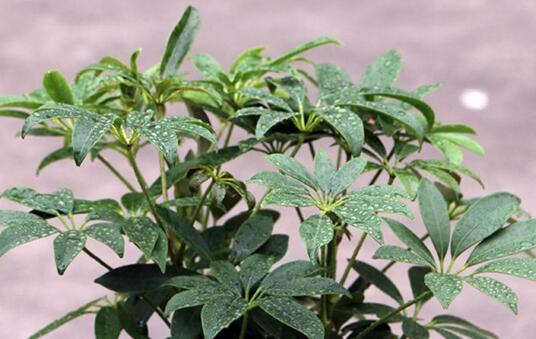
When potting newly purchased seedlings, base fertilizer should be applied at the bottom of the flower pot. For example, livestock manure and similar materials work very well. Organic fertilizer mixed into the soil can also be used as base fertilizer. When repotting every 1-2 years, base fertilizer should also be applied, using the same method as when potting.
2. Spring and Autumn / Applying Liquid Fertilizer
Spring and autumn are the vigorous growth periods for Schefflera. At this time, how do you fertilize Schefflera correctly? The answer is to apply liquid fertilizer once a month, mainly using organic fertilizer with relatively slow fertilizer effect. It must contain elements such as nitrogen, phosphorus and potassium. Water promptly after fertilizing.
3. Summer Fertilization / Apply Less Nitrogen Fertilizer
In summer, fertilize according to climate conditions. If the temperature exceeds 30 degrees, fertilization should be reduced as much as possible, and fertilizer can be applied once every 4-5 weeks. If the temperature is below 30 degrees, fertilizer can be applied once every 2-3 weeks. Apply less nitrogen fertilizer to avoid leaves becoming too green, which can cause the color of the patches on the leaves of variegated varieties to fade.
4. Winter Fertilization / Stop Fertilizing
Under normal circumstances, Schefflera does not need fertilization in winter. Applying large amounts of fertilizer may cause large areas of the soil to harden, which is unfavorable for Schefflera resuming growth in spring. Just water moderately to prevent the soil from compacting. Do not fertilize indiscriminately.
What to Do If You Over-Fertilize Schefflera
When fertilizing, try to avoid fertilizer concentration being too high. If the concentration is too high or too much fertilizer is applied, it will cause some leaves and stems to turn yellow due to excess nutrients, which is what people commonly call fertilizer burn. This is extremely harmful to the growth of Schefflera.
When too much fertilizer has been applied, we can bury some cabbage or radish seeds in the soil around the roots, letting these seeds absorb the excess nutrients in the soil. Once the seeds sprout, pull them out. If this still does not work, then the soil needs to be replaced.
Indoor Landscape Plant Design and Scenery Creation
Indoor plant landscaping is the further introduction of plants from the natural world into self-use building spaces such as residences, living rooms, studies and offices, as well as public shared building spaces such as supermarkets, hotels, cafes, indoor swimming pools and exhibition greenhouses. Self-use spaces generally have a certain degree of privacy and are relatively small in area, mainly used for rest, study and conversation, so the plant landscape should be simple, elegant and tranquil. Shared spaces are mainly for touring and viewing, and of course also for sitting, eating and resting. The spaces are generally larger, so the plant landscape should be lively, rich and colorful, and may even include terrain, mountains, water, small bridges and other structures, such as the landscapes in the shared spaces of the White Swan Hotel in Guangzhou and the Kunlun Hotel in Beijing. Indoor plant landscaping requires scientifically selecting shade-tolerant plants and providing meticulous, special maintenance and management, reasonable design and artistic layout, plus modern artificial equipment for lighting, heating, ventilation and air conditioning to improve indoor environmental conditions. This creates an environment that is both conducive to plant growth and meets people's living and working requirements, as well as their physiological and psychological needs, making people feel comfortable, elegant and beautiful, as if they were in a tranquil and beautiful natural world.As early as the 17th century, indoor greening was already in its embryonic stage. Aspidistra and Clivia nobilis were the earliest plants selected for indoor greening. In the early 19th century, cacti were all the rage, and afterward ferns, Sinningia and others were successively adopted, with more and more species being used. The development of recent decades has brought indoor greening to a stage of prosperity and flourishing.
Section One: Indoor Environmental Ecological Conditions
Indoor ecological environmental conditions are greatly different from outdoor conditions. Usually light is insufficient, air humidity is low, air circulation is poor, and temperature is relatively constant. Therefore, it is not conducive to plant growth. In order to ensure plant growth conditions, in addition to selecting plant species that are better able to adapt to indoor growth, artificial equipment must also be used to improve indoor light, temperature, air humidity, ventilation and other conditions to maintain plant growth.
1. Light
(1) Overview of Indoor Light
The main ecological factor limiting plant growth indoors is light. If light intensity does not reach above the light compensation point, it will cause plants to grow weakly and even die. Based on various domestic and international materials on the relationship between light and plant growth, it is generally believed that below 300 lx of light intensity, plants cannot maintain growth; at illuminance of 300-800 lx, if it can last 8-12 hours per day, plants can maintain growth and may even add a small amount of new leaves; at illuminance of 800-1600 lx, if it can last 8-12 hours per day, plants grow well and can replace old leaves with new ones; at illuminance above 1600 lx, if it lasts 12 hours per day, plants may even flower. Apart from conditions with skylights or floor-to-ceiling windows, relying only on general indoor diffused light cannot meet the normal growth needs of plants.
(2) Sources and Distribution of Indoor Light
1. Natural light: comes from skylights, side windows, roofs, courtyards and other places. Natural light contains all the spectral components needed for plant growth and costs nothing, but it is affected by latitude, season and weather conditions. The indoor light-receiving surface also varies according to orientation, glass quality and so on. Generally, roofs and skylights provide the best lighting; plants suffer less interference, light intensity and area are both greater, light distribution is uniform, and plants grow evenly. Side window lighting, however, has lower light intensity and smaller area, and causes plants to grow laterally. The orientation of side windows also affects indoor light intensity.
Direct light: South windows, east windows and west windows all have direct light, with south windows having the most direct light and the longest duration. Therefore, near south windows, plant species with high light requirements can be placed, even a small number of flowering species, such as cacti, Schlumbergera and rhododendrons. When curtains block the light, slightly shade-tolerant plants such as snake plants and spider plants can be grown.
Bright light: East windows and west windows, apart from short periods of direct light, are mostly diffused light, with light intensity only 20%-25% of direct light. West window afternoon sunlight is strong, so in summer it should be appropriately shaded, while in winter it can supplement indoor light. Succulent plants such as cacti can also be placed there. East windows are suitable for plants such as rubber trees, Monstera deliciosa, crotons, sago palms, areca palms, asparagus ferns, Peperomia and Pilea.
Medium light is near north windows, or farther from strong-light windows, where light intensity is only about 10% of direct light. Only plants such as ferns, Pilea and Rohdea japonica can be placed there.
Weak light: at the four corners of a room and along walls about 6.5 cm from the light source, light is weak, only 3%-5% of direct light. Shade-tolerant plants such as Philodendron and Rhapis excelsa are suitable there.
2. Artificial lighting: indoor natural light is insufficient to maintain plant growth, so artificial lighting needs to be set up as a supplement. Commonly used types include incandescent lamps and fluorescent lamps. Their advantages and disadvantages are as follows: the former has many shapes and can be designed as spotlights with high light intensity. Its advantages are concentrated and compact light source, low installation cost, small size, many types and more red light. Its disadvantages are low energy efficiency, light intensity often insufficient to meet the requirements of flowering plants, high temperature, short lifespan and uneven light distribution. Therefore, when used in residential environments, it should be mixed with natural light or fluorescent lamps with blue light, and consideration should be given to not placing it too close to plants to avoid scorching. Fluorescent lamps are the best artificial lighting. Their advantages are high energy efficiency, less heat output than incandescent lamps, long lifespan, even light distribution, many light colors and relatively high blue light, which is beneficial to the growth of foliage plants. Their disadvantages are higher installation cost, light intensity cannot be concentrated, and the middle part of the tube has higher light efficiency than the two ends, while daylight is low. In addition, mercury lamps are often used in commercial environments with high roofs, but the cost is very high.
2. Temperature
Most plants used for indoor landscaping originate from tropical and subtropical regions, so their effective growth temperature is preferably 18-24°C, and at night it is better to keep it above 10°C. Sudden temperature changes should be avoided. If the temperature is too high, it will cause excessive transpiration and lead to wilting; if the night temperature is too low, it will also damage plants. Therefore, thermostats are often installed to add energy when the nighttime temperature drops. Opening and closing skylights can control air circulation and regulate indoor temperature and humidity.
3. Humidity
If indoor relative air humidity is too low, it is unfavorable for plant growth; if too high, people will feel uncomfortable. Generally, controlling it at 40%-60% is beneficial to both. During indoor landscaping, setting up pools, cascading waterfalls, fountains and so on helps increase air humidity. If such equipment is unavailable, increasing misting, moistening the ground around plants and using nested pot planting also help increase air humidity.
4. Ventilation
Poor indoor air circulation often leads to poor plant growth and even leaf blight, leaf rot and pest and disease outbreaks. Therefore, it should be regulated by opening windows. In addition, air conditioning systems and hot and cold air vents can be used for regulation.
Section Two: Selection of Indoor Plants
In recent decades, indoor greening has developed rapidly, reflected not only in the increase in plant species, but also in the increasingly high level of artistic planting arrangement and maintenance. Indoor plants are mainly foliage species, with a small number of flowering and fruiting species. Examples are listed below:
1. Climbing and Hanging Plants
Ivy (Hedera spp.), pothos (Scindapsus aureus), climbing fig (Ficus pumila), donkey tail sedum (Sedum morganianum), rosary vine (Ceropegia woodii), spider plant (Chlorophytum capense), variegated spider plant (Chlorophytum capense var. marginata), inch plant (Zebrina pendula), Asiatic dayflower (Commelina communis), velvet plant (Gynura aurantiaca), wax plant (Hoya carnosa), miniature wax plant (Hoya bella), heartleaf philodendron (Philodendron oxycardium), Philodendron scandens, fiddle-leaf philodendron (Philodendron panduraeforme), Philodendron andreanum, Syngonium podophyllum, white butterfly (Syngonium podophyllum cv. White Butterfly), kangaroo vine (Cissus antarctica), Cissus repens, Cissus discolor, Cissus striata, grape ivy (Cissus rhombifolia), Epipremnum pinnatum, Monstera deliciosa, stringy stonecrop (Sedum sarmentosum).
2. Foliage Plants
Giant taro (Alocasia macrorrhiza), umbrella plant (Cyperus alternifolius), cast-iron plant (Aspidistra elatior), snake plant (Sansevieria trifasciata), golden-edged snake plant (Sansevieria trifasciata cv. Laurentii), cylindrical snake plant (Sansevieria cylindrica), bird's nest snake plant (Sansevieria hahnii), Sansevieria thyrsiflora, Asiatic dayflower (Commelina communis), Pilea notata, aluminum plant (Pilea cadierei), artillery plant (Pilea pumila), Pilea muscosa, asparagus fern (Asparagus plumosus), dwarf asparagus fern (Asparagus plumosus var. nanus), asparagus fern (Asparagus sprengeri), Sedum lineare, strawberry begonia (Saxifraga stolonifera), Calathea insignis, zebra plant (Calathea zebrina), Calathea ornata, Calathea leopardina, peacock plant (Calathea makoyana), Calathea warscewiczii, arrowroot (Maranta arundinacea), prayer plant (Maranta bicolor), Maranta leuconeura, Phrynium placentarium, flamingo flower (Anthurium andraeanum), Anthurium variabile, mosaic plant (Fittonia arundinacea), Fittonia verschaffeltii, inch plant (Tradescantia fluminensis), sensitive plant (Mimosa pudica), Cretan brake (Pteris cretica), staghorn fern (Platycerium bifurcatum), bird's nest fern (Neottopteris nidus), hen and chicken fern (Asplenium bulbiferum), maidenhair fern (Adiantum capillus-veneris), Boston fern (Nephrolepis exaltata var. Bostoniensis), tuberous sword fern (Nephrolepis auriculata), Christmas fern (Polystichum acrostichoides), lilyturf (Liriope spp.), cabbage tree (Cordyline australis), ti plant (Cordyline fruticosa), Cordyline stricta, Cordyline terminalis, Cordyline terminalis var. bella, dragon tree (Dracaena draco), corn plant (Dracaena fragrans), variegated corn plant (Dracaena fragrans cv. Massangeana), Dracaena deremensis, Dracaena godseffiana, Madagascar dragon tree (Dracaena marginata), lucky bamboo (Dracaena sanderiana), silver vase bromeliad (Aechmea fasciata), Neoregelia carolinae, pineapple (Ananas comosus), variegated pineapple (Ananas comosus var. variegata), Billbergia pyramidalis, Billbergia nutans, Cryptanthus acaulis, Dieffenbachia picta, Chinese evergreen (Aglaonema modestum), red-back excoecaria (Excoecaria cochinchinensis), Excoecaria bicolor, thread-leaf aralia (Dizygotheca elegantissima), Japanese aralia (Fatsia japonica), Schefflera actinophylla, Norfolk Island pine (Araucaria heterophylla), sago palm (Cycas revoluta), Cycas pectinata, Cycas rumphii, rubber tree (Ficus elastica), weeping fig (Ficus benjamina), fiddle-leaf fig (Ficus lyrata), croton (Codiaeum variegatum), parlor palm (Chamaedorea elegans), Howeia forsterana, Areca triandra, areca palm (Chrysalidocarpus lutescens), pygmy date palm (Phoenix roebelenii), Pinanga discolor, Rhapis humilis, Rhapis excelsa, Licuala fortunei, clustering fishtail palm (Caryota mitis), Caladium bicolor, Peperomia caperata, Peperomia hederifolia, Peperomia magnoliaefolia, Peperomia obtusifolia, Peperomia tetraphylla, Calanthe spp., Begonia spp., Plectranthus spp.
3. Fragrant, Flowering and Fruiting Plants
Gardenia (Gardenia jasminoides), osmanthus (Osmanthus fragrans), gloxinia (Sinningia speciosa), spring orchid (Cymbidium goeringii), lily of the valley (Convallaria majalis), banana shrub (Michelia figo), orange jessamine (Aglaia odorata), Magnolia coco, hosta (Hosta plantaginea), Chinese narcissus (Narcissus tazetta var. chinensis), Chloranthus spicatus, orange jasmine (Murraya paniculata), clivia (Clivia miniata), flamingo flower (Arisaema scherzerianum), primrose (Primula malacoides), purple camel's foot (Bauhinia purpurea), African violet (Saintpaulia ionantha), Kalanchoe laciniata, rhododendron (Rhododendron spp.), camellia (Camellia japonica), hydrangea (Hydrangea macrophylla), bleeding heart vine (Clerodendrum thomsoniae), yellow oleander (Allemanda neriifolia), Aphelandra squarrosa, wax plant (Hoya carnosa), wax begonia (Begonia semperflorens), coral ardisia (Ardisia crenata), Japanese ardisia (Ardisia japonica), Chinese holly (Ilex cornuta), heavenly bamboo (Nandina domestica), Japanese skimmia (Skimmia japonica).
Section Three: Indoor Courtyard Plant Landscape Design
Indoor plant landscape design must first conform to the nature and use of the indoor space, then according to its scale, shape, color and texture, make full use of walls, ceilings and floors to select plant materials, and carry out conception and design, so as to achieve the purpose of organizing space and improving and rendering the atmosphere of the space.
1. Organizing Space
Through plant arrangement, spaces of different sizes can highlight the theme of that space, and plants can be used to separate, define and guide movement through the space.
(1) Organizing Touring and Viewing
In recent years, many large and medium-sized public buildings have opened up tall, spacious "shared spaces" on the ground floor or between floors, with a certain amount of natural light and a certain degree of temperature and humidity control, used to create large indoor plant landscapes, supplemented by rocks, pools, waterfalls, small bridges and winding paths, forming an indoor touring and viewing center. The White Swan Hotel in Guangzhou fully took into account tourism characteristics and adopted the traditional Chinese freehand natural landscape garden technique of expressing the large within the small. In the ground-floor lobby, a rockery was built against the wall, with a pavilion at the top and a waterfall pouring straight down from the rock wall. On the wall, besides planting various shade- and moisture-tolerant ferns, lilyturf and Monstera deliciosa, the three large characters "Hometown Water" were also carved according to the travel psychology of overseas Chinese longing for home. Below the waterfall was a winding pool with fish in it, and a bridge was built over the pool, guiding visitors to enjoy the scenery of the Pearl River. Plants such as umbrella plant, shell ginger and Rhapis excelsa were planted by the pool, and bird's nest ferns were suspended overhead. The beautiful garden landscape and thematic inscription made visitors linger and forget to return.
There are many supermarkets in Western European countries, and their indoor greening design is very successful. They have even built all-weather, indoor commercial streets, becoming multifunctional shopping centers. In order to increase turnover, they all attach great importance to the design of plant landscapes, making customers feel as if they were in an open-air shopping mall. There are not only hanging plants such as pothos and ivy, but also large weeping fig trees, seasonal flowers and various foliage plants. Japanese women are good at flower arranging, and supermarkets and large department stores often hold ikebana exhibitions to attract female customers to visit and shop. Flower counters are also often set up, both doing business and beautifying the commercial environment. Large tree platforms are often set up on the ground floor or between floors, with wide surrounding edges where customers can sit and rest briefly. There are even tables and chairs placed under tall weeping figs for dining and resting.
In large indoor swimming pools, to make the environment more beautiful and natural, huge real pebbles are placed by the pool, large trees and palm family plants such as coconut palms are planted along the walls, and desert and tropical landscapes are painted on the walls. The real and the fake are mixed, with the fake dominating the real, making swimmers feel as if they were swimming freely in tropical rivers and lakes. To make plants grow vigorously, roofs are often made of translucent fiberglass or glass.
In some office buildings for leased commercial offices, in order to increase the success rate of negotiations between Party A and Party B and to provide a quiet and beautiful office environment, even more attention is paid to indoor plant landscapes. Space has already been reserved for plant landscapes during architectural design. For example, in a certain office building in the United Kingdom, offices are arranged around the perimeter of the building, while the center of the building is left open for gardens between floors and on the ground floor. The elevators face the gardens with acrylic glass, so passengers can enjoy the view continuously while riding up and down. Inside the offices, floor-to-ceiling glass walls face the gardens on each floor. Therefore, although negotiations and transactions take place indoors, it feels as if one is in a natural environment; the atmosphere is harmonious and pleasant, and psychologically speaking, this increases the success rate of transactions.
The garden landscapes inside exhibition greenhouses in some European and American countries are also praiseworthy. The indoor micro-terrain undulates, with pools, waterfalls, rocks, paths and small bridges. Plants are planted in the ground rather than in pots. Especially in some tropical greenhouses, the interior is dug down 1.5-2 m deep, and tropical valley shade- and moisture-loving plants are planted on top, which at the same time is equivalent to increasing the height of the greenhouse. Aquatic stones are attached to the walls, with ferns planted on them. The indoor plant arrangement makes full use of the epiphytic and parasitic landscapes of tropical rainforests, with not only lush foliage plants, but also many brilliantly colored orchids, bromeliads and numerous colorful-leaf plants. The cactus exhibition greenhouse of the Royal Botanic Garden Edinburgh in the United Kingdom is also extremely interesting. The interior is arranged according to ecological environment. Around the living stones, many small pebbles of very similar color and shape are spread out, and visitors are highly interested in squatting down to distinguish the real from the fake. Tall six-ribbed cacti, cacti and various succulent plants rise and fall one after another, and most of the flowers are extremely gorgeous and strange.
In a cafe near Heathrow Airport in London, United Kingdom, palm family plants and large trees such as weeping figs are used to create a tropical landscape, and logs of pine with bark are used to make small bridges, railings and small pavilions. When customers drink coffee, it feels as if they are in the natural environment of a tropical jungle, and they feel very relaxed and happy.
(2) Separation and Definition
In certain environments requiring privacy, plants can be used to separate and define space for conversation, reading or enjoying solitude, forming a local small environment. In certain commercial streets, and even in songbird houses in zoos, plants are also used for separation. Separation: boundaries can be drawn by methods such as flower walls, flower beds, barrel planting and pot planting, separating spaces that have a certain transparency and yet a slight degree of concealment. The effect should be as if separated yet not separated, mutually blending. However, when arranging, the visual height when walking and sitting must be taken into consideration.
Definition: flower platforms, trees, pools, stacked rocks and so on can all become the core of a local space, forming a relatively independent space for people to rest and stop to appreciate. At the bottom of the elevator in the Stirling supermarket in the United Kingdom, there is a semicircular large fish pool with koi swimming in it. The poolside is planted with various foliage plants, attracting many children and customers to stop and admire by the pool. Nearby, it is separated into another space with a completely different function. Under several tall weeping figs, dining tables and chairs are set up for customers to rest and eat, creating a quiet place in this bustling commercial environment. These two adjacent spaces, through plant organization of space, do not interfere with each other.
(3) Revelation and Guidance
In some public entertainment venues with flexible and complex architectural spaces, plant landscape design can play a role in organizing routes and guiding movement. The guidance at main entrances and exits can use highly ornamental or larger-volume plants to attract people's attention, and plants can also be used as barriers to prevent wrong directions, so that people unconsciously follow the routes arranged by the plants.
2. Improving the Sense of Space
Indoor plant landscape design mainly creates a beautiful visual image, and can also make people perceive the perfection of the space through physiological and psychological responses such as smell, hearing and touch.
(1) Connection and Penetration
Plant landscapes at building entrances and foyers can play a role in the natural transition and extension of people entering the interior space of a building from the exterior space, giving a sense of uninterrupted indoor-outdoor dynamics. In this way, the effect of connection is achieved. Large indoor spaces such as dining rooms and living rooms also often allow external plant landscapes to penetrate through floor-to-ceiling glass windows, serving as indoor reference, expanding the indoor sense of space, and bringing vitality to dull indoor spaces. Many large hotels in Japan and Europe and America, as well as the Fragrant Hills Hotel in Beijing, China, all adopt this method.
Plant landscapes can not only allow indoor and outdoor spaces to penetrate each other, but also help them connect with each other and merge into one. For example, the Longbai Hotel in Shanghai uses a pool of water to connect three indoor and outdoor spaces into one. In the front foyer section, the pool water is only exposed in a very small part, while most of it is the water body in the middle with natural light. In the pool, planting beds made of natural rocks are arranged, planted with ornamental plants such as southern jasmine, Acorus gramineus and aquatic iris. The large part of the water body at the back is outdoors. One water body connects three spaces, and the middle space is separated by two glass walls, so the effects of penetration and connection are both excellent.
(2) Enrichment and Embellishment
The indoor visual center is also the focal point with the greatest ornamental value. It usually takes plants as the main body, attracting visitors' sight with their brilliant colors and graceful postures. In addition to living plants, large fresh-cut flower or dried flower arrangements can also be used. Sometimes multiple plants are arranged into a group of plant communities, either a flower platform or a flower bed. There are also larger visual centers using plants, water and rocks, and then borrowing light and shadow effects to enhance variation, composing a landscape with sound and color. Walls are also often used to create visual centers. The simplest way is to place large, beautiful potted plants or bonsai in front of the wall. There are also cases where a planting bed is opened in front of the wall and ornamental plants are planted, or the gable wall is intentionally recessed into a niche shape, with Bambusa chungii, Bambusa vulgaris var. vittata or other plants arranged in front, just like a mural. There are also cases where stone bonsai and potted plants are attached to the wall.
(3) Foil and Contrast
Indoor plant landscapes must be connected with furniture and furnishings in terms of color and volume, with coordination as well as foil and contrast. Suzhou gardens often use window frames to frame outdoor plants as scenery for indoor viewing. In order to add interest, two pictures are hung on both sides of the indoor window frame, either landscapes or plants, contrasting with the picture of living plants outside the window, enhancing each other's charm. In the severe winter weather of the north, when it is snowy white outside and warm inside with heating, ornamental plants placed on windowsills, in corners, on tabletops and on top of furniture make the interior appear full of spring and create a strong contrast. Some miniature potted plants, such as miniature roses and miniature bonsai, placed on desks and tables, set off the owner's elegance.
(4) Blocking and Controlling Sight Lines
Certain unsightly indoor areas, such as the sides of furniture, heating pipes unused in summer, fireplaces and corners, can all be blocked with plants.
3. Rendering Atmosphere
Different indoor spaces have different uses, and reasonable design of plant landscapes can give people different feelings. Examples are as follows:
(1) Entrance
The entrances and foyers of public buildings are places people must pass through, with short stays and heavy traffic. The plant landscape should have a concise and clear welcoming atmosphere. Larger potted plants with upright postures and leaves growing straight up, which do not block people's sight lines when entering and exiting, can be selected, such as palms, coconut palms, Rhapis excelsa, sago palms and Norfolk Island pines. Brightly colored and lively potted flowers can also be used. The pots should be heavy and simple, commensurate with the scale of the entrance. On prominent porches, climbing flowering plants such as Banksian rose and Chinese trumpet creeper can be planted along columns. At indoor entrances, where light is generally dimmer and the area narrower, slender shade-tolerant plants such as Rhapis excelsa and umbrella plant should be chosen, giving people a feeling of lively and clear lines.
(2) Living Room
This is a place for receiving guests or family gatherings, emphasizing a soft and modest environmental atmosphere. When arranging plants, strive for simplicity, beauty and elegance, and avoid complexity. Colors should be bright; dimness will affect guests' mood. In the corners of the living room and beside sofas, large foliage plants should be placed, such as Norfolk Island pine, weeping fig, Monstera deliciosa and palm family plants. Flower racks can also be used to arrange potted flowers, either hanging or growing straight up, such as pothos, spider plant, Begonia rex and wax begonia, making a corner of the living room varied and full of vitality. On corner cabinets and coffee tables, small pots of orchids, coleus, wax plant, Rohdea japonica, umbrella plant and cyclamen can be placed, or matched with flower arrangements. Hanging plants on top of cabinets and on walls can add decorative spatial pictures indoors, giving a more three-dimensional feel without occupying the living room area. Commonly used plants include inch plant, Cissus species, sword fern, ivy and pothos. If appropriately matched with calligraphy, paintings or murals, the environment becomes even more elegant.
(3) Bedroom
The bedroom is for rest and sleeping, and should have an atmosphere that makes people feel relaxed and able to release tension, though this may differ for people of different personalities. For those who like tranquility, only a few foliage plants are needed, with light and slender forms, such as spider plant, asparagus fern, Boston fern and Howeia forsterana. When choosing seasonal flowers, the flower colors should not be too bright; African violets can be chosen. In corners, corn plant and parlor palm can be placed. For those who are lively and cheerful and full of youthful vitality, in addition to foliage plants, brightly colored potted flowers such as flamingo flower, geranium and cyclamen can be added, but large or strongly fragrant plants should not be chosen. Children's bedrooms require special attention to safety. Small foliage plants should dominate, and according to children's strong curiosity, some interesting plants can be chosen, such as pansy, calceolaria, croton, pitcher plant and sensitive plant, matched with containers featuring certain animal shapes. This not only helps inspire children's thinking ability, but also adds a joyful atmosphere to the environment.
(4) Study
As a study for research and writing, it should create a quiet and elegant atmosphere to help concentrate on intensive study. Indoor arrangement should be concise and elegant, and foliage plants such as palms are better. Hanging vines can be placed on bookshelves, and small foliage plants can be placed on desks, with outer bamboo containers, greatly increasing the elegant atmosphere of the study. Bambusa multiplex and similar plants can be chosen.
(5) Stairs
Every building has stairs, which often form a dark and uncomfortable dead corner. Arranging plants can both cover the dead corner and add a beautifying atmosphere. Some large hotels and restaurants attach great importance to plant arrangement on staircases in order to improve environmental quality. On wider stairs, a potted flower or foliage plant can be placed every few steps. On wide corner platforms, larger plants can be arranged, such as rubber tree, Monstera deliciosa, dragon tree and Rhapis excelsa. On handrails, climbing plants such as ivy, climbing fig, Philodendron and grape ivy can be allowed to twine, greatly increasing the natural atmosphere of the surrounding environment.
Section Four: Maintenance and Management of Indoor Plants
Due to the particularity of indoor environmental conditions, maintenance and management are correspondingly more unique.
1. "Light Acclimation" of Indoor Plants
Indoor light is low. If plants are suddenly moved from high light to low light for growth, they often cannot adapt and die. Therefore, before moving them indoors, it is best to carry out a period of "light acclimation" first, placing them under light slightly lower than their original growing conditions but higher than the future indoor growing environment. During this period, due to low light, plants experience physiological stress, which causes a decrease in photosynthetic rate and the use of stored substances in the body. At the same time, they strive to increase chlorophyll content, adjust the arrangement of chloroplasts, and lower respiration rate and other changes to improve the utilization rate of low light. For those that adapt smoothly, chlorophyll increases and chloroplasts basically rearrange. They may drop many old leaves and produce some new leaves, and the plant survives. For some shade-loving foliage plants, being under shaded conditions from the start of propagation to the completion of growth is the best way of light acclimation. The resulting plants have a low light compensation point, can effectively use indoor low light, and have a long lifespan. Some shade-tolerant woody plants, such as weeping fig, need to be cultivated under full sun to obtain a robust tree body. However, before being moved indoors, they must first acclimate in a place with lower light than before, and after being moved to the indoor environment, further adaptation will still occur until every leaf has been produced under the new growing environment conditions, which is when it is considered complete. The degree of adaptation of plants to low-light conditions is related to the length of time, their own volume and age, and is also affected by external factors such as fertilization and temperature. It usually takes 6 weeks to 6 months, or even longer. Large weeping figs need at least 3 months, while small potted plants need much less time. Proper nutrition is very important to help plants adapt to low-light environments. In general, when plants are in the light acclimation stage, fertilizer application should be reduced. An increase in temperature will cause an increase in respiration rate and light compensation point. Therefore, before moving indoors, a low-temperature cultivation environment is relatively ideal for light acclimation.
Although some plants do not require much light, because the light in their growing environment is too low, they grow poorly and need to be timely moved back to high light for rejuvenation. Since the leaves produced by the plant under low light have already adapted to the low-light environment, if light suddenly becomes too strong, the leaves will be injured, scorched and severely damaged. Therefore, it is best to move them to light intensity less than 5-10 times higher than their original growing environment for adaptive growth.
2. Cultivation Containers
The plant materials used for indoor greening, apart from those planted directly in the ground, are mostly planted in various containers such as pots, bowls, boxes, cases, baskets and troughs. Because the shapes, colors and textures of containers differ, they often become part of indoor furnishing art.
Containers must first meet the requirements of plant growth, have sufficient volume to accommodate normal root development, have good air permeability and drainage, and be sturdy and durable. Fixed containers should have drainage systems arranged during building construction. Mobile containers are often placed on trays to avoid staining indoor floors.
The shape, volume, color and texture of containers should be coordinated with the plants being grown, and should not create strong contrast or overshadow the main subject. At the same time, consideration should be given to coordination with wall, floor, furniture, ceiling and other decorative furnishings.
Container materials include clay, wood, rattan and bamboo; ceramic, stone, brick and cement; plastic, fiberglass and metal, among others. Clay containers have good water retention and breathability, a simple appearance, and are easy to pair with plants. However, they are unsuitable in places with a strong decorative atmosphere and need to be placed inside containers made of other materials. Containers made from natural materials such as wood, rattan and bamboo use ordinary materials, have a simple, natural charm, and are easy to arrange flexibly, but their sturdiness and durability are rather poor. Ceramic containers come in many styles, with attractive colors and strong decorative appeal; they are still widely used today, but they are heavy and break easily. The surfaces of containers made of stone, brick and concrete have a hard, rough texture, and different masonry forms produce interesting variations in texture. Because they are heavy, they are often considered together with building components in design and made into fixed containers, and their shapes should be conceived in a unified way with the interior plan and spatial composition; for example, they can be combined with walls, columns, steps, railings, partitions, seating and sculptures. Plastic and fiberglass containers are lightweight, come in many colors and styles, and can also imitate a variety of textures, but they have poor breathability. Metal containers are smooth and bright, strongly decorative, and simple in outline; they are mostly placed outside planting pots and are suitable for spaces with a strong modern feel.
III. Cultivation Methods
(1) Soil Culture
Mainly use garden soil, peat soil, leaf mold, sand, etc. mixed into a loose, fertile potting soil. The self-made formula for high-quality potting soil in Hong Kong, China is clay : peat soil : sand : vermiculite = 1:2:1:1. If one plant is grown per pot, management is convenient. If multiple plants are grown in one large planting pot to form a combined planting, management is more complicated, but the ornamental effect is greatly improved. For combined planting, choose plant species with relatively small differences in requirements for light, temperature, water and humidity and plant them together, with varied heights and each showing its own form; a water pipe can also be inserted among them, along with a few seasonal flowers. For example, Dizygotheca elegantissima, Tradescantia zebrina, Begonia rex, Codiaeum variegatum, Hedera helix 'Variegata', Philodendron scandens and Aglaonema commutatum 'White Rajah' can be planted together.
(2) Substrate Culture and Hydroponics
Although potting with soil as the substrate has a long history, because of poor hygiene it is no longer quite suitable as an indoor cultivation method, especially in hospital wards, to avoid certain fungi in the soil affecting patients' health. However, substrate culture and hydroponics can overcome this shortcoming. Materials used as substrates include ceramic gravel, perlite, vermiculite, pumice, sawdust, peanut shells, peat, sand, etc. Commonly used ratios are: peat : perlite : sand = 2:2:1; peat : pumice : sand = 2:2:1; peat : sand = 1:1; peat : sand = 3:1, etc. After adding nutrient solution, it can provide plants with oxygen, water and nutrients and also fix and support the roots. Plants suitable for soilless cultivation commonly include Schefflera octophylla, Fatsia japonica, Fatshedera lizei, Dypsis lutescens, Syagrus romanzoffiana, Chamaedorea elegans, Dracaena species, Ficus benjamina, Ficus elastica, Araucaria heterophylla, Codiaeum variegatum, Monstera deliciosa, Epipremnum aureum, Adiantum capillus-veneris, Nephrolepis cordifolia, Asplenium nidus, Cordyline fruticosa, Alocasia macrorrhizos, Hedera helix and Dizygotheca elegantissima, among others.
(3) Epiphytic Cultivation In tropical regions, especially in rainforests, there are many epiphytes. They do not need soil and often grow attached to other plants or rotting wood. The plant fibers on the host plants, or the dead roots and leaves at the base of the epiphytes themselves, are used as the epiphytic substrate. Epiphytic plant landscapes are very beautiful and are often the main cultivation method for key landscapes in exhibition greenhouses. Supports for epiphytic cultivation can include tree ferns, rotting wood, palm trunks, wooden boards, and even rocks and baskets. Epiphytic media can include fern roots, water moss, wood shavings, bark, coconut or palm leaf sheath fibers, and coconut husk fibers. Wrap the plant roots with the medium, then tie them and attach them to the support. In daily management, pay attention to spraying water to increase air humidity. Common epiphytic cultivated plants include orchids, bromeliads, and among ferns, Adiantum capillus-veneris, Polypodium species, Platycerium species, Davallia species, Nephrolepis cordifolia and Asplenium nidus, among others.
(4) Bottle Culture
Small plants requiring high temperature and high humidity can use this cultivation method. Use colorless transparent wide-mouth glass bottles or glass vessels, and choose short, slow-growing plants such as Saxifraga stolonifera, Peperomia, Fittonia, Pilea, Chlorophytum and cacti, and plant them in the bottle. With proper arrangement, they are full of interest. Bottle-cultured plants can be placed on a desk or hung up.
IV. Watering, Fertilizing and Cleaning
Because indoor plants receive low light and their physiological activity is relatively slow, the amount of watering is much lower than for outdoor plants. Therefore, it is better to water less than to overwater. Generally, water once every 3-7 days, and water appropriately more during the spring and summer growing seasons. At present, many countries use substrate culture and hydroponics for indoor cultivation, and containers are equipped with semi-automatic irrigation systems, with the nutrients needed by plants also obtained from liquid fertilizer. The lower layer of the container is provided with a water tank, with a water injection hole on one side and a water level indicator on the other side showing the highest and lowest water levels. The substrate filled in the container uses capillary action or the seepage action of gauze strips to absorb the water and liquid fertilizer at the bottom of the container to the plant roots.
Usually, before fertilizing indoor plants, water first to moisten the potting soil, then apply liquid fertilizer. Fertilize foliage plants and summer-flowering plants in summer and early autumn; fertilize winter-flowering plants in late autumn and spring.
Regularly and carefully wipe large leaves with warm water; the leaf surface will become more glossy and beautiful, and after dust is removed the leaf surface can also use more carbon dioxide. For indoor plants with small leaves, regular spraying with water has the same effect.