Four tips for caring for Schefflera (umbrella tree) in winter; temperature is the key to surviving the winter smoothly
Although we know from the cultivation methods of Schefflera that it has a certain degree of cold resistance, the temperature, light, humidity and other climatic conditions in winter are different from other seasons, so the care and management will also differ. So how do you care for Schefflera in winter? Let me tell you the methods.
How to care for Schefflera in winter
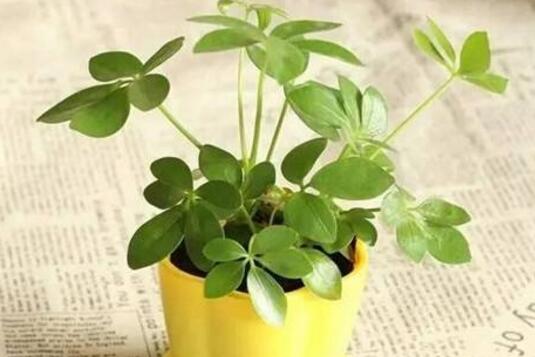
Because the climate in winter is rather special, adjustments need to be made appropriately in watering, fertilizing, light and so on. For example, watering much less frequently and with less water than in summer is one of them. Below we will look at these aspects in detail.
1. How to water Schefflera in winter
In winter, the soil of Schefflera should be kept slightly dry. Never water heavily. The watering frequency can be changed to once a week, and the amount of water should not be too much either - half of the summer amount is enough. The water temperature when watering should be kept above 8°C as much as possible.
2. Fertilizing Schefflera in winter
Schefflera grows rather slowly in winter, so it generally does not need fertilizing in winter. However, to maintain soil activity, you can apply a liquid fertilizer once before winter begins and once at the end of winter, so that its ability to resist the cold becomes stronger.
3. Light adjustment
Light is the key factor determining the growth of Schefflera leaves. In terms of light, how do you care for Schefflera in winter? You can place it in the sun for 4 hours each day, then move it to a bright place for care. In winter, avoid placing it in dark corners.
4. Temperature control
Schefflera's ability to regulate its own temperature is very weak, and when the temperature drops below 0°C it may suffer frost damage, so in winter the temperature needs to be controlled manually. It can survive in a 5°C environment, but to ensure that Schefflera can survive the winter smoothly, the temperature should be controlled at 8-10°C.
When the temperature is relatively low, the leaves of Schefflera will drop off. The fallen leaves should be cleaned up in time. As long as the roots and stems are not damaged, it can still sprout new branches and grow new leaves in the spring of the following year.
Winter precautions for Schefflera
1. Do not rush to move it outdoors. Sometimes winter can also be sunny, but do not rush to move Schefflera outdoors for care, because the temperature may drop sharply again. Wait until the temperature warms up in spring before moving it outdoors.
2. Keep the environment tidy and clean. In winter, many people keep Schefflera indoors for care, but note that its environment should be clean and tidy, and not too enclosed.
How to grow Schefflera, cultivation methods and precautions for Schefflera / light must be suitable
Schefflera is native to Guangdong, China, South America and other places. Because of its strong adaptability and its many effects and functions, more and more people are growing it. Although this plant is easy to keep alive, you still need to master certain methods if you want to grow it well. How do you grow Schefflera? Let us look at the cultivation methods and precautions for Schefflera.
Is Schefflera easy to grow
Schefflera is a relatively easy plant to grow, and its requirements for environment and methods are average. It likes a warm, humid, semi-sunny environment; its soil requirement is fertile acidic soil, and it can tolerate slightly poor soil; its cold resistance is relatively strong, and the suitable temperature is 16-27°C. Below 0°C it may suffer frost damage, and with high humidity it grows vigorously. It can be said to be very easy to grow.
How to grow Schefflera
1. Light
Schefflera can adapt to many kinds of light conditions; for example, it can grow normally in full sun, half sun, or semi-shade environments. But if you want its leaf color to be more deep green, suitable light is needed. If the light is relatively strong, the leaf color will be on the lighter side, while in a semi-shade environment its leaf color will be on the greener side. When the light is bright, the color will be relatively vivid.
2. Soil
Schefflera can survive in slightly poor soil, but in the cultivation methods and precautions for Schefflera, you should try to create suitable soil conditions for it. For example, fertile, loose, well-drained acidic soil is best. It is best to use peat soil, leaf mold and coarse sand mixed together.
3. Temperature
The relatively suitable growing temperature for Schefflera is 16-27°C. At 30°C it can grow normally, but if it is any higher, growth may stagnate. Its cold resistance is medium. The wintering temperature should not be lower than 5°C. If it is in a 0°C environment, it is very easily frost-damaged, and heavy leaf drop will occur.
4. Watering
Schefflera likes an environment with relatively high humidity, and it is rather afraid of dryness. If there is plenty of water, its stems, leaves and roots will be very lush, but too much water will cause root rot. So in terms of watering, how do you grow Schefflera? In summer, water once a day, and if the air is dry you can spray water on the leaves. In spring and autumn, water 2 times a week, and reduce watering in winter.
5. Fertilizing
From March to September, Schefflera grows fastest, so in the cultivation methods and precautions for Schefflera, fertilizing at this stage must be reasonable. Generally, fertilize once every 2-3 weeks, mainly with compound fertilizer and cake fertilizer water.
Precautions for growing Schefflera
1. Shaping and pruning. Schefflera sprouts new branches relatively easily. If new branches are not pruned in time, leggy growth may occur. So during normal care, pay attention to pinching and thinning, etc., which can maintain a good plant shape and also promote the sprouting of side branches.
2. Repot regularly. The nutrients contained in the soil are limited. After Schefflera has been grown for 1-2 years, the nutrients in the soil will have been absorbed. To maintain enough nutrients, the potting soil needs to be replaced regularly. Generally, the potting soil needs to be replaced once every 1-2 years in spring.
3. Control light. The leaf color of Schefflera is directly related to light, so if you want the leaf color to look better, you need to reasonably control light. In summer you can give it a semi-shade environment, and in winter full sun, which can make the leaves more emerald green.
What is the flower language of Schefflera, and does Schefflera bloom? / It does bloom / flowering period in November
Although Schefflera is not as brightly colored as flowers such as peonies and Lantana, it is still loved by many flower lovers because it is low-key but highly useful. Its emerald green, glossy leaves can absorb formaldehyde yet are not showy at all. What meanings does this plant represent? What is the flower language of Schefflera? Let me answer for you.
What is the flower language of Schefflera
Flower language one / low-key, steady
The plant color of Schefflera is relatively uniform. Its leaves are emerald green, with many branches but relatively short stems. Compared with many colorful flowers, it is much more monotonous. But the cultivation method of Schefflera is very simple; even with very little careful care it can still grow well, which reflects its low-key, steady characteristics.
Flower language two / natural, harmonious
Schefflera's vitality is very tenacious, and its adaptability is super strong. Grown at home or in the yard, it gives people a feeling of thriving prosperity, fills the home with a natural atmosphere, and blends harmoniously with the surrounding environment. So the flower language of Schefflera carries the meaning of natural and harmonious.
Flower language three / loyal, devoted
No matter how the environment around Schefflera changes, as long as the temperature and light are suitable, it will keep growing upward, and it stays green all year round. This devoted, loyal characteristic is the precious part of Schefflera, and it is also one of its flower languages.
Does Schefflera bloom
Although Schefflera is mainly grown for its foliage, it does also bloom. Its inflorescence is conical, 20-30 cm long, with white flowers densely arranged on umbel-like inflorescences. It can be said to have a distinctive charm.
When does Schefflera bloom
Usually, Schefflera blooms in November-December. Its flowering period does not last long. After flowering it will bear fruit, and the fruit is usually a black sphere. The ornamental value of the flowers is average, and the fruit is not edible.
What to do after Schefflera blooms
1. Stop fertilizing and water less
After flowering, stop fertilizing and control watering. Although Schefflera blooming consumes a large amount of nutrients, at this time its growth is relatively slow, so its nutrient demand is not high. In addition, after flowering it is about to enter winter, so fertilizing should be stopped.
2. Prune in time
If you do not plan to collect seeds, then after flowering it is best to prune off the flowers in time to avoid nutrient consumption. This can also let Schefflera smoothly enter its dormant period and survive the winter, and prevent some pests and diseases from targeting the flowers as a parasitic site.