What to Do When the Leaf Edges of Pennywort Dry Up? Four Tips for Greener, More Lush Leaves
The leaf edges of pennywort (Hydrocotyle vulgaris) are usually emerald green and have irregular serrations, as detailed in the article on the differences between Lysimachia nummularia and pennywort. However, some gardeners find that the leaf edges of their pennywort dry up, which not only ruins its looks but is also a real headache. If this happens, what should you do? Let me tell you the solution.
What Causes the Leaf Edges of Pennywort to Dry Up
1. Improper Watering
Improper watering includes two situations: either the water does not penetrate the soil each time, or too much water is given. Both can cause the leaves to dry up. The reason is that when the water does not penetrate, the lower roots have no moisture to absorb, while too much water causes root rot, and neither is good for the growth of pennywort.
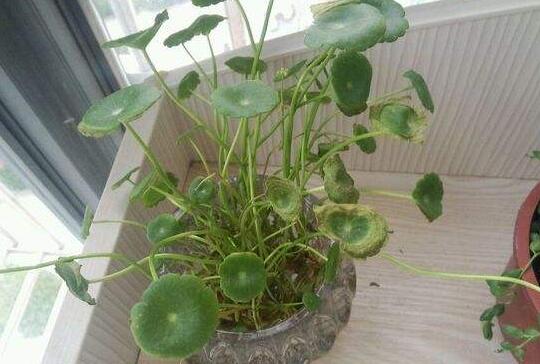
Solution: When watering, make sure you see water seeping from the drainage holes at the bottom of the pot; otherwise, the water has not penetrated. Once it has penetrated, stop watering immediately. Do not keep watering and cause water to accumulate in the soil.
2. Climate Change
In late autumn, climate changes are quite noticeable, especially sudden drops in temperature. If pennywort is not moved indoors in time in response to the climate change, the low temperatures can cause its leaf edges to dry up.
Solution: Keep an eye on the weather at all times. If the temperature difference changes greatly, move the pennywort indoors ahead of time. Indoor temperatures do not fluctuate as noticeably as outdoor ones, so the pennywort has time to adapt to the climate change.
3. Harsh Environment
Pennywort can absorb dust and harmful substances to some degree, but if the environment is especially harsh, such as when there is a lot of dust and noise, the leaves become covered in dust. If you do not clean them regularly, photosynthesis cannot proceed smoothly, and leaf drying becomes very likely.
Solution: Mist the leaves with a spray bottle regularly, keep the leaves clean, and make sure the environment has enough light so the plant can carry out normal photosynthesis. Then the drying problem can be greatly improved.
4. Lack of Nutrients
Pennywort can be managed fairly casually, and its fertilizer needs are not high. However, this depends on the soil being fairly fertile to begin with and on supplementing with some fertilizer at the right time. Conversely, if the soil is poor and little fertilizer is applied, the leaves will dry up from a lack of nutrients.
Solution: Use relatively fertile acidic soil, such as river soil or garden soil. If the soil quality is average, you can also add some livestock manure at the bottom when planting, then supplement with some urea during the growth stage.
Hydroponic, Growing and Propagation Methods for Pennywort
Hydroponic Methods for PennywortSource Author: Li Mu 2012-04-26 Popularity: 1530 Report an error
Pennywort, also called water coin, likes moist environmental conditions and is suitable for growing in water trays, aquariums, ponds or wetlands: it is not demanding about its environment, does best in moist conditions, and is suited to aquatic life. It grows toward the light and easily becomes lopsided and leggy.Cultivation method: semi-water, semi-soil is best, followed by soil culture; hydroponics is also possible. Because hydroponics is clean, many gardeners choose it. Here are some hydroponic experiences.
1. Water coin is suited to casual, low-maintenance growing. As long as it gets enough sunlight and water, it can grow very fast.
2. Indoors, if there is no sunlight, you can use artificial light instead.
3. The water needs to be tap water that has been left to settle for two hours, or used the next day.
4. You can add a little nutrient solution to the water.
5. Water coin usually has some yellow leaves, but they wither far more slowly than the plant grows, so do not worry.
6. Green algae will grow on the roots of water coin, but you do not have to wash it off.
7. As long as the water does not smell rotten, just top it up, and mist the leaves often.
As the weather warms up, now is a good time to buy some cute pennywort to grow.
Of course, the higher level of water-grown plants is scene design. Water coin is very easy to grow and is also a common pairing in aquascaping.
Growing Methods for Pennywort
Source Author: Wang Fei 2012-04-26 Popularity: 15943 Report an error
-
Pennywort, also called mushroom grass, is a perennial emergent or wet-growing herb. The plant height is 5-15 cm. The stem tip is brown. Submerged leaves have long petioles, are roundly shield-shaped, 2-4 cm in diameter, with wavy margins, grass green. Flowers are bisexual; umbels; small flowers are white-pink. Schizocarp. Flowering period is June to August. Its stem nodes are distinct, one segment after another, each segment bearing one leaf, and it can keep extending. Its underground creeping stems grow at an astonishing rate, spreading wherever they reach, making it one of the most attractive and easy-to-grow aquatic plants.
In warm regions this plant can be potted outdoors and is suitable for water trays, aquariums, ponds, wetlands, and indoor water greening. When grown in an aquarium, it is often used as a foreground plant. The whole plant can be used medicinally and has a diuretic effect. If you want to use it in pots or hanging baskets, it is best to keep it in water for a long time.Growing method: Pennywort is not demanding about water quality and can be cultivated in relatively soft freshwater; salinity should not be too high. The pH of the water is best kept between 6.5 and 7.0, that is, slightly acidic to neutral. It has a relatively high demand for fertilizer; during vigorous growth, top-dress once every 2-3 weeks. If planted in pots or containers, only a small amount of fertilizer is needed, such as a quick-acting fertilizer like Hyponex No. 2, or a slow-release fertilizer like Osmocote (which can maintain fertilizer efficiency in water for a long time).
Pennywort likes a sunny environment; in shady conditions the plant grows poorly. It grows well in full sun; under half-day sun its petioles stretch longer and it grows toward the light, so its posture needs slight adjustment to look better. It is best to give it 4-6 hours of scattered sunlight each day; with special fluorescent lamps, 8-10 hours of artificial light per day also allows the plant to grow normally. It likes warmth and fears cold, growing well in the temperature range of 10-25°C, and the overwintering temperature should not be lower than 5°C. Under good management conditions, pennywort is not prone to disease and is also less affected by harmful animals. This plant is perennial, sprouts quickly, and takes shape quickly. Without repotting, a well-formed plant should not be grown continuously for more than 2 years, otherwise the mushroom grass will grow weaker and weaker.
Other: Pennywort likes warmth and moisture. The cultivation site is best with half-day sun or shade; direct sunlight should be avoided. It is not particular about the growing soil, but loose, well-drained soil is best. The optimum water temperature is 22-28°C. It is shade-tolerant, moisture-tolerant, slightly drought-tolerant, and highly adaptable, able to grow both in water and on land. What to do when pennywort leaves turn yellow: The causes of yellowing are roughly these: 1. Giving "half water," that is, watering incompletely, without water seeping out at the bottom of the pot.
2. Exposure to cold in winter; the root system has already been frostbitten.
3. After overwintering, being moved outdoors too quickly and placed in a warm, sunny spot, so it cannot adapt to the sudden climate change for a time.
4. The potting soil has been too wet or too dry for a long time, without watering as soon as it dries.
5. Being kept for a long time in a poorly ventilated environment.
6. The leaves have not been misted and cleaned for a long time, so dust accumulates and hinders photosynthesis. Growing experience: Pennywort has round leaves with wavy edges and long stems, and blooms small yellow-green flowers in summer and autumn. It can be grown both in water and on land. It likes warmth and moisture. The cultivation site is best with half-day sun or shade; direct sunlight should be avoided. It is not particular about the growing soil, but loose, well-drained soil is best. The optimum water temperature is 22-28°C.
Propagation can be done by division or cuttings. It is easy to grow. Keep the growing soil moist, and roots will form in about 1-2 weeks. Because the plant is moisture-tolerant and emergent, it is also suitable for growing in water basins and ponds. If grown in water, be sure to change the water once a week and add a special nutrient solution for foliage plants. Figure 2 shows pennywort grown in water. The two pots just divided both look a little listless; I hope they get used to the new environment soon and grow like crazy.
Propagation Methods for Pennywort
Source Author: Wang Fei 2012-04-26 Popularity: 1071 Report an error
-
Propagation methods for pennywort: This plant is mainly propagated by division or cuttings, mostly carried out from March to May each year. It is easy to grow. Keep the growing soil moist, and roots will form in about 1-2 weeks. Seed sowing can also be used to raise seedlings. For the growing medium, you can use a mixed substrate made of leaf mold, river mud, and garden soil, with the proportions by volume being 0.5:2:2.
For pot cultivation, this can be done once the pennywort seedlings have taken shape. A medium-sized flowerpot without drainage holes is often used as the planting container. To achieve a better ornamental effect, place 1 seedling per pot, and simply fill with water after the operation is complete. To make it easier for the seedlings to recover, the planting operation is best carried out on a cloudy day.
★Many people grow it as a water plant, but in fact some water plants grow better in soil than in water, and pennywort is the same. You can plant it in soil, then give it plenty of sunlight but not scorching sun, water it once in the morning and once in the evening, and if you fertilize, use a mild fertilizer.
★Pennywort is not demanding about water quality and can be cultivated in relatively soft freshwater. It is highly adaptable to the pH of the water, but it is best kept between 6.5 and 7.5, meaning it can grow well in water from slightly acidic to slightly alkaline. It has a relatively high demand for fertilizer; during vigorous growth, top-dress once every 2-3 weeks. After the plant differentiates flower buds, you can appropriately increase phosphorus fertilizer. Lysimachia nummularia likes a sunny environment; in shady conditions the leaves rot easily. It is best to give it more than 4 hours of scattered sunlight each day. You can also use special fluorescent lamps; 8-10 hours of artificial light per day also allows the plant to grow normally. Note that when light is strong, the plant begins to grow sideways, while when light is weak, the plant begins to grow upward. It likes warmth, dislikes high temperatures, and tolerates low temperatures, growing well in the temperature range of 16-24°C; the overwintering temperature should not be lower than 5°C. When the water temperature exceeds 30°C, the growth of the plant will be inhibited. Under good management conditions, Lysimachia nummularia is not prone to disease and is also less affected by harmful animals.
★Pennywort is quite easy to grow. First cut off the withered leaves, close to the soil, leaving about 1 cm, and it will keep growing. People who have grown pennywort will recommend semi-soil, semi-water, because that gives the fastest growth. In addition, put it in full sun; as long as there is water and sun, it will grow like crazy.
★In warm regions this plant can be potted outdoors and is suitable for water trays, aquariums, ponds, wetlands, and indoor water greening. When grown in an aquarium, it is often used as a foreground plant. The whole plant can be used medicinally and has a diuretic effect. If you want to use it in pots or hanging baskets, it is best to keep it in water for a long time.
Propagation method: This plant is mainly propagated by division or cuttings, mostly carried out from March to May each year. It is easy to grow. Keep the growing soil moist, and roots will form in about 1-2 weeks. Seed sowing can also be used to raise seedlings. For the growing medium, you can use a mixed substrate made of leaf mold, river mud, and garden soil, with the proportions by volume being 0.5:2:2.
For pot cultivation, this can be done once the pennywort seedlings have taken shape. A medium-sized flowerpot without drainage holes is often used as the planting container. To achieve a better ornamental effect, place 1 seedling per pot, and simply fill with water after the operation is complete. To make it easier for the seedlings to recover, the planting operation is best carried out on a cloudy day.
Growing method: Pennywort is not demanding about water quality and can be cultivated in relatively soft freshwater; salinity should not be too high. The pH of the water is best kept between 6.5 and 7.0, that is, slightly acidic to neutral. It has a relatively high demand for fertilizer; during vigorous growth, top-dress once every 2-3 weeks. If planted in pots or containers, only a small amount of fertilizer is needed, such as a quick-acting fertilizer like Hyponex No. 2, or a slow-release fertilizer like Osmocote (which can maintain fertilizer efficiency in water for a long time). Pennywort likes a sunny environment; in shady conditions the plant grows poorly. It grows well in full sun; under half-day sun its petioles stretch longer and it grows toward the light, so its posture needs slight adjustment to look better. It is best to give it 4-6 hours of scattered sunlight each day; with special fluorescent lamps, 8-10 hours of artificial light per day also allows the plant to grow normally. It likes warmth and fears cold, growing well in the temperature range of 10-25°C, and the overwintering temperature should not be lower than 5°C. Under good management conditions, pennywort is not prone to disease and is also less affected by harmful animals.
Pennywort (Encyclopedia Profile) Pennywort
Stems slender, rooting at the nodes. Leaves round or kidney-shaped, the underside densely covered with appressed T-shaped hairs, entire margins; corolla bell-shaped, yellow. Flowering period April. Fruiting period July, capsule nearly spherical. Propagated by sowing and division, with very strong spreading ability, an excellent groundcover plant. Pennywort is robust, easy to plant, and quick to propagate, able to grow both in water and on land. Stolons are well developed, sending out roots and leaves from the internodes. Leaves are roundly peltate, with long petioles and wavy margins, blooming small yellow-green flowers in summer and autumn. Main habits: It likes warmth and moisture. The cultivation site is best with half-day sun or shade; direct sunlight should be avoided. It is not particular about the growing soil, but loose, well-drained soil is best. The optimum water temperature is 22-28°C. It is shade-tolerant, moisture-tolerant, slightly drought-tolerant, and highly adaptable.
Chinese scientific name: Pennywort
Kingdom: Plantae
Phylum: Angiosperms
Class: Dicotyledons
Subclass: Rosidae
Order: Apiales
Family: Apiaceae
Species: Pennywort
Contents
Basic InformationPlant name: Pennywort
Scientific name: Hydrocotyle vulgaris
Aliases: Centella asiatica, large-leaf Lysimachia, bengdawan, quewancao, maticao, hanqiaocao, quqiaocao, luodeda, shibaque, lianxiancao, dixiancao, laogonggen, kuipengcai, bengkouwan, qishiwan, ditangcao, damaticao, tuxixin, qianzaokou, houguicao, biandixiang, dengzhancai, niuyucai, yejicai, jiubeicai, potongqian, banbianqian, difuping, yedonghuacai, panlongcao, jiejielian, dayeshangjincao, huguacao, luodimeihua, mushroom grass, water coin, South American pennywort, jinqianlian.
Family and genus: Apiaceae, Hydrocotyle
Plant IntroductionA perennial creeping herb, often curling into a clump. Its stems are slender, rooting at the nodes, densely forming. Native to India, it is now widely distributed in tropical and subtropical regions of the world. In China it is mainly distributed in the provinces south of the Yangtze River. Centella asiatica prefers to grow on moist riverbanks, marshes, and grasslands. Apiaceae plants:
Pennywort, with smaller leaves, 0.5-2.5 cm long, palmately lobed, with a celery fragrance when rubbed by hand. It is commonly called small Lysimachia, with similar effects.
Morphological CharacteristicsPlant height 5-15 cm. The stem tip is brown. Submerged leaves have long petioles, are roundly shield-shaped, 2-4 cm in diameter, with wavy margins, grass green. Flowers are bisexual; umbels; small flowers are white-pink. Schizocarp. Flowering period is June to August. Stems slender, rooting at the nodes. Leaves round or kidney-shaped, the underside densely covered with appressed T-shaped hairs, entire margins; corolla bell-shaped, yellow. Flowering period April. Fruiting period July, capsule nearly spherical. Propagated by sowing and division, with very strong spreading ability, an excellent groundcover plant. Pennywort is robust, easy to plant, and quick to propagate, able to grow both in water and on land. Stolons are well developed, sending out roots and leaves from the internodes. Leaves are roundly peltate, with long petioles and wavy margins, blooming small yellow-green flowers in summer and autumn. Its stem nodes are distinct, one segment after another, each segment bearing one leaf, and it can keep extending. Its underground creeping stems grow at an astonishing rate, spreading wherever they reach, making it one of the most attractive and easy-to-grow aquatic plants.
Pharmacological Effects
Medicine
Pennywort
Medicinal part used: The whole plant.Collection time: Collected in summer and autumn.
Properties: Slightly cold in nature, bitter and pungent in taste; clears heat and removes dampness, detoxifies and promotes urination. Aliases: bengdawan, maticao, leigonggen, hanqiaocao, pennywort, luodeda.
Preparation: Remove impurities, wash clean, cut into sections, and dry in the sun.
Characteristics: This product often curls into a clump. The root is cylindrical, 2-4 cm long, 1-1.5 mm in diameter, with a pale yellow or grayish-yellow surface. The stem is slender and curved, yellow-brown, with fine longitudinal wrinkles, and often bears fibrous roots at the nodes. The leaves are mostly shrunken and broken; when complete and flattened out they are nearly round or kidney-shaped, 1-4 cm in diameter, grayish green, with coarse blunt teeth on the margins; the petiole is 3-6 cm long and twisted. The umbel is axillary and short. The schizocarp is flat and round, with distinctly raised longitudinal ridges and fine reticulate veins, and the fruit stalk is very short. The odor is faint, and the taste is bland.Pennywort
Proven formulas:
1. Externally contracted summer heat, nose and throat: appropriate amounts of Centella asiatica, Eclipta prostrata, and sweet wormwood (all fresh), pound together and take the juice, and take it with cool boiled water.
2. Externally contracted wind-heat: 60 grams of fresh Centella asiatica and 4 white-necked earthworms, pound together, decoct in water and take the juice, divided into 3 doses a day.
Nature, taste, and meridian entry: Bitter, pungent, cold. Enters the liver, spleen, and kidney meridians.
Functions and indications: Clears heat and promotes dampness, detoxifies and reduces swelling. Used for damp-heat jaundice, heatstroke diarrhea, strangury with sand and blood, carbuncles and sores, and traumatic injuries.
Usage and dosage: 15-30 g; double the amount for fresh product. Storage: Keep in a dry place.
Excerpted from: "Chinese Pharmacopoeia"
Greening UsesPennywort, also called mushroom grass, is a perennial emergent or wet-growing herb. The plant height is 5-15 cm. The stem tip is brown. Submerged leaves have long petioles, are roundly shield-shaped, 2-4 cm in diameter, with wavy margins, grass green. Flowers are bisexual; umbels; small flowers are white-pink. Schizocarp. Flowering period is June to August. Its stem nodes are distinct, one segment after another, each segment bearing one leaf, and it can keep extending. Its underground creeping stems grow at an astonishing rate, spreading wherever they reach, making it one of the most attractive and easy-to-grow aquatic plants.
Pennywort is not demanding about water quality and can be cultivated in relatively soft freshwater. In warm regions it can be potted outdoors and is suitable for water trays, aquariums, ponds, wetlands, and indoor water greening. When grown in an aquarium, it is often used as a foreground plant. The whole plant can be used medicinally and has a diuretic effect. If you want to use it in pots or hanging baskets, it is best to keep it in water for a long time.
Propagation MethodsThis plant is mainly propagated by division or cuttings, mostly carried out from March to May each year. It is easy to grow. Keep the growing soil moist, and roots will form in about 1-2 weeks. Seed sowing can also be used to raise seedlings. For the growing medium, you can use a mixed substrate made of leaf mold, river mud, and garden soil, with the proportions by volume being 0.5:2:2.
For pot cultivation, this can be done once the pennywort seedlings have taken shape. A medium-sized flowerpot without drainage holes is often used as the planting container. To achieve a better ornamental effect, place 1 seedling per pot, and simply fill with water after the operation is complete. To make it easier for the seedlings to recover, the planting operation is best carried out on a cloudy day.
Growing Methods
Pennywort is not demanding about water quality and can be cultivated in relatively soft freshwater; salinity should not be too high. The pH of the water is best kept between 6.5 and 7.0, that is, slightly acidic to neutral. It has a relatively high demand for fertilizer; during vigorous growth, top-dress once every 2-3 weeks. If planted in pots or containers, only a small amount of fertilizer is needed, such as a quick-acting fertilizer like Hyponex No. 2, or a slow-release fertilizer like Osmocote (which can maintain fertilizer efficiency in water for a long time). Pennywort likes a sunny environment; in shady conditions the plant grows poorly. It grows well in full sun; under half-day sun its petioles stretch longer and it grows toward the light, so its posture needs slight adjustment to look better. It is best to give it 4-6 hours of scattered sunlight each day; with special fluorescent lamps, 8-10 hours of artificial light per day also allows the plant to grow normally. It likes warmth and fears cold, growing well in the temperature range of 10-25°C, and the overwintering temperature should not be lower than 5°C. Under good management conditions, pennywort is not prone to disease and is also less affected by harmful animals.
This plant is perennial, sprouts quickly, and takes shape quickly. Without repotting, a well-formed plant should not be grown continuously for more than 2 years, otherwise the mushroom grass will grow weaker and weaker.Growing Environment
Pennywort likes warmth and moisture. The cultivation site can have half-day sun, and direct sunlight is also acceptable. It is not particular about the growing soil, but loose, well-drained soil is best. The optimum water temperature is 22-28°C. It is shade-tolerant, moisture-tolerant, slightly drought-tolerant, and highly adaptable, able to grow both in water and on land.
Application Value
Pennywort has roundly peltate leaves like a copper coin, with long petioles and wavy margins, blooming small yellow-green flowers in summer and autumn. Pennywort is simple to cultivate and manage, with a beautiful plant shape and emerald leaf color. It is very pleasing to look at and is currently one of the aquatic plants most loved and widely praised by gardeners.
In warm regions this plant can be potted outdoors and is suitable for water trays, aquariums, ponds, wetlands, and indoor water greening. When grown in an aquarium, it is often used as a foreground plant. The whole plant can be used medicinally and has a diuretic effect. If you want to use it in pots or hanging baskets, it is best to keep it in water for a long time.
The roots, stems, and leaves can be used as a vegetable dish; they can also be used as a Chinese medicinal herb to dispel wind, firm the intestines, and clear the eyes and summer heat.
Care PointsPennywort has round leaves with wavy edges and long stems, and blooms small yellow-green flowers in summer and autumn. It can be grown both in water and on land. It likes warmth and moisture. The cultivation site is best with half-day sun or shade; direct sunlight should be avoided. It is not particular about the growing soil, but loose, well-drained soil is best. The optimum water temperature is 22-28°C. Propagation can be done by division or cuttings. It is easy to grow. Keep the growing soil moist, and roots will form in about 1-2 weeks. Because the plant is moisture-tolerant and emergent, it is also suitable for growing in water basins and ponds. If grown in water, be sure to change the water once a week and add a special nutrient solution for foliage plants.
Pennywort does not need a very large pot. You can also grow it in a larger bowl, and a narcissus pot for growing narcissus also works. Use ordinary vegetable garden soil, mix in an appropriate amount of river sand, and add a small amount of organic fertilizer as a base fertilizer. When planting pennywort, you can plant it flat, covering the rhizome just enough that it is not visible; be sure not to plant it too deep. Then place it in half shade for a week and wait for new leaves to grow before giving it sunlight.
Pennywort is afraid of cold. In winter, for pennywort kept outdoors, you can pour out all the water and place it in a south-facing, sunny, wind-sheltered spot; it can overwinter safely, though some leaves will die off, and the underground root system will sprout again the following spring. In cold northern regions without heating, you can make a cover to enclose the pot, pour out the water, and keep it moist; as long as the room temperature does not drop below freezing, it will likewise continue to grow the next year.
Leaves Turning Yellow
What to do when pennywort leaves turn yellow:
The causes of yellowing are roughly these:
1. Giving "half water," that is, watering incompletely, without water seeping out at the bottom of the pot.
2. Exposure to cold in winter; the root system has already been frostbitten.
3. After overwintering, being moved outdoors too quickly and placed in a warm, sunny spot, so it cannot adapt to the sudden climate change for a time.
4. The potting soil has been too wet or too dry for a long time, without watering as soon as it dries.
5. Being kept for a long time in a poorly ventilated environment.
6. The leaves have not been misted and cleaned for a long time, so dust accumulates and hinders photosynthesis.
Questions About Pennywort Growing Methods
The way we usually grow pennywort is semi-soil, semi-water for the best results, plus plenty of water and plenty of sun. But today I happened to see on Baidu Baike that pennywort is a shade-loving plant, which made me doubt my growing method.
The following is material excerpted from Baidu. Let us study and discuss it together and see how everyone grows pennywort:
[Pennywort]
Pennywort likes warmth and moisture. The cultivation site is best with half-day sun or shade; direct sunlight should be avoided. It is not particular about the growing soil, but loose, well-drained soil is best. The optimum water temperature is 22-28°C. It is shade-tolerant, moisture-tolerant, slightly drought-tolerant, and highly adaptable, able to grow both in water and on land.
Plant height 5-15 cm. The stem tip is brown. Submerged leaves have long petioles, are roundly shield-shaped, 2-4 cm in diameter, with wavy margins, grass green. Flowers are bisexual; umbels; small flowers are white-pink. Schizocarp. Flowering period is June to August. Stems slender, rooting at the nodes. Leaves round or kidney-shaped, the underside densely covered with appressed T-shaped hairs, entire margins; corolla bell-shaped, yellow. Flowering period April. Fruiting period July, capsule nearly spherical. Propagated by sowing and division, with very strong spreading ability, an excellent groundcover plant. Pennywort is robust, easy to plant, and quick to propagate, able to grow both in water and on land. Stolons are well developed, sending out roots and leaves from the internodes. Leaves are roundly peltate, with long petioles and wavy margins, blooming small yellow-green flowers in summer and autumn.
Its stem nodes are distinct, one segment after another, each segment bearing one leaf, and it can keep extending. Its underground creeping stems grow at an astonishing rate, spreading wherever they reach, making it one of the most attractive and easy-to-grow aquatic plants.
Propagation can be done by division or cuttings. It is easy to grow. Keep the growing soil moist, and roots will form in about 1-2 weeks. Because the plant is moisture-tolerant and emergent, it is also suitable for growing in water basins and ponds.
This plant is not demanding about water quality and can be cultivated in relatively soft freshwater. In warm regions it can be potted outdoors and is suitable for water trays, aquariums, ponds, wetlands, and indoor water greening. When grown in an aquarium, it is often used as a foreground plant.
Pennywort, also called mushroom grass, is a perennial emergent or wet-growing herb. The plant height is 5-15 cm. The stem tip is brown. Submerged leaves have long petioles, are roundly shield-shaped, 2-4 cm in diameter, with wavy margins, grass green. Flowers are bisexual; umbels; small flowers are white-pink. Schizocarp. Flowering period is June to August. Its stem nodes are distinct, one segment after another, each segment bearing one leaf, and it can keep extending. Its underground creeping stems grow at an astonishing rate, spreading wherever they reach, making it one of the most attractive and easy-to-grow aquatic plants.
In warm regions this plant can be potted outdoors and is suitable for water trays, aquariums, ponds, wetlands, and indoor water greening. When grown in an aquarium, it is often used as a foreground plant. The whole plant can be used medicinally and has a diuretic effect. If you want to use it in pots or hanging baskets, it is best to keep it in water for a long time.
This plant is mainly propagated by division or cuttings, mostly carried out from March to May each year. It is easy to grow. Keep the growing soil moist, and roots will form in about 1-2 weeks. Seed sowing can also be used to raise seedlings. For the growing medium, you can use a mixed substrate made of leaf mold, river mud, and garden soil, with the proportions by volume being 0.5:2:2.
For pot cultivation, this can be done once the pennywort seedlings have taken shape. A medium-sized flowerpot without drainage holes is often used as the planting container. To achieve a better ornamental effect, place 1 seedling per pot, and simply fill with water after the operation is complete. To make it easier for the seedlings to recover, the planting operation is best carried out on a cloudy day.
Leaves Turning Yellow
What to do when pennywort leaves turn yellow:
The causes of yellowing are roughly these:
1. Giving "half water," that is, watering incompletely, without water seeping out at the bottom of the pot.
2. Exposure to cold in winter; the root system has already been frostbitten.
3. After overwintering, being moved outdoors too quickly and placed in a warm, sunny spot, so it cannot adapt to the sudden climate change for a time.
4. The potting soil has been too wet or too dry for a long time, without watering as soon as it dries.
5. Being kept for a long time in a poorly ventilated environment.
6. The leaves have not been misted and cleaned for a long time, so dust accumulates and hinders photosynthesis.