How to grow pennywort hydroponically? Four steps to complete it easily
Pennywort is extremely hardy by nature; it is easy to plant and grows quickly, and it can be grown either in soil or in water. Growing it hydroponically not only brings out its ornamental value among the benefits and uses of pennywort, but is also very convenient to maintain. So how do you grow pennywort hydroponically? Let's take a look at the hydroponic method for pennywort.
How to grow pennywort hydroponically
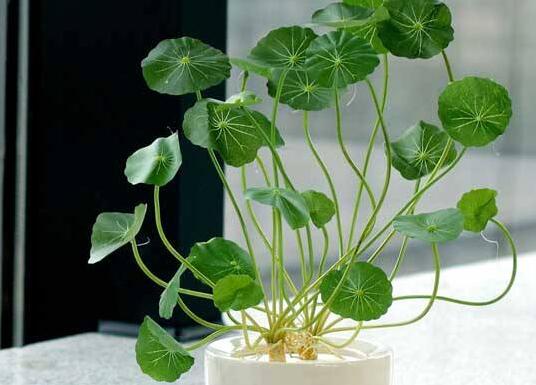
Hydroponics means placing the roots of pennywort in water to grow. When growing hydroponically, the water quality, temperature, light, fertilizer and other aspects all differ from the soil-growing method for pennywort, and the key is likewise to create good conditions for pennywort in these aspects.
Hydroponic method for pennywort
1. Choosing the container
From the standpoint of favoring growth, an opaque container should be the main choice, because pennywort roots develop faster in a dark environment; but from an ornamental standpoint, a transparent glass container is most suitable. So when choosing a container, it depends on your personal preference.
2. Choosing the water
There is no strict requirement for the pH of the water; ordinary tap water from daily life will do. However, before use it is best to let the tap water sit for 2-3 hours so that part of the gases in it can be filtered out, and then it is best to use it.
3. Selecting the plants
Pennywort used for hydroponics needs to be healthy and robust. Cut off all the yellowed leaves and weak stems so the plants can be at varying heights to increase their beauty. But when selecting the plants, be sure to check that the roots are intact, which is crucial in the hydroponic method for pennywort.
4. Planting the plants
Place the selected pennywort into the container, fix the roots in place with vermiculite, keep it upright, then add water to the container; the water level should just cover one-half or one-third of the pennywort roots.
Notes on growing pennywort hydroponically
1. Light. Usually, when pennywort is grown hydroponically it is kept indoors. If the indoor sunlight is not sufficient, artificial light can be used instead, and the best light is diffused light.
2. Fertilizer. When growing in soil, pennywort needs fertilizing, but in hydroponics the nutrients usually come from a nutrient solution. You can use a nutrient solution specially made for hydroponics and add it when changing the water. And if you keep goldfish at home, you can also put them in the hydroponic container, which can provide some fertilizer for the pennywort.
3. Changing the water. Just after starting hydroponics, generally change the water once a week; after the roots begin to grow, change the water once every 3-4 days. Note that the water temperature is best at 22-28 degrees. If the water has not been changed for a long time, you should take the plant out, cut off the rotted roots and yellowed leaves, then replace it with clean, clear water.
How to grow pennywort hydroponically - the hydroponic method for pennywort
Pennywort has round, shield-shaped leaves, like a copper coin, with long stalks and wavy edges, and it blooms small yellow-green flowers in summer and autumn. Pennywort is simple to cultivate and manage, with a neat plant shape and verdant leaf color, very pleasing to look at; it is one of the aquatic plants most loved by flower enthusiasts today and is widely praised. In warm regions this plant can be potted outdoors and is suitable for growing in water dishes, aquariums, ponds and wetlands, and for indoor water landscaping. But how should such pennywort be grown to do best? Pennywort can also be grown hydroponically, so how do you go about growing it hydroponically? And what is the hydroponic method like? Below, we explain the hydroponic method for pennywort, hoping it can help everyone.
The hydroponic method for pennywort
1. Choose some pennywort; it must have roots, otherwise it cannot survive. For the sake of beauty, you can arrange the height of its leaves according to your own preference. Put the arranged pennywort into a hydroponic bottle.
2. Press small stones onto the roots of the pennywort; white stones look better if there are more of them, and colored stones bought online also look very nice. Then add some water - it's just that simple.
3. There is another method: plant the pennywort directly into mud or sand without stones, and you can plant just one or two pennywort plants at varying heights; when they slowly sprout it will look even better, with a feeling of emerging from the mud unsoiled.
4. There are very few pests and diseases. It has strong growth adaptability and needs no deliberate care. After growing for a period, Chinese pennywort will fill the entire container. Often spray water on the leaf surface to wash the leaves and keep them verdant and glossy. After it grows densely, pay attention to ventilation, otherwise the plants easily turn yellow. In winter the root system has already been frostbitten. In spring, rushing to move it outdoors, the pennywort cannot adapt to the sudden change in climate for a while. Being placed in a poorly ventilated environment for a long time. The leaf surface is not sprayed and washed for a long time, accumulating dust, which hinders photosynthesis.
Key points for pennywort care
Water pennywort is suited to rough, low-maintenance growing; as long as it gets enough sunlight and water, it can grow very fast. The water needs to be tap water that has settled for more than two hours, or used the next day. You can add a little nutrient solution to the water. If indoors with no sunlight, artificial light can be used instead. Water pennywort generally has some yellow leaves, but the speed at which they wither is far slower than the speed of growth, so do not worry. The roots of water pennywort will grow green algae, but it does not need to be washed off. As long as the water does not smell rotten, just top it up with water, and at the same time frequently spray a little water on the leaf surface.
The meaning of pennywort
In our country's culture, which pays attention to implied meanings and homophones, pennywort has round leaves, like miniature lotus leaves, quite lovely, and also like ancient copper coins, implying reunion and continuous good fortune. Moreover, its name carries the two characters "copper" and "coin", so its implied meaning is naturally different: a home with copper coins means rolling wealth, and thus it is regarded as a symbol of wealth. So growing pennywort at home has symbolic meaning and also avoids the tackiness of using golden copper coin decorations, while the pennywort's special shape also shows a sense of nobility.
Matching pennywort with home decor styles
People today have begun to shift from the complicated to pursuing a simple and comfortable home decor style and environment, so more and more people design their furniture style to be simple yet unique, fresh yet bright. Pennywort is also a versatile green plant in home decor matching; for example, growing pennywort in a round transparent glass container is both fresh and bright and shows off individuality, adding a lot of artistic flavor to your home. If it is a back-to-nature pastoral home decor style, there is even less need to say - pennywort is unique and emerald green, showing even more natural freshness and elegance.
The above is the hydroponic method for pennywort that we have explained; is everyone clear about it? For more home decoration knowledge, please pay attention.
The hydroponic method for pennywort - how to grow pennywort hydroponically
Pennywort is also known by other names such as South American pennywort, coin grass, round coin grass, shield-leaf pennywort and golden coin lotus. It likes moist environmental conditions and is suitable for growing in water dishes, aquariums, ponds or wetlands. It is not strict about the environment, does best in a moist environment, is suited to aquatic life, grows toward the light, and easily becomes lopsided and leggy. Now let's take a look at how to grow pennywort hydroponically!
Can pennywort be grown hydroponically?
Pennywort can be grown hydroponically. Pennywort likes warmth and moisture; the growing spot is best with partial sun or shade, and it dislikes direct sunlight. It is not particular about the growing medium; a soft, well-draining growing medium is best, or it can be grown directly in water. The most suitable water temperature is 22-28 degrees. It is shade-tolerant, moisture-tolerant, slightly drought-tolerant, highly adaptable, hardy by nature, easy to plant, and fast to propagate; it can live both in water and on land. Pennywort fears the cold. In winter, for pennywort kept outdoors, you can pour out all the water and place it in a south-facing, sunny, wind-sheltered spot, and it can winter over safely, only the leaves will partly die off, and the underground root system will sprout again the following spring. In cold northern regions, if there is no heating, you can make a cover and cover it together with the pot, pour out the water, keep it moist, and as long as the room temperature is not below zero, it will likewise continue to grow the following year.
Hydroponic method for pennywort
1. Water quality: Pennywort does not have high requirements for hydroponic water quality; as long as it does not smell bad or breed insects, ordinary tap water can be used directly for hydroponics. In summer, change the water about once every 3-4 days, each time replacing half the water in the basin; in winter, change it once a week, each time replacing one-third.
3. Temperature: Pennywort is suited to growing in most of the hot and humid regions of the south, especially in summer, when it propagates especially quickly. Its normal growing temperature is most suitable between 10-26 degrees Celsius; being too hot or too cold will both inhibit the growth of pennywort.
3. Light: Pennywort greatly loves sunlight when growing, so it is best to place the water basin outdoors or by a window with sufficient light. If grown indoors, the daily sun exposure time should be no less than 4-5 hours. In addition, a UV lamp or a strong fluorescent lamp can also be used instead of sunlight for lighting.
4. Fertilizing: Pennywort can produce the nutrients it needs to grow on its own through photosynthesis, so it can be fertilized relatively little. If fertilizing is needed, ordinary fertilizer can be dissolved in water in the basin and left for it to absorb on its own, but note that the amount should not be too concentrated; a small amount is enough.
5. Pests: Pennywort generally does not attract pests, but soft-bodied animals such as water snails may gnaw at the grass roots and tender shoots. If such small creatures are found in the water, they should be removed by hand to prevent them from multiplying in large numbers.
Notes on growing pennywort hydroponically
1. There is no need to change the water especially frequently; on the premise of ensuring there is enough water in the basin, changing it once a week is enough. In summer, you can change the water a bit more frequently, mainly to keep mosquitoes from laying eggs in it.
2. Maintain sufficient light; it needs to receive more than 4 hours of sunlight per day for pennywort to grow luxuriant and emerald green. Pennywort especially loves sun; under sufficient sunlight it can grow rapidly even without fertilizer. Conversely, if there is insufficient light or it is placed in a dark indoor spot for a long time, the leaves of pennywort easily turn yellow and wither.
3. When it comes to fertilizing, there is no need for too much fuss. If you keep goldfish at home, you can pour the water from changing the goldfish water into the pennywort basin, which can make the pennywort grow better.
4. In the south, it grows well within the temperature range of 16-24 degrees Celsius and can survive naturally very well. But too high or too low a temperature will both inhibit the growth of pennywort, and at high temperatures small insects are also more likely to appear in the water.
5. When growing pennywort in water, yellowed leaves will rot in the water and spoil the water quality, so we should regularly check the water container and remove any moldy, rotted leaves as soon as they are found.
6. Vigorously growing pennywort can spread to fill the whole water basin in one month, so we should properly prune and divide it, transplanting overly dense pennywort into other water basins, so as to prevent the mature leaves from shading the light of the tender leaves and affecting normal plant growth and metabolism.