How to repot a white orchid tree (Michelia alba)? Master post-adaptation soil removal and four-season care management
The white orchid tree (Michelia alba) is a highly ornamental flowering plant that can be seen in many regions of our country. However, to grow it well, there are many things to pay attention to, such as regular repotting and seasonal care, none of which can be done carelessly. So how do you repot a white orchid tree? And how should the four-season care management of the white orchid tree be carried out? Let the editor walk you through it below.
I. How to repot a white orchid tree
1. Repotting time
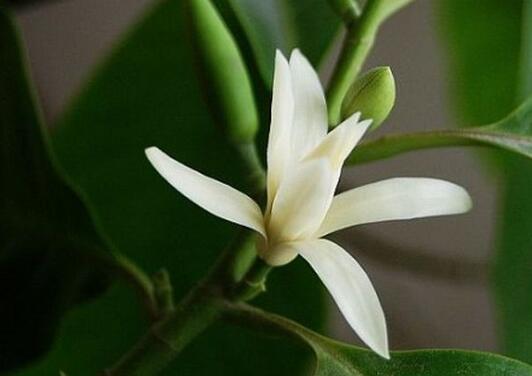
Regarding how to repot a white orchid tree, the choice of timing is very important. Generally, it is best to do it in March-April. If it is the first potting, we can choose a pot with a diameter of about 40cm. During the process of growing a white orchid tree, we generally repot it once every 2 years. If the plant is relatively large, repotting once every 3-4 years is also fine.
2. Repotting method
When preparing to repot a white orchid tree, we need to water the potting soil the day before, which makes it easier to separate the soil from the pot. When separating, we can use a shovel to dig around the edge in a circle, then slowly tip the pot, and push the soil out through the drainage holes. After it comes out, we give it some pruning, and then it can be transplanted into the new pot.
II. Precautions for repotting a white orchid tree
When repotting a white orchid tree, we should cover the drainage holes at the bottom with tile pieces, then lay down some stones, which can help the white orchid tree drain and breathe. In addition, when repotting, do not remove all of the original soil; let it slowly adapt to the new environment. Also, do not let it receive light immediately; let it rest for a period.
III. Four-season care management of the white orchid tree
1. Spring care
Spring is a relatively comfortable season for the white orchid tree. The climate in this season is quite suitable for its growth, so during cultivation, watering in moderation is enough. As for light, we can let it receive it all day, so that it will grow more robustly and look lush and green.
2. Summer care
Summer is the season with the highest temperatures of the year. When growing a white orchid tree in this season, it is best to keep it indoors in a semi-shaded spot, and the environment should be well ventilated, so that it will grow very well. If it is grown outdoors, the light is very likely to be too intense and cause the white orchid tree's leaves to turn yellow, so everyone should pay attention to this point.
3. Autumn care
The autumn climate is similar to spring, both are quite suitable for the growth of the white orchid tree. However, the autumn climate is a bit drier than spring, so the watering frequency should be increased slightly. The light in this season is not too intense, and we can grow it outdoors and let it receive light all day.
4. Winter care
In winter, the white orchid tree enters a semi-dormant period. At this time, we can stop fertilizing it, but watering still cannot be cut off. We only need to appropriately reduce the amount and frequency of watering, and maintain the principle of not watering until dry. When the temperature rises again at noon each day, we also need to move it outdoors to receive a few hours of sunlight, which can increase its cold resistance.
Summary: After reading the above content, I believe everyone has gained some understanding of the question of how to repot a white orchid tree. The editor's introduction on the four-season care management of the white orchid tree ends here, and I hope it can provide some effective help to everyone.
Four-season care management of the white orchid tree
Four-season management
Spring
Suitable for placement on balconies facing east, south, or west:
After temperatures rise in spring, the white orchid tree needs to be repotted. Young plants (once/year), mature plants (once every 2-3 years).
Give priority to using sandy soil with good drainage, good looseness, and rich in humus as the potting soil. Keep the core soil around the roots when repotting.
Because the white orchid tree has fleshy roots, it is not good at tolerating either dryness or moisture, so it fears both waterlogging and a lack of water in the soil after new buds sprout.
When the temperature rises above 15°C and becomes relatively stable, the white orchid tree can be placed outside the balcony in a bright spot for cultivation. Be careful to keep the potting soil moist, and begin fertilizing when new leaves grow.
Summer
Suitable for placement on balconies facing east, south, or west:
The high temperatures and strong light of summer easily accelerate the aging of the white orchid tree's leaves, and also easily cause the potting soil to dry out and the water supply to be insufficient. Therefore, in summer, the white orchid tree needs to be moved to a semi-shaded spot with sufficient morning and evening light for cultivation. Be careful to keep the soil moist and apply dilute fertilizer frequently.
To increase air humidity, you can sprinkle water around it, and also ensure good ventilation.
After temperatures drop in late summer, place the white orchid tree in a spot with sufficient light for cultivation.
Autumn
Suitable for placement on balconies facing east, south, or west:
In autumn, light intensity weakens, so the white orchid tree needs to be placed in a sunny spot to ensure sufficient light, and water and fertilizer amounts should also keep up.
After October, the weather turns cooler, so watering should be gradually reduced and fertilizing gradually stopped.
In autumn, to improve the white orchid tree's cold resistance and prevent pest outbreaks, the white orchid tree needs to be placed outdoors at low temperatures for a period of hardening, but it must not be hit by frost. Before frost, it should immediately be moved into a balcony with sufficient light for cultivation. When temperatures drop sharply, cold protection measures should be taken promptly.
Winter
Suitable for placement on balconies facing east, south, or west:
The white orchid tree has poor cold resistance, and the winter cultivation temperature is best kept above 5°C-8°C.
Winter is the semi-dormant period of the white orchid tree. It is likewise necessary to ensure sufficient light, not fertilize, and keep the potting soil in a "water only when dry" state.
Maintaining smooth ventilation in winter is also key to safely overwintering, in order to prevent pests such as scale insects.
A year of careful tending will make your white orchid tree pure and flawless. Precisely because it is so beautiful and fragile, care cannot be careless or negligent.
Four-season care management and pruning of the white orchid tree
The white orchid tree, also known as white orchid, magnolia flower, white Burmese orchid, etc., is a plant in the genus Michelia of the family Magnoliaceae. It is an evergreen tree with large, long-elliptical leaves, green on the upper surface and pale green on the underside. Its flowering period is June to October, with flowers borne singly in the leaf axils, white or slightly yellow, and strongly fragrant. It is native to the Himalayan region and the Malay Peninsula, and likes a warm, hot, humid environment with sufficient light; it is not tolerant of shade. The optimum growth temperature is 15-30°C.
1. Placement
The white orchid tree is pure and flawless, with an alluring fragrance. Its flowers can be used to scent tea. It can be placed in a spot with light. Because the plant form is large, it is suitable for placement in a bright corner, or combined with other plants.
2. Four-season management
(1) In spring, it is suitable for placement on balconies facing east, south, or west. After temperatures rise in spring, repot it (young white orchid trees are repotted once a year, mature plants once every 2-3 years). The potting soil is best a sandy soil rich in humus, fertile, loose, and well-drained. When repotting, it is best to keep the core soil around the roots. The roots of the white orchid tree are fleshy roots, tolerating neither dryness nor moisture, and especially fearing waterlogging. After new buds begin to sprout, the soil must not lack water. When the outdoor temperature is stable above 15°C, the white orchid tree can be moved outside the balcony to a bright spot for cultivation, keeping the potting soil moist, and fertilizing begins after new leaves emerge.
(2) In summer, it is suitable for placement on balconies facing east, south, or west.
The white orchid tree tolerates high temperatures and also tolerates strong light. However, when summer light is too strong, it easily ages the leaves, and the potting soil easily dries out, so watering cannot keep up. Therefore, in summer, the white orchid tree should be moved to a spot with morning and evening light or semi-shade for cultivation, keeping the potting soil moist and applying light fertilizer frequently. Sprinkle water around it more often to increase air humidity, and at the same time pay attention to ventilation. After temperatures cool in late summer, the white orchid tree should be moved to a spot with sufficient light for cultivation.
(3) In autumn, it is suitable for placement on balconies facing east, south, or west. In autumn, the white orchid tree should be ensured sufficient light, and water and fertilizer management should keep up. After October, when the weather is cool, the water supply can be gradually reduced and fertilizing stopped. In autumn, in order to enhance its cold resistance and reduce the occurrence of pests, the white orchid tree should be left outdoors at low temperatures for a period of hardening, but it must not be hit by frost. Before frost, it should promptly be moved into a bright balcony for cultivation. If the outdoor temperature drops sharply, it should promptly be moved into the balcony.
(4) In winter, it is suitable for placement on balconies facing east, south, or west. The white orchid tree is not tolerant of low temperatures, and the winter temperature should be kept above 5°C. At this time, the white orchid tree is in a semi-dormant state, so sufficient light should be ensured, the potting soil should be kept on the dry side, and it should not be watered until dry, and fertilizing should be stopped. When grown at home, the temperature is best kept above 8°C. At this time, keep the potting soil moist and provide sufficient light, and do not fertilize. A balcony environment without ventilation in winter easily breeds scale insects, so appropriate ventilation should be provided.
3. Pruning
The white orchid tree produces new branches and leaves 3 times a year. The first leafing is from early to mid-April, the second leafing is from mid-to-late June to early July, and the third leafing is from mid-to-late August. Because the white orchid tree only has flower buds in the leaf axils of new branches and leaves, it only blooms when new branches and leaves grow. Appropriately removing some old leaves during the growing season is beneficial to the growth and sprouting of new branches and leaves, and also helps it bloom more. After propagation and survival, the white orchid tree should be pinched back 1-2 times to make it branch, which is beneficial for dwarfing and shaping in pots.