How to grow white magnolia in winter? Control indoor temperature and reduce watering
Winter is a rather difficult period for the vast majority of plants, and white magnolia is no exception. It does not have strong resistance to severe cold either, so you must pay extra attention when growing it. Regarding how to grow white magnolia in winter, what are the points that need attention? Below, the editor will walk everyone through them.
How to grow white magnolia in winter
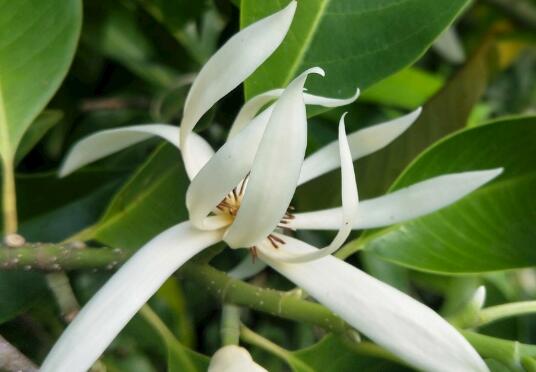
If you want to know how to grow white magnolia in winter, first we need to take good cold-protection measures, and then we also need to pay extra attention to temperature control, watering, fertilizing and other aspects. The specific details are introduced in detail below. Let us take a look together.
1. Cold protection management
In winter we generally grow white magnolia indoors, but even when growing it indoors we still need to take good cold-protection measures. We need to pour an appropriate amount of anti-freezing water into the soil, which can improve the white magnolia's resistance to severe cold weather.
2. Temperature control
Regarding how to grow white magnolia in winter, temperature control is a very important part. Generally, it is best to keep the indoor temperature above 5°C, so that the white magnolia will not suffer frost damage due to excessively low temperatures. Also, ventilation must be maintained and it must not be too closed off, otherwise pests and diseases can easily sneak in. Everyone should remember this point.
3. Fertilization management
Winter is the dormant period of white magnolia, so no fertilizing is needed. We only need to fertilize it once half a month before winter arrives, and after winter passes we can return to the normal fertilizing frequency.
4. Watering management
Regarding how to grow white magnolia in winter, watering is also a very important point, but there is no specific frequency. We just need to maintain the principle of not watering until dry. Wait until the potting soil is completely dry before watering it, and the amount of water should not be too large. Generally, watering a moderate amount to keep the soil with a certain degree of moisture is enough, so as to avoid frost damage to the plant caused by too much water.
5. Light management
White magnolia is a light-loving plant. Although we generally grow it indoors in winter, it still needs to receive an appropriate period of sunlight every day. This time can be chosen at noon each day when the temperature rises. At this time we can move it outdoors to a place with direct sunlight, and when the sun is about to set, move it back indoors. This can increase the white magnolia's cold resistance.
Summary: After reading the above content, I believe everyone has gained a certain understanding of how to grow white magnolia in winter. In fact, the winter care methods for white magnolia still have some points in common with ordinary care methods. Everyone can refer to the article on white magnolia cultivation methods for growing it, and I believe it can bring everyone some help.
How to grow white magnolia? Potted cultivation methods and precautions for white magnolia
White magnolia has a rich fragrance and a long flowering period, blooming from June to October. Put one of its flowers in your pocket, or place a few in a room, and the fragrance can last more than ten days without fading. Even after it has dried and shriveled and turned yellow, using it to brew tea is still very fragrant. To cultivate white magnolia at home, you need a relatively large balcony and courtyard, and sufficient sunlight, because it is a sun-loving flowering plant, otherwise it cannot be grown well.
How to grow white magnolia?
1. White magnolia is neither tolerant of drought nor of moisture. In summer and autumn the weather is hot, evaporation is fast, and water demand is high, so watering must be timely. It is best to keep the potting soil slightly moist. Its roots are thick and fleshy, and it fears waterlogging the most, so the potting soil should use humus soil with good drainage. Do not let it get rained on during the moldy rainy season. If the potting soil stays wet for a long time without drying, the roots will rot, causing the leaves to turn yellow and fall off and the plant to die, and it is very hard to save. This point is especially noteworthy for white magnolia that is brought indoors to overwinter and go dormant, because large white magnolia planted in glazed jars has jar walls with glaze that do not allow air through, and at this time the plant's transpiration is also low. The surface soil in the jar dries easily, but the inner soil is hard to dry. If you water as soon as you see the surface turn pale, the potting soil will stay constantly wet and the plant will die. Most people who kill white magnolia do so because of this mistake. Therefore, in winter the potting soil should be kept slightly dry. Do not water until even the inner part of the jar is dry, and by no means water before that.
2. White magnolia likes fertilizer, but dislikes concentrated fertilizer. Aside from applying sufficient base fertilizer when repotting every 2-3 years, generally after the plant blooms, water it once every 7-10 days with decomposed soybean cake water or fishy water. You should master the principles of dilute application, frequent application, and application in the evening. Stop fertilizing after the cool autumn.
3. White magnolia fears cold and likes sunlight, and should have more than 10 hours of sunlight every day. Even when brought indoors to go dormant in winter, it cannot be kept in shade for a long time, otherwise it will affect flowering the following year. It fears cold even more than jasmine. It enters the room to overwinter in early November, and must wait until mid-April of the following year before it can be brought out for care.
4. White magnolia is not tolerant of pollution. Besides not growing it in pots in factory areas, home care should also not place it in the kitchen to overwinter, so as to avoid oil fume pollution.
Precautions for potted white magnolia cultivation
1. White magnolia has fleshy roots and fears water accumulation the most. The potting soil must be well-drained acidic soil, and the bottom of the pot should be lined with 3-4 cm thick granular furnace slag or broken tiles as a water layer.
2. In midsummer the sunlight is strong, so appropriate shading should be provided around noon, or it should be moved under tree shade for care from June to August. During the peak growing season (May-September), apply liquid fertilizer once every 1-2 weeks, and at the same time keep the potting soil moist regularly. In summer it is also necessary to frequently spray and wash the leaf surface and sprinkle water on the ground to keep the environment moist.
3. In winter it is best to keep it indoors for care. During the day the room temperature should be kept at around 12°C, and at night the minimum should not be lower than 5°C. When it has just been brought indoors, watering should not be too little. Around the winter solstice, white magnolia enters its dormant period, so watering needs to be controlled, fertilizing stopped, and appropriate ventilation should be paid attention to.
4. During cultivation, if yellow leaves are found, spray 0.2% ferrous sulfate solution 2-3 times in time, which can gradually turn the leaves from yellow back to green. Avoid applying concentrated fertilizer. When repotting every 2-3 years, sufficient base fertilizer must be applied. After flowering, apply once every 10 days in the evening a thin, decomposed soybean cake water and fishy water. Stop fertilizing after the weather turns cool in autumn. More than 10 hours of light are needed every day, and even during the winter dormant period it should be placed in a place with weak or scattered light indoors, avoiding oil fume pollution. When overwintering in winter, by no means move white magnolia into the kitchen. Yellow leaves on white magnolia occur in two situations - iron-deficiency chlorosis and root rot from excessive water.
① Chlorosis: mainly caused by the potting soil being too alkaline.
② Symptoms of root rot: the root system turns black and rots, and the leaves wilt yellow and fall off, leading to the death of the entire plant. Therefore, normally wait until the surface of the potting soil turns pale before watering, and loosen the soil frequently.
5. Spring care and management. When the flowers fade, promptly cut back to about 3-4 stem nodes below the spent flowers, and at the same time thin out some old stems and overly dense stem nodes, to facilitate ventilation and adapt to the home balcony environment. After flowering in March, there is a short dormant period, during which fertilizing and watering should be stopped.
6. Summer care. Crab claw orchid can grow slowly at 15°C. At around 25°C, when the air is also relatively moist, it grows faster. When the temperature exceeds 30°C, even place it in a shaded environment.
7. Autumn and winter care. In early autumn the temperature is still high, so spraying the leaf surface and sprinkling water on the environment should continue. Starting from September, crab claw orchid gradually recovers its growth. In mid-to-late September, as the temperature drops, sunlight can be seen in the morning and evening. In mid-to-late October it should receive full sun to promote flower bud differentiation and produce more buds. By early-to-mid November, as the temperature turns colder, crab claw orchid should be brought indoors to overwinter, and when brought indoors it should also be placed in a place with sufficient sunlight. However, during the flowering period it should avoid direct sunlight to prolong the flowering period. In autumn watering should be appropriate, and the potting soil should still remain moist, neither dry nor waterlogged. Excessive dryness, excessive moisture, a sudden drop in temperature, or too large a day-night temperature difference will all cause flower and bud drop.
8. In winter the temperature is low, and the evaporation of crab claw orchid is also reduced accordingly, so watering must be watched carefully. There are often cases of root rot and death due to too much watering in winter. Autumn and winter are the period when crab claw orchid buds and blooms, so apply a phosphorus-rich topdressing once every 7-10 days, and stop fertilizing during the flowering period. Winter temperatures change easily, so heat preservation and ventilation work must be done well. When the room temperature drops to 5°C, frost protection is needed. Growing crab claw orchid is common in some households in Jiangnan, and when the room temperature cannot be kept at around 15°C, even with a pot full of flower buds, it is difficult for them to open.
White magnolia can be exposed to the sun
White magnolia likes warmth and sunlight, and needs sufficient sunlight all year round. In winter during dormancy, it should receive a little sunlight while being protected from cold and kept warm. In summer and autumn during the growth and flowering period, it should have even more sufficient light. With sufficient light, it grows well, blooms more, and the flowers are fragrant; with insufficient light, the branches and leaves grow thin and weak, it blooms less, and the fragrance is poor. In addition, water when the potting soil is dry, especially during the high temperatures of summer and autumn, water thoroughly and generously. If the potting soil is dry for too long, it will cause yellow leaves to fall off and affect growth. But note that the potting soil drainage must be unobstructed to prevent water accumulation, otherwise it will also cause root rot and leaf drop. The fertilizing method can be like that for Milan and jasmine, adopting the method of "light fertilizer applied frequently."
White magnolia drops a large number of leaves in winter
Whenever white magnolia overwinters indoors or in a greenhouse in winter, it often encounters the phenomenon of dropping a large number of leaves, especially when the greenhouse alternates between hot and cold, this situation occurs even more. The reasons are: first, the potting soil is improperly dry or wet, alternating between dry and wet, and the fleshy roots cannot bear it, causing the water in the leaves to flow backward, resulting in leaf drop. Second, the room temperature rises, the environment becomes stuffy and hot, and ventilation is not provided in time, which also causes the same situation. There is another reason, which is being exposed to cold.
In order to prevent white magnolia from dropping a large number of leaves during winter, after the potting soil dries, the amount of water used in a single watering should not be too much. Keep the room temperature between 5-10°C, not too high or too low. Increase environmental humidity and indoor ventilation, and maintain air circulation. In this way, the leaf drop of white magnolia can be reduced somewhat. In addition, as long as the terminal buds of white magnolia after leaf drop are still healthy, it will grow new leaves again after spring warms up and it is brought outside.
How white magnolia overwinters
Potted white magnolia brought indoors to overwinter often drops leaves. First, brown small spots and dry tips appear on the leaves, then they fall off, and soon after new leaves grow they fall off again. The main reason is that the room temperature is too high. When the temperature exceeds 15°C, the orchid that has entered relative dormancy sprouts again. After the new buds appear, due to the physiological phenomenon of metabolism, the old leaves also fall off accordingly. However, these newly grown leaves and new shoots, because indoor light and temperature conditions are insufficient, are weak and extremely prone to turning yellow and falling.
For home potted white magnolia, bring it indoors after the "Autumn Equinox." The room temperature should not be too high; around 10°C is more suitable. Pay attention to indoor air circulation, but do not open windows directly to let cold wind blow on it. Potted flowers should be placed in a place with sufficient light, watering should be controlled, and fertilizing is prohibited.
After the "Start of Winter," if the temperature drops, you can make a plastic shed cover and cover the white magnolia with it. This not only ensures relatively stable temperature, but also ensures a certain degree of temperature and prevents smoke and dust pollution. Note that the shed cover should have ventilation openings, so as to avoid excessive humidity that would cause mold to develop. When the room temperature is too high in early spring, try to lower the temperature.
Around the "Qingming" period, on a clear and windless noon it can be moved outdoors, placed in a wind-sheltered, sunny place, and sprayed with water on the leaf surface. At night or when a cold wave occurs, it should be moved back indoors. After transitioning this way for a period, when the temperature stabilizes above 10°C, it can be cared for normally outdoors.
How to plant white magnolia? White magnolia cultivation techniques and pest and disease control methods!
White magnolia has a long flowering period and deep green leaves, and is a garden ornamental and landscaping seedling deeply loved by people. So do you all know how to plant white magnolia? Do you know how to control white magnolia pests and diseases? If not, hurry and take a look with the Hui Nong Wang editor. The following is the pest and disease control methods for white magnolia compiled by the Hui Nong Wang editor!
Ecological habits of white magnolia:
White magnolia likes warmth and is not cold-tolerant. In the north, potted plants should be moved indoors in winter and placed in a sunny place. Keep the room temperature above 12°C, with 15°C being the most suitable. Under such temperature conditions it can remain without dropping leaves. If it is frozen and drops leaves in winter, it will affect flowering the following year. White magnolia likes sunlight and is not shade-tolerant. After the weather warms up in spring, it should be moved outdoors and placed in a sunny place. In summer the climate is hot and the air is dry, so appropriate shading can be provided, and it should be watered and sprayed sufficiently.
White magnolia likes water, is not tolerant of drought, and fears waterlogging. If the leaves are found to turn red, it means the root system has suffered water damage, and watering should be stopped or reduced, otherwise it will cause leaf drop. After autumn turns cool, watering should be reduced. To prevent water accumulation, more broken bricks and tiles can be placed at the bottom of the pot to facilitate drainage and avoid root rot and yellow leaves.
White magnolia likes acidity, and the soil should preferably be acidic or slightly acidic sandy loam. Because the soil or water in the north is mostly on the alkaline side, it easily causes poor plant growth and the phenomenon of leaf yellowing. In this case, reduce watering, and at the same time use black alum water to water the flowers, which can gradually eliminate the yellowing phenomenon and slowly make the leaf color turn green again.
White magnolia likes fertilizer water. During the growing season, water it once every 4-5 days with alum fertilizer water. Generally, apply fertilizer in the afternoon, then water with clear water in the evening to dilute the fertilizer water, so as to disperse the heat at the roots and prevent root burn. Stop fertilizing from August. White magnolia sprouts twice a year. The first time is in spring, the second time is in summer. The branches can grow more than 50 cm in a year. Before the second sprouting, the branches have a period of stopped growth. At this time, maintain sufficient light and strengthen fertilizer and water management to promote the second sprouting. Generally, water once every 3-4 days with decomposed soybean cake fertilizer water, so as to achieve the goal of growing branches while blooming.
White magnolia cultivation and management techniques:
White magnolia is not tolerant of pruning, and in principle should be maintained in a natural state. In summer, pay attention to promptly cutting off leggy roots and dead branches, to maintain a beautiful tree shape and reduce nutrient consumption.
The work of bringing white magnolia out of the room is very important. When winter goes and spring comes and the weather gradually warms, in northern regions because the climate is dry, evaporation increases significantly. If white magnolia has poor winter management and its root system is damaged, hastily moving it out in early spring will cause a large number of leaves to fall, the branches to shrivel, or even cause death. When this situation is found, by no means rush to move it out. First restore the root system indoors, and after the branches and leaves grow vigorously, then gradually move it out. In summer it should be placed in a well-ventilated place, because the climate is dry and hot, and poor ventilation easily causes red spider harm and diseases.
White magnolia should be repotted once every 1-2 years, mostly in March-April before it is brought out of the room. Use loose, fertile, well-drained acidic sandy loam soil.
White magnolia is mostly propagated by approach grafting. The time is May-August. Use magnolia as the rootstock, and use one-year-old branches as the scion. After about 40 days it can be cut apart. It can also be propagated by layering. Propagation by cuttings is not easy to survive, so it is mostly not used.
Pest and disease control methods:
The main pests and diseases of white magnolia are root mold disease, aphids and scale insects.
(1) Root mold disease: manifested as root rot and white fuzz. The main cause is that the potting soil is too wet. You can dig open the soil around the roots, expose the diseased roots, and then sprinkle gypsum powder to sterilize. You can also wait until the potting soil is slightly dry, then water with dilute lime water.
(2) Aphids. Aphids often harm it when it sprouts in spring. Aphids are very small, and adults have wings or no wings. They reproduce very quickly and cause relatively serious harm. They have piercing-sucking mouthparts, usually gather on branches, leaves, buds or flower stalks, suck the sap in tender tissues, causing branches and leaves to shrink and deform, and flowers to grow poorly or fail to open fully. The honeydew they secrete at the same time cultivates a kind of sooty mold fungus, which spreads viral diseases and many other harms, and produces a black covering on the affected branches and other parts, affecting normal photosynthesis and ornamental value. The control method is to ensure the plant has ventilation and light, and frequently spray the leaf surface with clear water. After aphids appear, spray with 800 times fenitrothion or 2000 times omethoate solution to kill them.
(3) Scale insects. Scale insects often reside on the underside of leaves and cause harm. The control method is the same as for other flowers.
The above is the Hui Nong Wang editor's summary of the growth habits and cultivation management techniques of white magnolia. I hope it is helpful to all growers!