How many years it takes for a yew (Taxus) to bloom and bear fruit depends on the variety, the environment and the care method
Although the main value of the yew lies in its medicinal properties, many gardening enthusiasts grow yew not for medicine but for ornamental purposes. When its small red fruits stand on the branches, the whole plant looks even more beautiful. So how many years does it take for a yew to bloom and bear fruit? Let me tell you the answer.
How many years it takes for a yew to bloom and bear fruit
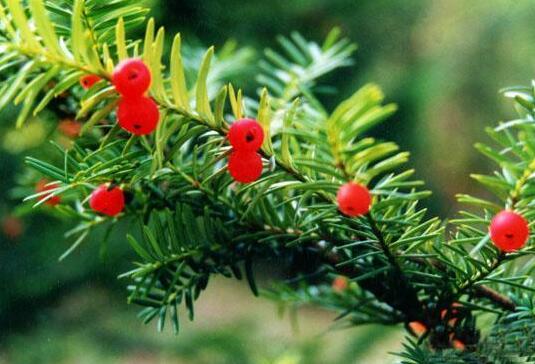
Because yew varieties differ and propagation methods differ, the time of blooming and fruiting also differs for every gardening enthusiast growing yew. So how many years does it take for a yew to bloom and bear fruit? For example, the Chinese yew (Taxus chinensis) must be over 7 years old before it blooms and bears fruit, while the Media yew (Taxus x media) can bear fruit at 4 years, and yews propagated by cuttings may bear fruit in 2-3 years.
1. Flowering and fruiting period of the Chinese yew
Its flowering period is usually from April to May, and the fruit ripening period is from June to November. Normally, it needs to reach a tree age of over 7-8 years before it bears fruit. The fruit is ruby-red in color, about the size of a cherry, and can be enjoyed both ornamentally and as food.
2. Fruiting period of the Media yew
It is mainly distributed in the United States and Canada, and is a newly bred hybrid variety, so its fruit ripens earlier than other varieties. Generally, a 3-year-old Media yew can bloom and bear fruit, with the fruiting period from June to November, and it is mainly used to extract taxol.
How to make a yew bloom and bear fruit
1. Cultivation methods
First, you must use the correct yew cultivation methods in your routine care and management, which include scientific watering, fertilizing, repotting, pruning and so on. Among these, repotting and pruning are easily overlooked by some gardening enthusiasts, but they are very beneficial to the growth of the yew.
2. Growing environment
The yew likes a moist, cool environment with fertile soil, good ventilation, moderate light and temperatures that are not too extreme. So in routine cultivation, you should try to create a suitable environment for it, so that the yew can grow faster.
3. Variety selection
Besides the cultivation method and growing environment, we also need to choose suitable varieties, and when planting, plant male and female plants together so that they can cross-pollinate after blooming, and thus successfully bear fruit.
How to grow red crabapple (Malus)
Part One: "Planting Methods for Ruby Crabapple"
Planting methods for Ruby Crabapple
As an excellent tree species for viewing flowers, foliage and fruit, the Ruby Crabapple will have very broad applications in urban landscaping in the future. However, the few varieties used in Chinese garden landscaping are currently a major problem troubling China's landscaping field. According to statistics, developed countries have as many as 2000-3000 species of ornamental garden trees, while most Chinese cities have only 100-200 species. With few species, a lack of layering and short ornamental periods, developing strongly ornamental colored-leaf tree species is one of the most feasible ways to quickly enrich China's garden landscapes and ornamental tree species. Jiangxi Sannong Flowers and Trees Gardening Co., Ltd. has introduced a large number of some North American crabapple varieties, and through the breeders' comparative selection of these varieties in terms of their adaptation to various places, growth vigor, disease resistance, cold and drought resistance and tolerance to acid and alkali, the ornamental effect and quality of the Ruby Crabapple are guaranteed. The improved and selected Ruby Crabapple has unmatched charm in landscaping compared with other tree species, and in the breeding experimental observations of it, its ornamental effect is indeed summarized as incredible.
The Ruby Crabapple is a precious landscaping and color-enhancing tree species whose leaves, flowers, fruits, branches and tree shape can all be appreciated together. It has the characteristics of "red leaves, red flowers, red fruits and red branches too," and its flowers, fruits, branches and leaves all show the ruby color during the growing season. After the red branches sprout in spring, their young buds and leaves are blood-red. Throughout the growing season, the leaves of the Ruby Crabapple are purplish-red, the color sensation of the whole plant is excellent, and it is waxy and glossy. The flowers it produces are pink, with a flowering period from April to May. After fruit set, bright red fruits hang all over the tree; the fruit is a red pome, close to spherical, and the fruit ripening period is from August to September. In autumn, the tree is full of red leaves, the branches are full of red fruits and the tree is full of purple branches, heavy with fruit, very beautiful. In winter, the bright red branches are refreshing. It not only grows well but also has a beautiful landscape presence and strong adaptability; below a pH value of 8.5, it can adapt and grow vigorously; after 5 years of experimental observation, when the lowest temperature reached -35.7°C, no frost damage occurred, and it is relatively cold-resistant, tolerant of barren soil and strongly resistant to saline-alkali soil.
Planting methods:
1. Planting. It is generally planted in the ground, and can also be potted to make a bonsai. Plant in spring; because it dislikes waterlogging, it should be planted in a sunny place with slightly higher terrain that is not prone to water accumulation. The soil should be neutral to slightly alkaline, with a pH value not lower than 7. The soil texture should be loose, but not too fertile, as overly fertile soil easily causes excessive vegetative growth and fewer flowers. The planting hole should be determined according to the size of the root system, and should not be too deep or too large; it is best if the root system can spread out. The planting depth is preferably 10 cm from the ground. It is best to plant with a soil ball. After planting, water thoroughly.
2. Light and temperature. Crabapple is suitable for growing in an environment with sufficient light, and grows poorly in shaded environments. If potted, it should be placed in a place with sufficient light during the growing period. In winter, it will not suffer frost damage even at a low temperature of -15°C, and can overwinter outdoors in the open ground. However, in an exceptionally cold winter, cold protection measures are needed.
3. Watering and fertilizing. Watering is done together with fertilizing. After the leaves fall each autumn, apply 1 heavy fertilizing to replenish the nutrients consumed by flowers and fruits, preferably with decomposed organic fertilizer. At the same time, water together with the winter irrigation. Before the spring buds sprout, apply 1 application of organic fertilizer and water once thoroughly. The fertilizing method in autumn and winter varies with tree age: for young trees, apply fertilizer in a ring-shaped trench, with the ring within 100 cm of the tree root; for older trees, dig radial trenches for fertilizing; for aged trees, combine with inter-row weeding and broadcast organic fertilizer under the canopy, then turn the fertilizer into the ground 30 cm deep. After the flowers fade, apply 2 topdressings of phosphorus and potassium fertilizer to ensure a certain fruit-setting rate. At the same time, pay attention to watering.
4. Shaping and pruning. Crabapple flower buds mostly differentiate from terminal buds, and medium and short fruit branches are the main flowering branches, so medium and short fruit branches should be retained. Long branches should be shortened, and overly dense branches, dead branches and diseased and pest-infested branches should also be cut off, then prune according to the desired tree shape. If you want a full crown, thin out the dense growth and keep it sparse, cutting away overly dense branches, while for parts with sparse branches, prune downward so as to make them produce more side branches and fill the gaps.
Sannong Crabapple Series: Indian Magic Crabapple, Ruby Crabapple, Flame Crabapple, Red Splendor Crabapple, Hall Crabapple, Royalty Crabapple, Adams Crabapple, Radiant Crabapple, Donghong Crabapple, Dolgo Crabapple, Midget Crabapple, Chaenomeles Crabapple, Speciosa Crabapple
Part Two: "Morphological Characteristics and Care and Cultivation of Ruby Crabapple"
Morphological characteristics and care and cultivation of Ruby Crabapple {How to grow red crabapple}.
As an excellent tree species for viewing flowers, foliage and fruit, the Ruby Crabapple will have very broad applications in urban landscaping in the future. However, the few varieties used in Chinese garden landscaping are currently a major problem troubling China's landscaping field. According to statistics, developed countries have as many as 2000-3000 species of ornamental garden trees, while most Chinese cities have only 100-200 species. With few species, a lack of layering and short ornamental periods, developing strongly ornamental colored-leaf tree species is one of the most feasible ways to quickly enrich China's garden landscapes and ornamental tree species. Jiangxi Sannong Flowers and Trees Gardening has introduced a large number of some North American crabapple varieties, and through the breeders' comparative selection of these varieties in terms of their adaptation to various places, growth vigor, disease resistance, cold and drought resistance and tolerance to acid and alkali, the ornamental effect and quality of the Ruby Crabapple are guaranteed. The improved and selected Ruby Crabapple has unmatched charm in landscaping compared with other tree species, and in the breeding experimental observations of it, its ornamental effect is indeed summarized as incredible.
Morphological characteristics:
The Ruby Crabapple is a precious landscaping and color-enhancing tree species whose leaves, flowers, fruits, branches and tree shape can all be appreciated together. It has the characteristics of "red leaves, red flowers, red fruits and red branches too," and its flowers, fruits, branches and leaves all show the ruby color during the growing season. After the red branches sprout in spring, their young buds and leaves are blood-red. Throughout the growing season, the leaves of the Ruby Crabapple are purplish-red, the color sensation of the whole plant is excellent, and it is waxy and glossy. The flowers it produces are pink, with a flowering period from April to May. After fruit set, bright red fruits hang all over the tree; the fruit is a red pome, close to spherical, and the fruit ripening period is from August to September. In autumn, the tree is full of red leaves, the branches are full of red fruits and the tree is full of purple branches, heavy with fruit, very beautiful. In winter, the bright red branches are refreshing. It not only grows well but also has a beautiful landscape presence and strong adaptability; below a pH value of 8.5, it can adapt and grow vigorously; after 5 years of experimental observation, when the lowest temperature reached -35.7°C, no frost damage occurred, and it is relatively cold-resistant, tolerant of barren soil and strongly resistant to saline-alkali soil. Crabapple: Rosaceae, Chaenomeles genus, a deciduous small shrub, with small prickles on the branches, many branches, brown, leaves broadly ovate, apex blunt or slightly pointed with rounded serrations on the edges, flowers clustered, flowering before leafing out, flower colors include red, orange, white, pink, etc., single or double, brightly colored flowers, bearing spherical or pear-shaped fruit after flowering, with an fragrant aroma when ripe, a high-grade flowering tree that combines bud viewing, flower viewing, fruit appreciation and medicinal use. Care and cultivation methods:
It is generally planted in the ground, but can also be made into a stump bonsai for pot cultivation. The planting time is preferably before bud break in early spring or after leaf fall in early winter. When seedlings leave the nursery, keeping the root system of the seedling intact is one of the keys to successful planting. Generally, large seedlings to be planted must have a soil ball, and small seedlings should retain some native soil depending on the situation. After the seedlings are planted, tending and management should be strengthened, and the soil should often be kept loose and fertile. Every autumn and winter, a batch of pond mud or fertile soil can be replaced and banked up around the root zone. After leaf fall and before bud break in early spring, carry out one pruning, cutting off dead and weak branches and diseased and pest-infested branches, so as to keep the crown open and allow ventilation and light penetration. To promote vigorous flowering of the plant, the leggy branches should be shortened, to reduce the nutrient consumption of sprouting, so that all retained axillary buds can obtain more nutrients and form more flowering and fruiting branches. Fruit branches and intermediate branches do not need pruning. During the growing period, if pinching can be carried out in time to limit vegetative growth early, the effect is even more remarkable. For potted stump bonsai, this control should be applied even more.
In case of a spring drought, carry out 1-2 irrigations, and pay attention to controlling pests such as scarab beetles, leaf rollers, aphids, bagworms and red spiders, as well as diseases such as rot disease and red star disease.
Part Three: "Care of Chaenomeles speciosa"
[Species name] Chaenomeles speciosa / wrinkled-skinned papaya
[Chinese aliases] Iron-foot crabapple, iron-stem crabapple, wrinkled-skinned papaya, Sichuan papaya, Xuan papaya
[Latin scientific name] Chaenomeles speciosa
[Family and genus classification] Rosaceae, Chaenomeles genus
[Morphological characteristics]
Deciduous shrub, up to 2 m tall, branchlets hairless, with thorns. Leaves ovate to elliptic, 3-10 cm long, 1.5-1 cm wide. Flowers clustered, red, pink, pale red or white; styles 5, united at the base, hairless; pome spherical or oblong, about 8 cm long, and the fruit skin shrivels after drying.
Flowering period March to April, fruiting period October. The fruit is ovate or oblong, mostly cut longitudinally into two halves, 4-9 cm long, 2-5 cm wide, 1-2.5 cm thick. The outer surface is purplish-red or reddish-brown, with irregular deep wrinkles; the cut edge curls inward, the flesh is reddish-brown, and the central part is sunken and brownish-yellow.
[Habits] It likes light, is relatively cold-resistant, not tolerant of flooding, and not choosy about soil, but likes fertile, deep, well-drained soil. Propagation methods
Chaenomeles speciosa is mainly propagated by division, cuttings and layering, and sowing is also possible. Sowing propagation can obtain a large number of uniform seedlings, but it is not easy to maintain the original variety characteristics. Chaenomeles speciosa has strong tillering ability, and in autumn or early spring the mother plant can be dug out and divided, divided into 2 to 3 trunk branches per plant, and after planting it can be divided again 3 years later. Generally, after division in autumn, heel in the plants to promote wound healing, and they can be planted out in the following spring, and can bloom the next year. Hardwood cuttings are taken at the same time as division, and in the growing season softwood cuttings can also be taken. Take a section about 15 cm long, insert it into plain sand or plain soil, water thoroughly and keep moist, and after more than a month leaves can emerge. Cutting seedlings can bloom in 2 to 3 years.
Care and management
Chaenomeles speciosa is relatively simple to manage. Because its flowering is mainly on short branches, before spring sprouting the long branches need to be appropriately shortened and pruned into a hemispherical shape, to stimulate the sprouting of more new shoots. During summer growth, the growing branches should also be pinched. During cultivation and management, pay attention to watering in the dry season. Chaenomeles speciosa fears waterlogging, otherwise it easily rots the roots, so watering must be moderate; in the annual dry season, watering a few times appropriately is enough, and from October to before spring of the next year, water less or not at all. Fertilizing can be done after flowering, applying decomposed human and animal manure or barnyard manure 1-2 times, and cutting off the tips of old branches to promote the sprouting of new shoots; after autumn, apply organic fertilizer once more to help increase the amount of flowering the next year. When the winter temperature is below minus 20°C, outdoor plants need attention to cold protection, and potted Chaenomeles speciosa can be moved indoors to overwinter.
White Chaenomeles speciosa flowers
Decomposed organic fertilizer, or an appropriate amount of compound fertilizer (N, P, K elements). For potted flower forcing, suitable plants can be dug up and potted from September to October, first placed in a cool, ventilated place for care for a period, and after winter begins moved into a 15°C to 20
°C greenhouse, frequently
spray water on the branches, and after about 25 days they can bloom, and can be used for New Year's Day and Spring Festival viewing.
Chaenomeles speciosa that blooms during the Spring Festival has been forced. Usually more than a month before the Spring Festival, the plant is placed in a greenhouse and heated to promote the flower buds to grow and swell abnormally, achieving the purpose of early blooming. The normal flowering period in the Jiangnan region is around April. Chaenomeles speciosa is not strict about soil; for potting, ordinary garden soil mixed with 25% decomposed organic fertilizer can be used. During the growing season, Chaenomeles speciosa can be fertilized once every month, with either organic or inorganic fertilizer. When new leaves sprout after flowering, topdressing should be applied in time, and the nitrogen content in the fertilizer can be appropriately higher to benefit the growth of new leaves. After June, apply more fertilizer with high phosphorus and potassium content to ensure flower bud differentiation. Chaenomeles speciosa is a sun-loving flower, and during the growing period it should be placed in sunlight; sufficient sunlight can make the new leaves fully spread out, the old leaves robust and the plant shape compact, and also produce more flowers the next year. If there is little light, the new leaves grow leggy and are easily harmed by aphids, and there will be fewer flower buds the next year. During the flowering period, sufficient light makes the flowers large and bright; with little light, the flowers are weak and the flower color turns pale red, or even white; if placed in a place with sufficient light, the flower color will gradually turn deep red after a few days. Chaenomeles speciosa is relatively drought-tolerant, and during the growing period it is generally watered thoroughly after the soil dries out. In summer, spraying and watering should avoid noon. During the growing season, Chaenomeles speciosa is easily harmed by aphids, stinging moth larvae and scale insects,
Part Four: "How to Plant Ruby Crabapple"
How to plant Ruby Crabapple
The Ruby Crabapple is a precious landscaping, color-enhancing and fruit-producing tree species whose leaves, flowers, fruits, branches and tree shape can all be appreciated together. It has the characteristics of "red leaves, red flowers, red fruits and red branches too," and its flowers, fruits, branches and leaves all show the ruby color during the growing season. After the red branches sprout in spring, their young buds and leaves are blood-red. Throughout the growing season, the leaves of the Ruby Crabapple are purplish-red, the color sensation of the whole plant is excellent, and it is waxy and glossy. The flowers it produces are pink, with a flowering period from April to May. After fruit set, bright red fruits hang all over the tree; the fruit is a red pome, close to spherical, and the fruit ripening period is from August to September. In autumn, the tree is full of red leaves, the branches are full of red fruits and the tree is full of purple branches, heavy with fruit, very beautiful. In winter, the bright red branches are refreshing, and it is also an excellent tree species for greening parks, courtyards and streets. Moreover, because it is easy to prune and shape, it is often planted beside courtyard gates or on both sides of pavilions and corridors, and is also a material for configuring lawns, rockeries and lake stones. It not only grows well but also has a beautiful landscape presence and strong adaptability, is tolerant of barren soil and strongly resistant to saline-alkali soil. Below a pH value of 8.5, it can adapt and grow vigorously; it is cold-resistant, and after 5 years of experimental observation, when the lowest temperature reached -35.7°C, no frost damage occurred, and it grew well; it is the best excellent colored landscaping tree species for cities.
The Ruby Crabapple has the characteristics of "red leaves, red flowers, red fruits and red branches too," and may become an indispensable tree species in landscaping. The color sensation of the whole Ruby Crabapple plant is excellent, and it is waxy and glossy. Moreover, the Ruby Crabapple has very strong adaptability to the environment; as long as it is managed properly, whether in hot summer or cold winter, the Ruby Crabapple will not die. Jiangxi Lvnong Agricultural Development Co., Ltd. introduces the planting and pruning methods of the Ruby Crabapple as follows: {How to grow red crabapple}.
Selection of planting site: To plant Ruby Crabapple, choose fertile, well-drained soil, because this benefits root absorption.
Fertilizer and water management after planting: Planting Ruby Crabapple requires a large amount of water and fertilizer, so during the planting process, regular fertilizing and watering are necessary.
Pruning: A moderate amount of pruning can make the Ruby Crabapple grow more vigorously, and regular pruning is necessary, but during pruning pay attention to the number of prunings. {How to grow red crabapple}.
Pests and diseases and their control: A large number of pests and diseases do not affect the survival rate and beauty of the Ruby Crabapple, but during the planting process, pest and disease control must be carried out.
Part Five: "Methods for Caring for Midget Crabapple (Jiangxi Sannong)"
Methods for caring for Midget Crabapple (Jiangxi Sannong)
Midget Crabapple, also known as mother-and-child crabapple, is one of China's traditional famous flowers. It has national beauty and heavenly fragrance, being both fragrant and gorgeous. The flower buds are rose-red, and the budding flower buds are dotted with scarlet, like touches of rouge, small and exquisite, very lovely, and it is a superior grade among crabapples. It likes light, is cold-resistant, drought-resistant and averse to water and moisture. It is the best product among shrubs or small trees, and is a relatively popular product in greening projects. It can be potted and pruned into an elegant stump bonsai treasure. It can also be planted in the ground for courtyards, flower beds, roads, parks and residential areas. So how is Midget Crabapple cared for? Below, Jiangxi Sannong Flowers and Trees Gardening Co., Ltd. introduces the care methods for Midget Crabapple as follows:
1. Planting. Midget Crabapple is generally planted in the ground, and the time is preferably before bud break in early spring or after leaf fall in early winter. When leaving the nursery, keeping the root system of the seedling intact is the key to survival. Generally, large seedlings need a soil ball, and small seedlings should retain native soil depending on the situation. After the seedlings are planted, tending and management should be strengthened, and the soil should often be kept loose and fertile.
2. Pruning. After leaf fall and before bud break in early spring, carry out one pruning, cutting off dead and weak branches and diseased and pest-infested branches, so as to keep the crown open and allow ventilation and light penetration. To promote vigorous flowering of the plant, the leggy branches must be shortened, to reduce the nutrient consumption of sprouting. Fruit branches and intermediate branches do not need pruning. During the growing period, if pinching can be carried out in time to limit vegetative growth early, the effect is even more remarkable.
3. Diseases. Rot disease, also known as bark rot, is one of the important diseases of many crabapples, harming the trunk and branch tips. It generally begins to occur from April to May each year, with the peak period from May to June, and after July the disease gradually moderates. In the early stage of the disease, water-soaked lesions appear on the trunk, and afterward the cortex of the diseased part rots, shrinks and sinks. In the later stage, many small black needle-like protrusions grow, namely the pycnidia. Control methods: Remove diseased trees, burn diseased branches, and reduce the source of the pathogen. Spray lime-sulfur mixture in early spring or brush lime agent on the trunk. At the initial onset, cut cross-hatched cuts about 0.5 cm apart on the lesions, reaching the xylem, then spray a fungicide. The main disease of Midget Crabapple bonsai is red star disease, which can be controlled with agents such as lime-sulfur mixture and thiophanate-methyl; the main pests include aphids, scale insects, pear lace bugs, stinging moths and longhorn beetles, which can be controlled with agents such as dichlorvos, deltamethrin, phoxim and cypermethrin. Note to avoid using dimethoate or omethoate, to prevent phytotoxicity.
4. Watering and fertilizing. To make Midget Crabapple's flowers beautiful, it should be planted in well-drained, fertile and moist land. The planting time should be before buds sprout in early spring, and decomposed organic fertilizer should be applied before planting. After leaf fall each autumn, dig a ring-shaped trench around its root zone, apply decomposed organic fertilizer, cover with soil and water thoroughly, and this will make the branches lush and the flowers numerous and beautiful. During the seedling stage, water frequently to keep the soil moist, but there must be no water accumulation; in the rainy season, drain water in time, and every 2-3 weeks loosen the soil with inter-row cultivation once to facilitate aeration.
Part Six: "Irrigation and Care Methods for Colored-Leaf Seedlings"
Irrigation and care methods for colored-leaf seedlings
Greening seedlings have strict requirements for water; their characteristic is that they like moisture and fear waterlogging. They grow well when the soil is moist, otherwise growth is obviously poor. If ginkgo seedlings are soaked in water for 3-4 days, they will all die. Therefore, in the production process, special attention must be paid to the watering and drainage of ginkgo.
(1) Watering principles: In terms of the growth process of ginkgo, one should focus on spring, adopting the principle of watering frequently in small amounts many times. Spring is the key period for watering ginkgo, and from late June to early July the new shoots of ginkgo stop growing. From before and after sprouting to before and after wheat harvest is the key period when ginkgo needs water. However, this period is generally a season of little rain and drought, so water frequently in small amounts many times to keep the soil moist, keeping the soil moisture content at 60%-80% of the field maximum water-holding capacity. From late June to late July is the peak of ginkgo seed kernel growth and development, requiring a relatively large amount of water, but generally this period is a rainy season; if dry weather occurs, watering must be done, otherwise it will affect the growth and development of the seed kernel and cause reduced yield. From autumn to before the soil freezes, ginkgo needs less water than in spring, and generally no watering is done unless there is special drought. Before the soil freezes, generally water once with freeze-up water. Leaf-harvesting ginkgo plantations need more watering than fruit-producing plantations; before the end of September, water whenever there is drought.
(2) Irrigation methods: At present, most areas of our country mostly use flood irrigation. The disadvantages of this irrigation method are that it wastes water, damages the soil's physical and chemical properties, causes serious nutrient loss, and the effective utilization period of soil moisture is short, which is not conducive to ginkgo growth. Reforming irrigation methods is an important technical measure for saving water and using water scientifically. According to the growth characteristics and production practice of ginkgo, the best irrigation methods are sprinkler irrigation and micro-spraying; these two irrigation methods can increase the growth of ginkgo. So in places
with conditions, sprinkler irrigation, drip irrigation and micro-sprinkler irrigation should be vigorously promoted. In places that temporarily lack the conditions, flood irrigation should also be changed to hole irrigation or furrow irrigation.
(1) Hole irrigation: suitable for cultivation modes such as "four-side" planting, intercropping, farmland shelterbelts and urban greening. The specific method is: from the outer edge of the crown projection inward about 30 cm, dig irrigation holes about 25 cm deep and about 30 cm in diameter. The irrigation holes are evenly arranged along the crown. The number of holes dug, in general, should ensure that within the root distribution area, more than 40% of the soil maintains 60%-80% of the field maximum water-holding capacity. Generally, for 3-4 year old trees, 2-3 holes per tree; in the initial fruiting stage, 3-4 holes per tree; in the full fruiting stage, 4-6 holes per tree. After digging the holes, fill them with water, and after the water has all seeped down, immediately fill the holes level with soil and level the tree disk.
(2) Furrow irrigation: suitable for cultivation modes such as fruit-producing plantations, leaf-harvesting plantations, high-yield forests and intercropping. The specific method is: dig strip trenches 20-25 cm deep and 30-40 cm wide between the rows of trees. As for the number of trenches, according to experience in various places, generally one trench every 100-120 cm is enough. The gradient of the strip trenches is 1/1200. Too large a gradient easily causes uneven irrigation. When irrigating, fill the trenches as the standard, and after the water seeps down, fill the trenches level in time.
Jiangxi Yihuang County Sannong Flowers and Trees Gardening Co., Ltd. was founded in 2006 by Xiao Bin. It is a large seedling company integrating scientific research, production, introduction, demonstration, sales and promotion, and specializing in new varieties of greening and colored-leaf seedlings. The company has always adhered to the business principles of "integrity, professionalism, innovation and gratitude," and has won the trust and high praise of new and old customers. Gathering the essence of domestic and foreign varieties, it has successively introduced and collected more than 300 new seedling and colored-leaf seedling varieties from home and abroad, among which more than 100 varieties in the new colored-leaf series such as red-leaf arbor vitex, Japanese red maple Sijihong, red-leaf cherry blossom, golden-leaf dawn redwood and Ruby Crabapple enjoy relatively high evaluation and reputation in the domestic landscaping industry. The fine and superior variety scion collection garden, demonstration garden and high-standard seedling base have expanded to more than 300 mu, with an annual output value of nearly 10 million yuan, and about 200,000 customers spread across 25 provinces and cities nationwide. In order to accelerate the development and promotion of new varieties of greening seedlings in our country, serve the adjustment of our country's current agricultural structure, develop high-quality and efficient agriculture and promote farmers' increased production and income, the company has made relatively large contributions. {How to grow red crabapple}.
Through years of development, Jiangxi Sannong Flowers and Trees Gardening Co., Ltd. has created the "Huacai Sannong" brand, and promoted it domestically through various channels such as newspapers, magazines, the internet, exhibitions and conferences. Its products are all over Beijing, Shanghai, Zhejiang and other places across the country, and it has established stable partnerships with a group of merchants. {How to grow red crabapple}.
While launching new greening and colored-leaf varieties, the company, proceeding from the benefits of those who introduce and establish plantations, repeatedly tests each variety, striving for them to have reliable adaptability while possessing excellent traits, so as to ensure more remarkable cultivation benefits. New and old customer friends and seedling-using units are welcome to conduct on-site inspections, view seedlings and place orders. Every year, some rare varieties are introduced from home and abroad for planting and promotion.
For details, please refer to the book "A Collection of Rare Seedlings from Home and Abroad" printed every year.
Jiangxi Sannong Flowers and Trees latest product series: {How to grow red crabapple}.
Sannong Eight Great Treasures: Japanese red-leaf arbor vitex (No. 1), fast-growing brilliant red crape myrtle, golden-leaf dawn redwood, red-leaf cherry blossom, Japanese red maple Sijihong, fast-growing red osmanthus, red-leaf red fruit, Ruby Crabapple. Crape myrtle series: Red Fireball crape myrtle, fast-growing crape myrtle, American red-leaf arbor crape myrtle (No. 2), rose-red crape myrtle, American Red Rocket crape myrtle
Red maple series: Japanese red maple Red Maiko, pomegranate-red feather maple, Japanese red maple Orange Dream, Japanese red maple Butterfly Maple, Euro red maple, Chinese red maple, American improved red maple (Autumn Flame), American improved red maple (October Glory), American improved red maple (Red Sunset Maple), Red King Norway maple, variegated Norway maple, variegated box elder, pink-leaf box elder, golden-leaf box elder
Osmanthus series: Zhuangyuan Red osmanthus, Rixiang osmanthus, August Golden osmanthus, Dan osmanthus, Yueyuehong osmanthus, fast-growing silver osmanthus, Xideguizi, Golden Ball osmanthus, Tianxiang Taige, Jinmantang osmanthus, Chinese Dragon osmanthus, Fodingzhu osmanthus
Crabapple series: Royalty Crabapple, Indian Magic Crabapple, Hall Crabapple, Adams Crabapple, Radiant Crabapple, Donghong Crabapple, Dolgo Crabapple, Midget Crabapple, Chaenomeles Crabapple, Speciosa Crabapple
Cherry blossom series: Yoshino cherry, Feihan cherry (fast-growing cherry blossom), Japanese early cherry, Kanzan cherry
Camellia series: Four-season golden camellia, concave-veined golden camellia, Shibaxueshi camellia, Krammer's Grand Peony camellia, Bella Grande Rose camellia, Midnight Magic camellia, Fragrant Sun camellia, Liexiang camellia, Queen No. 2 camellia (broad color band), Confused Spring camellia, Elizabeth Weaver camellia, red-leaf Bella camellia, Tongzimian camellia, Black Magic camellia, Crown camellia, Hua Baozhu camellia, Hong Luzhen camellia, red-leaf camellia. Colored willow series: golden fragrant willow, red-leaf willow, golden silk willow, American chameleon willow, 9901 willow, American bamboo willow
Colored small tree or large tree series: red-leaf tree of heaven, European golden-leaf poplar, four-season red poplar, golden-leaf ginkgo, red-leaf longevity peach, golden-edge tulip tree, purple-leaf silk tree, golden-leaf ash, golden-leaf black locust, golden-leaf Chinese scholartree
golden-leaf goldenrain tree, northern red oak
Colored small shrub or small tree series: red-leaf red fruit, red five-color honeysuckle, golden gem, Chinese yew, rare Buddhist pine, sparrow-tongue Buddhist pine, red-leaf beauty plum, pure-hearted wintersweet, golden flower cypress, blue flower cypress, Canadian red-leaf redbud, European variegated hibiscus, purple-leaf weigela, golden-leaf weigela, red-leaf nandina, variegated oleander, golden-leaf red-twig dogwood, golden-leaf smoke tree, American purple-leaf smoke tree, agate pomegranate, peony-flowered pomegranate, tricolor hypericum, purple-leaf ninebark.
Edited by Jiangxi Sannong Flowers and Trees Gardening
Part Seven: "Japanese Red Maple Sijihong - Care"
Japanese Red Maple Sijihong - Care
The leaf edges of Japanese red maple Sijihong have serrations. The leaves and stems are blood-red year-round and do not change with the seasons. When the hot summer comes, ordinary Japanese red maple leaves turn green, while the whole Japanese red maple Sijihong is still a beautiful red, with no leaf scorch or burnt leaves! It grows faster than ordinary red maple. It has strong upright growth. It likes sunlight and a warm, humid environment, is tolerant of partial shade, and is not strict about soil.
Most red maple varieties have red new leaves, gradually turn green in summer, and turn red again after frost. To make red maple show red leaves in advance around National Day, the method of leaf removal can be used to force reddening and compel new leaves to sprout. The specific method is: in mid-August, remove all leaves on the plant together with the petioles. Place it in a sunny place, apply manure 1-2 times, and water once a day to keep the potting soil moist, while appropriately spraying water on the branches. After about half a month, the axillary buds will successively sprout and produce small red leaves, and in late September the whole leaves develop and mature, with the whole tree red, just in time to appreciate around National Day.
Sannong Eight Great Treasures: Japanese red-leaf arbor vitex (No. 1), American Red Rocket crape myrtle
golden-leaf dawn redwood, red-leaf cherry blossom, Japanese red maple Sijihong, fast-growing red osmanthus, red-leaf red fruit, Ruby Crabapple
Crape myrtle series: Red Fireball crape myrtle, fast-growing crape myrtle, American red-leaf arbor crape myrtle (No. 2), rose-red crape myrtle
Red maple series: Japanese red maple Red Maiko, pomegranate-red feather maple, Japanese red maple Orange Dream, Japanese red maple Butterfly Maple, Euro red maple, Chinese red maple, American improved red maple (Autumn Flame), American improved red maple (October Glory), American improved red maple (Red Sunset Maple), Red King Norway maple, variegated Norway maple, variegated box elder, pink-leaf box elder, golden-leaf box elder
Osmanthus series: Zhuangyuan Red osmanthus, Rixiang osmanthus, August Golden osmanthus, Dan osmanthus, Yueyuehong osmanthus, fast-growing silver osmanthus, Xideguizi, Golden Ball osmanthus, Tianxiang Taige, Jinmantang osmanthus, Chinese Dragon osmanthus, Fodingzhu osmanthus
Crabapple series: Royalty Crabapple, Indian Magic Crabapple, Hall Crabapple, Adams Crabapple, Radiant Crabapple, Donghong Crabapple, Dolgo Crabapple, Midget Crabapple, Chaenomeles Crabapple, Speciosa Crabapple
Cherry blossom series: Yoshino cherry, Feihan cherry (fast-growing cherry blossom), Japanese early cherry, Kanzan cherry
Camellia series: Four-season golden camellia, concave-veined golden camellia, Shibaxueshi camellia, Krammer's Grand Peony camellia, Bella Grande Rose camellia, Midnight Magic camellia, Fragrant Sun camellia, Liexiang camellia, Queen No. 2 camellia (broad color band), Confused Spring camellia, Elizabeth Weaver camellia, red-leaf Bella camellia, Tongzimian camellia, Black Magic camellia, Crown camellia, Hua Baozhu camellia, Hong Luzhen camellia, red-leaf camellia
Colored willow series: golden fragrant willow, red-leaf willow, golden silk willow, American chameleon willow, 9901 willow, American bamboo willow
Colored small tree or large tree series: red-leaf tree of heaven, European golden-leaf poplar, four-season red poplar, golden-leaf ginkgo, red-leaf longevity peach, golden-edge tulip tree, purple-leaf silk tree, golden-leaf ash, golden-leaf black locust, golden-leaf Chinese scholartree, golden-leaf goldenrain tree, northern red oak
Colored small shrub or small tree series: red-leaf red fruit, red five-color honeysuckle, golden gem, Chinese yew, rare Buddhist pine, sparrow-tongue Buddhist pine, red-leaf beauty plum, pure-hearted wintersweet, golden flower cypress, blue flower cypress, Canadian red-leaf redbud, European variegated hibiscus, purple-leaf weigela, golden-leaf weigela, red-leaf nandina, variegated oleander, golden-leaf red-twig dogwood, golden-leaf smoke tree, American purple-leaf smoke tree, agate pomegranate, peony-flowered pomegranate, tricolor hypericum, purple-leaf ninebark.
Jiangxi Sannong Flowers and Trees Gardening Co., Ltd.
How to grow Chinese torreya and points to note
Chinese scientific name: Chinese torreyaLatin scientific name: Torreya grandis Fort. ex Lindl. cv. MerrilliiOther names: Chinese torreya, torreya tree, jade torreya, wild Chinese torreya seedTwo-name method: Torreya grandisKingdom: PlantaeDivision: GymnospermaeClass: ConiferopsidaOrder: TaxalesFamily: TaxaceaeGenus: TorreyaSpecies: Chinese torreyaDistribution area: Jiangsu, Zhejiang, Fujian, Jiangxi, Anhui, Hunan, GuizhouChinese torreya (scientific name: Torreya grandis Fort. ex Lindl. cv. Merrillii.), also known as Chinese torreya, is an evergreen tree of the order Taxales, family Taxaceae and genus Torreya. It is a tree species native to China, and is a rare economic tree species in the world. It mainly grows in the relatively humid areas of southern China, below 1400 m altitude, in warm and rainy yellow soil, red soil and yellow-brown soil areas. At present, it is mainly distributed in Yixian in Anhui, Zhuji and Fuyang in Zhejiang, China, and other places. Chinese torreya can reach 25 m tall, and is a type of torreya tree, usually obtained through grafting. The growth and maturation period of Chinese torreya is three years: it blooms in the first year, bears fruit in the second year, and matures in the third year (though generally a Chinese torreya tree needs several hundred years to bloom). The flowering period is mid-to-late April, and the fruit ripens in September of the following year. Its fruits grow in clusters on the branches, and it has always been known as the "three-generation fruit"; on one tree, one-year fruit and two-year fruit often exist at the same time. The fruit of Chinese torreya is a nut with extremely high nutritional value. The dried fruit is called "Chinese torreya seed," and is a famous dried fruit; it is olive-shaped, with a relatively hard shell, and inside is a black seed coat wrapping pale yellow flesh, which is edible and rich in nutrition. In East Asian countries, torreya wood is a high-grade wood used to make Go boards.1. Morphological characteristics
Torreya grandis is an evergreen tree, grafted, up to 20 m tall, with a trunk base 30-60 cm high and up to 1 m in diameter, from which 3-4 obliquely spreading trunks arise; branchlets droop, with first- and second-year branchlets green and third-year branches green-purple or purple; leaves dark green, relatively soft in texture; seeds including the fleshy aril broadly oblong or obovate, 3-4 cm long, 1.5-2.5 cm in diameter, with a white bloom, dark purple and glossy when dry, with a short pointed tip at the apex; seeds oblong-obovate or cylindrical, 2.7-3.2 cm long, 1-1.6 cm in diameter, with faint longitudinal shallow grooves, pointed at the base, endosperm slightly wrinkled inside.2. Growth Habits
The normal growth and development period of Torreya grandis has an annual average temperature of 14-18°C, an average accumulated active temperature of over 7000°C for years with ≥10°C, an annual extreme minimum temperature of ≥-15°C, a maximum temperature of ≤43.0°C, a frost-free period of ≥210 Td, abundant precipitation, and an average annual rainfall of ≥1200 mm. Torreya grandis is a relatively cold-tolerant tree species of the subtropics, dioecious, a shallow-rooted, semi-shade-tolerant evergreen large tree, fond of warm, humid, weak-light and cool climatic conditions. Streamsides with frequent morning and evening mist and mountain-waist valleys with less direct light and more scattered light are its best habitats. It is suitable for areas south of the middle and lower reaches of the Yangtze River, and planting in wind gaps should be avoided. Torreya grandis has low soil requirements and strong adaptability, preferring slightly acidic to neutral loam, that is, a pH value of 4.5-8.5. It is drought-tolerant and barren-tolerant, and can adapt to red soil and sandy (gravel, pebble) calcareous soil; it can even take root and grow in bare rock crevices. Under normal circumstances, the best area for planting Torreya grandis should be selected with deep soil layers, loose and fertile soil, good permeability, and complete drainage and irrigation facilities.3. Geographical Distribution
It is a tree species endemic to China, produced in southern Jiangsu, Zhejiang, northern Fujian, northern Jiangxi, southern Anhui, and westward to southwestern Hunan and Songtao, Guizhou, and other places. It grows below 1400 m altitude, in warm and rainy areas with yellow soil, red soil, and yellow-brown soil.