How to grow Cymbidium sinensis? Cultivation methods and precautions, avoid strong light
Cymbidium sinensis is a highly ornamental flowering plant that can be found all over the world. However, growing it well is not easy, and there are many things to pay attention to. So how do you grow Cymbidium sinensis? What are the cultivation methods and precautions for Cymbidium sinensis? Let me walk you through them below.
I. How to grow Cymbidium sinensis
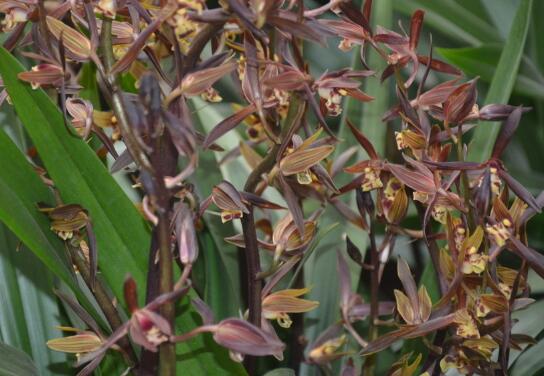
To know how to grow Cymbidium sinensis, we first need to understand its growth habits. Cymbidium sinensis is a shade-loving plant, so its demand for sunlight is not high. It likes to grow in a warm and moist environment, and under such conditions it will grow even better.
II. Cultivation methods and precautions for Cymbidium sinensis
1. Soil selection
When growing Cymbidium sinensis, the first thing is to choose the soil. Cymbidium sinensis prefers fertile humus soil. This kind of soil has excellent drainage and aeration, making it an excellent medium for cultivating Cymbidium sinensis, and it also allows the plant to absorb nutrients better.
2. Fertilization requirements
Fertilizer is one of the main nutrients in the growth of Cymbidium sinensis, especially during the growing season, when its demand for fertilizer is very high, requiring fertilization basically once every 20 days. However, fertilization for Cymbidium sinensis "should be dilute rather than concentrated." Before fertilizing, we should first dilute the fertilizer with water so that it can be absorbed better. If concentrated fertilizer is applied directly, it can easily burn the plant.
3. Humidity control
The humidity mentioned here refers to air humidity. Cymbidium sinensis likes to grow in an environment where the potting soil is slightly dry and the air humidity is high. When growing Cymbidium sinensis, it is best to keep the ambient humidity between 55% and 80%. If growing it indoors, we can use a humidifier to increase indoor humidity, so that it will grow better.
4. Watering requirements
During the growth of Cymbidium sinensis, its demand for water is also very high. Generally, rainwater and snow water are best. If tap water must be used on a sunny day, it must first be exposed to sunlight for a full day before use, and when watering, be sure not to spray water into the flower buds, as this can easily cause the buds to rot.
5. Light management
Cymbidium sinensis likes a cool and shady environment and is not tolerant of strong light, so when growing it, be sure not to place it in direct sunlight, as this can easily sunburn the plant. However, it should not be shaded too heavily either, as then it cannot carry out photosynthesis, which will affect its flowering. So when growing it, we can place it in a spot with scattered sunlight.
6. Pest and disease control
During the growth of Cymbidium sinensis, if we do not care for it properly, problems such as pests and diseases can easily appear. These problems are very harmful to the plant, so when they occur, they must be dealt with promptly. For specific treatment methods, you can refer to the article on pest and disease control for Cymbidium sinensis, which has detailed information, so I will not repeat it here.
Summary: After reading the above, everyone should have a certain understanding of how to grow Cymbidium sinensis. As long as you follow the methods above, your Cymbidium sinensis will surely grow with lush foliage. Enough talk, that is all from me on the cultivation methods and precautions for Cymbidium sinensis. I hope it can be of some help to everyone.
How to grow Cymbidium sinensis, cultivation methods and precautions for Cymbidium sinensis
Today, more and more friends who love Cymbidium sinensis are gradually moving it into indoor pots as an indoor ornamental plant. So how do you grow Cymbidium sinensis? The cultivation methods for Cymbidium sinensis have become a concern for many consumers. Let me tell you about the cultivation methods and precautions for Cymbidium sinensis.
How to grow Cymbidium sinensis
1. Cultivation substrate
Traditional Chinese potted orchids mostly use the humus soil from the forests of their place of origin, which the locals call "orchid mud." This soil is rich in humus, loose and non-sticky, and often slightly acidic, making it an excellent potting soil for cultivating orchids. When cultivating orchids in the north, a mixture of 5 parts leaf mold and 1 part sandy soil is generally used. Some also use a mix of 4 parts humus soil, 2 parts peat soil, 2 parts furnace slag and 2 parts river sand.
2. Dividing seedlings and disinfection
When dividing the pot, first grasp the base of the orchid seedling with the five fingers of your left hand, turn the pot upside down, and gently tap around the pot to separate the pot from the potting soil, then carefully pat and shake the soil ball to remove the soil. Carefully clean the orchid roots, cut off rotten roots, broken roots, dead leaves and dried pseudobulbs, then rinse clean with water, and place the orchid roots into a 1000-fold dilution of Topsin or an 800-fold dilution of potassium permanganate for disinfection, to kill the pathogens near the wounds.
3. Potting
After choosing the pot, before planting, first cover the drainage hole at the bottom of the pot with a large piece of broken tile, and lay on window screen, then spread coarse mountain soil particles, and then place in the orchid plant (the root system of the orchid plant should be distributed evenly and spread out, not touching the pot wall), then fill the pot with humus soil up to the leaf base of the pseudobulb. Then cover the surface of the soil with a layer of white stones or Selaginella uncinata, which is both attractive and helps keep the surface soil moist. Then use the bottom-seepage method to make the soil thoroughly wet, then take it out, rinse the soil off the leaves with a watering can, place it in a shaded place to recover, and after a week move it to normal management.
4. Management
Cymbidium sinensis is a semi-shade plant and requires environmental conditions of "warmth, moisture, scattered light and ventilation." How well it grows depends entirely on care and management. The cultivation site requires good ventilation and shade facilities. The water requirements of Cymbidium sinensis mainly depend on the temperature, light intensity and plant growth. Gao Lian of the Ming Dynasty wrote in the appendix to the "Lan Pu," in "Four Prohibitions for Cultivating Orchids": "Do not take it out in spring, do not expose it to the sun in summer, do not let it dry in autumn, do not keep it wet in winter." These twelve characters are indeed the experience of growing orchids. For Cymbidium sinensis, rainwater or snow water is best. If tap water must be used to water the orchid, it must be exposed to the sun for a day before use. Use a watering can when watering, and do not spray water into the flower buds, to avoid causing rot. In summer, never let it be drenched by sudden rain; plastic film must be used to block the rain. As for watering time, in summer and autumn, water around sunset, and the leaf surface should be dry before nightfall. In winter and spring, watering around sunrise is best, and misting should also be done to increase air humidity to benefit the growth of Cymbidium sinensis.
5. Fertilization
Fertilization for Cymbidium sinensis "should be dilute rather than concentrated," generally starting in late spring and stopping in late autumn. The suitable temperature for fertilization is 18°C to 25°C, and fertilization should not be done on cloudy or rainy days. As for the types of fertilizer, both organic and inorganic fertilizers are fine. During the growing season, fertilize once a week. In autumn and winter, Cymbidium sinensis grows slowly, so fertilize less, once every 20 days. After fertilizing, spray a small amount of clean water to prevent the fertilizer solution from soiling the leaves. Fertilization must be done on a clear evening; fertilizing on cloudy days risks root rot.
Cultivation methods and precautions for Cymbidium sinensis
(1) Likes shade, and avoids strong light. According to many field investigations, Cymbidium sinensis mostly grows in sunny dense forests. According to experiments by the National Orchid Research Center of South China Normal University and the Department of Botany of the National University of Singapore: the light compensation point of photosynthesis in Cymbidium sinensis is about half of the morning light in spring, and the light saturation point is about 10%-15% of the midday light intensity in summer. This fully confirms that Cymbidium sinensis is a typical shade plant. If the sunlight is too strong, it will very easily cause sunscald damage. Therefore, in winter and spring there should be 60%-70% shade density; in summer and autumn there should be 85%-90% shade density.
(2) Likes warmth, and avoids severe cold. The suitable growth temperature for Cymbidium sinensis is 25-28°C, and the suitable temperature during dormancy is 12-15°C during the day and 8-12°C at night. It is not tolerant of low temperatures below 3°C. Even a brief low temperature below 2°C will cause freeze damage.
(3) Likes moisture, and avoids dryness. Cymbidium sinensis originated in the rain-rich forests of the south, and likes moisture while avoiding dryness. During the growing period it needs 75%-80% relative air humidity, and in winter it needs more than 50% relative air humidity. When the substrate surface is on the dry side, water it as soon as possible, and never let it stay too dry for too long.
(4) Likes fertilizer, and avoids turbidity. According to measurements by relevant departments: both the leaves and pseudobulbs of Cymbidium sinensis contain large amounts of phosphorus, and its old roots also have a very strong ability to absorb phosphorus, so Cymbidium sinensis has a relatively low phosphorus requirement; Cymbidium sinensis has thick stems and broad leaves, so its demand for nitrogen is relatively large. Cymbidium sinensis has broad leaves and needs more potassium nutrition, so that the lignin and cellulose in the stems and leaves can effectively increase and strengthen the supporting power of the stems and leaves, preventing them from being weak and unsupported. Therefore, the suitable ratio of the three major fertilizer elements for Cymbidium sinensis is nitrogen 35% : 20% : 45%. Although Cymbidium sinensis likes fertilizer, it absolutely must not be given high-concentration fertilizer or frequent fertilization; rather, it requires chemical fertilizer at 0.1%, organic liquid fertilizer at 0.1%-0.2%, applied once every 15-20 days.
Cymbidium sinensis has a rich fragrance, varied flower colors, beautiful flowers, and a unique leaf shape. Many friends cannot resist its charm. If you like it, you can grow it yourself.
How to grow Cymbidium sinensis, cultivation methods and precautions for Cymbidium sinensis
Cymbidium sinensis has a rich fragrance, varied flower colors, beautiful flowers, and a unique leaf shape. Many friends cannot resist its charm. So when moving it into indoor pots, I believe how to grow Cymbidium sinensis? The cultivation methods for Cymbidium sinensis have become a concern for many consumers. Below, together with pictures of Cymbidium sinensis, let me tell you about the cultivation knowledge for Cymbidium sinensis.
[Plant profile]
Chinese name: Cymbidium sinensis (Chinese orchid)
Scientific name: Cymbidium sinensis Wild
Aliases: Baosui Lan, Rusui Lan, Kuanye Lan, Baocai Lan, Cuisheng Lan, Fa Lan, Fengcai Lan, Fengsui Lan, Sui Lan
Family: Orchidaceae
Genus: Cymbidium
Place of origin and distribution: Native to China, Vietnam and Myanmar. Mainly produced in Yunnan, Sichuan, Guangdong, Guangxi, Hainan, Taiwan, China, Hunan, Guizhou
Growing environment: Often grows under mountain forests by streams, and is also seen in evergreen broad-leaved forests or in grass clumps under mixed forests.
Morphological characteristics: The pseudobulbs of common traditional cultivated varieties of Cymbidium sinensis are oval, and the roots are thick and long, some branching in a deer-antler shape. The leaves are clustered, sword-shaped, with the upper half spreading upward and outward (some upright-leaf types are called qijian, and some semi-drooping or drooping-leaf types are called soft swords). The leaves are 50-8Ocm long and 2.7-4.2cm wide, with entire margins or serrations, and a jade-green luster. The flower scape is upright, usually higher than the leaf surface (exserted). There are 7-20 flowers, the bracts are small, and there are nectaries at the base (nectar, orchid paste). The sepals are narrowly lanceolate, light brown with 5 purple veins. The petals are shorter and wider, extending forward, above the column. The column is 1.2-1.6cm long, with 4 pollinia. The lip is 3-lobed, inconspicuous, with the tip drooping and curling back, with 2 yellow lamellae. The fruit is narrowly oval, 5-6cm long. Inside there are hundreds of thousands of embryos.
How to grow Cymbidium sinensis?
◆ Growth habits: Cymbidium sinensis likes shade, and avoids strong light; likes shade, and avoids strong light; likes warmth, and avoids severe cold; likes moisture, and avoids dryness; likes fertilizer, and avoids turbidity.
◆ Soil: Cymbidium sinensis likes a slightly moist soil environment, and should not be allowed to suffer drought. The water used should preferably be soft water.
◆ Fertilization: Cymbidium sinensis does not need much fertilizer, and the plant can still grow well without base fertilizer. In spring and autumn each year, water the plant once with dilute liquid fertilizer. Topdressing should be stopped during the dormant period.
◆ Light: In summer, Cymbidium sinensis should be shaded. It should still be ensured that the plant receives appropriate direct sunlight, otherwise the plant will grow poorly and flower poorly. However, it should be ensured that the plant receives sunlight before 10 a.m. each day and avoids direct sunlight at noon and in the afternoon, otherwise it is not conducive to the normal growth and development of the plant.
◆ Environment: Cymbidium sinensis likes a well-ventilated environment. When ventilating under conditions of relatively low humidity, it is best to spray water at the same time, which helps increase air humidity and prevent the leaf tips from drying.
◆ Temperature: Cymbidium sinensis likes a warm environment and grows well within a temperature range of 16°C-28°C.
◆ Pest control: When exposed to too much sunlight in summer, the plant is prone to sunscald. Its symptoms are yellow spots appearing on the leaf surface, which then gradually turn black, and in severe cases the entire leaf dries up and dies. The control method is: avoid prolonged direct sunlight and provide timely shading. In balcony cultivation, Cymbidium sinensis is prone to root rot and is often attacked by harmful animals such as scale insects and ants.
How many times a year does Cymbidium sinensis bloom?
Cymbidium sinensis and Cymbidium kanran bloom more than once a year, but depending on the temperature, the flowering period may be earlier or later. Cymbidium kanran may bloom in September, or in November-December. Cymbidium sinensis in Guangdong can bloom around the Spring Festival, while in Zhejiang it blooms together with Cymbidium goeringii.
Cultivation methods and precautions for Cymbidium sinensis
[Placement location] Cymbidium sinensis can be placed on east-facing, south-facing and west-facing balconies for management, among which cultivation results on east-facing and west-facing balconies are relatively better. On south-facing balconies, places with overly strong sunlight should be avoided. Because it is moderate in height, it can be placed on balconies of various sizes. During its vigorous growth stage, place the plant in a spot where it receives at least 1-2 hours of scattered sunlight each day. In summer, the environment should be kept ventilated. Slightly lower temperatures in winter are not a problem.
[Propagation method] Mainly propagated by division, mostly carried out in March each spring. Since the seedlings are directly planted, the propagation substrate should preferably be acidic loam containing humus, and the pot used is the planting pot. Use large plants that have already been grown for 3-5 years as propagation material. Do not water for several days before division, because the roots and leaves of the plant are relatively brittle when water is sufficient, and become limp and soft when lacking water, so they are less likely to be damaged and easier to handle. The sowing method can also be used for raising seedlings.
[Planting lifespan] Cymbidium sinensis is a perennial plant, and its growth is very slow, and the plant does not easily age. Its best ornamental period can reach 5-7 years after the seedlings are planted, or even longer. Without repotting, continuous cultivation should not exceed 2 years.
Types of Cymbidium sinensis
Today, besides traditional varieties such as Jinzui, Yinbian, Qihei, Baimo and Huizhou, there are also many new and superior varieties on the market, such as Jinzui Cymbidium sinensis, Yinbian Cymbidium sinensis, Qihei Cymbidium sinensis, Qijian Baimo, Shenzhou Qi, Piaoyi, Huaxi Hedie, Huangfei, Shengshi Zhonghua and so on.
Applications of Cymbidium sinensis
Cymbidium sinensis has now become one of the more popular Chinese orchids in our country. In Taiwan, China it has entered thousands of households, used to decorate indoor environments and as a main ceremonial potted flower for giving to relatives and friends. The flower branches are also used for flower arranging. If Cymbidium sinensis is used as the main material, paired with rhododendron, Spiraea cantoniensis, Callicarpa, Hydrangea and Panicum, it can display a picture full of vitality.
"Conclusion: Chinese Cymbidium sinensis has elegant leaf and flower forms, refined flower posture, and a distant delicate fragrance, enjoying the reputation of 'the fragrance of kings' and 'the gentleman among flowers.' It can be said to have a uniquely charming appeal that no one can resist, and it is inevitable that it will tempt you to think about trying to grow it.