Five Reasons Why Rubber Plants Drop Leaves and How to Fix Them
Under normal circumstances, the leaves of a rubber plant are glossy and upright, but some plant lovers run into the problem of a rubber plant dropping a large number of leaves, which not only affects its appearance but also signals that something is wrong with the plant's health. So what is going on when a rubber plant drops its leaves? We have put together several common causes and solutions for your reference.
What Is Going On When a Rubber Plant Drops Its Leaves
1. Too Little Watering
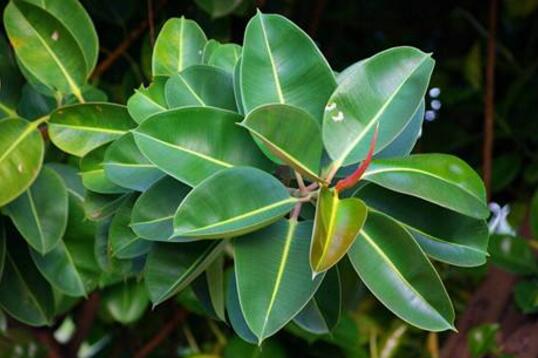
Cause: The rubber plant (Ficus elastica) quite likes a moist environment. If it is not watered for a long time, or if only a little water is given each time, the plant will grow poorly due to lack of water, and the old leaves will drop early.
Solution: Pay attention to reasonable watering. In summer it needs watering once a day; in spring and autumn, water once every 3-4 days; in winter watering can be reduced, but try to keep the soil fairly moist.
2. Root Rot
Cause: There are many causes of root rot, such as waterlogging, damage to the roots when repotting, unclean soil, and so on. Once rot appears and is not dealt with in time, the roots will not be able to absorb nutrients properly, so the leaves cannot get enough nutrients and leaf drop will occur.
Solution: Do not water too much at ordinary times, and do not let the roots of the rubber plant sit in water for a long time. When repotting, be careful not to cut the roots when taking the plant out of its pot. The soil used for planting the rubber plant should be kept clean and tidy and should be sterilised.
3. Temperature Too Low
Cause: In the care methods for rubber plants, we know that it needs to be kept warm in winter. If a rubber plant drops its leaves in winter, what is going on? The cause is a temperature that is too low. If the temperature falls below 5°C and no warmth-retaining measures are taken, it will cause a large number of leaves to drop.
Solution: Cut off all the top leaves, and take warmth-retaining measures for the rubber plant, such as covering it with insulating film or moving it to a warm indoor spot. At the same time, let the rubber plant receive plenty of light.
4. Compacted Soil
Cause: When choosing soil, loose, breathable soil is preferable, but sometimes conditions are limited and the soil quality is not high. Add to that no repotting or turning of the soil for a long time, and the soil becomes compacted. Even watering and fertilising will not let nutrients enter the soil, and the roots will drop leaves because of the lack of nutrients.
Solution: The soil used should as far as possible be sandy soil such as garden soil and leaf mould. Then, every 1-2 years, decide whether repotting is needed according to the condition of the soil. If the soil cannot be pressed into a ball, that shows its breathability is rather poor and the soil should be changed in time.
5. Pests and Diseases
Cause: Many diseases can cause a rubber plant to drop its leaves, such as grey mould (Botrytis), and so on. At first the leaves only show disease spots, and if not treated in time the leaves will wither and drop.
Solution: When pests or diseases appear, spray with medicine in time. More importantly, prevent pests and diseases from appearing. For example, ensuring enough light, a ventilated environment and moderate humidity can reduce the appearance of pests and diseases, and the leaf drop will also be noticeably reduced.
How to Grow a Rubber Plant, What Is Going On When a Rubber Plant Drops Its Leaves, Care Methods for Rubber Plants
The rubber plant is a great plant for home decoration, with large leaves and a bright green colour. It is not only for viewing, but also has very strong vitality and does not need much effort to grow. But sometimes, while growing it, we find that the rubber plant has dropped its leaves. So what causes this? How should a rubber plant be grown? Next, we will briefly introduce this subject as a reference for growing rubber plants.
I. What Is Going On When a Rubber Plant Drops Its Leaves
1. Temperature Too Low or Too High
The rubber plant is a plant with tropical characteristics and by nature likes a high-temperature environment. Its optimal growing temperature is 20-25°C. If a rubber plant has dropped its leaves, it is very likely because the temperature is below 10°C, or above 30°C. So in winter, when the temperature gradually drops, the rubber plant will also gradually drop its leaves, and it should be moved to an indoor environment no lower than 10°C for growing. If it is summer and leaf drop occurs, it needs to be moved to a shady place for shade.
2. Insufficient Sunlight
The rubber plant by nature likes an environment with plenty of sunlight and needs sufficient light every day. If the light is insufficient, it will also cause leaf drop. So the rubber plant should be placed in a place with plenty of sunlight for growing, and in winter when the daylight is short, a sufficient daily light period should also be ensured, preferably full sun.
3. Improper Watering
The rubber plant by nature likes a high-humidity environment and needs plenty of water. During the peak growing period in midsummer, when the temperature is high and water evaporates quickly, the rubber plant needs a lot of water. Not only should the roots be watered, but the leaves also need a moderate amount of water sprayed on them. But be careful not to let water accumulate, otherwise the roots will rot and cause the leaves to drop. In addition, not watering for a long time and the potting soil being too dry will also make the rubber plant drop its leaves, so watering must be timely and moderate.
4. The Effect of Pests
When leaves are affected by red spider mites, scale insects and the like, producing pest damage, the leaves will drop. So when the rubber plant's leaves drop, check whether it is caused by pests, and if so, buy the corresponding pesticide and spray it for control.
II. How to Grow a Rubber Plant
1. Temperature
The optimal growing temperature for the rubber plant is 20-25°C. In summer it must not exceed 30°C, and in winter it must not be below 10°C. So when the summer temperature is too high, it needs to be moved to a shady place; when the winter temperature is too low, cold protection and warmth measures need to be done well.
2. Light
The rubber plant likes an environment with plenty of sunlight. When growing it, be sure to ensure a sufficient light period. In the fierce sunlight from May to September, appropriate shading can be given.
3. Soil
The rubber plant grows well in neutral to slightly acidic soil, so leaf mould, garden soil and river sand plus a small amount of base fertiliser can be used to make a growing medium, and the soil should be kept well drained and loose, with the earth turned over and loosened often.
4. Fertiliser
Nitrogen fertiliser should be the main type, as it can make the leaves more glossy and reduce the occurrence of markings. A dilute liquid fertiliser can be applied once every 15 days. After the start of autumn, the application of fertiliser can be appropriately reduced to make the plant grow sturdier, and in winter fertilising should be stopped.
5. Watering
In the hot summer season, the rubber plant needs a lot of water, and sufficient water must be ensured for both roots and leaves, but water accumulation in the pot must be avoided. In winter, when the temperature is low, watering can be reduced to a small amount, just keeping the soil moist. When watering, overnight tea can be used, and the whole plant should be sprayed with water.
6. Pruning and Repotting
In spring, to ensure good ventilation conditions and growth for the rubber plant, it needs to be pruned. Branches inside the crown, inward-growing branches, thin and weak branches and the like can be cut off. At the same time, the pot also needs to be changed once every 2 years, and when repotting, soil with a fertile base such as leaf mould can be added, to ensure the rubber plant's soil is loose and well drained.
Care Methods for Rubber Plants
The causes of a rubber plant dropping its leaves are related to factors such as temperature, light, watering and pests. When growing it, attention should be paid to doing cold protection and warmth measures well, giving the rubber plant plenty of light, watering it timely and moderately, and spraying pesticide regularly. As long as it is cared for patiently, the rubber plant's growth will develop in a good direction.
How to Grow the Indoor Potted Black Prince Rubber Plant?
The Black Prince rubber plant (Ficus elastica 'Black Prince') is also known as the India rubber tree, rubber tree and so on. It originates from India and Malaysia and other places, and is now cultivated in many parts of our country. It is a common ornamental tree and street tree in gardens, and is extremely suitable for indoor beautification arrangements. Small and medium-sized plants are often used to beautify living rooms and studies, while medium and large-sized plants are suitable for placing on both sides of the entrance hall and in the centre of the lobby of large buildings. Let's take a look below at how to grow the Black Prince rubber plant!
Growing Habits of the Black Prince Rubber Plant
The Black Prince rubber plant by nature likes a high-temperature, humid, sunny environment. Its suitable growing temperature is 20-25°C. It dislikes direct sunlight, and can also tolerate shade but not cold, with a safe overwintering temperature of 5°C. It tolerates dry air. It dislikes sticky soil, cannot tolerate poor, thin soil or drought, and likes loose, fertile, well-drained, slightly acidic soil.
Propagation Methods for the Black Prince Rubber Plant
1. Cuttings method: The cutting time is in late spring and early summer, and it can be done together with pruning. For the cuttings, one-year-old, semi-lignified middle branches are mostly used, and the wounds should be sealed in time with clay or plant ash. The length of the cutting is standardised as retaining 3 buds; cut off the lower leaf, bring the upper two leaves together and tie them with fine plastic string. Then insert them into a cutting bed with plain sand or vermiculite as the medium. After inserting, keep the cutting bed at fairly high humidity, but do not let water accumulate. The suitable temperature is 18-25°C. Often sprinkle water on the ground to raise the air humidity, and do the shading and ventilation work well. In about 2-3 weeks they will take root.
2. Layering method: Choose a two-year-old branch of appropriate size, well developed and with firm tissue. At the part where soil is to be wrapped, make a light ring-shaped peel about 1 cm wide, and apply 30-50 ppm naphthaleneacetic acid solution. Then use wet soil or a mixture of moss, or vermiculite that has absorbed enough water, to wrap the ring-cut part, tie it on the outside with plastic film, tie the lower end tightly, and leave an opening at the upper end to allow ventilation and watering. Pay attention to care. If layered in June, it will take root in July-August. Once rooted, it can be cut off and potted.
Growing Methods for the Black Prince Rubber Plant
1. Reasonable fertilising: For the Black Prince rubber plant, fertilising should mainly use nitrogen fertiliser, with a small amount of phosphorus and potassium fertiliser. Well-rotted soybean water or soybean cake water, diluted, can be used to water the roots; a concentration of 20% is generally enough. Inorganic fertiliser such as urea can also be used, but it should be applied little and often, and concentrated fertiliser should not be applied, to avoid burning the roots.
2. Soil mix: When potting the Black Prince rubber plant, it is best to use 1 part leaf mould, 1 part garden soil and 1 part river sand, plus a small amount of base fertiliser, to make a growing medium. In a high-temperature, humid environment it grows very fast, and can produce one leaf every 5-10 days. During this period, sufficient fertiliser and water must be ensured.
3. Light management: The Black Prince rubber plant likes strong sunlight. Throughout the growing season from spring to autumn it should be grown in the sun, and in winter it should also be placed in a place with fairly strong light. But it can also tolerate shade, and growing it indoors under low light is also fairly good.
4. Temperature control: The suitable growing temperature for the Black Prince rubber plant is between 20-30°C, and it grows most luxuriantly at 25-30°C. Below 10°C it grows poorly, and below 0°C it is prone to cold damage. Indoors, if the Black Prince rubber plant is exposed to cold draughts, yellow leaves and leaf drop will occur.
5. Timely watering: The Black Prince rubber plant likes water, but cannot tolerate waterlogging. When waterlogging occurs, the roots cannot get oxygen, and yellow leaves and leaf drop will occur. Watering should follow the principle of “water when dry, stop when wet”, and do not water too often. In winter it should overwinter indoors, generally watered once a week; in summer it should be decided according to the weather and the moisture of the potting soil!
6. Reasonable pruning: To make the Black Prince rubber plant grow evenly and ensure a good plant shape, when the seedling grows to a height of 50-80 cm it should be pinched out, to promote the sprouting of side branches. After the side branches grow out, choose 3-5 branches, and afterwards shorten the side branches by cutting once a year. After 2-3 years, a fairly large plant with a complete, round and full shape can be obtained.
7. Pest and disease control
① Leaf spot disease: If leaf spot disease is found on the Black Prince rubber plant, an 800-fold dilution of chlorothalonil or carbendazim can be used to spray the leaf surfaces, once a week, and 2-3 times in a row can basically cure it.
② Anthracnose: In the early stage, anthracnose is not easy to find. At first there are just small brown spots on the leaves. If not treated in time, they will quickly expand into patches, making it lose its ornamental value. So once this disease is found, a 400-fold dilution of thiophanate-methyl should be used at once to spray the leaf surfaces, once a week, 3 times in a row, and it can generally be cured.
③ Root rot disease: Root rot disease is generally caused by infection by Rhizoctonia or Pythium in the soil, or by its physiological diseases. For bacterial infection, a 500-fold dilution of dexon, soil fungicide, or quintozene can be used to drench the roots for treatment. Physiological diseases are mostly caused by the soil being too sticky and heavy, or watering too much and too often, so that the roots cannot breathe. The soil can be changed to a well-drained one.