What to do when Camellia nitidissima leaves turn yellow? Pay attention to 6 points, increase light and change the potting soil
Camellia nitidissima, the twin sister of Camellia sasanqua and Camellia japonica, has graceful flowers and golden petals, and is known as the giant panda of the plant world. In daily life, because Camellia nitidissima has strong effects, many people keep it at home, but during cultivation, many of them encounter yellowing leaves. So what should be done when Camellia nitidissima leaves turn yellow? For this, the editor has summarized 6 reasons, let's take a look together!
1. Find the cause of yellowing leaves in Camellia nitidissima
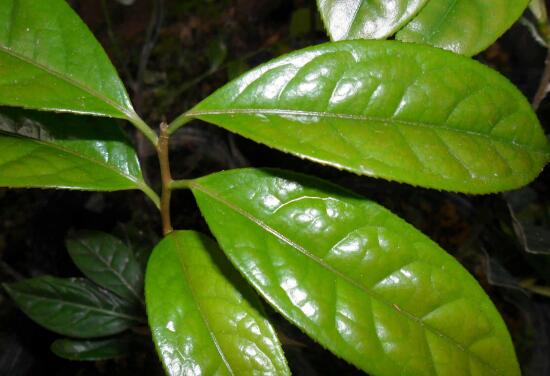
When beginners grow Camellia nitidissima, because they are new to it, they do not understand the cultivation methods of Camellia nitidissima, and as a result they encounter yellowing leaves, which seriously affects its ornamental value. As for what to do when Camellia nitidissima leaves turn yellow, do not worry, first find the cause, then solve it accordingly. For this, the editor has summarized 6 causes of yellowing leaves in Camellia nitidissima, with solutions attached, let's continue reading.
2. Causes and solutions for yellowing leaves in Camellia nitidissima
1. Sudden environmental change
As for the causes of yellowing leaves in Camellia nitidissima, there are actually many, but the environmental factor is the first thing everyone should consider. After flower lovers buy Camellia nitidissima from the flower market, because of the sudden environmental change, Camellia nitidissima cannot adapt for a while, thus showing symptoms of yellow leaves.
Solution: Communicate with the shop, learn the growing environment of Camellia nitidissima before it was bought, and then we change it at home to the same environment. After a period of time, the plant will recover its health.
2. Unsuitable soil
Camellia nitidissima likes loose, fertile, slightly acidic soil. Once it has not been renewed or repotted for a long time, the nutrient elements in the potting soil may be lost. At this time, after the leaves absorb fewer nutrients, the phenomenon of yellowing will naturally appear.
Solution: At this time, everyone can water with diluted sour milk to supplement soil nutrients; besides that, you can also change the potting soil, replacing it with loose, fertile, well-drained slightly acidic soil, so that Camellia nitidissima regains its splendor.
3. Insufficient light
Camellia nitidissima likes light and needs sufficient sunlight during growth. Once the environment where the plant is located is too dark, causing insufficient light, the phenomenon of yellowing leaves will appear.
Solution: If the yellowing leaves of Camellia nitidissima are caused by insufficient light, everyone should take time every day to move the plant into the sunlight to bathe for a few hours, or place it in a relatively bright place. Of course, the light cannot be too strong.
4. Too much watering
Camellia nitidissima dropping leaves, or even yellowing, is very likely related to watering. For beginners, it is difficult to grasp the amount and frequency of watering, and too much watering often occurs, thus causing water accumulation in the potting soil and hindering root respiration. Over time, the roots are further damaged, affecting absorption, causing a large number of fallen leaves and yellow leaves.
Solution: At this time, watering should be stopped immediately, and the flowerpot should be moved to a ventilated place with scattered light; in severe cases, dig out the plant, cut off the rotten roots, replace with new soil, and replant. Afterward, watering should follow the principle of watering when dry and stopping when wet, and do not water too frequently.
5. Too much fertilizing
Camellia nitidissima likes fertilizer, but it should not be too much. Generally speaking, fertilize once every other week. Once too much fertilizer is applied, it is easy to burn the roots, thus causing symptoms of yellow leaves.
Solution: Fertilizing should be stopped in time, and more clean water should be poured to dilute the fertilizer. After about a week, it can improve; besides that, you can also directly renew the soil in the clay pot a second time, change the soil, and so on.
6. Poor environment
In addition to the above points, everyone should also consider indoor environmental problems, because if ventilation and air permeability are poor, the leaf tips of Camellia nitidissima will wither and turn yellow; besides that, dry indoor air will also cause yellow leaves.
Solution: Open the window and let the indoor air circulate. If the air is too dry, spray clean water on the leaves 2 to 3 times a day, which can effectively prevent the leaf tips of newly sprouted leaves from withering and turning yellow.
Overall, Camellia nitidissima is still quite easy to grow, but because many flower lovers are beginners, symptoms of yellow leaves will inevitably appear. However, after reading the whole article, I believe everyone has a clearer idea now. When yellow leaf problems appear, just follow the methods above. The editor will introduce this much about yellowing leaves in Camellia nitidissima, hoping to bring help to everyone.
What to do when orchid leaves turn yellow? What to do when orchid leaves turn yellow and black?
?`?.??.?′′ˉ`?Related recommendations:
?Radiation protection with cactus ?Uses of cactus ?Flower language of daisy?Flower language of calla lily
?`?.??.?′′ˉ`?Indoor plants, this article originates from [Decoration Information]
Orchids are loved by many flower lovers. Whether from their ornamental value or their air-purifying function, they are also a good choice for home potted plants. But what should be done if improper care of orchids causes orchid leaves to turn yellow and black? If the leaves turn yellow, the ornamental value is greatly reduced. Below are some solutions for what to do when orchid leaves turn yellow and black? I hope it can help everyone.
[Causes of orchid leaves turning yellow and black] First: Too much or too little water:Orchids like a humid climate. If there is a lack of water for a long time, it will cause the roots to shrink, and with insufficient water, the leaves will turn yellow and black. Watering the orchid potting soil too much can also cause root rot, yellow leaves, and even death.
Second: Too high temperature:Yellowing orchid leaves have a great relationship with temperature. If the indoor temperature is too high or too stuffy and hot, the phenomenon of yellowing leaves will also appear.
Third: Too little light:Orchids like sunlight. If there is too little sunlight, it will also cause poor plant growth and yellow leaves. Especially for orchids placed indoors, they must be placed in a place where sunlight can reach.
Fourth: Too much fertilizing:Many friends think that applying more fertilizer is very helpful for plant growth, but this is not the case. Orchids do not need too much fertilizer. If too much fertilizer is applied, it will cause root burn, which in turn leads to yellowing and blackening of the leaves. Chlorosis can also cause leaves to turn yellow and fall off, and in severe cases the plant will die.
Fifth: Damage from pests and diseases:Any plant suffering from pest damage will show yellowing and blackening leaves. When orchids suffer from pest and disease damage, it will cause damage to the leaves, showing yellow leaves and black leaves. Also, unsuitable use of soil with high acidity or alkalinity makes root rot easy to occur. When the root system rots and turns black, the leaves will also become withered, yellow and fall off.
[What to do when orchid leaves turn yellow and black]
1. Water appropriately. After the potting soil dries, do not water too much at one time, and do not leave it in a drought state without watering for a long time.
2. Keep the temperature stable, not too high or too low. Between 5-10°C is most suitable. When the temperature rises and the environment is stuffy and hot, pay attention to ventilation and air permeability, and strengthen humidity management.
3. White orchid is suitable for planting in courtyards or home balconies, windowsills and other places. It needs sufficient sunlight, but cannot be exposed to strong sun. In summer, when the sunlight is intense, pay attention to shading.
4. White orchid potting soil should use slightly acidic soil, and cannot be given more alkaline inorganic fertilizer or water. Use 0.2% ferrous sulfate for foliar spraying, once a week.
5. Root rot is mainly caused by too much water. Usually wait until the surface of the potting soil turns white before watering, and loosen the soil frequently. During the plum rain season or when there is too much rain, it is advisable to move it under the eaves or indoors to avoid rain.
Conclusion:The above are the solutions for orchid leaves turning yellow and black. I hope it is helpful to many flower lovers. The ornamental value of orchids is very high, so orchids must be grown well. If you want to learn many methods for growing indoor plants, please continue to follow Aiyouwo.
▓ Recommended reading
?How to grow water lilies ?Camellia nitidissima pictures ?Balloon flower pictures ?Cornflower flower language ?Succulent Sempervivum
?Agave pictures ?Poppy cultivation ?Epiphyllum information ?Ginkgo tree cultivation ?Cosmos pictures
Effects of Camellia nitidissima, cultivation techniques of Camellia nitidissima
Camellia nitidissima is a traditional famous flower native to China, and also a world-famous precious ornamental plant. It is the only germplasm resource in the world's flower gardens with golden yellow petals whose color can be inherited. Because of its extremely high scientific research value and ornamental value, it is praised by people as a "world treasure, queen of the tea family" and so on. Today, the editor of Aiyouwo will learn with everyone about this golden yellow camellia: the effects of Camellia nitidissima and the cultivation techniques of Camellia nitidissima.
【Editor's strong recommendation]Indoor plants Plectranthus amboinicus Pistacia weinmannifolia Hydroponic plants Small potted plants Plant flowers Plant feng shui Radiation-resistant plants Statice
[Camellia nitidissima] Effects of Camellia nitidissima, cultivation techniques of Camellia nitidissima——————————————————————————————————————————————
[Plant profile]——————————————————————————————————————————————
Chinese name:Camellia nitidissima
Scientific name:Camellia
Alias:Golden tea yellow, yellow camellia
Family:Theaceae
Genus:Camellia
Origin and distribution:Grows in valleys under forests. It only grows in the low gentle hills at an altitude of 100-200 m in Shangsi County on the Shiwan Dashan in Guangxi, and the quantity is very limited, so it is listed as a first-class protected plant in China.
Morphological characteristics:Evergreen shrub or small tree, 2-6 m tall, bark grayish white and smooth. Leaves alternate, broadly lanceolate to oblong. Flowers solitary in leaf axils or nearly terminal, golden yellow, cup-shaped, pot-shaped or bowl-shaped when open, diameter 3-3.5 cm; petals 9-11, broadly ovate to obovate or oblong, fleshy, with waxy luster; flowering period from November to March of the following year. Capsule triangular oblate, yellow-green or purplish brown; fruiting period October-December.
Effects of Camellia nitidissima——————————————————————————————————————————————
Camellia nitidissima has obvious effects on regulating human blood lipids, blood sugar and cholesterol, and enhancing body immunity. It can improve various uncomfortable symptoms caused by high blood pressure, and has antibacterial and anti-inflammatory effects, clears heat and detoxifies, promotes urination and reduces swelling, enhances the vitality of the liver and kidneys, prevents blood artery hardening, prevents cancer and inhibits tumor growth, etc. According to investigations, Camellia nitidissima has long been used among the people to refresh the mind, clear liver fire, relieve heat toxin and nourish vitality.
● Among the people, Camellia nitidissima leaves are used to clear heat and detoxify, promote urination and remove dampness, stop dysentery and stop bleeding, etc.
——Compendium of Materia Medica · Li Shizhen
● Camellia nitidissima leaves are a folk medicine of the Zhuang people, mainly used for pharyngitis, dysentery, high blood pressure, and tumor prevention (decocted in water or drunk as tea). The flowers are used for bloody stool and irregular menstruation.
——A Brief Compilation of Guangxi Ethnic Medicines · recorded
● Camellia nitidissima medicinal leaves and flowers. The leaves treat dysentery, and the flowers treat bloody stool and excessive menstruation.
——Modern Compendium of Materia Medica · recorded
● Camellia nitidissima medicinal leaves clear heat and promote fluid production, used for dysentery.
——List of Guangxi Medicinal Plants · recorded
● "All medicines are medicines for various diseases, tea is the medicine for all diseases. One day without tea causes stagnation, three days without tea brings danger."
——Supplement to the Compendium of Materia Medica · recorded
[Properties of traditional Chinese medicine]——————————————————————————————————————————————
[Nature and flavor]Astringent; neutral
[Meridian entry]Astringent; neutral
[Effects]Astringes and stops bleeding. Mainly for bloody stool; excessive menstruation
[Indications]Refreshes the mind, clears liver fire, relieves heat toxin, and nourishes vitality.
[Usage and dosage]Internal use: decoct in water, 3-9 g; or brew in boiling water.
[Medicinal material source]It is the flower of the Theaceae plant Camellia nitidissima.
Cultivation techniques of Camellia nitidissima——————————————————————————————————————————————
Habits:Likes a warm and humid climate, prefers well-drained acidic soil, likes shade at the seedling stage, and quite likes transmitted sunlight after entering the flowering stage. It has no strict requirements for soil and can grow in slightly acidic to neutral soil. Tolerates barrenness, and also likes fertilizer. Strong waterlogging tolerance.
Wind direction:Camellia nitidissima is afraid of strong wind, especially the north wind and typhoons, so windproof measures must be taken well.
Soil:Fertile, deep, moist, breathable, with a pH value of weakly acidic between 4.5 and 6.5.
Temperature:To achieve high-yield planting of Camellia nitidissima, its most suitable temperature must be maintained between 20-30°C, and the lowest temperature cannot be lower than minus 5°C.
Light:Camellia nitidissima is a semi-shade and semi-sun tree species. It can be shaded by planting trees or by a shade shed. The height of the shade shed should preferably be designed at 2.2 m-2.5 m, so that the light transmittance reaches about 30 percent, which is best.
Cultivation methods of Camellia nitidissima
————————————————————————————————————
① Cuttage: In the dry season from May to June, select a young mother tree, cut a one-year-old tender branch from the top, about 10 cm long, remove the lower leaves, flatten the cut below the node with a blade, keep one terminal bud and one lateral bud at the top, and 2-3 leaves, insert it into a medium of river sand or gravel, with an insertion depth of 1/3-2/3. After insertion, cover with a straw curtain for shade, increase leaf spraying, maintain air humidity in the cutting bed, and promote rooting. To improve the survival rate of cuttings, soak the cuttings in a 50-100 ppm ABT rooting powder solution for 8-12 hours.
② Grafting: Select a strong seedling or a camellia species that roots easily from cuttings as the rootstock, cut it off at 4-5 cm from the ground diameter, split it through the pith about 1.5 cm deep, use a 1-2 year old branch as the scion, keep 1-2 leaves on the upper part of the scion, cut the lower part into a wedge shape, insert it into the split opening of the rootstock, make the cambium on both sides fit closely, then bind it tightly with a plastic band.
Aftercare after grafting: After grafting, cover the scion with a plastic bag and tie it below with a band, but not too tightly, so that water droplets form inside the bag and drip onto the rootstock from time to time. Then add a paper bag outside the plastic bag to cover it from direct sunlight.
③ Bud cutting: Use each bud node as a section, keep one leaf, about 1.5 cm long, cut obliquely at the lower part, then insert it into the medium, with the depth just covering the branch. This method can fully utilize branches and is suitable for many propagation needs.
④ Pot cultivation: When potting Camellia nitidissima, it is advisable to choose a culture soil prepared from leaf mold or peat soil plus part garden soil and river sand. To make it grow quickly, it should be planted in a breathable clay pot. When planting, it is best to choose a deep simple pot. Before potting, first fill the bottom of the pot with a layer of broken tiles to facilitate drainage; then apply a small amount of decomposed cake fertilizer powder or bone powder on top as base fertilizer, and fill a layer of culture soil above the fertilizer; then place the seedling in the center of the pot, straighten it, and fill in the culture soil layer by layer, compacting while filling, finally leaving about a few cm of pot rim. After planting, water thoroughly and place it in a semi-shady place for cultivation. After the seedling recovers, transfer to normal management.
Conclusion:Camellia nitidissima has the beautiful titles of "queen of the tea family" and "giant panda of the plant world", and is called by foreign countries "the imagined yellow camellia". Its pedicels droop, its form is beautiful, its petals are waxy and thick, its color is golden yellow, its flowering period is long, and its ornamental value is extremely high. It is an ideal garden tree species for courtyard and park greening and beautification in tropical and subtropical regions. It not only has high ornamental value, but also has high medicinal value. It is a world-famous precious ornamental plant and a traditional famous flower native to China.
【More plant encyclopedia】
Cultivation methods of Pothos Cultivation methods of sago palm Effects of cactus Characteristics of peonyHow to grow wintersweet How to grow Aglaia odorata
Cultivation methods and precautions of pothos Does cactus protect against radiation Cultivation methods of Guzmania Yellowing leaves of cyclamen Price of blue enchantress
Cultivation methods and precautions of lucky bamboo Sago palm pictures Cultivation methods of sago palm Is rubber tree poisonous Sunflower flower language Sansevieria trifasciata
Yellowing tips of spider plant leaves How to grow liliesNine large cymbidiumAnthurium cultivation methods and precautionsIs flamingo flower poisonousPodocarpus bonsai pictures