What to do when Cymbidium sinense leaves turn yellow? Control watering and avoid direct sunlight
Cymbidium sinense is a beautiful flower with high ornamental value, but no matter how beautiful a flower is, yellowing will greatly affect its beauty. So what should be done when Cymbidium sinense leaves turn yellow, and how should it be solved? Let's take a look below.
1. What to do when Cymbidium sinense leaves turn yellow
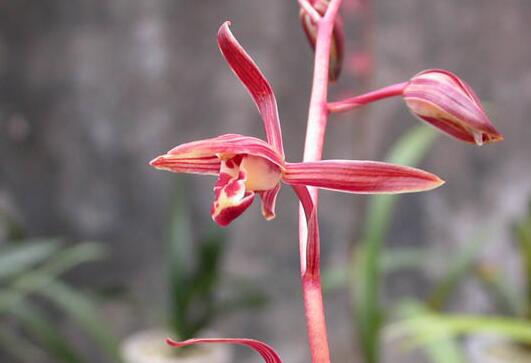
To know what to do when Cymbidium sinense leaves turn yellow, we first need to understand what causes it. There are many reasons for this phenomenon, such as improper watering and fertilizing, long-term exposure to the sun, and pest and disease problems, all of which can cause this phenomenon. The specific solutions are described in detail below. Let's take a look.
1. Improper fertilizing
Fertilizer is one of the main nutrients in the growth of Cymbidium sinense, but fertilizing requires skill. If too much fertilizer is applied or concentrated fertilizer is applied directly, it can easily cause the leaves of Cymbidium sinense to turn yellow, because Cymbidium sinense does not need heavy fertilizer.
Solution: In terms of fertilizing, Cymbidium sinense needs light fertilizer applied skillfully. Avoid concentrated fertilizer, heavy fertilizer and unfermented liquid fertilizer. Before fertilizing, we need to dilute the fertilizer with clean water first, so that it can be absorbed better.
2. Improper watering
Although Cymbidium sinense likes to grow in a warm and moist environment, this refers to air humidity, not the soil. It likes the soil to be slightly dry. If too much water is given and water accumulates, it will cause the leaves of Cymbidium sinense to turn yellow, and in severe cases it will also cause its roots to rot.
Solution: When watering Cymbidium sinense, we must do it in moderation and keep the soil in a semi-dry state. Under normal circumstances, watering once every 10 days is enough. If the climate changes greatly, the watering frequency can also be adjusted appropriately.
3. Too much light
Cymbidium sinense prefers to grow in a cool environment, but it cannot lack sunlight during growth, so it is quite particular about light. If it is placed in direct sunlight to grow, it can easily cause the leaves of Cymbidium sinense to turn yellow.
Solution: When cultivating Cymbidium sinense, it is best to place it in a spot with scattered sunlight, so that it can carry out photosynthesis without being sunburned.
4. Pests and diseases
During the cultivation of Cymbidium sinense, if it is not cultivated properly, pest and disease problems can easily occur. Such problems are extremely harmful to the plant, not only causing the leaves of Cymbidium sinense to turn yellow, but in severe cases also causing the plant to wither and die.
Solution: If this problem is caused by pests and diseases, we must deal with it promptly. The specific treatment methods are described in detail by the editor in the article on pest and disease control of Cymbidium sinense. You can take a look.
5. Metabolism
During the growth of Cymbidium sinense, as it grows, new and old leaves will replace each other. Because of the need to develop new leaves, the old leaves will no longer continue to grow, and will gradually turn yellow and fall off.
Solution: If the yellowing of Cymbidium sinense leaves is caused by metabolism, everyone does not need to worry too much, because this is a normal phenomenon and will not have any impact on the plant.
Summary: After reading the above content, I believe everyone has gained some understanding of the problem of yellowing leaves in Cymbidium sinense. As long as everyone solves it according to the above methods, your Cymbidium sinense will surely get rid of the trouble of yellowing.
What to do when orchid leaves turn yellow
Orchids are indoor plants that many flower lovers like to choose for planting, because orchids have very high ornamental value. The flowers are white and elegant, and the stems are elegant and green. Placed indoors, they can add more vitality to the home and also beautify the environment. Whether from the ornamental value of orchids or their air-purifying function, they are also a good choice for home potted plants.When orchid leaves turn yellow, to solve this problem, you need to first find the cause of the yellowing orchid leaves and must not blindly solve it. Because orchid enthusiasts each have different cultivation environments, this article analyzes and summarizes based on some common causes of yellowing orchid leaves.
What to do when orchid leaves turn yellow
Causes of yellowing orchid leaf tips
Water-induced yellowing
Caused by overly frequent watering. Its characteristic is that old leaves show no obvious change, while young leaves turn yellow; in this case, watering should be controlled immediately.
That is, watering too much causes long-term water accumulation in the soil, poor aeration, and even partial rotting of fibrous roots, showing dark yellow, lusterless young leaves and shrinking new shoots. Too much or too little water: orchids like a humid climate. If water is lacking for a long time, it will cause shrinkage of the root part, and with insufficient water, the leaves will turn yellow and black. Watering the orchid potting soil too much can also cause root rot, yellow leaves, and even death.
Drought-induced yellowing
Caused by lack of water and drought. Its characteristic is that old leaves turn yellow first from the bottom up. If the water shortage lasts a little longer, the whole plant's leaves will turn yellow, and it may even die. It should be watered in time.
Because it has not been watered thoroughly or has become dehydrated for a long time, although the new leaves remain normal in color, the lower leaves gradually dry, turn yellow, fall off and age upward.
Sunburn
Yellowing orchid leaves are greatly related to temperature. If the indoor temperature is too high or it is too stuffy and hot, leaf yellowing can also occur. Under strong direct sunlight, especially after summer, yellow spots appear on the leaves, called sunscald. When it is dry at high temperatures above 30 degrees, the leaves also tend to wilt and turn yellow.
If orchid leaves turn yellow and new buds are relatively small, it is due to excessive light and a lack of nitrogen fertilizer and necessary humidity. Orchids should be placed in a ventilated spot and protected from direct sunlight. If orchid leaves are yellowish but growth is normal, it may be caused by excessive light.
The solution is to avoid exposure to the sun and regularly wipe the leaves with a cloth dipped in beer. Clivia wiped with beer is not only attractive but also less likely to lose moisture from the leaves.
What to do when orchid leaves turn yellow
Too little light
Orchids like sunlight. If there is too little sunlight, it will also cause poor plant growth and yellow leaves. Especially for orchids placed indoors, they must be placed in a place where sunlight can reach them.
Freeze damage
Orchids suffer freeze damage below 0 degrees, and the symptom is still yellow leaves.
Fertilizer-induced yellowing
Caused by overly frequent fertilizing or too high concentration. Its characteristics are that young leaves are thick, glossy, and uneven; fertilizing should be controlled, and the soil should be loosened and watered.
That is, too much fertilizer, shown by old leaf tips turning yellow and falling off, while new leaves, although thick and glossy, are generally uneven and not stretched out. If it is a valuable flower, you can scatter a layer of pak choi or radish seeds, and after they sprout for a few days, pull them out to consume nutrients.
Many friends think that applying more fertilizer is very helpful for plant growth, but this is not the case. Orchids do not need too much fertilizer. If too much fertilizer is applied, it will cause burns to the root part, which in turn causes the leaves to turn yellow and black. Chlorosis can also cause leaves to turn yellow and fall off, and in severe cases cause the plant to die.
Starvation-induced yellowing
Caused by insufficient fertilizer, low fertilizer concentration, and too long intervals between fertilizing. Its characteristic is that young leaves and tender stems turn yellow first. If this phenomenon is seen and fertilizer is not applied in time, it can also cause the whole plant's leaves to turn yellow and even die. For flowers lacking fertilizer, avoid applying a large amount of concentrated fertilizer at one time, so as not to burn the roots.
What to do when orchid leaves turn yellow
Alkaline yellowing
In particular, some southern flowers like acidic soil, while northern water is more alkaline, causing leaves to gradually fade, turn yellow, and even fall off. The simplest method is to water with fermented rice-washing water or rainwater.
Iron-deficiency yellow leaves
For woody flowers in greenhouses, because soil fertility conditions vary greatly, yellow leaf phenomena often occur. The characteristics are that young leaves are obvious, old leaves are lighter, the leaf flesh is yellow, the veins are green, and a typical network forms. It can be solved by applying ferrous sulfate aqueous solution. The method is: mix 7 parts cake fertilizer, 5 parts ferrous sulfate, and 200 parts water into a diluted solution and water with it.
Loss of green due to lack of elements
If the potting soil lacks iron, the leaf tips turn yellow first. If it lacks nitrogen, new leaves appear yellow-white.
Pollution
Orchid leaves should be kept clean. If dirty things splash on them, the polluted area may turn yellow.
A directly purchased potted orchid is one that the seller has newly potted. The orchid is somewhat unaccustomed to the soil, temporarily affecting nutrient absorption and causing yellow leaves. For a newly bought orchid, the watering and placement environment are unsuitable for orchid growth. Before the orchid was bought, it was newly potted, and the orchid is somewhat unaccustomed to the soil, temporarily affecting nutrient absorption. The change in the orchid's environment causes poor water absorption by the leaves.
Yellowing and falling of old leaves is normal aging or is caused by repotting. Rapid yellowing and falling of old leaves is caused by too much and too frequent watering or improper repotting and planting. In addition, flower lovers can check whether their orchid has root rot or whether the growing medium is unclean. If the roots are rotten, disinfect them as soon as possible and maintain them in a ventilated, slightly dry environment.
What to do when orchid leaves turn yellow
Leaf spot disease
It is caused by bacterial infection. The main causes are using fresh soil that has not been decomposed, applying fertilizer that has not been fully fermented, not changing the potting soil for a long time, and an imbalance of nitrogen, phosphorus, and potassium in the fertilizer applied. Excessive fertilizing can all cause this disease. In the early stage of the disease, small yellow-brown spots appear on the leaf surface. Afterward, the color of the spots gradually deepens, the area of the spots continuously expands, ulceration occurs, and eventually the whole plant rots away.
Solution: Flowers should be placed in a ventilated spot and protected from direct sunlight. Orchids often suffer from dry and withered leaf tips, and even whole-leaf withering. Flower lovers raising orchids for the first time do not know what to do. Dry orchid leaf tips are mainly caused by orchid anthracnose and round spot disease. When orchids suffer freeze damage or late frost damage, they are also prone to dry or discolored leaf tips. Let's look at the specific solutions below.
Caused by orchid anthracnose and round spot disease. This disease occurs in large amounts during the plum rain season or at the turn of summer and autumn when temperatures are high and rain is frequent. The solution is to spray 50% carbendazim 1000x solution or 50% captan 500x solution during the susceptible period, once every 10 days, for 3-4 consecutive sprays.
When any plant suffers pest damage, yellowing and blackening of leaves will occur. When orchids suffer pest and disease damage, it will cause damage to the leaves, resulting in yellow leaves and black leaves. In addition, using soil with high acidity or alkalinity makes root rot more likely. When the root system rots and turns black, the leaves will also wilt, turn yellow and fall off.
Caused by orchid anthracnose and round spot disease. This disease occurs in large amounts during the plum rain season or at the turn of summer and autumn when temperatures are high and rain is frequent. The solution is to spray 50% carbendazim 1000x solution or 50% captan 500x solution during the susceptible period, once every 10 days, for 3-4 consecutive sprays.
In addition, when orchids suffer freeze damage or late frost damage, they are also prone to dry or discolored leaf tips. Therefore, in areas where the winter temperature is below 0°C, orchids should be moved indoors before winter to a ventilated, sunny place for care. When moving them outdoors in spring, pay attention to avoiding late frost damage. The traditional experience "no wind in spring, no sun in summer, no drought in autumn, no dampness in winter" is very helpful for preventing dry orchid leaves.
What to do when orchid leaves turn yellow
Causes of orchid leaves becoming dry and withered
1. If the pot is too dry, or the air humidity is too low, or the pot surface is too dry, this situation generally cannot immediately show shrinking of the orchid leaves. The first reflection is that the orchid leaves appear dehydrated. After watering restores them, it is easy for the old seedlings to begin declining. The orchid leaves turn yellow from the top downward. If there is water damage in the pot, the orchid leaves turn yellow from the bottom upward, and the decline is slower.
2. Orchid root fungal damage or water soaking of the orchid root crystal tips should be the same in principle. Water soaking is the process, rotting of the crystal tips is the result, and scorched leaf tips are the surface phenomenon. For such scorched tips, as Feixiang said, when the leaf tips turn black, after treatment in the pot, generally the scorched tips no longer extend downward.
3. Scorched tips caused by fertilizer damage are brown or black. The boundary with the unaffected orchid leaf parts is very obvious, and spots from fertilizer damage also easily appear on the normal tissues of orchid leaves. Such irregular round spots have a brown center, and where they contact normal tissue there is a ring of black spots of uneven thickness, with a very obvious boundary.
4. When orchid plants suffer fungal damage, many cases are shown through the phenomenon of scorched tips. For example, tip blight: the scorched tip is white-brown, and the junction with normal orchid leaf tissue is black-brown. The white-brown is the dead and dried area, and the black-brown is the area where the fungal damage is active. For leaf blight, the light brown at the leaf tip is the dead and dried area, and the black-brown is the area where the fungal damage is active. Where it contacts normal orchid leaf tissue, it mostly appears yellow-green. This yellow-green area is the infected area of normal orchid leaf tissue, which is different from tip blight. Anthracnose also easily shows scorched tips. The leaf tip appears in alternating sections of black-brown and light brown, developing toward the lower part of the orchid leaf, and independent or connected black-brown patches also appear in the leaf blade, with the outer edges of the patches appearing light yellow.
Solution: When orchids suffer freeze damage or late frost damage, they are also prone to dry or discolored leaf tips. Therefore, in areas where the winter temperature is below 0°C, orchids should be moved indoors before winter to a ventilated, sunny place for care. When moving them outdoors in spring, pay attention to avoiding late frost damage. The traditional saying "no wind in spring, no sun in summer, no drought in autumn, no dampness in winter" is very helpful for preventing dry orchid leaves.
For orchid leaves whose tips have already dried up, if the situation is not too serious, manual pruning can be used. Use scissors, preferably disinfected with alcohol. Cut about 10 mm below the dried part, so that the pot can still remain full of green. If a fungicide is sprayed after pruning, so much the better.
What to do when orchid leaves turn yellow
Precautions for yellowing orchid leaves
Wounds must be protected from bacteria
When repotting or dividing plants, if the roots have wounds, first apply fungicide to the wounds to prevent bacteria from invading.
Do not use too large a pot
Planting a small plant in a large pot uses a lot of growing medium, which easily leads to poor aeration, and watering is also hard to control. If too much water is absorbed, the growing medium is not easy to dry, and bacteria invade and cause root rot.
Orchids should be planted shallowly
Orchid plants should not be planted too deep, otherwise long-term dampness will cause rot. When planting, fill the growing medium around the roots, and the base or pseudobulbs must be exposed.
Roots should be spread out
When planting orchids, the roots should be evenly spread out and not squeezed together, so that each root can contact the growing medium and aeration is also better.
Do not water for several days
Newly planted orchids may have injured roots. After the wounds are coated with fungicide, do not water for 3-5 days so that the fungicide can take effect and also promote the growth of new buds and new roots.
Avoid strong light
Newly planted orchids must avoid direct strong light to prevent dehydration. They should be placed in a warm and shaded place, and spraying can be used to increase air humidity until the orchids resume normal growth.
What to do when orchid leaves turn yellow
Treatment measures
1. Water appropriately. After the potting soil dries, when watering at one time, the amount of water should not be too much, nor should it remain in a drought state without watering for a long time.
2. Keep the temperature stable, neither too high nor too low. Between 5-10°C is most suitable. When the temperature rises and the environment is stuffy and hot, pay attention to ventilation and breathability, and strengthen humidity management.
3. Michelia alba is suitable for planting in courtyards, home balconies, windowsills and other places. It needs sufficient sunlight but cannot be exposed to the sun. In summer, when sunlight is intense, pay attention to shading.
4. The potting soil for Michelia alba should be slightly acidic soil. Do not apply too much alkaline inorganic fertilizer or water. Spray the leaves with 0.2% ferrous sulfate once a week.
5. Root rot is mainly caused by too much water. Usually, wait until the surface of the potting soil turns white before watering, and loosen the soil regularly. During the plum rain season or when there is too much rain, it is advisable to move it under the eaves or indoors to avoid the rain.
For orchid leaves whose tips have already dried up, if the situation is not too serious, manual pruning can be used. Use scissors (preferably disinfected with alcohol) to cut in a "∧" shape about 10 mm below the dried part, so that the pot can still remain full of green. If a fungicide is sprayed after pruning, so much the better.
Note: "No wind in spring, no sun in summer, no drought in autumn, no dampness in winter" means that in spring, do not move them outdoors too early, to avoid damage from strong winds; in summer, shade appropriately to prevent exposure to fierce sunlight; in autumn, water frequently to prevent drought; in winter, the potting soil should not be too wet, to prevent freezing and root rot.
What to do when Michelia alba leaves turn yellow and why leaves turn yellow and fall off
Michelia alba likes light, fears high temperatures, is not cold-tolerant, and is suitable for slightly acidic soil. It likes warmth and humidity, is not tolerant of drought or waterlogging, and is relatively sensitive to toxic gases such as sulfur dioxide and chlorine, with poor resistance. So what should be done when Michelia alba leaves turn yellow? Why do Michelia alba leaves turn yellow and fall off? Below, the editor of wed114 Wedding Network brings you detailed content.
Causes of yellowing Michelia alba leaves
Too much water
If the watering amount for Michelia alba is not controlled well, causing the potting soil to become too dry or too wet, it will affect the normal growth of the fleshy root system, thereby causing yellow leaves.
Too high temperature
When there is a problem with temperature control, too high a temperature will cause abnormal leaf transpiration and yellowing.
Too little light
Michelia alba needs sufficient sunlight; otherwise, normal plant growth will be inhibited and yellow leaves will appear.
Chlorosis
Chlorosis very easily causes leaves to turn yellow and fall off, and in severe cases can cause the entire plant to die.
Root rot
The harm of root rot is also relatively serious. It causes the root system to turn black and rot, affecting the leaves from the bottom upward and eventually causing them to wither, turn yellow and fall off.
What to do when Michelia alba leaves turn yellow
Water appropriately
The amount of watering should be continuously adjusted according to climate humidity and many other aspects to ensure normal and suitable soil moisture.
Suitable temperature
Avoid situations with too large a temperature difference. Maintaining an average temperature of 5-10°C is more suitable. When the temperature rises, pay special attention to ventilation and breathability of the cultivation environment, and also humidify the dry air.
Sufficient light
To ensure sufficient light, Michelia alba needs to be placed in a courtyard, home balcony, windowsill or other place with a longer period of light, but in summer, pay attention to avoiding direct strong light. Exposure to the sun can also have an adverse effect on the plant.
Prevention and treatment of chlorosis
Slightly acidic soil should be selected, and alkaline inorganic fertilizer should be applied in small amounts. When the disease appears, spray the leaves with ferrous sulfate (0.2%) once a week, for 3-4 consecutive sprays, or spray with alum fertilizer water once a week, for 3-4 consecutive sprays to alleviate the condition.
Prevention and treatment of root rot
This disease usually occurs because of excess moisture. Watering should follow the rule of "don't water unless the soil is dry," and the soil should be kept loose to improve its drainage. During the plum rain season and other periods of heavy rainfall, take timely measures to shelter the plants from the rain; when potting, add more broken tile pieces to the bottom of the pot to speed up the flow of water and promote drainage.
Yellowing leaves are actually quite easy to deal with. Every cause is closely tied to our day-to-day care routine. As long as you are careful and do the work well in normal times, there is no need to worry at all that the greenery in your pots will leave you.