How to grow Dracaena? Growing methods and precautions, temperature is key
Dracaena is known as the holy medicine for blood circulation and the longevity plant of the plant world. It is a very famous plant. Although Dracaena has many effects and functions, it still takes some skill to grow it well. So how do you grow Dracaena? Let me tell you the growing methods and precautions for Dracaena.
How to grow Dracaena
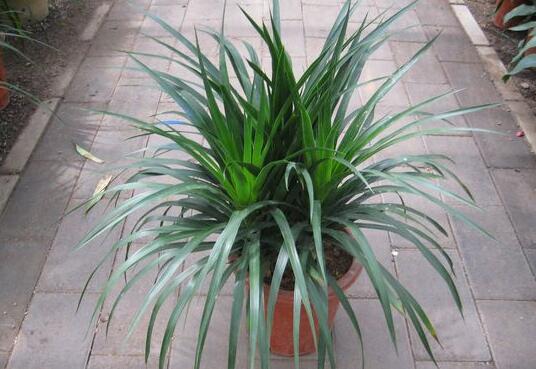
Before becoming familiar with care techniques, you first need to understand the growth habits of Dracaena. It likes high temperatures and humid environments, likes light but is also shade-tolerant, and can be displayed in dim environments for 2-4 weeks, but it cannot lack light for long periods. Its cold tolerance is weak, and in winter the minimum temperature must be kept above 5-10°C.
Growing methods and precautions for Dracaena
1. Soil requirements
Dracaena likes soil containing a large amount of humus, and the soil must be nutrient-rich, loose and well-drained. Peat soil, river sand and leaf mold can be evenly mixed as the substrate, or vermiculite, perlite and sandy soil can be mixed.
Precautions: In addition to the soil being sufficiently fertile, good drainage is also very important. It can ensure that the inside of the soil is moist enough, thereby allowing the roots to grow and develop better.
2. Light requirements
In terms of light, it likes an environment with ample sunlight. During normal care it should be placed in the sun, keeping the light level at at least 40% or more. It is most suitable for the leaves in every position to be able to enjoy sunlight.
Precautions: Although Dracaena can survive in a dark room for 2-4 weeks, it cannot lack light for long periods, because leaf scars are closely related to light. If there is insufficient sunlight, the leaves will turn yellow and lose their luster, affecting appearance and also hindering growth.
3. Temperature requirements
Dracaena especially likes high-temperature environments. Its most suitable temperature is 20-28°C. It is relatively afraid of cold, and when the temperature is lower it enters dormancy. Therefore, in late autumn and winter, pay attention to temperature changes and take insulation measures in advance.
Precautions: Low temperatures are extremely harmful to Dracaena. They cause poor absorption of nutrients and water by the roots, thereby causing yellow-brown patches at the leaf tips and leaf margins. Therefore, the temperature must be kept above 15°C, and the minimum temperature must not be lower than 5-10°C.
4. Watering method
In terms of drought tolerance, Dracaena is relatively strong, but when growing it, it cannot lack water for long periods. During the growing season, water once every 3-5 days. In winter, water once every 10-15 days. Keeping the soil from drying out and slightly moist is the most ideal state.
Precautions: When watering, prevent waterlogging, otherwise it will cause root rot, and then the water cannot be absorbed by the roots, which has a very large impact on the whole plant. Frequent waterlogging can easily lead to plant death.
5. Fertilization techniques
Dracaena has relatively high nutritional needs. In addition to fertile soil, fertilization is also very important. During the growing season, apply organic fertilizer once a month, or evenly irrigate with a special nutrient solution.
Precautions: Fertilization should mainly use dilute fertilizer water. If solid fertilizer is used, water immediately after fertilizing. Do not use raw fertilizer or fertilizer with too high a concentration. The principle is that the nutrients can be fully absorbed.
Dracaena Dracaena angustifolia Dracaena illustrated guide: how to grow Dracaena / how to propagate Dracaena
Dracaena profileDracaena Dracaena angustifolia
Aliases: Shengji orchid, maluo sugarcane tree, narrow-leaf dracaena, long-flowered dracaena, bucai tree, bamboo ginseng
Classification: shrub flowers
Family and genus: Plantae, Angiosperms, Monocots, Liliales, Liliaceae, Dracaena
Full bloom period:
The Latin name of the genus Dracaena comes from Greek (δρ?καινα), meaning "female dragon", and includes about 40 species of plants, including trees, shrubs and succulents. According to the APG II classification, it is merged into Ruscaceae, and there is also a classification method that lists it separately as Dracaenaceae or merges it into Agavaceae. Plants of this genus mainly grow in tropical regions such as Africa and southern Asia. In Central America there is only one species. The genus Pleomele has already been merged into this genus. Sanseviera is relatively closely related to this genus, and some taxonomists also merge it into this genus...
Growing methods and precautions for Dracaena Introduction to Dracaena
The Latin name of the genus Dracaena comes from Greek (δρ?καινα), meaning "female dragon", and includes about 40 species of plants, including trees, shrubs and succulents. According to the APG II classification, it is merged into Ruscaceae, and there is also a classification method that lists it separately as Dracaenaceae or merges it into Agavaceae.
Plants of this genus mainly grow in tropical regions such as Africa and southern Asia. In Central America there is only one species. The genus Pleomele has already been merged into this genus. Sanseviera is relatively closely related to this genus, and some taxonomists also merge it into this genus. Its flowers are bisexual and small, with a perianth split into 7 parts, in panicles or spicate racemes or dense spikes; the fruit is a berry.
It is said that in ancient times, when a giant dragon fought with an elephant, the giant dragon's blood spilled over the earth, and what later grew from the soil was the Dracaena. When Dracaena is injured, it exudes a dark red sticky liquid like blood plasma. This sticky liquid was believed in legend to be dragon's blood, and Dracaena got its name because of this.
Cambodian Dracaena was already listed by the state in 2001 as a second-class rare and endangered protected plant, and was included in the "China Plant Red Data Book - Rare and Endangered Plants".
Morphological characteristics of Dracaena
Dracaena is mainly divided into two groups:
One type is trees, with trunks and flat leathery leaves, usually growing in arid semi-desert areas, commonly known as "Dracaena".
The other type is shrubs, with slender stems and strap-shaped leaves, generally growing in tropical rainforests and usually cultivated as ornamental plants.
Evergreen small shrub, up to 4 m tall, bark gray. Leaves sessile, densely borne at the top of the stem, thickly papery, broadly linear or oblanceolate, 10-35 cm long, 1-5.5 cm wide, base enlarged and stem-clasping, narrower near the base, midvein obvious on the lower part of the underside, rib-like, terminal large panicle up to 60 cm long, flowers in clusters of 1-3. Flowers white, fragrant. Berry spherical, yellow.
Many species and varieties in the same genus are used for garden ornament. Dracaena has loose wood and a hollow trunk, and the branches are full of holes, so it cannot be used as a beam; when burned it only smokes and does not catch fire, and it cannot be used as firewood either. It is truly useless, so it is also called "bucai tree".
Ecological habits of Dracaena
Dracaena likes high temperatures and humidity, likes light, and with sufficient light its leaves are brightly colored. It is not cold-tolerant. The winter temperature should be about 15°C, and the minimum temperature should be 5-10°C. If the temperature is too low, due to insufficient water absorption by the roots, yellow-brown patches will appear at the leaf tips and leaf margins.
Dracaena likes loose, well-drained soil rich in humus and nutrients.
Cultivation techniques of Dracaena Planting techniques
Production standard: 14 cm pot, height 50 cm, crown width about 40 cm, growth cycle about 3 months.
Substrate preparation: Use imported peat of 5-40 mm specification that is loose and has good drainage and aeration. Add water to the peat and mix well. (Standard for adding water: after adding water and mixing well, when a handful of peat is squeezed tightly, water seeps out between the fingers.) Then plant in cups. Each 14 cm pot uses about 400 ml of peat, and one 300 L bag of imported peat can fill about 750 cups.
Potting requirements: Choose high-quality seedlings from professional production. Seedling height 25 cm, crown width 20 cm, leaf number 4-6, no pests or diseases, no dead leaves or yellow leaves.
Potting: For reused old pots, they must be soaked in 1000 times diluted potassium permanganate solution for more than half an hour, then rinsed with clean water and dried for later use.
Small pots are generally planted in pots with a caliber of 14 cm. When planting, first place about 3 cm of substrate at the bottom of the cup, then move the screened seedlings into the cup. Small seedlings should not be planted too deep; it is suitable to keep the plant base level; the substrate should be moderately firm and filled to 9/10 of the cup.
Cultivation and care
A substrate mixed with 1 part each of leaf mold, peat soil and river sand can be used, and cultivation is carried out under 70-80% shading conditions. During the growing season, apply compound fertilizer 1-2 times a month, keep the soil moist, and in summer spray the foliage more to increase air humidity. The leaves will then be thicker, the leaf color brighter, and the tips less likely to dry. In winter, protect against cold and keep the temperature above 8°C. Reduce watering of the potting soil, but frequently wetting the floor to increase humidity helps maintain leaf color and prevent dry tips.
Plants of this genus have graceful leaf shapes and are good materials for various indoor arrangements. If the humidity can be appropriately lowered before bringing them indoors to adapt them to a drier environment, and then water is frequently sprayed on the leaves after bringing them indoors, they can be displayed indoors for a long time and the leaf tips are not likely to dry.
Some plants damaged by indoor display, if the damage is not serious, can recover after being moved back to the production site and given a period of care. Some seriously damaged plants are difficult to restore and can be used as propagation material. For example, some people throw away Dracaena fragrans after the leaves are damaged after being displayed for a period, which is a great pity. In fact, as long as the damaged branches are cut off about 2 cm below the sprouting branch at the upper end of the stem and conventional management is continued, new branches and leaves will sprout again after a period.
Planting management
Dracaena likes warmth and fears severe cold, likes light but fears exposure to scorching sun, and is most suitable for growing in a warm but not extremely hot environment.
Spring, summer and autumn are the vigorous growing seasons for Dracaena. During this period, growers must fully satisfy its needs for water, nutrients and temperature so that it grows robustly.
Fertilizer and water management
Dracaena likes loose, fertile substrate with good permeability, and soilless cultivation methods can be used for cultivation and management. The cultivation container should be an aesthetically pleasing Yixing purple clay pot, or a high-grade porcelain pottery pot selected from Jingdezhen City, Jiangxi Province. The substrate can be a full mix of vermiculite, perlite and peat soil. This kind of substrate has good permeability, is clean, sterile and odorless. Moreover, when Dracaena is cultivated in this substrate in high-grade containers, it can go several years without repotting or changing soil, and the plant roots are well developed and grow robustly. For fertilizer and water management in soilless cultivation, the main thing is to apply nutrient solution.
If the number of plants cultivated is small, there is no need to specially prepare a nutrient solution, and commercially sold "Hongmei" and "Jinyue" brand nutrient solutions can be used. According to the instructions, add an appropriate amount of water, mix thoroughly and then irrigate. Alternatively, every 30 to 40 days, scrape open the surface substrate and apply a granular slow-release fertilizer once. Water once every 3 to 5 days to keep the substrate moist.
In summer, most areas are hot and dry. At 10 a.m. and after 6 p.m. every day, use a fine-nozzle watering can to spray mist onto the leaf surface to protect the beautiful and vivid leaf color. During the winter dormant period, stop fertilizing and control watering. Generally place it indoors for overwintering, and water once every ten days to half a month, keeping the potting soil slightly dry, so that it can overwinter safely.
Temperature and light
Dracaena likes warm, humid and sunlit environments, but it can also tolerate shade. However, if kept indoors and placed in too shady an environment for a long time, the leaves will also fade. Therefore, it is best to place the flower pot on a southeast-facing windowsill so that it fully receives sunlight. If Dracaena is kept on a balcony, when the summer sunlight is too strong, move the flower pot indoors, especially at noon, and provide appropriate shading. Generally a light level of 40-50% is sufficient, so as to avoid scorching the leaves with the blazing sun. Dracaena likes warmth and is not cold-tolerant. Its most suitable growth temperature is 20-28°C. If summer temperatures are high and the temperature exceeds 32°C, or if the winter temperature is lower than 15°C, Dracaena will enter dormancy or semi-dormancy.
In the Yangtze River basin and areas to the south, after late October, Dracaena should be moved indoors one after another to prevent damage from early frost. Throughout winter, it is best to keep room temperature between 10-20°C, and it must not be too low. At the same time, place the potted flower inside a south-facing window so that sunlight falls directly on the plant, and rotate the direction regularly so that light is even. If there is no sunlight for a long time, you can turn on a light at night and place Dracaena under a 40-watt light for supplemental artificial lighting to ensure the leaves remain attractive. At night, place Dracaena inside the curtains and use thick curtains to block cold air, or place the flower pot in a warm corner of the room, so that it can overwinter safely.
Growing methods for Dracaena
After Dracaena was introduced to China, except for a few tropical areas where seeds are produced, other areas mainly use high-temperature, cuttings and tissue culture methods for asexual propagation.
Layering propagation
Preparation work
The stems of Dracaena mostly grow upright and branch little. After the plant grows for several years, the basal leaves fall off and it naturally loses ornamental value. Based on this situation, growers can carry out air layering propagation in the hot and humid season from May to July.
Method
At a suitable part of the plant stem, make a ring cut with a ring width of 1.8-2.2 cm, deep to the xylem, and use a small knife to peel off the bark at the ring. Wipe away the overflowing sap at the cut with a clean wet cloth. Apply 5000-1000 ppm naphthalene acetic acid aqueous solution to the bark at the upper end of the cut, then tie white plastic film at the lower end of the cut, straighten it into a funnel shape, fill it with a rooting medium mixed with moss and mountain soil, wrap it around the cut, pour water through once, tie the upper end of the plastic film tightly, then place the plant outdoors for cultivation and strengthen fertilizer and water management. After air layering Dracaena, check at any time whether the substrate is dry and replenish water as needed. Generally after 30 to 40 days of cultivation, new roots appear at the ring-cut part, and in September to October it can be cut from the mother plant and cultivated separately to become an independently growing plant.
Cutting propagation
Preparation work
Dracaena can also be propagated asexually by cuttings, from May to June. This is precisely the vigorous growth period of Dracaena, when the plant body is rich in nutrients and cuttings root very easily after planting. Before cutting, select a mother plant with relatively high ornamental value and take robust branches that have grown for more than two years, each segment about 10-20 cm long, with or without leaves. Cut the base of the cutting into a flat end, and after the upper part is cut crosswise, retain the leaves. The upper and lower cuts can be soaked and washed with clean water to remove the overflowing sap, then placed in a cool, ventilated place to dry briefly. Then soak the base of the cutting 2-3 cm deep in 500-1000 ppm naphthalene acetic acid, generally for 5 seconds, and insert immediately after soaking.
Method
The seedbed can use a small clay pottery flower pot, and the substrate can be vermiculite, perlite or plain sandy soil that has been sterilized at high temperature. Insert the cuttings after potting. One plant per pot. After inserting, water thoroughly once, place the seedbed in dappled light, and care for it carefully. Later management is mainly to keep the substrate moist. Dracaena wounds heal quickly, roots early and sprouts rapidly. Generally in 15 to 20 days, under the action of wound hormones, the cut produces callus tissue. In 25 to 35 days, under the action of endogenous hormones, the cutting quickly develops root primordia. In 35 to 40 days, new roots can sprout. After two months, it can be repotted and transplanted with cultivation soil.
Potted management
Dracaena likes an environment with ample light, high temperature and high humidity, and has a wide adaptability range to light. As long as conditions such as temperature are suitable, it can remain in a growing state all year round, but it is best to let it go dormant in winter, with a dormancy temperature of 13°C. In winter it must not be lower than 5°C. If the temperature is too low, yellow-brown patches will appear at the leaf tips and leaf margins.
When placed indoors, potted plants should be 3-4 m from a south-facing windowsill or in a similar light position, and note that strong direct light at noon must be prevented. The water amount should be balanced. If the potting soil is too dry or too wet, both have adverse effects. Excess water at the bottom of the pot will cause root rot, so use a liner with strong drainage at the bottom of the pot. In summer it is best to irrigate with rainwater. It requires moderate air humidity. If the humidity is insufficient, the leaves may fall off, so frequently use misting to increase air humidity. On rainy days, place it outdoors for a shower, which is beneficial to growth, but at the same time cover the potting soil with plastic sheeting to prevent waterlogging damage. Repot every April. New plants are repotted once a year, and old plants once every other year. The potting soil is a mix of grass peat soil plus a small amount of coarse sand, and add a small amount of sesame residue or decomposed cake fertilizer to increase nutrients.
If the environment is unsuitable, there may be damage from scale insects, red spider mites or thrips. In addition, excessive ventilation, dryness, irregular watering or excessive fertilization can all cause leaf tip scorch. If the plant is clean, it generally does not easily attract pests.
Disease control of Dracaena Red spider mite disease
Because the environment is dry, keeping Dracaena on a balcony or indoor windowsill for a long time makes it prone to red spider mites. Red spider mites, commonly known as fire dragons, are mite pests. They mostly gather on the underside of plant leaves, make webs to hide themselves, and pierce and suck sap. When Dracaena is harmed by them, the leaves fade, chlorophyll is destroyed, dense small yellow dots and small yellow patches appear on the surface, and they gradually shrink, yellow, wither, and in severe cases fall off, losing their due ornamental value.
Control methods
1. Red spider mites often hide on branches, the underside of leaves, or in places where leaves are dense, hiding behind webs, so manual capture is relatively easy.
2. For chemical control, use 20% dicofol emulsion, add 800-**** times water, make a solution and spray. This pesticide has a good killing effect on adults, nymphs and eggs.
3. You can also use 50% dichlorvos emulsion added to 1000-1500 times water to make a solution and spray. When spraying, be careful to also spray the underside of the leaves, so that the killing effect is better.
Alternaria black spot disease
Alternaria black spot disease of Dracaena mainly harms Dracaena leaves. Irregular or nearly circular lesions appear on the leaves, with a brown ring around the lesion and a gray-white center. Later, dense small black mold spots grow on the diseased part, namely the pathogen's conidiophores and conidia. The pathogen Alternaria sp. is a species of Alternaria, belonging to the Deuteromycetes fungi. Conidiophores are often unbranched, with obvious spore scars, septate, size 14-48 x 6-13 (μm). Conidia are obclavate, with 3-18 septa, constricted inward at the transverse septa, and 0-15 longitudinal septa. The pathogen overwinters as mycelium on diseased parts or fallen diseased leaves, and in the following spring produces conidia that spread by wind and rain. The disease is more severe after entering the rainy season or when air humidity is high and fertilizer is lacking.
Control methods
1. In greenhouses that propagate Dracaena in large quantities, at the turn of spring and summer each year, after closing doors and windows, use 200 g of 45% chlorothalonil smoke agent per 667 sq m and fumigate for one night. This can kill most pathogens and reduce disease occurrence. It is recommended to use the "Futeng" brand temperature-controlled electric sulfur evaporator, which uses electric heat to make sulfur or other fungicides enter the protected space in vapor form and diffuse evenly, thoroughly sterilizing.
2. After disease onset, in addition to still using the above smoke method for control, you can also spray 40% chlorothalonil suspension concentrate at 400-500 times, or 50% iprodione wettable powder at 1000 times, 70% mancozeb wettable powder at 500 times, or 80% pencozeb wettable powder at 500 times, once every 10 days or so, for 3-4 treatments.
3. Careful maintenance. Dracaena likes high temperature, high humidity and a semi-shady environment. The suitable growth temperature is 20-25°C, and the winter overwintering temperature should be above 5°C. The potting soil is required to drain well. If direct light in summer is too strong, the leaf tips will be scorched. During the growing period, supply sufficient water, frequently spray water on the leaves or around the plant to increase air humidity, and apply fertilizer once a month to enhance disease resistance.
Variety classification of Dracaena
There are about 150 species in the genus Dracaena, native to tropical regions of the Eastern Hemisphere, with about 8 species native to China. The recognized resource plant for domestic dragon's blood resin is Dracaena cochinchinensis, whose Latin scientific name is identified as D. cochinchinensis (Lour.) S.C. Chen (also called Cochinchina dracaena). During the 1985-1990 survey of traditional Chinese medicine resources, large areas of pure Dracaena forests were discovered in counties such as Jinggu in Simao.
Dracaena cochinchinensis
Dracaena cochinchinensis (Cambodian Dracaena) in Yunnan Province mostly occurs in sunny slopes of limestone areas on cliffs, with a vertical distribution range of 800-1700 m above sea level, commonly found in stone crevices on dangerous mountain terrain and steeper slopes. In Jinping, Mengla, Jinghong, Simao, Pu'er, Jinggu, Menglian, Cangyuan, Zhenkang, Gengma and other places in Yunnan, it is generally called rock palm; the Jino people call it Yabode, the Dai people call it Maigashai, the Aini people call it Laishai, etc.; in Guangxi it is called mountain-sea belt.
Dracaena cochinchinensis is an evergreen tree-like plant with stems up to 5-15 m tall. The stem is thick, with many branches, the bark gray-white and smooth, the bark of old trunks gray-brown and peeling in flakes, and young branches with ring-shaped leaf scars. Leaves clustered at the top of the stem, branches or branchlets, overlapping each other, sword-shaped, thinly leathery, 50-00 cm long, 2-5 cm wide, slightly narrowed toward the base and then enlarged, stem-clasping, sessile. Panicle more than 40 cm long, inflorescence axis densely covered with papillose short pubescence, even more so when young; flowers in clusters of 2-5, milky white; pedicels 3-6 mm long, joint near the apex; tepals 6-8 mm long, about 1/4-1/5 connate in the lower part; filaments flat, about 0.6 mm wide, with reddish-brown wart spots in the upper part; anthers about 1.2 mm long; style slender. Berry about 8-12 mm in diameter, orange-yellow, with 1-3 seeds. Flowering in March, fruiting in July-August.
This species often exudes a small amount of reddish-brown sap at the leaf base and at injured parts of the stem and branches, and the inflorescence axis is densely covered with papillose short pubescence, making it very easy to identify.
Hainan Dracaena
Hainan Dracaena (small-flowered Dracaena) Dracaena cambodiana Pierre ex Gagnep, Liliaceae, tree-like, 3-4 m tall, stem unbranched or branched, bark grayish-brown, young branches with dense ring-shaped leaf scars. Leaves clustered at the top of the stem and branches, almost overlapping each other, sword-shaped, thinly leathery, up to 70 cm long, 1.5-3 cm wide, slightly narrowed toward the base and then enlarged, stem-clasping, sessile. Panicle more than 30 cm long; inflorescence axis glabrous or nearly glabrous; flowers in clusters of 3-7, greenish-white or pale yellow; pedicels 5-7 mm long, joint located at the upper 1/3; tepals 6-7 mm long, about 1/4-1/5 connate in the lower part into a short tube; filaments flat, about 0.5 mm wide, without reddish-brown wart spots; anthers about 1.2 mm long; style slightly shorter than the ovary. Berry about 1 cm in diameter. Flowering in July.
Distributed in southwestern Hainan, growing on dry sandy soil in leeward areas, also distributed in Vietnam and Cambodia. National second-class protected endangered species.
Dwarf Dracaena
Small shrub-like, less than 1 m tall, with thick roots. Stem unbranched or sometimes slightly branched, with sparse ring-shaped leaf scars. Leaves borne on the upper part or top of the stem, with a certain distance from each other, elliptic or elliptic-lanceolate, 20-30 cm long, 6-8 cm wide, midvein slightly obvious, petiolate, petiole 3-6 cm long. Raceme terminal, about 15 cm long; flowers borne 1-3 per node, recorded as about 2 cm long; pedicels 3-4 mm long, joint located in the upper part. Berry 10-13 mm in diameter, with 1-3 seeds. Flowering period unknown, fruiting in August.
Produced in southern Yunnan (Yunjinghong). Grows under dense forest at an altitude of 1050 m. Also distributed in Bangladesh, India to Malaysia.
Long-flowered Dracaena
Shrub-like, 1-3 m tall. Stem unbranched or slightly branched, with sparse ring-shaped leaf scars, bark gray. Leaves borne on the upper part or near the top of the stem, with a certain distance from each other, linear-oblanceolate, 20-30 (-45) cm long, 1.5-3 (-5.5) cm wide, midvein obvious below the middle, base gradually narrowing into a petiole-like form, sometimes with an obvious petiole, petiole 2-6 cm long. Panicle 30-50 cm long; inflorescence axis glabrous; flowers in clusters of 2-3 or solitary, greenish-white; pedicels 7-8 mm long, joint located in the upper part or near the apex; perianth cylindrical, 19-23 mm long; tepals connate in the lower part into a tube, tube 7-8 mm long, lobes 11-16 mm long; filaments filiform, anthers 2-3 mm long; style 5-8 times as long as the ovary. Berry about 8-12 mm in diameter, orange-yellow, with 1-2 seeds. Flowering in March-May, fruiting in June-August.
Produced in Guangdong (Hainan Island), Taiwan (Kaohsiung, Tainan) and Yunnan (Hekou). Grows on dry sandy soil under forests or shrubs at lower altitudes. Widely distributed in Southeast Asia.
Slender-branched Dracaena
Large shrub-like, 1-5 m tall. Stem often with many branches, branches relatively slender, with sparse ring-shaped leaf scars. Leaves borne on the upper part of branches or near the apex, with a certain distance from each other, narrowly elliptic-lanceolate or linear-lanceolate, 10-15 cm long, 2-3 cm wide or wider, midvein obvious, petiolate, petiole 1 cm long. Panicle borne at the top of branches, relatively short, less than 10 cm long; flowers usually solitary, recorded as up to 2.2 cm long; pedicels up to 1 cm long, joint located in the upper part.
Produced in southern Guangxi, distributed in Southeast Asia, from Vietnam to Indonesia.
Distribution range of Dracaena
Dracaena is distributed in areas between 21.5-23.6° north latitude, with Southeast Asian countries such as Cambodia, Laos and Vietnam as the main producing areas.
In China, Dracaena mainly has production areas in Simao, Xishuangbanna and other places in Yunnan, with some resources also in Guangxi and Hainan. It is mainly distributed in tropical and subtropical limestone mountainous areas at altitudes of 250-1700 m in southern Yunnan and southern Guangxi.
Medicinal or dietary therapeutic value of Dracaena
The medical information and health dietary information on Huhua Network is for reference only and cannot be used as a basis for diagnosis or medical treatment. For any health problem, consult professional medical personnel, and for the treatment of any disease, follow doctor's advice.
Ultimate flower-protecting task: love yourself, and start from reality and strictly follow doctor's advice. For illness, do not be careless, do not delay, do not give up hope, face it bravely, use love to warm the silent world, and use your heart to care for the flower field within.
After Dracaena is injured, it exudes a blood-colored liquid. This liquid is a resin, dark red, and is a precious traditional Chinese medicine. Its Chinese medicine name is "xuejie" or "qilinjie". It has the medicinal function of promoting blood circulation and can treat pain in the muscles and bones. Ancient people also used the resin of Dracaena as a raw material for preserving corpses, because this resin is a very good preservative. It is also a raw material for making paint.
Uses and purposes of Dracaena
The dark red sap of Dracaena can be used as a dye, or to paint violins.
Dracaena has a graceful and neat plant shape, and varied leaf shapes and colors. It is an excellent foliage plant for modern interior decoration. Small and medium potted flowers can decorate a study, living room and bedroom, and medium and large plants can beautify and furnish halls.
Dracaena has strong adaptability to light. It can be displayed continuously in a dark room for 2-4 weeks, and can be placed for a long time in a bright room.
Dragon's Blood Tree Information
Which plant is the oldest living thing in the world? According to research, redwoods, baobab trees, and Australian eucalyptus trees can all live to over 4,000 years old, while the "world patriarch" giant sequoia has lived over 5,000 years, but none of these is the oldest of all plants.
In 1868, the famous geographer Humboldt, while exploring the island of Tenerife off the coast of Africa, discovered an ancient plant that had already reached the age of 8,000 years. Unfortunately, this tree had just been broken by a great storm. And precisely because the storm had broken its trunk, Humboldt was able to determine its exact age by counting the growth rings at the broken section of the trunk. This is the oldest plant known to date. This long-lived tree is called the dragon's blood tree, standing 18 m tall, with a trunk diameter of nearly 5 m, and a diameter of 1 m at the break 3 m above the ground.
The dragon's blood tree belongs to the lily family (Liliaceae). There are over 150 species worldwide, and 5 species grow in the tropical rainforests of southern China. It grows extremely slowly, taking several hundred years to become a tree and blooming only once every hundred years, which is why it is so precious and rare.
When a dragon's blood tree is injured, it exudes a blood-colored liquid. This liquid is a resin, dark red in color, and is a valuable traditional Chinese medicine.
The dragon's blood tree is native to the Canary Islands in western Africa. According to local legend, the blood-colored liquid that flows from the dragon's blood tree is dragon's blood, because the dragon's blood tree was born from the blood that spilled onto the earth when a giant dragon and an elephant did battle. This is the origin of the name "dragon's blood tree."
For ordinary trees, after injury, the sap that flows out is colorless and transparent. Some trees, such as rubber trees and milk trees, can exude a white milky latex, but you probably did not know that the dragon's blood tree can actually exude "blood."
The dragon's blood tree is a tree belonging to the lily family. Although not very tall, about 10-odd m, its trunk is unusually thick and stout, often reaching about 1 m. Its long, strap-shaped whitish leaves have sharp tips, like sharp long swords, densely layered and inserted upside-down at the tops of the branches.
Generally speaking, once monocotyledonous plants grow to a certain extent, they can no longer continue to thicken. Although the dragon's blood tree belongs to the monocotyledons, the parenchyma cells in its stem can continue to divide, causing the stem to thicken year by year and become lignified, thus forming a tree. The dragon's blood tree is native to the Canary Islands in the Atlantic Ocean. There are 150 species worldwide, but only 5 in China, growing in Yunnan, Hainan Island, Taiwan, China, and other places. The dragon's blood tree is also a long-lived tree, with the longest-lived reaching over 8,000 years.
The Titles of the Dragon's Blood Tree
The dragon's blood tree is known as: the tree that bleeds, the sacred herb for invigorating blood, and the plant longevity star.
The precious Yunnan red medicine -- dragon's blood (xuejie), also known as qilinjie, is as famous as Yunnan Baiyao and is also a main ingredient of the well-known medicine "Qili San." Li Shizhen praised it in the "Compendium of Materia Medica" as the "sacred herb for invigorating blood." It has excellent effects in invigorating blood and resolving stasis, reducing swelling and relieving pain, and astringing to stop bleeding. It can be taken internally or applied externally, and is a specific remedy for treating bruises and injuries, invigorating blood, and stopping bleeding. Dragon's blood is refined from the dragon's blood tree, an evergreen tree of the Agavaceae family, as its raw material.
As a precious traditional Chinese medicine, dragon's blood has been used in traditional Chinese medicine for at least 1,500 years. However, before domestically produced dragon's blood trees were discovered in 1972, the dragon's blood used was always imported from Southeast Asia and Africa, and the price was extremely high, consuming a large amount of the country's foreign exchange every year. Abroad, dragon's blood is mostly called DRAGON'S BLOOD. In Africa, there is a history of over 2,000 years of tapping dragon's blood from the trunks of plants of the genus Dracaena in the Agavaceae family, while extracting dragon's blood from the fruit of the yellow rattan (Daemonorops) of the palm family is only a modern development. However, our country recorded the dragon's blood plant as early as over 1,000 years ago. Su Song wrote in the "Tang Materia Medica": "The original plant of dragon's blood: the tree is several zhang tall, graceful and lovely. Its resinous liquid flows from the wood, dripping down like glue or syrup; after a long time it hardens and congeals, thus becoming dragon's blood, red as blood in color, and can be collected at any time."
When speaking of domestic dragon's blood trees and domestically produced dragon's blood, one must begin with a legendary figure -- Professor Cai Xitao, a famous Chinese botanist and founder of the Xishuangbanna Tropical Botanical Garden. Professor Cai's ancestral home was Dongyang, Zhejiang. He was born in 1911 into a doctor's family and loved nature from childhood. When young, with excellent grades, he was admitted to the Beijing Jingsheng Biological Survey Institute, where he studied botany under the famous botanist Mr. Hu Xiansu. In the early 1930s, Professor Cai went deep into Yunnan, Guizhou, Sichuan, and other places to investigate plants and collect plant specimens. In order to enter the Daliang Mountains, he swore blood brotherhood with a Black Yi chieftain; in order to reach southern Yunnan, disregarding the dangers of miasma and banditry, he clung to a horse's tail and made his way through no man's land. Professor Cai loved plants and was also passionately fond of literature. The novels he wrote while collecting plant specimens in Yunnan, such as "Puji -- A Flower Miao Girl," "Climbing the Ladder -- The Diary of a Horse Driver," and "The Bapu Liangshan People of Sichuan," were highly praised by Mr. Lu Xun. However, his profound literary attainments brought him unfortunate disaster. In 1960, the two words "ba guan" (dismissal from office) in the new historical drama "Hai Rui Dismissed from Office" written by Professor Cai's good friend Wu Han were added according to Professor Cai's opinion. During the Cultural Revolution, "Hai Rui Dismissed from Office" was criticized, and the two words "ba guan" were a key point, so Professor Cai was implicated and suffered cruel persecution. In the 1970s, the United States invaded Vietnam, and "comrade plus brother" China gave Vietnam selfless assistance. Botanists throughout the country, especially in Fujian, Guangdong, Guangxi, Yunnan, and other provinces, searched everywhere for a specific hemostatic medicine. Despite searching far and wide, all was in vain and nothing was found. At that time, Professor Cai had just been "liberated" and restored to work. Though already past the age of 60, with a broad mind and without concern for personal grievances, based on his memories of collecting specimens in his youth, he led a group of young scientific and technical personnel and in 1972 first discovered a large area of dragon's blood trees on the limestone mountains within Menglian County, Simao Prefecture, Yunnan Province. From then on, domestically produced dragon's blood came into being, and its therapeutic effect was superior to the imported dragon's blood processed from palm family plants as raw material, filling a gap in the history of Chinese medicine. For this reason, after Professor Cai passed away, half of his ashes were buried beneath the dragon's blood tree he had planted with his own hands in the Xishuangbanna Tropical Botanical Garden, and the other half were buried beneath the dawn redwood he had planted with his own hands at the Kunming Institute of Botany in Heilongtan, Kunming.
The dragon's blood tree grows very slowly; within one year the trunk thickens by less than 1 cm, but in the plant kingdom it has the longest lifespan, reaching up to 8,000 years, and is therefore praised by botanists as the "plant longevity star."
The dragon's blood tree is a tropical evergreen tree. Once its bark is cut, it exudes a deep red sap, like human blood, and it is named for this. It is mostly distributed in limestone areas at higher altitudes, can reach 20 m in height, with a thick, short trunk and longitudinally fissured bark, appearing aged and venerable, yet its branches and leaves are very luxuriant. The dark green strap-shaped leaves are concentrated in whorls at the branch tips, so green they seem about to drip, full of vitality. The entire crown is very beautiful. Dragon's blood trees can be seen for people to admire in many tourist areas, guesthouses, and hotels. The dragon's blood tree is already a rare plant and is under key state protection.
Dragon's Blood Tree Pictures
What Is the Method for Growing Dragon's Blood Tree at Home?
The dragon's blood tree is also known as: the tree that bleeds, the sacred herb for invigorating blood, and the plant longevity star. It is the precious Yunnan red medicine——dragon's blood, also known as qilinjie, as famous as Yunnan Baiyao, and is also a main ingredient of the well-known medicine “Qili San.” So, what is the method for growing dragon's blood tree at home?
Growing Methods and Precautions for Dragon's Blood Tree
1. Soil: The dragon's blood tree has strong adaptability and is not demanding about soil, but it grows best in loose, fertile, well-drained, slightly acidic soil. You can use loam soil with high humus content from under pine and cypress forests mixed with river sand for cultivation, or mix leaf mold and river sand for cultivation. During cultivation of the dragon's blood tree, ferrous sulfate needs to be applied about once a month, which can ensure the soil pH is suitable, slightly acidic, and suitable for its normal growth.
2. Fertilizer and water management: The dragon's blood tree likes loose, fertile, well-aerated substrates and can be cultivated and managed using soilless culture methods. The substrate can be a thorough mixture of vermiculite, perlite, and peat soil. This kind of substrate has good permeability, is clean and hygienic, and is sterile and odorless. When the dragon's blood tree is cultivated in this substrate in high-grade containers, it can go several years without repotting or changing the soil; the plant's root system is well developed and it grows robustly. Fertilizer and water management in soilless culture mainly consists of applying nutrient solution as a top dressing. If the number of plants cultivated is small, you do not need to specially prepare nutrient solution.
3. Temperature and light: The dragon's blood tree likes warm, humid, sunny environments, and can also tolerate shade. However, if grown indoors and placed in too shady an environment for a long time, the leaves will fade in color. Therefore, it is best to place the flowerpot on a southeast-facing windowsill so that it fully receives sunlight. If the dragon's blood tree is grown on a balcony, when the summer sunlight is too intense, the flowerpot should be moved indoors, especially at noon, and appropriate shading should be provided; generally a light level of 40-50% is sufficient, to avoid scorching the leaves with fierce sun. The dragon's blood tree likes warmth and is not cold-tolerant.
4. Propagation: Household propagation of the dragon's blood tree generally uses cuttings, carried out in combination with pruning; it can be done from April to August each year, and indoors it can be done year-round, but the temperature needs to be maintained between 20-30°C to favor the growth of new roots. For the stump type, it is best to break it off by hand, remove 1/2-2/3 of the lower leaves, insert it directly into clean river sand and water thoroughly, and temporarily avoid strong light. For the whole-plant type, after shortening and cutting, the leaves must also be removed first, and then it is inserted into clean river sand and watered thoroughly. Afterward, the air humidity should be maintained at about 70%, and in one month it will grow new roots and become a new plant.
Precautions:
The dragon's blood tree likes warmth and fears severe cold. It likes light but fears scorching sun exposure, and is most suitable for growing in a warm but not extremely hot environment. Spring, summer, and autumn are the vigorous growing seasons for the dragon's blood tree. During this period, growers must fully satisfy its needs for water, nutrients, and temperature so that it grows robustly.
During the winter dormant period, fertilization should be stopped and watering controlled. Generally it is placed indoors to overwinter, and it can be watered once every ten days to half a month, keeping the potting soil slightly dry-moist, so that it can overwinter safely. If there is no sunlight for a long time, you can turn on a light at night and place the dragon's blood tree under a 40-watt light for supplemental artificial lighting to keep the leaves attractive. At night, place the dragon's blood tree inside the curtains and use thick curtains to block cold air, or place the flowerpot in a warm corner of the room, so that it can overwinter safely.
The Titles of the Dragon's Blood Tree
The dragon's blood tree is known as: the tree that bleeds, the sacred herb for invigorating blood, and the plant longevity star.
The precious Yunnan red medicine——dragon's blood, also known as qilinjie, is as famous as Yunnan Baiyao and is also a main ingredient of the well-known medicine “Qili San.” Li Shizhen praised it in the "Compendium of Materia Medica" as the “sacred herb for invigorating blood.” It has excellent effects in invigorating blood and resolving stasis, reducing swelling and relieving pain, and astringing to stop bleeding. It can be taken internally or applied externally, and is a specific remedy for treating bruises and injuries, invigorating blood, and stopping bleeding. Dragon's blood is refined from the dragon's blood tree, an evergreen tree of the Agavaceae family, as its raw material.
As a precious traditional Chinese medicine, dragon's blood has been used in traditional Chinese medicine for at least 1,500 years. However, before domestically produced dragon's blood trees were discovered in 1972, the dragon's blood used was always imported from Southeast Asia and Africa, and the price was extremely high, consuming a large amount of the country's foreign exchange every year. Abroad, dragon's blood is mostly called DRAGON'S BLOOD. In Africa, there is a history of over 2,000 years of tapping dragon's blood from the trunks of plants of the genus Dracaena in the Agavaceae family, while extracting dragon's blood from the fruit of the yellow rattan (Daemonorops) of the palm family is only a modern development. However, our country recorded the dragon's blood plant as early as over 1,000 years ago. Su Song wrote in the "Tang Materia Medica": “The original plant of dragon's blood: the tree is several zhang tall, graceful and lovely. Its resinous liquid flows from the wood, dripping down like glue or syrup; after a long time it hardens and congeals, thus becoming dragon's blood, red as blood in color, and can be collected at any time.”
When speaking of domestic dragon's blood trees and domestically produced dragon's blood, one must begin with a legendary figure——Professor Cai Xitao, a famous Chinese botanist and founder of the Xishuangbanna Tropical Botanical Garden. Professor Cai's ancestral home was Dongyang, Zhejiang. He was born in 1911 into a doctor's family and loved nature from childhood. When young, with excellent grades, he was admitted to the Beijing Jingsheng Biological Survey Institute, where he studied botany under the famous botanist Mr. Hu Xiansu. In the early 1930s, Professor Cai went deep into Yunnan, Guizhou, Sichuan, and other places to investigate plants and collect plant specimens. In order to enter the Daliang Mountains, he swore blood brotherhood with a Black Yi chieftain; in order to reach southern Yunnan, disregarding the dangers of miasma and banditry, he clung to a horse's tail and made his way through no man's land. Professor Cai loved plants and was also passionately fond of literature. The novels he wrote while collecting plant specimens in Yunnan, such as "Puji——A Flower Miao Girl," "Climbing the Ladder——The Diary of a Horse Driver," and "The Bapu Liangshan People of Sichuan," were highly praised by Mr. Lu Xun. However, his profound literary attainments brought him unfortunate disaster. In 1960, the two words “ba guan” (dismissal from office) in the new historical drama "Hai Rui Dismissed from Office" written by Professor Cai's good friend Wu Han were added according to Professor Cai's opinion. During the Cultural Revolution, "Hai Rui Dismissed from Office" was criticized, and the two words “ba guan” were a key point, so Professor Cai was implicated and suffered cruel persecution. In the 1970s, the United States invaded Vietnam, and “comrade plus brother” China gave Vietnam selfless assistance. Botanists throughout the country, especially in Fujian, Guangdong, Guangxi, Yunnan, and other provinces, searched everywhere for a specific hemostatic medicine. Despite searching far and wide, all was in vain and nothing was found. At that time, Professor Cai had just been “liberated” and restored to work. Though already past the age of 60, with a broad mind and without concern for personal grievances, based on his memories of collecting specimens in his youth, he led a group of young scientific and technical personnel and in 1972 first discovered a large area of dragon's blood trees on the limestone mountains within Menglian County, Simao Prefecture, Yunnan Province. From then on, domestically produced dragon's blood came into being, and its therapeutic effect was superior to the imported dragon's blood processed from palm family plants as raw material, filling a gap in the history of Chinese medicine. For this reason, after Professor Cai passed away, half of his ashes were buried beneath the dragon's blood tree he had planted with his own hands in the Xishuangbanna Tropical Botanical Garden, and the other half were buried beneath the dawn redwood he had planted with his own hands at the Kunming Institute of Botany in Heilongtan, Kunming.