How to fertilize heavenly bamboo? Precautions such as avoiding concentrated fertilizer
Heavenly bamboo (Nandina domestica) is an ornamental flowering plant that many people greatly love, and it can be seen in many regions of China. There are also many people who grow it, but to grow it well, there are many points to pay attention to, among which fertilizing is especially important. So how do you fertilize heavenly bamboo? Below, the editor will walk everyone through it.
1. How to fertilize heavenly bamboo: apply light fertilizer frequently
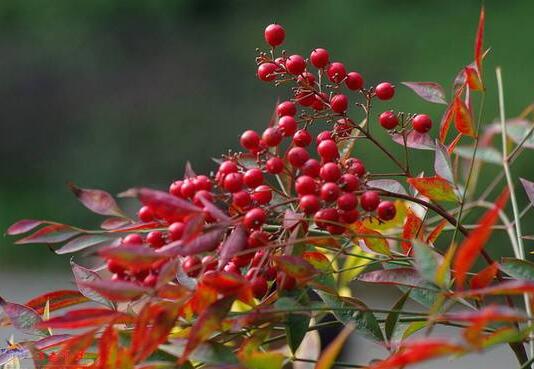
2. Precautions for fertilizing heavenly bamboo: avoid concentrated fertilizer
1. Fertilizing time
Heavenly bamboo is a plant that loves fertilizer. Around February each year it enters its growth period, and at this time its demand for fertilizer is very high. Basically, it needs to be fertilized 1-2 times every month, and this period lasts until around July.
2. Fertilizer selection
In the process of growing heavenly bamboo, the choice of fertilizer is also very important. Normally, we can choose to apply more phosphorus fertilizer and potassium fertilizer, but the concentration of the fertilizer must not be too high. Around May, we can spray it once with monopotassium phosphate. From May to September, every 15-20 days it also needs to be given a thin cake fertilizer water, and every 2 months it also needs ferrous sulfate water at a concentration of about 0.2%.
3. Dilute with water
Before fertilizing, the fertilizer needs to be diluted with water first. This can lower the concentration of the fertilizer and allow heavenly bamboo to absorb it better. If the concentration of the fertilizer applied is too high, the plant not only cannot absorb it, but will also develop yellowing and drying out as a result, so everyone should pay attention to this point.
4. Fertilizing method
Regarding how to fertilize heavenly bamboo, what needs more attention is the ratio of fertilizer to water. Under normal circumstances, a ratio of 1:10 is fine. During the growth period, it can be slightly more concentrated, and the ratio can be controlled at 1:8. When fertilizing, fertilizer must strictly not be applied onto the plant, otherwise it is very easy to burn it. Generally, it is fine to apply it directly into the soil.
Summary: After reading the above content, I believe everyone has gained some understanding of how to fertilize heavenly bamboo. The editor will introduce the precautions for fertilizing heavenly bamboo here. As long as everyone fertilizes according to the above methods, your heavenly bamboo will certainly grow with lush branches and leaves.
How to grow a heavenly bamboo bonsai: cultivation methods and precautions for heavenly bamboo / avoid waterlogging
Heavenly bamboo (Nandina domestica) is a relatively common woody flowering plant in people's lives. It has a graceful plant shape and very high ornamental value, but this plant is not easy to grow well, and there are many points to pay attention to. So how do you grow a heavenly bamboo bonsai? What are the cultivation methods and precautions for heavenly bamboo? Below, the editor will walk everyone through it.
1. How to grow a heavenly bamboo bonsai: understand its habits
To know how to grow a heavenly bamboo bonsai, we first need to understand its growth habits. Heavenly bamboo is naturally fond of warm and humid environments, so when growing it we need to pay attention to the environment. In addition, aspects such as watering and fertilizing cannot be neglected either. The specific details are introduced in the section below on cultivation methods and precautions for heavenly bamboo. Let us take a look below.
2. Cultivation methods and precautions for heavenly bamboo
1. Soil: use sandy soil
During the growth process of heavenly bamboo, its requirements for soil are very high. It is best to use relatively fertile sandy soil. This kind of soil has good drainage and aeration, which allows it to grow better. Remember not to choose soil that is too acidic, otherwise it will be very difficult for it to survive.
Precautions: In the process of growing heavenly bamboo, we need to change its soil once every 2-3 years, and during cultivation we need to loosen the soil for it frequently, because fertilizing easily causes the soil to become compacted. In addition, we must also promptly remove weeds from the potting soil so as not to affect its growth.
2. Fertilizing: apply light fertilizer frequently
Among the cultivation methods and precautions for heavenly bamboo, fertilizing is a very important point, because fertilizer is one of the main nutrients in its growth process. Before planting, we should apply an appropriate amount of base fertilizer into the soil. This can help it get through the seedling stage. After entering the growth period, its demand for fertilizer is very great. Basically, it needs to be fertilized 1-2 times every month, and this can stop around July.
Precautions: When fertilizing heavenly bamboo, there is one point we need to pay attention to, which is that before fertilizing, the fertilizer must first be diluted, and the principle of applying light fertilizer frequently must be maintained. Only in this way can it absorb it better. If concentrated fertilizer is applied directly, it is very easy to burn the plant and cause its leaves to turn yellow.
3. Humidity: maintain humidity at 50-70%
Heavenly bamboo likes to grow in warm and humid environments. If the humidity of the growing environment is too low, it is very easy for the plant to show adverse symptoms such as dull leaves, yellowing, and shedding, so maintaining air humidity is a very important point.
Precautions: During the growth process of heavenly bamboo, its requirement for air humidity is between 50-70%. If it is too low, it is easy to cause drying out. If it is too high, pest and disease problems are also likely to occur, so everyone must grasp this point well.
4. Water: keep the soil moist / avoid waterlogging
In the process of growing heavenly bamboo, we need to water frequently, because it relatively likes humid environments. Keeping the soil moist can let it grow better and more vigorously. Especially when it is flowering, it basically needs to be watered once every evening, and when summer temperatures are high, it even needs to be watered once in the morning and once in the evening.
Precautions: Although heavenly bamboo likes humid environments, we still cannot water too much. We should control the amount of watering and just keep the soil at a certain level of moisture. If too much watering causes waterlogging, it is very easy to cause root rot, so everyone should pay attention to this point.
5. Light: provide shade in summer
Heavenly bamboo likes light, but it relatively fears strong light, so the cultivation method differs in different seasons. If light is suitable in spring and autumn, we can grow it outdoors and let it receive light all day. When summer sunlight is too strong, it is best to move it indoors to a semi-shaded place to grow, so as not to scorch the plant.
Precautions: Spring and autumn are relatively suitable growing seasons for heavenly bamboo. In summer, it needs to be grown in a semi-shaded place, so that it can receive a certain amount of light and also avoid being scorched by light that is too strong. In winter, it is best to grow it indoors, and when the temperature rises at noon, move it outdoors to receive 2-3 hours of sunlight.
6. Pests and diseases: handle promptly to avoid withering
During the growth process of heavenly bamboo, if we do not care for it properly, problems such as pests and diseases are very likely to appear. Such problems are extremely harmful to the plant, not only affecting its ornamental value, but in severe cases also causing heavenly bamboo to wither.
Precautions: When problems such as pests and diseases appear, we must handle them promptly. If the time is dragged out, it will be very difficult to cure them completely. For specific prevention and control methods, everyone can refer to the article on pest and disease control for heavenly bamboo. The editor will not introduce too much here.
Summary: After reading the above content, I believe everyone has gained some understanding of how to grow a heavenly bamboo bonsai. The editor will introduce the cultivation methods and precautions for heavenly bamboo here. As long as everyone follows the above methods when growing it, your heavenly bamboo will certainly grow with lush branches and leaves.
Do you understand the fertilizing techniques for heavenly bamboo?
Heavenly bamboo (Nandina domestica) is an ornamental plant that many bonsai lovers greatly like. Its branches and trunk are upright like bamboo, and its leaves are also very elegant. In autumn and winter, its color turns red, very brilliant and beautiful, and it is quite ornamental with abundant fruit! So if you also grow a pot of heavenly bamboo, do you know how it should be fertilized? Below, let the editor tell you!
1. Growth habits
First, you must understand in advance what living habits heavenly bamboo has. In fact, heavenly bamboo's adaptability is still quite strong. It likes warm climates and humid environments, but it can also withstand shady environments and cold climates. However, its requirements for soil are relatively high. It must be fertile, drainage must be good, and it must be sandy soil. Its requirements for water are not strict either; it can withstand both drought and moisture. Here comes the key point: heavenly bamboo greatly likes fertilizer, especially fertilizer containing phosphorus and potassium, so more can be applied normally!
2. How to fertilize
1. Fertilizing time. Generally, it starts in February. It needs to be fertilized once or twice every month, and this can stop in July.
2. Fertilizer selection. Normally, more phosphorus and potassium fertilizer can be applied, or cake fertilizer and bone meal can be applied alternately, but the concentration cannot be too high. By the end of May, it can be sprayed once with monopotassium phosphate. From May to September, every 15 to 20 days it can be given a dilute thin cake water, and about every two months it needs ferrous sulfate water at a concentration of about 0.2%.
3. Fertilizing method. During the seedling stage of heavenly bamboo, the liquid fertilizer should be lighter and not too concentrated. Generally, the ratio of liquid fertilizer to water is 1:10. During the growth period of heavenly bamboo, liquid fertilizer can be applied once or twice every month. At this time, the ratio can be slightly more concentrated: the ratio of liquid fertilizer to water is 1:8. After it matures, dry fertilizer needs to be applied once a year, respectively in May, August, and October each year. The third fertilizing should be done when it is moved indoors for overwintering. At this time, the fertilizer can be cake fertilizer or sesame paste residue. During the rainy season, only dry fertilizer can be applied, and only once every month, about 20-40 grams per pot.
4. Fertilizer amount. The amount of fertilizer is generally smaller for the first and second times, and starting from the third time, the amount of fertilizer needs to be appropriately increased.
The above are all some techniques related to fertilizing heavenly bamboo during cultivation. In fact, as long as the right method is used and it is grown scientifically, heavenly bamboo will grow very well. You can give it a try; it is quite good!