How to grow a Nandina domestica bonsai? Cultivation methods and precautions, avoid waterlogging
Nandina domestica is a fairly common woody flowering plant in people's daily lives. It has a graceful plant shape and high ornamental value, but this plant is not easy to grow well, and there are many points that need attention. So how do you grow a Nandina domestica bonsai? What are the cultivation methods and precautions for Nandina domestica? Below, the editor will guide everyone through it.
1. How to grow a Nandina domestica bonsai, understand its habits
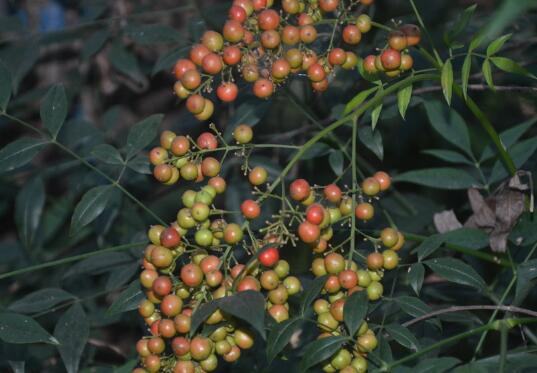
To know how to grow a Nandina domestica bonsai, we first need to understand its growth habits. Nandina domestica naturally likes a warm and humid environment, so when cultivating it we need to pay attention to the environment. In addition, watering, fertilizing and other aspects cannot be neglected either. The specific details are introduced in the section below on cultivation methods and precautions for Nandina domestica. Let's take a look below.
2. Cultivation methods and precautions for Nandina domestica
1. Soil, use sandy soil
During the growth of Nandina domestica, its requirements for soil are very high. It is best to use relatively fertile sandy soil. This kind of soil has good drainage and aeration, which can let it grow better. Remember not to choose soil that is too acidic, otherwise it will be very difficult for it to survive.
Precautions: In the process of cultivating Nandina domestica, we need to change the soil once every 2-3 years, and during cultivation we need to loosen the soil frequently, because fertilizing easily causes the soil to become compacted. In addition, we must also promptly remove weeds from the potting soil so as not to affect its growth.
2. Fertilizing, apply thin fertilizer frequently
Among the cultivation methods and precautions for Nandina domestica, fertilizing is a very important point, because fertilizer is one of the main nutrients in its growth process. Before planting, we should apply an appropriate amount of base fertilizer to the soil, which can help it get through the seedling stage. After entering the growth period, its demand for fertilizer is very large, and it basically needs fertilizing 1-2 times every month, until around July when it can stop.
Precautions: When fertilizing Nandina domestica, there is one point we need to note, which is that the fertilizer must be diluted first before application, and the principle of applying thin fertilizer frequently must be maintained. Only then can it absorb it better. If concentrated fertilizer is applied directly, it can easily burn the plant and cause its leaves to turn yellow.
3. Humidity, maintain humidity at 50-70%
Nandina domestica likes to grow in a warm and humid environment. If the humidity of the cultivation environment is too low, it is easy for the plant to show undesirable signs such as dull leaves, yellowing, and shedding, so maintaining air humidity is a very important point.
Precautions: During the growth of Nandina domestica, the requirement for air humidity is between 50-70%. If it is too low, it can easily cause drying out; if it is too high, problems such as pests and diseases can also easily occur, so everyone must grasp this point well.
4. Water, keep the soil moist / avoid waterlogging
In the process of cultivating Nandina domestica, we need to water frequently, because it relatively likes a humid environment. Keeping the soil moist can let it grow better and more vigorously. Especially when it is flowering, it basically needs watering once every evening, and when the temperature is relatively high in summer, it even needs watering once in the morning and once in the evening.
Precautions: Although Nandina domestica likes a humid environment, we still cannot water too much. We should control the amount of watering and just keep the soil at a certain humidity. If too much watering causes waterlogging, it can easily lead to root rot, so everyone should pay attention to this point.
5. Light, pay attention to shading in summer
Nandina domestica likes light, but it is relatively afraid of strong light, so the cultivation method is also different in different seasons. If the light is suitable in spring and autumn, we can keep it outdoors to receive all-day light. When the sunlight is too strong in summer, it is best to move it indoors to a semi-shaded place for cultivation, so as to avoid the plant being scorched.
Precautions: Spring and autumn are relatively suitable growing seasons for Nandina domestica. In summer it needs to be kept in a semi-shaded place, so that it can receive a certain amount of light and also avoid being scorched by too strong light. In winter, it is best to cultivate it indoors, and when the temperature rises at noon, move it outdoors to receive 2-3 hours of sunlight.
6. Pests and diseases, deal with them promptly to avoid withering
During the growth of Nandina domestica, if we do not care for it properly, problems such as pests and diseases can easily appear. Such problems are extremely harmful to the plant. They not only affect its ornamental value, but in severe cases can also cause Nandina domestica to wither.
Precautions: When problems such as pests and diseases appear, we must deal with them promptly. If the time is dragged out, it will be difficult to cure them completely. For specific control methods, everyone can refer to the article on pest and disease control for Nandina domestica. The editor will not introduce them in too much detail here.
Summary: After reading the above content, I believe everyone has gained a certain understanding of how to grow a Nandina domestica bonsai. The editor will introduce the cultivation methods and precautions for Nandina domestica here. As long as everyone follows the above methods when cultivating, your Nandina domestica will definitely grow with lush branches and leaves.
Production and care of Nandina domestica bonsai
What the editor of Flower Bonsai Network is sharing with everyone today is an article about the production and care of Nandina domestica bonsai. Let's take a look together.
[Scientific name]: Nandina domestica,
[Aliases]: Tianzhu, Lanzhu, Hongtianzhu,
[Family and genus]: Berberidaceae, Nandina genus
Nandina domestica is native to the Yangtze River basin of our country, and is also distributed in neighboring countries to the southeast. It mostly grows in humid gullies, sparse forests, and shrub thickets, and is an indicator plant of calcareous soil. Nandina domestica has clustered stems, upright and tall, with nodes like bamboo, and its leaf arrangement is slanted and elegant. Its young leaves are yellow-green, later gradually turning green, and after winter gradually turning red. From June to July it is full of small white flowers, and after flowering it bears fruit. The fruit is a spherical berry, arranged in spikes, with dozens of grains per spike. It starts green and later turns red. The fruiting period is from October to November, and the fruit persists until February of the following year, remaining for a long time without falling, which people love.
In the Song Dynasty, Yang Zhuanzhai wrote in the poem "Nandina": "After the rainy days the red-named flowers bloom, forming red fruits even lighter and rounder; in the world who can cure heat in the brain, only the pure fragrance purifies karmic ties." It not only praises the flowers and fruits, but also explains its medicinal value.
1
Basic habits and advantages of Nandina domestica
Nandina domestica likes a warm, humid, well-ventilated semi-shaded environment. It is relatively cold-tolerant. It can tolerate slightly alkaline soil. Its root system is well developed and its sprouting ability is strong. Its trunk is upright and tall, similar to bamboo.
Nandina domestica has a beautiful tree posture, lush green foliage, and abundant round, smooth red fruits. It is one of the excellent varieties for foliage and fruit appreciation. Whether planted in the ground, in pots, or made into bonsai, it has very high ornamental value. In Chinese folk custom, during the Spring Festival, Nandina domestica, wintersweet, and pine branches are often placed in vases, creating a charming contrast.
2
Production of Nandina domestica bonsai
To make a Nandina domestica bonsai, seedlings can be obtained through sowing, cuttings, or division. You can also dig up old stumps by the stream, and after 2-3 years of training the material, they can be potted in a fine pot for viewing. Because the stems of Nandina domestica are not easy to wire, processing and shaping are mainly done by combining plantings and pruning. This kind of bonsai is best in a multi-trunk style or forest style. When shaping, there should be both sparse and dense areas, with staggered heights and clear layers. Relatively thick plants can also form a landscape as a single specimen. Nandina domestica is mostly planted during the spring sprouting period. It is suitable for loose, fertile, well-drained sandy soil rich in organic matter. Controlling water and fertilizer early in growth can control stem height. Heavy pruning and shortening before germination or during the growth period can promote side buds. Pulling and tying before lignification can change the trunk shape and direction. For pots used for Nandina domestica bonsai, medium-deep or shallow pots are suitable, mainly rectangular or oval. Because it is for viewing green leaves and red fruits, the color of the pot should be coordinated. According to the beautiful, free-spirited, and upright characteristics of Nandina domestica bonsai, you can dot the pot with rocks, create a small stream, place ornaments, or plant it together with other plants to express a better theme.
3
Care of Nandina domestica bonsai
Site: Place it in a warm, semi-shaded, ventilated place for care. Strong light will make the leaves turn red and also scorch tender leaves. A place without sunlight all day will cause leggy growth and deformation, as well as fewer flowers and fruits, and in severe cases leaf drop. For ground planting, it can overwinter in the open; for potted planting, move it indoors.
Watering: Nandina domestica likes moisture, but there must be no waterlogging. Create a humid microclimate. Do not water too much during the flowering period, so as to avoid flower drop. Controlling water early in growth can control excessive growth.
Fertilizing: Nandina domestica should not be fertilized too much. Applying organic thin fertilizer liquid twice each in May and June is enough. It should be noted that Nandina domestica is an indicator plant of calcareous soil. Every year before flowering, some calcium-containing acidic substances or fertilizer should be added to the potting soil to ensure more fruit.
Shaping: During the growth period, useless branches sprouting from the roots should often be removed. In early spring, combined with changing the soil, comprehensive shaping should be carried out, cutting off diseased branches and useless branches, and shortening overly long branches, weak branches, and old branches to dwarf the plant. Applying growth regulators early in growth can shorten the distance between nodes and leaf stalks.
Pests and diseases: Nandina domestica has relatively few pests and diseases. Occasionally scale insects occur, and they should be removed promptly.
How is a Nandina domestica bonsai made, and what precautions are there
On a spring balcony, in the fertile soil in that flowerpot, tender bamboo stalks grow one by one, as if they were a group of graceful young maidens. That Nandina domestica in the bonsai has slender branches and small leaves, like patches of green clouds. Today I will guide everyone to understand the production and care of Nandina domestica bonsai.Growth habits
It is an evergreen shrub. It mostly grows beside humid gullies, under sparse forests, or in shrub thickets, and is an indicator plant of calcareous soil. It likes a warm, humid, and well-ventilated semi-shaded environment. It is relatively cold-tolerant. It can tolerate slightly alkaline soil. The flowering period is from May to July. It grows wild in sparse forests and shrub thickets, and is also often planted in courtyards. It likes a warm and humid climate, and is neither cold-tolerant nor drought-tolerant. It likes light and tolerates shade; under strong light the leaf color turns red. It is suitable for growing in sandy loam containing humus.
Production of bonsai
To make a Nandina domestica bonsai, seedlings can be obtained through sowing, cuttings, or division. You can also dig up old stumps by the stream, and after 2-3 years of training the material, they can be potted in a fine pot for viewing. Because the stems of Nandina domestica are not easy to wire, processing and shaping are mainly done by combining plantings and pruning. This kind of bonsai is best in a multi-trunk style or forest style. When shaping, there should be both sparse and dense areas, with staggered heights and clear layers. Relatively thick plants can also form a landscape as a single specimen. Nandina domestica is mostly planted during the spring sprouting period. It is suitable for loose, fertile, well-drained sandy soil rich in organic matter. Controlling water and fertilizer early in growth can control stem height. Heavy pruning and shortening before germination or during the growth period can promote side buds. Pulling and tying before lignification can change the trunk shape and direction. For pots used for Nandina domestica bonsai, medium-deep or shallow pots are suitable, mainly rectangular or oval. Because it is for viewing green leaves and red fruits, the color of the pot should be coordinated. According to the beautiful, free-spirited, and upright characteristics of Nandina domestica bonsai, you can dot the pot with rocks, create a small stream, place ornaments, or plant it together with other plants to express a better theme.
Care of bonsai
1. Site
Place it in a warm, semi-shaded, ventilated place for care. Strong light will make the leaves turn red and also scorch tender leaves. A place without sunlight all day will cause leggy growth and deformation, as well as fewer flowers and fruits, and in severe cases leaf drop. For ground planting, it can overwinter in the open; for potted planting, move it indoors.
2. Watering
Nandina domestica likes moisture, but there must be no waterlogging. Create a humid microclimate. Do not water too much during the flowering period, so as to avoid flower drop. Controlling water early in growth can control excessive growth.
3. Fertilizing
Nandina domestica should not be fertilized too much. Applying organic thin fertilizer liquid twice each in May and June is enough. It should be noted that Nandina domestica is an indicator plant of calcareous soil. Every year before flowering, some calcium-containing acidic substances or fertilizer should be added to the potting soil to ensure more fruit.
4. Shaping
During the growth period, useless branches sprouting from the roots should often be removed. In early spring, combined with changing the soil, comprehensive shaping should be carried out, cutting off diseased branches and useless branches, and shortening overly long branches, weak branches, and old branches to dwarf the plant. Applying growth regulators early in growth can shorten the distance between nodes and leaf stalks.
5. Pests and diseases
Nandina domestica has relatively few pests and diseases. Occasionally scale insects occur, and they should be removed promptly.
The above is the knowledge on Nandina domestica bonsai production methods and care that I have compiled. I hope it can be helpful to you. Please continue to follow Succulent Garden to learn more about bonsai production knowledge.