Basil Watering Guide: How Often to Water and Why You Should Not Overwater
From basil growing guides, we know it is a plant that likes a dry environment, so during normal care you should try to create such conditions for it, and watering becomes a key part of this: you should neither water too much nor go too long without watering. So how do you water basil? How often should basil be watered? These are questions many flower lovers consider, and below the editor will answer them for you.
Does basil need a lot of water?
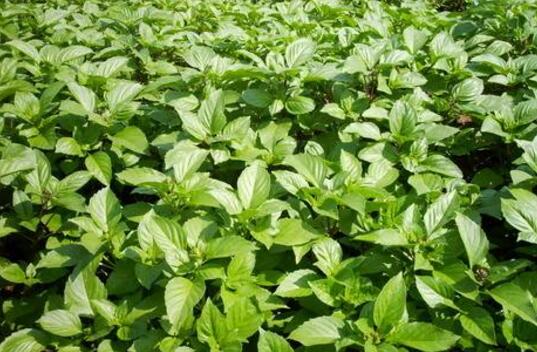
Basil does not need to be watered every day. During normal care, you can let the soil stay slightly dry. If you find that the soil can no longer be pressed into a ball, it means the soil is already fairly dry, and at this point you need to water promptly, taking care to water thoroughly.
How to water basil
Because basil has different water requirements at different growth stages, and because of changes in climate, watering times cannot be generalized. Below we introduce them in detail by germination stage, young plant stage, and growth stage.
How often to water basil
1. Germination stage
After basil is propagated, it needs a period to take root and sprout. During this process the soil needs to stay moist, but it does not need frequent or heavy watering. You can spray some water on the soil surface every day, then cover it with plastic film to keep it warm, and basil will sprout smoothly.
2. Young plant stage
Basil that has just been potted generally only needs watering once every 5-7 days. Do not let the soil become too dry; make sure the soil stays slightly moist. In addition, throughout this stage the water needs of young plants are lower than those of basil in vigorous growth, so watering does not need to be too frequent.
3. Growth stage
(1) Spring and autumn
Usually water once every 4-5 days. You can choose the watering time according to how wet or dry the soil is. If the soil dries relatively quickly, replenish water in time. In addition, in some places there is more rain in spring. At this time, how should basil be watered? The answer is that watering can be stopped during the rainy season.
(2) Watering in summer
In summer, besides being absorbed, much of the water in the soil evaporates. To keep the soil moist, generally water once every 2-3 days, preferably in the morning or evening, which is better for full water absorption.
(3) How to water basil in winter
In most regions, winter temperatures are not favorable for basil growth, so in winter you need to keep it warm. At this time watering should also be reduced: you can water once every 10-15 days, choosing an afternoon with more sunlight, and also take care that the water temperature is not too low.
How to grow basil: basil growing methods and precautions / temperature and light are key
Although basil leaves have many effects and benefits, to bring all these benefits into play, you must ensure that basil grows relatively healthily. Because basil is fairly sensitive to temperature, you need to master certain techniques when growing it. So how do you grow basil? Let us look at basil growing methods and precautions.
Basil's growing environment
Before learning how to grow basil, you need a preliminary understanding of its suitable growing environment. Basil is fairly sensitive to temperature. It grows quickly in a warm, dry environment, but it is not cold-tolerant. In addition, it is relatively drought-tolerant and not waterlogging-tolerant, prefers fertile, well-drained soil, and has average light requirements.
How to grow basil
1. Soil requirements
Basil relatively prefers fertile soil. When cultivating it, humus soil and sandy soil are best. You can use a mix of garden soil, river sand, and so on. If growing it in pots, you can use vermiculite, peat soil, and so on to make the growing medium.
2. Temperature requirements
Basil is a relatively cold-sensitive plant. It likes a warm environment, and the most suitable temperature is between 15-28 degrees. Therefore, in spring, summer, and autumn it grows relatively quickly, but in winter you need to keep the temperature above 5 degrees to avoid cold damage to the plant.
3. Light conditions
Among basil growing methods and precautions, basil's light requirement is plenty of sunlight. It is a sun-loving plant. Lack of light will cause the leaves to become dull in color and growth to slow down, so during normal care it should be placed in a bright place or in full sun.
4. Watering method
For watering, the soil should be kept on the dry side, because basil likes a dry environment and has relatively strong drought tolerance. During normal watering, water once every 3-4 days and just do not let the soil become too dry. Apart from needing frequent misting when summer temperatures are high, at other times mist the leaves as little as possible to avoid excessive humidity.
5. Pest and disease control
The main pests harmful to basil include aphids, leaf miners, snails, and so on, while diseases include fungal wilt. The main control methods are to maintain good environmental sanitation during normal care and not let the environment lack light, be too cold, or be too humid. If pests or diseases appear, use medication promptly for treatment.
Basil growing methods and precautions
1. Soil should not become waterlogged
When watering, do not pour in too much at one time. Just make sure the upper and lower parts of the soil are moist. Do not let the roots sit in water, as this easily causes root rot. At the same time, ensure the soil drains well to avoid water being unable to drain promptly during the rainy season.
2. Light should not be lacking
Only when basil leaves are green and lush can it show its greatest value. To achieve this, sufficient light is needed, so never let the environment lack light. In particular, do not place basil indoors where there is neither indirect light nor lamplight, otherwise basil will soon wither and die.
3. The environment should be ventilated
One way to maintain environmental sanitation is good ventilation. Only when air circulates can pathogens and harmful microorganisms be prevented from breeding. If basil is always kept in a stuffy, airtight environment, the chance of pests and diseases will increase exponentially, posing a huge threat to its health.
How to plant basil: basil planting methods and precautions
Surely everyone is familiar with basil. It is an aromatic plant used both as medicine and food, and often appears as an ingredient on all kinds of dining tables. However, when used as a seasoning, fresh basil is best, so many fans have started growing it at home themselves. But everyone still has many questions about how to plant it correctly. Below the editor will answer them one by one.
How to plant basil
I. Planting methods
Sowing time: if in the south, you can choose March to April; if in the north, you can choose late April to May.
Sowing soil: the soil can be mixed with 1 part peat soil + 1 part perlite + 1 part vermiculite.
II. Preparation before sowing
Seeds: you can buy the variety you want. Basil also comes in many varieties. When buying seeds, you can choose the variety you want.
Soil: gently press the soil with your hand to help release air in the soil, then water the soil thoroughly, without waterlogging. This helps the seeds germinate.
III. Sowing steps
1. Put 1 to 2 seeds in each flowerpot, then cover with a layer of soil, then cover it with plastic film. At this time the soil should be kept moist.
2. Place the flowerpot in a sunny place, and every day open the plastic film and spray water into the flowerpot to keep the soil moist. Doing this twice a day is enough.
3. When small sprouts emerge, the plastic film can be removed completely.
4. Water it every day to keep the soil moist. At this time, never let the soil dry out.
IV. Transplanting and setting out
When it grows 1 to 2 mature leaves, it can be transplanted and set out, but the location must be chosen in a sunny place, which is very beneficial to its growth.
After that, it can be grown in the normal way.
Basil planting methods and precautions
1. Cultivation and topdressing
When basil seedlings are 6-10 cm tall, thin and fill in the seedlings. For hole sowing, keep 2-3 plants per hole; for drill sowing, keep about 1 plant every 10 cm. Generally cultivate and weed twice. The first time is 10-20 days after emergence, shallowly hoeing the surface soil. The second time is from early May to early June, before the seedlings close the rows. After each cultivation, apply human and livestock manure water. Seedlings are afraid of drought, so pay attention to timely watering.
2. Harvest time
Basil stems and leaves are harvested in July-August. Cut the whole plant, remove fine roots and impurities, and sun-dry it. Harvest after the plants are 20 cm tall and the rows have closed. Choose the tender front ends of branches that have not bolted, 5-10 cm long, and harvest once every 7-15 days. For essential oil extraction, do it when the inflorescences have all emerged.
3. Harvesting and processing
When harvesting basil, use a sickle to cut the plant 20-25 cm above the ground, avoiding shaking the root system, so as not to affect its ability to regrow. Then strengthen fertilizer and water management to encourage it to sprout new stems and leaves again. After harvesting, process it as soon as possible to avoid the wounds and leaves turning brown and yellow, which affects the quality of the essential oil.
4. Pest control
In terms of pests, basil mainly has aphids, Japanese beetles, thrips, leaf miners, snails, and slugs. For organic cultivation, you can use water sprays to drive away aphids, and pick off Japanese beetles by hand and throw them into soapy water. As for slugs and snails, you can use small beer containers to trap and kill them, or tie copper strips 5 cm from the plant base (10 cm is even better). Because of the interaction between copper strips and slug mucus, invading insects are driven back.
5. Disease control
In terms of diseases, basil is highly susceptible to fungal wilt. The pathogen invades from the vascular bundles of the roots, hindering plant growth and causing leaf wilting. In general field cultivation, you can choose fungal-resistant F1 hybrid varieties. In addition, high humidity and poor drainage also make it more prone to fungal leaf spot.
Does basil bloom?
The answer is that it certainly will. Basil produces purple or white flowers, and the tiny little blooms are very cute. Usually, a single flowering branch of basil is covered with a cluster, layer by layer. The petals open wide, and the long filaments hang down, making it feel like little dancing figures growing there.
Basil's flowering period is usually from July to September each year. When basil blooms, a single flowering branch blooms very profusely. After the flowering period comes basil's fruiting period. When the flowering branches become dry and withered, collect the seeds and sow them the following year.
How to water basil
1. During germination
During this period, keep the potting soil continuously moist, but not too moist. The environment at this time also needs a certain humidity for it to send out small sprouts faster. You can cover the flowerpot with plastic film and regularly open it to water the potting soil a little.
2. During the seedling stage
During the seedling stage, careful care is needed. At this time it is most afraid of the soil being too dry, which does not help the growth of the young seedlings, so just keep the soil continuously moist.
3. Summer
Summer is characterized by high temperature and high heat. You can water once a day, preferably in the early morning before the sun has fully risen. Watering at this time allows the plant and soil to absorb water more thoroughly. But if the soil becomes dry in the evening, you can water once more. If there is bad weather such as rain, you can delay watering or extend the watering interval.
4. Winter
In winter, if the growing temperature can be maintained at a normal temperature, then you can water normally, but if the temperature is relatively low, just keep the potting soil slightly dry.
If you have a small balcony at home, besides growing ornamental plants to decorate the home environment, growing a small pot of fruit and vegetable plants is also not a bad idea. Basil is a very good choice. Its small body contains endless power, and it has very good effects in both edible and medicinal value.