How to fertilize basil? Master four tips, and stop fertilizing in winter
Basil is a relatively robust plant with low fertilizer requirements; as long as the soil is fertile enough, it will grow well. However, to make the leaves greener, you can fertilize it reasonably as part of basil care. So how do you fertilize basil? Let me give you the answer.
Does basil need fertilizing?
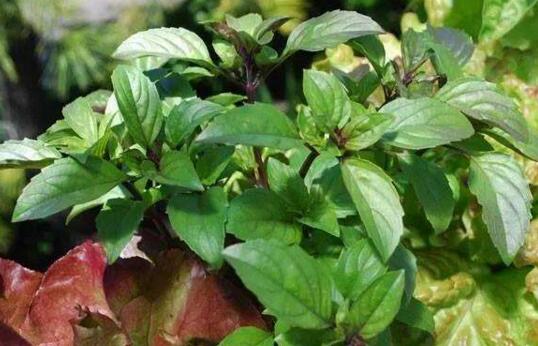
Usually, basil does not need fertilizing. If the chosen soil is fairly fertile and base fertilizer was added at planting time, the nutrients it needs for growth are basically sufficient. But if the soil is rather poor, you can apply some fertilizer appropriately.
How soon can basil be fertilized?
Once basil has grown 4-6 leaves, you can begin fertilizing. The fertilizer should mainly be a dilute liquid fertilizer, with the aim of promoting root growth. Only when the roots develop quickly and well will the plant grow vigorously.
How to fertilize basil
1. Keep fertilizer away from the roots
Since basil is quite susceptible to fertilizer burn, when fertilizing, the fertilizer should be poured in from the edge of the pot, keeping it as far from the roots as possible. Otherwise, it can easily cause basil leaves to become thick and yellow, affecting its growth and appearance.
2. Mainly use dilute liquid fertilizer
When basil grows to about 10 cm, you can apply some nitrogen fertilizer, preferably a dilute liquid fertilizer. If using solid fertilizer, you can scatter it 4 cm from the roots, then water appropriately, but do not let water accumulate.
3. Do not fertilize in the rainy season or winter
During the usual rainy season and in winter, how do you fertilize basil? The answer is to stop fertilizing, especially in winter when fertilizing is absolutely not allowed, because basil grows very slowly at this time. Fertilizing not only fails to promote growth but instead causes fertilizer burn.
4. Do not let the plant get fertilizer on it
When fertilizing, never spray the liquid fertilizer directly onto the leaves. The principle is the same as keeping it away from the roots: if fertilizer touches the leaves, it can easily cause them to turn yellow from fertilizer burn, because basil mainly absorbs nutrients through its roots, not its leaves.
How to grow basil indoors
Basil, also known as lanxiang, nine-layer pagoda or shilixiang, is one of the more common culinary herbs. In ancient Greece, basil was called the "king of herbs." Many people now like to grow a pot of basil at home; it not only helps repel mosquitoes, but when used medicinally, basil can also invigorate the blood and dispel wind, giving it certain medicinal value.
Basil
I. Growing environment for basil
It is understood that basil prefers warm, humid environments and grows in subtropical regions. It is not cold-tolerant or drought-tolerant, and has no strict requirements for soil. To obtain high yields and quality produce, it is best to choose fertile soil with good drainage for planting. In the south, seedlings emerge in early April; in the north, seedlings emerge from early May to mid-May. The length of emergence time is related to the temperature at the time; if the temperature rises to 21-25°C, seedlings can emerge in 7-10 days. In the Beijing area, plant height increases fastest from early May to mid-June, and leaf number also increases the most. During this period, elongation is mainly due to the rapid elongation of many internodes. After flowering in mid-June, leaf number no longer increases. At this stage, elongation is caused by the elongation of the upper few internodes, so plant height growth slows.
Basil is robust by nature and very easy to cultivate. Because it likes warmth, it can grow well in all four seasons, though growth slows when cold spells arrive in winter. Cultivate it in a sunny, well-drained spot. After planting, it will branch on its own and form a bushy shape as it grows, but if you keep pinching out the growing tips to encourage branching, the more branches and leaves there are, the larger the harvest will be. At the same time, suppressing height makes it less likely to flower. There is a folk saying that basil flowers are toxic; in fact, basil stems and leaves themselves contain aroma, and the inflorescence has a coarser texture and is not suitable for eating, but there is no issue of toxicity. Abroad, young flower buds are harvested because the buds contain a higher content of essential oil.
Growing basil indoors is very easy. Container-grown basil should be planted in well-drained, nutrient-rich soil. Using the appropriate soil type is important for successfully growing basil in containers. Basil cannot tolerate water stress, so make sure the pot provides sufficient drainage. While the soil should be kept slightly moist, it should not be soggy; otherwise, the roots will be prone to rot.
Basil
Growing basil indoors requires fertilizing. Depending on the variety grown and its overall purpose, general indoor plant fertilizers can be used. As with many indoor plant fertilizers, this should be used at half the recommended strength. However, basil used only for flavoring food needs organic fertilizer. Organic fertilizer also helps maintain pH when growing basil indoors.
Healthy pH is another important aspect of quality soil. You should check the soil pH about once a month, or every 4-6 weeks, for optimal growth. Sufficient pH is usually between 6.0 and 7.5.
II. Lighting for growing basil indoors
When growing basil indoors, lighting is very important. Growing basil indoors requires at least 6 hours of sunlight. Basil plants should be placed at a sunny window, preferably one facing south. Otherwise, these potted plants may need to be grown under fluorescent lights. With this type of lighting fixture, basil plants will need about 10 hours of light to grow healthily. However, basil grown indoors can also alternate that many hours between natural and artificial lighting in any given period.
Basil is more often grown outdoors, but many people also choose to grow it at home as greenery and a potted ornamental plant. Its tender stems and leaves can also be used directly for stir-frying and making soup. It can be said that a small pot of basil has many uses.
Introduction to how to cultivate herb plants
How to fertilize herb plantsFor plants, fertilizer is like vitamins. If you open a gardening book, you can see all kinds of fertilizer types, and you might therefore feel that gardening work is very hard. However, fertilizing herbs is not hard at all. Why? Because herbs are very tough plants and do not really need these artificial products.
Herbs can actually fail to grow because of too much fertilizer. Generally speaking, fertilizing when the seasons change is best, but recently there is a type of soil on the market advertised as "herb fertilizer" that is even simpler to use directly. If you gradually get used to growing herbs and want to seriously propagate them, accumulating common knowledge about fertilizing is necessary, or simply absorbing it as general basic gardening knowledge is also fine.
Key points for cultivating herb plants:
First, you only need to remember a few key points; growing herbs is not very difficult:
1. Know the types of herbs you are growing
There are many plants that can be used as herbs, but the most commonly used types number around 10-20. Some have aromas that people in this country find hard to accept, such as geranium; some are less suited to Taiwan's climate, such as plants like dong quai; and some do not have a strong aroma themselves and are more often used for beauty purposes, such as aloe. Therefore, choosing plants to grow according to your purpose and understanding their characteristics is the first step to success. You can go to a flower market to buy the types you want to grow, and after bringing them home, increase their number by asexual propagation through cuttings or division, or buy seeds and grow them.
2. Suitable growing environment
This item includes the correct growing location or season. Before buying herbs to grow, you must first know where you will plant them. Is there a yard at home? What are the sunlight conditions? What is the soil texture, and is drainage good or not? Will you plant them in flower pots or directly in the ground? You must understand all of this first, and then choose the herb types you want to grow based on these conditions. Even if you do not understand the characteristics of a type, you can ask the seller to choose for you or give you some suggestions. Some annual or biennial types die after flowering, so you must carefully choose a suitable season for planting. Because these herbs are mostly native to high-latitude regions, under Taiwan's climate conditions, the cool climate of winter is more favorable for growth. This is also something you need to know in advance.
Miniature potted flowers can be used and enjoyed at home. The front row is rosemary, the second row is two different varieties of lavender, and the back row, from left to right, is thyme, lemon balm and lemon basil. When planting different types of herbs in pots, pay attention to matching their growth characteristics. The lemon balm on the left is suited to a shallow, wide pot, while the rosemary on the right is suited to a larger pot.
3. Careful and appropriate care
Herbs are living plants, so they must be cared for constantly during cultivation to grow well. When caring for them, first observe the condition of the plant and then take appropriate measures. For example, when watering, wait until the soil is slightly dry before watering, to avoid suffocating the roots. Do not water too much for types with thick leaves; moderate dryness helps the plant develop. When harvesting or pruning, do not cut too much at once, to avoid too great a shock that prevents new buds from growing and causes death. During periods of rapid growth, place some organic fertilizer on the soil surface; when watering, the nutrients seep in and are absorbed by the roots, helping growth and development. As long as you always pay attention to its growth condition, everyone can try growing it at home and add more enjoyment to life.
4. Do not use pesticides
As for pests, herbs themselves contain special odors, and these odors themselves have a repellent effect on some pests. However, some pests will still eat the leaves. For example, some varieties of basil may have cutworms. At this time, it is better to spend a little effort removing them by hand, or use insect-proof netting to cover and isolate them. For disease prevention and control, prevention is better than treatment. The method is not to use old soil that has already been used for cultivation to grow herbs, because the pathogenic bacteria hidden inside can become a source of infection. Another method is to grow herbs in a suitable environment or season, so that the plants are strong and can naturally resist disease invasion. Remember that fresh herbs are eaten raw or only briefly heated when used, so if they contain pesticide residues, it will have adverse effects on health.
The above is Zuihua Net's introduction to the care of herb plants. I hope everyone can gain something from it!