How to grow basil? Growing methods and precautions, temperature and light are key
Although basil leaves have many benefits and effects, to fully bring out these benefits, you must ensure that the basil grows relatively healthily. Since basil is quite sensitive to temperature, you need to master certain techniques when growing it. So how do you grow basil? Let's take a look at the growing methods and precautions for basil.
The growing environment of basil
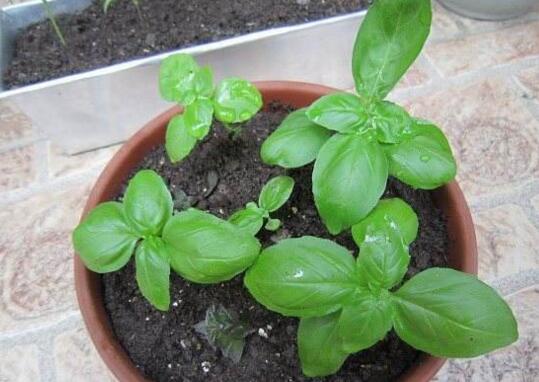
Before learning how to grow basil, you need to have a preliminary understanding of its suitable growing environment. Basil is quite sensitive to temperature. It grows quickly in a warm, dry environment, but it is not cold-tolerant. In addition, it is relatively drought-tolerant and not tolerant of waterlogging. It likes fertile, well-drained soil and has average requirements for light.
How to grow basil
1. Soil requirements
Basil relatively likes fertile soil. When cultivating it, humus soil and sandy soil are best. You can use a mix of garden soil, river sand, and so on. If growing it in a pot, you can use vermiculite, peat soil, and so on to make the growing medium.
2. Temperature requirements
Basil is a plant that is relatively afraid of cold. It likes a warm environment. The most suitable temperature is between 15-28°C. Therefore, in spring, summer, and autumn, it grows relatively quickly, but in winter you need to keep the temperature above 5°C to avoid the plant being damaged by freezing.
3. Light conditions
In the growing methods and precautions for basil, basil's requirement for light is sufficient sunlight. It is a sun-loving plant. If it lacks light, the leaves will become dull in color and growth will slow down. So during normal care, it should be placed in a bright or full-sun location.
4. Watering method
In terms of watering, the soil should be kept on the dry side, because basil likes a dry environment and has relatively strong drought tolerance. During normal watering, water once every 3-4 days, as long as the soil is not too dry. Apart from needing frequent misting when the temperature is relatively high in summer, at other times try to spray the leaves as little as possible to avoid excessively high humidity.
5. Pest and disease control
The main pests harmful to basil include aphids, leaf miners, snails, and so on, while diseases include fungal wilt. The main control methods are to maintain good environmental sanitation in normal times and not let the environment lack light, have too low a temperature, or have too high humidity. If pests or diseases appear, treat them promptly with medication.
Growing methods and precautions for basil
1. Soil should not retain water
When watering, do not pour in too much at one time. Just ensure that both the upper and lower parts of the soil are moist. Do not let the roots soak in water, as this can easily cause root rot. At the same time, ensure the soil drains well to avoid water being unable to drain promptly during the rainy season.
2. Light should not be lacking
Only when basil leaves are verdant can they deliver their greatest value. To achieve this, sufficient light is needed, so never let the environment lack light. In particular, do not place basil indoors where there is neither indirect light nor artificial lighting, otherwise the basil will quickly wither and die.
3. The environment should be ventilated
One way to maintain environmental sanitation is good ventilation. Only when air can circulate can you avoid the breeding of pathogens and harmful microorganisms. If basil is always kept in a stuffy, unventilated environment, the probability of pests and diseases will increase exponentially, posing a huge threat to its health.
Growing methods and precautions for Mesona chinensis
Chinese scientific name: Liangfen grassLatin scientific name: Mesona chinensis Benth.Also known as Xianren grass, Xianren dong, XiancaoKingdom: PlantaePhylum: AngiospermsClass: DicotyledoneaeSubclass: SympetalaeOrder: TubifloraeFamily: LamiaceaeSubfamily: OcimoideaeTribe: OcimeaeGenus: MesonaSpecies: Mesona chinensisDistribution area: Taiwan, China, Zhejiang, Jiangxi, Guangdong, and Guangxi in southern ChinaMesona chinensis, also known as Xianren grass, Xianren dong, and Xiancao, is a plant in the Lamiaceae family. The lower part of the stem lies on the ground, while the upper part is upright. The leaves are ovate or ovate-oblong, slightly blunt at the tip, gradually contracting at the base into a stalk, with small serrations along the edges and sparse long hairs on both sides; the leaves borne on the upper part of the inflorescence are smaller, bract-like, ovate to inverted-triangular, shorter than the flowers, often with a pale purple base, and falling off when fruiting. The raceme is slender, the flowers are small, whorled, the calyx is small, bell-shaped, 2-lipped, the upper lip 3-lobed, the lower lip entire, and when fruiting it may become tubular, curved downward, with longitudinal veins and transverse wrinkles; the corolla is pale red, the upper lip broad, entire or toothed, the lower lip oblong, concave; there are 4 stamens, with the filaments protruding; the pistil is 1, with the style 2-lobed; one side of the disc is swollen. The nutlet is elliptical. The flowering period is late autumn. It is distributed in southern China.1. Morphological characteristics
Herbaceous, upright or creeping. Stems 15-100 cm tall, branched or sparsely branched; stems and branches four-angled, sometimes grooved, covered with deciduous long soft hairs or fine bristles. Leaves narrowly ovate to broadly ovate or nearly circular, 2-5 cm long, 0.8-2.8 cm wide, smaller on branchlets, apex acute or blunt, base acute, blunt, or sometimes rounded, margins with shallow or deep serrations, papery or nearly membranous, both surfaces covered with fine bristles or soft hairs, or hairy only along the veins beneath, or becoming hairless; lateral veins 6-7 pairs, flat or slightly concave above with the midrib and slightly raised beneath; petiole 2-15 mm long, covered with spreading soft hairs. Verticillasters numerous, forming an interrupted or nearly continuous terminal raceme, this inflorescence 2-10 (13) cm long, upright or slanting upward, with short stalks; bracts circular or rhombic-ovate, rarely lanceolate, slightly exceeding or shorter than the flowers, with short or long tail-like pointed tips, usually colored; pedicels slender, 3-4 (5) mm long, covered with short hairs. The calyx at flowering is bell-shaped, 2-2.5 mm long, densely covered with white soft hairs, veins inconspicuous, 2-lipped, the upper lip 3-lobed, the middle lobe especially large, apex acute or blunt, the lateral lobes small, the lower lip entire, occasionally slightly emarginate; at fruiting the calyx is tubular or urceolate-tubular, 3-5 mm long, with 10 veins and many transverse veins very obvious, forming small pits between them, nearly hairless or hairy only along the veins. The corolla is white or pale red, small, about 3 mm long, externally covered with fine soft hairs, internally slightly covered with fine soft hairs inside the tube below the upper lip, the corolla tube extremely short, the throat extremely enlarged, the limb 2-lipped, the upper lip broad, with 4 teeth, the 2 lateral teeth higher, the central 2 teeth inconspicuous, sometimes nearly entire, the lower lip entire, boat-shaped. Stamens 4, slanting outward, the anterior pair longer, the posterior pair with tooth-like appendages at the base of the filaments, covered with stiff hairs on them, anthers merged into one locule. The style extends far beyond the stamens, apex unequally 2-cleft. Nutlet oblong, black. Flowering and fruiting period July-October.2. Geographical distribution
Produced in Taiwan, China, Zhejiang, Jiangxi, Guangdong, and western Guangxi; grows along ditches and in dry sandy grassland.3. Growth habits
It likes a warm and humid climate. When the daily temperature reaches above 20°C, it grows vigorously. When the daily average temperature is below 15°C, it grows slowly. Below 10°C, it becomes difficult to grow. Below 0°C, the aboveground parts die, and it overwinters by its perennial roots. It dislikes drought and waterlogging. During growth and development, sufficient rain can often lead to high yields, but if it is soaked in standing water for more than 2 days, root rot will occur. It is relatively shade-tolerant and grows better under light conditions with sunshine duration ≤8 h. It is not strict about soil conditions, but sandy loam that is deep, fertile, loose, moist, and rich in humus is best. Plants grown on dry and barren soil are short and grow slowly.How does basil reproduce, when is basil sown / sow in March-May / can be propagated by cuttings
Basil's growing method is simple and its adaptability is strong. It can be grown on a large scale and also in pots for ornamental purposes. What method is generally used to propagate this highly vigorous plant? This is probably a question many flower lovers need to know. So how does basil reproduce? Let's take a look at the propagation methods for basil.
How does basil reproduce
The propagation methods more commonly used by flower lovers are sowing and cuttings. For flower lovers growing it in pots, cuttings are one of the better choices. They have relatively low requirements for facilities and technique, and are easier to care for and manage. Sowing propagation requires finding high-quality seeds, but it can propagate a large number of basil plants at one time.
Propagation methods for basil
I. Basil cutting propagation
1. Can basil be propagated by cuttings
Although basil's branches are not long and its petioles are relatively short, it can still be propagated by cuttings, and cuttings have relatively little impact on the mother plant and are relatively easy to care for. However, when selecting cuttings, you must pay attention to technique.
2. Selecting branches
Be sure to select branches from basil plants that have never flowered, so the cutting time should generally be chosen before the flowering period, that is, before July, and preferably in spring. Select 5-10 cm branches from the plant, then cut them off.
3. Pruning the branches
Cut off the leaves at the lower part of the branch, keeping only the upper 2 leaves, then place it in a shady spot and wait for the cut to dry naturally. Do not place the branch in direct sunlight, otherwise the leaves may easily wilt, which may affect the survival rate of the cuttings.
4. Soil cuttings and later management
Insert the cutting into the prepared potting soil, then water immediately. The watering should be thorough, then place it in a bright, well-ventilated place. There is no need to water or fertilize again. If the soil is relatively dry, you can mist appropriately. Generally, roots will form after 3-4 weeks.
II. Water propagation
Besides the above soil propagation, basil can also be propagated by water. Making the cuttings is the same as for soil propagation, but afterward the cuttings are inserted into water, and the care and management are also slightly different. For water propagation, change the water once every 3-4 days. After rooting, change the water every day. After rooting, they can be transplanted into potting soil.
III. Basil sowing propagation
1. When is basil sown
Because suitable temperatures are needed after sowing to ensure rooting, the time is generally March-May. In the south, temperatures rise quickly, so the time is generally March-April, while in the north you need to wait until April-May to begin sowing.
2. Operation method
When using sowing, how does basil reproduce? First, select excellent seeds and germinate them. Wrap the seeds in a wet towel and control the temperature at 25°C. When the seeds sprout small buds, it means germination has succeeded. At this point, you can keep the temperature at around 22°C.
Plant the germinated seeds into the prepared nutrient soil, water thoroughly with warm water, then cover with plastic film to keep warm and moist, control light and temperature well, and then transplant after raising seedlings.