How to prune a rubber plant? Five pruning techniques and methods illustrated
We know the main purpose and function of the rubber plant is ornamental. To keep its shape attractive, besides letting it grow healthily and vigorously, it also needs to be pruned during routine care. For example, pinching can control height, and thinning can ensure light penetration, and so on. So how do you prune a rubber plant? Let's look at the illustrated guide to rubber plant pruning methods.
How to prune a rubber plant
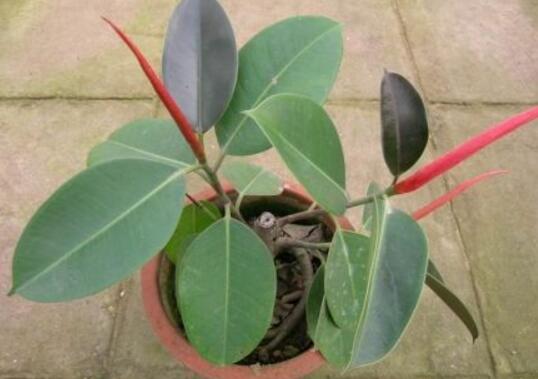
(1) Tools. The main tools include scissors, a flower pot and a watering can.
(2) Timing. Rubber plants can be pruned throughout the year, but winter is suitable for heavy pruning on a large scale, while in summer the side branches can be pruned. In spring you can thin or pinch. One thing to note is that no matter the season, pruning should avoid the rainy season so the cut wounds do not become infected.
Illustrated guide to rubber plant pruning methods
1. Pinching
When the rubber plant is young, once it grows to 30-50 cm, use scissors to cut off the top leaves and tender shoots so that the 2-3 side buds below the top sprout new branches, making the side branches grow in a ring shape. Pinching can control the plant from growing too tall and also promote the sprouting of side buds.
2. Thinning
During the period of more vigorous growth, some branches of the rubber plant become rather dense. At this point, how do you prune a rubber plant? The answer is to use scissors to cut off all the thin weak branches, diseased branches, dead branches and so on, so the plant lets more light through.
3. Truncation
In the illustrated guide to rubber plant pruning methods, truncation is not used very often, but it is very necessary. The method is to use scissors to cut off one third or half of the upper part of the main branch, so the plant height is effectively controlled and the trunk sprouts more side branches. Although truncation affects the appearance, it is more beneficial for the rubber plant's later growth.
4. Notching buds
When bare areas appear on the main branch, they look rather unattractive. To make these areas grow side branches, you can use the bud-notching method. In April, use a tool to make 1-2 horizontal cuts 1 cm above the bud you want to stimulate, and then after 3-4 weeks the buds below these cuts will begin to swell, and afterwards 3-4 side branches will grow.
5. Bud removal
If you find that the trunk has many side branches while the trunk itself grows rather slowly, you can also remove buds on the trunk. The method is to pinch off newly swelling buds by hand, so nutrients are concentrated on the main branch, thereby inhibiting the growth of side branches.
How to decapitate a rubber plant
Besides the pruning methods above, if the rubber plant grows leggy or becomes rather tall, you can decapitate it, which means cutting off all the upper part from the main trunk. However, when doing this, you need to pay attention to certain techniques.
First, the rubber plant must be fairly robust, otherwise it tends to wither and die after decapitation. Second, it is best done in summer, when it grows more vigorously; after major pruning, the time for buds to break is relatively much shorter and it survives more easily.
How to prune a rubber plant: illustrated guide to rubber plant pruning methods
How do you decapitate a rubber plant when it is too tall? As for how to decapitate it, Xiao Qi recommends pruning. To let it grow better, the rubber plant needs to be pruned regularly. So how do you prune a rubber plant? Let's learn about rubber plant pruning methods together.
Rubber plant pruning methods
1. Pinching:The principle is that the terminal bud of the main branch is removed, eliminating apical dominance so the side buds can sprout and grow. The specific method is that when the rubber plant grows to a suitable height, generally 30-50 cm tall, pinching can change its upright growth and prompt side buds to sprout. Generally the 2-3 side buds near the top of the branch sprout most easily; after the side branches grow, the tree shape becomes cup-shaped or Y-shaped. For rubber plant pruning, pinching is a relatively easy operation.
2. Shortening:This means cutting off 1/3 or 1/2 of the upper part of the whole main branch to prompt the trunk to sprout side branches. The principle is that by cutting off the top branches, apical dominance is eliminated so the side buds below the cut sprout and grow. Because this method removes too much at one time from the rubber plant, it easily removes a relatively large amount of the foliage and branches grown during earlier care; for at least half a year to a year, because there is less foliage, the ornamental value is poorer, but it is extremely beneficial for later shaping.
3. Bud notching:Making cuts on bare areas of the main branch to prompt the buds below the cuts to sprout and form side branches is called bud notching. The principle is that the cuts obstruct the transport of nutrients and water, generally inhibiting the growth of the part above the cut and strengthening the growth of the part below the cut.
4. Branch bending:Branch bending means using external force to change the direction in which branches extend in space. The principle is that by bending the branch, the polarity of the branch is changed, that is, the apical dominance of the terminal bud is weakened or eliminated. The greater the bending angle, the more strongly apical dominance is weakened; if bent to a horizontal position, apical dominance is completely eliminated. The specific operation is to bend the area where you want to promote buds into an arc so that the bud to be promoted is in the position of apical dominance. If branch bending is done in spring, side branches can be prompted to form that same year.
5. Notes:In the actual operation of rubber plant pruning, you should choose the appropriate spot for notching according to the shaping needs. When bud notching causes too large a branch angle, you can use the branch-propping method to bring the branch to a suitable angle. Notching is mainly applied to strong branches and thick branches; thin weak branches generally do not use it.
6. Shaping and pruning techniques to prompt side branches:The rubber plant has strong apical dominance, and side buds generally do not sprout easily. If it is not shaped, it very easily grows upright and forms an upright shape. When it grows to a certain height, first, it is too tall to be convenient for indoor placement; second, after the lower leaves fall off, it easily becomes a top-heavy shape with dense foliage above and a bare lower part, losing its ornamental value. Here are several simple and easy methods to inhibit its height growth, prompt side branches and change its shape.
7. Pruning seasons for the rubber plant:Rubber plant pruning should pay attention to "prune branches in winter, control side branches in summer." That is, in winter carry out heavy pruning on strong trees and light pruning on weak trees, focusing on removing upright, strong competing branches from the base. In summer, rubber plant pruning carries out heavy control of strong vigorous branches, controlling the strong and keeping the weak, adjusting the tree vigor to balance, and mastering the principles of tipping strong side branches, heavy pruning of strong branches, light pruning of weak branches and keeping more small branches, so as to achieve the pruning goal of highlighting the main trunk and promoting faster tree growth.
The above is an introduction to rubber plant pruning methods. To help the rubber plant grow better and improve its ornamental value, prune it regularly.
[Wintersweet] Wintersweet growing methods and precautions, complete collection of wintersweet pictures for appreciation
WintersweetJuly 23, 2015 by admin
When does wintersweet bloom_How many colors do wintersweet flowers have?
Wintersweet is a precious flowering plant exclusive to China. It is native to the central regions of the Qinling Mountains, Wudang Mountains, Daba Mountains and so on. In the earliest period, wild wintersweet forests were discovered in the Shennongjia area of Hubei, while in Liuzhuang Village, Yanling County, Henan Province, every household planted wintersweet in front of and behind their houses, earning the reputation of "Liu family dragon wintersweet crowns the world." Planting wintersweet in Liujia Village has a very long history and is quite loved by the local people. Below let us look together at when wintersweet blooms, and how many colors wintersweet flowers have.
[Introduction to wintersweet]Wintersweet is also called golden plum, wintersweet, yellow plum blossom, wax flower and so on. It belongs to the genus Chimonanthus in the family Calycanthaceae and is a deciduous shrub plant. It grows in a clustered state, and its leaves are opposite, elliptical-ovate or ovate-lanceolate in shape. The flowers grow in the leaf axils of the branches. It is a plant that blooms first and then grows leaves. When the flowers bloom they bring a pleasant fragrance, very refreshing to the heart. The tepals of wintersweet are round, elliptical, spoon-shaped, oblong, obovate and so on. Its filaments are sometimes longer than the anthers; the anthers are incurved and have no hairs at all. The fruit is nearly lignified, with the mouth in a constricted state, and is a subulate-lanceolate hairy appendage. The flowering period of wintersweet is from November to March of the following year, and the fruiting period is from April to November. It is a plant with very good ornamental value.
[How many colors do wintersweet flowers have]Wintersweet mainly has four cultivar groups and 12 cultivar types, with a total of 165 cultivars. Their colors include pure yellow, ink yellow, pale yellow, golden yellow, purple yellow, silver white, snow white, pale white, yellow white and so on, while its stamens include purple, pure white, red and so on. The color of wintersweet is determined by the different cultivars, and the relatively important wintersweet cultivars include Suxin wintersweet, Dogtooth wintersweet, Xiaohua wintersweet and Qingkou wintersweet. Their shape characteristics are all different, and their flower colors are also different.1. Suxin wintersweet: the back of its petals is pure yellow, while the inner whorl is rather similar to the pure color. The flowers are very large, and the fragrance given off when the flowers bloom is very rich.
2. Dogtooth wintersweet: its tepals are rather narrow and long, and also rather pointed. The tepals at the center of the middle whorl are purple, and it also has a faint fragrance. The flowers are very small, and the flowering period is also rather late.3. Qingkou wintersweet: its outer whorl tepals are pale yellow, while the edges of the inner whorl tepals are purplish red and also bear stripes. The flowers are very large, and the fragrance is very clear and overflowing.
4. Xiaohua wintersweet: the back of the petals of Xiaohua wintersweet is yellow-white, while the inner whorl tepals have purplish red stripes. The flowers are rather small and have very good ornamental value.
[When does wintersweet bloom]Wintersweet is a flowering plant with very good ornamental value. Its flowering period is from December to March of the following year. It is a deciduous shrub plant with a height of 3 m, and its single leaves are opposite. The leaves are elliptical, ovate, ovate-lanceolate and so on, with a rather pointed tip and a wedge-shaped or rounded base, 7-15 cm long, and entire, with a rather rough surface. It is a bisexual flower, and the flowers grow singly on the leaf axils at the tips of branches. The pedicels are rather short, and the tepals are yellow, waxen and fragrant. Wintersweet is native to the central region of China. It likes to grow in an environment with ample sunlight, has fairly good shade tolerance, and also has a certain tolerance to cold and drought. Its requirements for soil are not particularly strict, and it grows best in well-drained sandy soil.
[The flower language of wintersweet]The flower language of wintersweet is a loving heart, a noble soul, loyalty, independence, strength, purity, faithfulness, firmness, devotion, proud and unyielding spirit, noble and upright spirit, independent innovation, and a clear heart. Its morphological characteristics and growth habits give people an unyielding refinement; it is a kind of spiritual inspiration and a plant much loved by people all over the world.
More related information
Pink rose flower language How to grow pennywort How to grow hyacinth How to grow lucky bamboo What are blue-green algae
How to grow carnations The flower language of daisies The flower language of dandelion The flower language of rosemary What is matsutake
Posted in Woody Plants, Ornamental Plants | Tagged garden plants, potted plants, green plants, wintersweet, wintersweet flowers, flowering plants, Chimonanthus praecox July 22, 2015 by admin
How to plant wintersweet seeds_The effects and functions of wintersweet flowers
Wintersweet is a very traditional and precious ornamental flowering plant of China. It generally opens before spring, and is a flowering plant that blooms before the hundred flowers; especially the Hutimei among wintersweets generally opens its flowers around the tenth month of the lunar calendar and is called early plum by people. Wintersweet blooms after the beginning of winter; it accompanies winter and grows very solidly, so it is also called winter plum. Many people like wintersweet very much, as it gives a feeling of perseverance and hard striving. Below let us look together at how to plant wintersweet seeds, and the effects and functions of wintersweet flowers.
[Introduction to wintersweet]Wintersweet is also called golden plum, wax flower and yellow plum blossom. It is a deciduous shrub plant, often in a clustered state. Its leaves are opposite, elliptical-ovate or ovate-lanceolate in shape. The flowers grow in the leaf axils of branches in the second year. It blooms first and only then grows leaves, and when the flowers bloom they carry a fragrant scent. Its diameter is 2-4 cm, and the tepals are elliptical, oblong, obovate, elliptical and spoon-shaped, with no hairs at all. Its filaments are a little longer than the anthers; the anthers are incurved and have no hairs at all, and the style is very long.
[Growth habits of wintersweet]Wintersweet likes to grow in an environment with ample sunlight. It has a certain tolerance to shade, cold and drought, but dislikes waterlogging. Wintersweet opens proudly in frost and snowy cold weather. The flower color is yellow like wax, and the fragrance is very rich and striking. It is an ornamental flowering plant for winter. Wintersweet fears wind and has very good cold tolerance; it can safely overwinter at -15°C. It can be planted in the open ground in the southern Beijing area, and during the flowering period it can withstand low temperatures of minus ten degrees Celsius; if the temperature falls below this, it will suffer cold damage.Wintersweet likes to grow in deep, loose, fertile, well-drained, slightly acidic soil, and cannot grow normally in saline-alkaline soil. Wintersweet's drought tolerance is also very good, but it fears waterlogging, so it is not suitable for planting in low-lying areas. The plant has strong growth vigor and vigorous tillering, and the rhizome part easily sprouts suckers. It is also rather tolerant of pruning and suitable for appropriate pruning and shaping. Its flowering period is from November to March of the following year, and the fruit is produced from July to August.
[How to plant wintersweet seeds]1. Open-ground planting: you need to choose deep, well-drained neutral or slightly acidic sandy soil, and plant in a wind-sheltered, sunny place. Generally it is planted before spring sprouting. Seedlings can be planted at a row spacing of 30-50 cm, while two- to three-year-old medium seedlings are planted at a plant spacing of 50-55 cm. If planting a large sapling in a courtyard, a planting hole 60-70 cm in diameter is sufficient, with a hole depth of 40-50 cm. Add decomposed manure and bean cake fertilizer inside as base fertilizer; you can cover the base fertilizer with a layer of soil, then place the wintersweet plant with its root ball into it, cover with another layer of soil on top, firm it down, and water it thoroughly.2. Pot cultivation: the method of potting wintersweet is very simple. It needs to be planted in loose, fertile, well-drained sandy soil. Drainage work for the pot must be done well by placing a layer of gravel on top. Then lift out a plant with rather plump flower buds together with its soil and put it into the pot. After it blooms it can be kept indoors as an ornamental plant, and it can receive more photosynthesis.
[The effects and functions of wintersweet flowers]The flowers of wintersweet are rich in volatile oil, and the volatile oil contains chemical components such as borneol, linalool, eucalyptol, isocalycanthine, calycanthine, a-carotene, chimonanthin and oleic acid, as well as linoleic acid; the leaves contain calycanthine, isocalycanthine and hydrocyanic acid; while the seeds contain fatty oil, linoleic acid, linolenic acid, fatty acids and so on. Its flower buds have effects such as quenching thirst, stimulating the appetite and dispersing stagnation, and relieving summer heat and promoting fluid production. They are mainly used for summer-heat dizziness, qi stagnation and stomach stuffiness, vomiting, measles, and externally for burns and scalds, whooping cough, otitis media and so on. While the root has effects such as detoxifying and dispelling wind, and stopping bleeding. It is mainly used for patients with rheumatoid arthritis, wind-cold colds, lumbar muscle strain and so on; the root bark can treat bleeding from cuts.
More related information
How to grow pothos and precautions Epiphyllum pictures How to grow lucky bamboo How to grow golden barrel cactus Water lily pictures
How to grow anthurium and precautions Lotus pictures The functions of lucky bamboo How to grow kalanchoe Plum blossom pictures
Posted in Succulents, Herbaceous Plants | Tagged garden plants, potted plants, green plants, wintersweet, wintersweet flowers, flowering plants, Chimonanthus praecox July 22, 2015 by admin
Wintersweet tree prices and complete picture collection
Wintersweet is a flowering plant among white flowers that blooms in the cold winter. It braves the cold and defies frost, showing a character that never yields in the face of violence, giving people spiritual inspiration and enjoyment of beauty. In daily life many people plant wintersweet in their courtyards, and it is very suitable as an old-stump bonsai and as an artistic plant for camellias and shaping. It is a very precious ornamental plant for winter. When its flowers bloom they give off a fragrant scent, very beautiful, and it is a very good landscaping plant. Below let us look together at the appreciation of wintersweet tree prices and the complete picture collection.
[Wintersweet tree picture collection - introduction]Wintersweet tree is also called yellow plum blossom, fragrant plum, dry-branch plum and fragrant plum blossom. It is an ornamental tree plant in the genus Chimonanthus of the family Calycanthaceae. Its fruit receptacle is nearly lignified, urn-shaped or obovate-elliptical in shape, with a plant length of 2-5 cm and a diameter of 1-2.5 cm. The mouth is in a constricted state, and it is a subulate-lanceolate hairy appendage. The seeds of wintersweet are elliptical and chestnut brown in color, with a very smooth surface and also a certain luster. The flowering period of the wintersweet tree is from November to February of the following year, and the fruiting period is from April to November.
[Wintersweet tree picture collection - morphological characteristics]The wintersweet tree is about 3 m tall, with alternate single leaves. The flowers grow singly on the leaf axils. The outer whorl of the tepals is wax-yellow, while the middle whorl has purple stripes and carries a rich fragrance. The flowering period is from December to March of the following year; it grows leaves first and then opens flowers. Its fruit is in an urn-shaped receptacle, with seed-like small achenes, and the fruiting period is in August. The wintersweet tree likes to grow in a state of ample sunlight, is rather tolerant of shade and cold, and is generally planted in a wind-sheltered, sunny place. It likes to grow in relatively deep, well-drained, fertile sandy soil. Its drought tolerance is very good, and it dislikes waterlogging. Its growth vigor is very strong, and the sprouting ability of its branches is also very strong. The wintersweet tree has a very long lifespan. The wintersweet tree is native to Shaanxi, Hubei and other provinces and regions of China, and is now cultivated in various regions. Yaojia Garden in Yanling County, Henan, is a growing base for wintersweet tree nursery stock.
[Wintersweet tree picture collection - growth habits]The wintersweet tree likes to grow in an environment with ample sunlight. It has a certain cold tolerance; in winter the temperature cannot be lower than minus 15 degrees Celsius, and it is suitable for open-ground planting and can also overwinter safely. The wintersweet tree also has a certain tolerance to partial shade and drought, and also fears waterlogging. Its branching ability is very strong, and it is rather tolerant of pruning. But the wintersweet tree is a plant that fears wind. If it is not planted in a wind-sheltered place, the plants will rub against each other and cause rust spot disease. If it is exposed to wind during the flowering period, flower opening will also be affected, showing petals that do not stretch out, and even affecting the normal opening of small young flower buds. The wintersweet tree likes to grow in neutral, slightly acidic sandy soil; heavy or alkaline soil will have a certain impact on the growth of the wintersweet tree.
[Wintersweet tree picture collection - growing methods]The propagation methods of the wintersweet tree include seed propagation, grafting propagation, division propagation, layering propagation, cutting propagation and so on. Transplanting needs to be done before spring sprouting. Seedlings are dipped in mud with bare roots, while large seedlings need to grow with a soil ball, and the diameter of the soil ball needs to be about 8 times the base diameter of the tree. Before planting, use decomposed organic fertilizer as cluster fertilizer, 5-8 kg per plant, and then water thoroughly; if the soil is not particularly dry, no watering is needed. In seasons with relatively high rainfall, attention should be paid to drainage, and overwintering water should be watered before winter. At the end of autumn, apply a topdressing once, using phosphorus liquid fertilizer, and then after the flowers fade the following year, apply a nitrogen-phosphorus compound liquid fertilizer once more. Common pests of the wintersweet tree include scale insects, aphids, large bagworms and stinging caterpillars; use phoxim and sumithion to spray for control.
[Wintersweet tree prices and complete picture collection]The wintersweet tree is a flowering plant with very good ornamental value and is quite loved by people. The price of the wintersweet tree is determined by the size of the plant, the different selling regions and the different sales volume. If the sales volume is relatively large, the price is relatively cheap, and the smaller the plant, the cheaper the price. The price of wintersweet tree small seedlings on the market is one yuan per plant. The larger the wintersweet tree plant, the more expensive the price, with prices ranging from hundreds to thousands.
More related information
How to grow anthurium The effects and functions of saxifrage How to grow aloe How to make a winter jasmine bonsai Spider plant pictures
What is gorgon nut The effects and functions of gotu kola Cactus pictures The effects and functions of white plum blossom What is wild water chestnut
Posted in Woody Plants, Ornamental Plants | Tagged garden plants, potted plants, green plants, wintersweet, wintersweet flowers, flowering plants May 7, 2015 by admin
Illustrated guide to making wintersweet bonsai_Wintersweet bonsai pictures_How much per plant
Wintersweet is a very precious flowering plant of China. It first grew in the central Qinling, Daba Mountains and Wudang Mountains regions, and a large area of wild wintersweet forest was discovered in the Shennongjia area of Hubei. Today wintersweet is also planted in many family courtyards. Wintersweet blooms before spring and is called the first of the hundred flowers. How much do you know about wintersweet? Today the editor will introduce to you the illustrated guide to making wintersweet bonsai, as well as wintersweet bonsai pictures, and briefly explain how much a wintersweet bonsai costs per plant.
[Wintersweet bonsai pictures - introduction]Wintersweet is also called golden plum, wax flower and yellow plum blossom. It is a deciduous shrub plant in the genus Chimonanthus of the family Calycanthaceae. It is clustered, and its leaves are opposite. The leaf shape is elliptical-ovate and ovate-lanceolate. It generally blooms in the leaf axils of branches in the second year. It is a plant that blooms first and then grows leaves. When the flowers bloom they carry a faint fragrance, especially attractive. Wintersweet opens in the cold freezing season of other flowers; it needs to brave the cold and defy frost, showing a character of the Chinese nation that does not yield in the face of violence, giving people spiritual enlightenment and thus letting people gain an enjoyment of beauty. Wintersweet bonsai is suitable for planting in courtyards, and is especially suitable for viewing as old-stump bonsai and shaping art. It is a very ideal precious flowering plant for winter.
[Wintersweet bonsai pictures - growth habits]Wintersweet bonsai likes to grow in an environment with ample sunlight, and has a certain tolerance to shade, cold and drought, but dislikes waterlogging. It generally blooms proudly in cold winter weather. The flower color is yellow, like wax. When the flowers bloom the fragrance is striking, and it is especially favored by people. Wintersweet bonsai fears wind and is rather cold-tolerant; when growing, the temperature cannot be lower than -15°C, so that it can overwinter safely. During the flowering period the temperature cannot be lower than -10°C, otherwise the flowers will suffer cold damage and flowering will be affected. It likes to grow in deep, fertile, loose, well-drained, slightly acidic sandy soil. Although its drought tolerance is good, it fears waterlogging and is not suitable for cultivation in low-lying land. Its vitality is rather vigorous, and its branching is also rather vigorous. It is tolerant of pruning and shaping treatment. The flowering period is generally from November to March of the following year, and it matures in July or August.
[Illustrated guide to making wintersweet bonsai]When planting wintersweet bonsai, pot cultivation and open-ground planting are both suitable. For pot cultivation, choose loose, fertile, well-drained, slightly acidic soil, and some drainage holes need to be made at the bottom of the pot with some gravel placed on top. Every winter choose a small plant with plump flower buds and plant it in a pot. With careful cultivation, after it blooms it can be enjoyed as an ornamental plant. During care it should be placed outdoors in a sunny place, and the soil is best kept in a half-moist state; prevent water accumulation in the rainy season. Water more in drought, and maintain the principle of not watering until dry.After the flowers of the wintersweet bonsai fade, apply decomposed organic fertilizer, fertilizing once every half month. In July-August use decomposed organic fertilizer and a phosphorus-potassium mixed fertilizer liquid. When fertilizing, loosen the soil appropriately to make the soil loose. Do not fertilize during the flowering period. Repot every two to three years, and after the flowers fade replace one third of the soil. If you want the wintersweet bonsai to look good, you must carry out shaping and pruning treatment to make the wintersweet bonsai more shapely. You can pinch and remove buds when the seedling has a growing tip, prune before flowering and do supplementary pruning after flowering. Also prevent and control pests and diseases. Wintersweet bonsai can develop anthracnose, black spot disease, aphids, red-necked longhorn beetles and Japanese wax scales. You can remove diseased leaves and use effective pesticides to spray.
[How much does a wintersweet bonsai cost per plant]The price of wintersweet bonsai is determined by the height of the plant. Generally a wintersweet bonsai plant around 20 cm is 15 yuan per pot, a plant at 30 cm is 20 yuan per pot, a plant at 50 cm is 40 yuan per pot, and if the plant height is above 800 cm, it is 150 yuan per pot. But when looking at plant height, you should also look at the tree shape and the fullness of the leaves of the wintersweet bonsai.
More related information
Fruit tree cultivation techniques Late-autumn yellow pear planting techniques Peony flower language How to grow pothos How to grow Chinese rose
The flower language of carnations The growth process of impatiens Peony flower language How to grow water lilies Information on impatiens
Posted in Indoor Plants, Woody Plants | Tagged potted plants, green plants, wintersweet, wintersweet flowers, flowering plants, Chimonanthus praecox November 6, 2014 by admin
Complete collection of wintersweet pictures for appreciation, what are the growing methods of wintersweet
Wintersweet is a plant in the genus Chimonanthus of the family Calycanthaceae. Wintersweet buds in the deep winter when the hundred flowers have withered. It braves the cold and defies frost, showing a character of the Chinese nation that never yields in the face of violence, giving people spiritual enlightenment and enjoyment of beauty. It is good for courtyard planting, and is also suitable as old-stump bonsai and for flower arranging and shaping art. It is an ideal precious flowering tree for winter flower appreciation. The flowers are fragrant and beautiful, and it is a landscaping plant. So the editor has brought you the complete collection of wintersweet pictures for appreciation, as well as wintersweet's
Complete collection of wintersweet pictures for appreciation one
Wintersweet is a deciduous shrub that can reach 4 m tall. Its young branches are four-angled, while its old branches are nearly cylindrical, gray-brown and hairless or sparsely pubescent, and also have lenticels. The fruit receptacle is nearly lignified, urn-shaped or obovate-elliptical, 2-5 cm long, 1-2.5 cm in diameter, with a constricted mouth and a subulate-lanceolate hairy appendage. The flowering period is from November to March of the following year, and the fruiting period is from April to November.Complete collection of wintersweet pictures for appreciation two
Wintersweet likes sunlight by nature, and of course it is also tolerant of shade, cold and drought. It most avoids waterlogging. Wintersweet flowers open proudly in frosty, snowy cold weather. Its flowers are yellow like wax, with a striking rich fragrance, and it is also a main flowering tree for winter viewing. It is not afraid of wind and is also rather cold-tolerant; it can also overwinter safely when the temperature is not lower than minus 15 degrees.Complete collection of wintersweet pictures for appreciation three
It grows well in deep, fertile, loose, well-drained, slightly acidic sandy loam, and grows poorly on saline-alkaline land. It has rather strong drought tolerance and fears waterlogging, so it is not suitable for cultivation in low-lying land. The tree has strong growth vigor and vigorous branching, and the rhizome part easily produces suckers. It is tolerant of pruning and easy to shape. It blooms first and then grows leaves. The flowering period is from November to March of the following year, and it matures from July to August.What are the growing methods of wintersweet
Watering: in normal times, watering should best maintain the soil half-moist, and in the rainy season attention should be paid to drainage to prevent water accumulation in the soil. In dry seasons, water needs to be replenished in time. During the flowering period, the soil should be kept moderately dry, and it should not be watered too much. For potted wintersweet in spring and autumn, the principle for the pot soil is not to water until dry, while in summer it needs to be watered once every morning and evening, and the amount of water should also be controlled according to the dry or wet condition of the pot soil.
Fertilizing: after the flowers fade each year, apply a full application of decomposed organic fertilizer. From after new leaves sprout in spring to the growing season in June, apply topdressing of decomposed organic fertilizer and a phosphorus-potassium fertilizer mixed liquid; after autumn apply organic fertilizer once more. After each fertilization, water and loosen the soil in time to keep the soil loose, and do not fertilize during the flowering period. For potted wintersweet, no additional fertilizer water is applied in the early potting stage; in spring apply leaf-promoting fertilizer, and repot and change the soil once every 2-3 years, carried out after the flowers fade in spring, while replacing 1/3 of the pot soil. ted in Indoor Plants, Woody Plants, Ornamental Plants | Tagged white wax, potted plants, wintersweet August 19, 2014 by admin
Introduction to wintersweet bonsai making and care methods
Wintersweet can also be called Huanghuamei and so on. It is produced in the central region of our country, and of course Henan is the most famous. It can be ground-planted and potted, and is even better as an excellent material for making bonsai. It has no excessive requirements for soil, but well-drained light loam is still the best and most ideal.Propagation: we mainly use grafting as well as division and cutting methods for propagation, and seldom use the sowing method for propagation. The overall pruning methods for wintersweet are broadly based on single-trunk style and multi-trunk style.
Pruning: Pruning wintersweet (Chimonanthus praecox) is done mainly during the dormant period, with supplementary pruning during the growing season. At the same time, we should also pay attention to pruning after flowering. When pruning in winter, the extension shoots of the scaffold branches at all levels should be cut back. Wintersweet bonsai has developed quite rapidly in recent years; most are made mainly from wild old wintersweet stumps, successfully created through artistic shaping and grafting.Care
The best thing for wintersweet bonsai is to place it in a wind-sheltered, sunny spot. It dislikes cold wind and needs a little shade in summer. In winter, potted plants should be moved indoors for cultivation when the temperature drops below 1°C.
Watering: Wintersweet is fairly drought-tolerant and is known as the wintersweet that cannot be killed by drought, but it should not be left too dry either. Normally the potting soil only needs to be slightly dry. Watering should also follow the principle of alternating dry and wet: do not water unless necessary, and when you do water, water thoroughly. During the dog days of summer, which is also the period when its flower buds form, it must not lack water; it is best to water it once in the morning and once in the evening. After leaf fall in autumn, its potting soil should preferably be on the drier side, and it can be watered once every 5-7 days.Fertilizing: We all know that wintersweet is a plant that likes fertilizer. From April to June, which is the early stage of flower bud formation, it is best to apply cake fertilizer water once every 10 days. At the end of June, a topdressing can be given once a week, which will promote the formation of flower buds. After the beginning of autumn, one more fertilizing is enough. When repotting, sufficient base fertilizer can be applied at the bottom of the pot.Pruning: If we want wintersweet to have abundant branches and leaves year after year, pruning and bud pinching are extremely important. After it flowers each year, the old flowering branches should be cut short immediately. Once the new branches grow buds, the terminal buds should be pinched off, and before long new side branches will grow. Repeat this until the flower buds have basically formed.
The above is what the editor has brought to you about the making of wintersweet bonsai and its care methods. I hope it is useful to everyone. If you also want to learn more about plant cultivation methods and related content, you are welcome to visit my grape trellis too. There is a complete collection of plants you need here. Money Tree care methods and precautions Prickly Pear fruit Variegated Hosta
Gardenia care methods and precautions Snake Plant care methods and precautions Hylotelephium erythrostictum Epiphyllum pictures
Phalaenopsis care methods and precautions Rubber Tree care methods and precautions Water Lily pictures Plum Blossom pictures
ZZ Plant care methods and precautions Yew care methods and precautions Lotus pictures Stock flower
Posted in Indoor Plants, Ornamental Plants | Tagged White Wax, Potted Plants, Wintersweet