How to fertilize and water China asters? Remember to apply light fertilizer and avoid waterlogging
China aster is a highly ornamental flowering plant, and many people in China grow it, but to grow it well, there are many points to pay attention to, such as fertilizing and watering, which are especially key. So how do you fertilize China asters? How do you water China asters? Below, the editor will walk you through it.
I. How to fertilize China asters
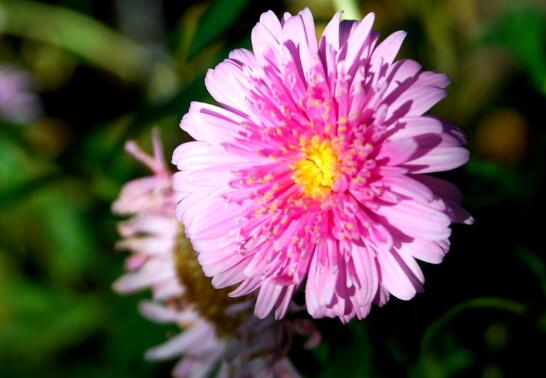
1. Fertilizer requirements
When we grow China asters, their demand for fertilizer is very high. Basically, at each different stage we need to give them some fertilizer to meet their nutrient needs, so they can grow better and more vigorously, and the flowers will bloom longer and more beautifully.
2. Fertilizer selection
Before planting China asters, we need to apply an appropriate amount of base fertilizer into the soil, so they have enough nutrients to get through the seedling stage. After entering the growth period, we also need to fertilize them regularly, so they have enough nutrients and grow better. In terms of fertilizer choice, we generally use organic fertilizer as the main type.
3. Fertilizing method
As for how to fertilize China asters, the method is actually very simple. When fertilizing, we should apply the fertilizer into the soil so the plant roots can absorb it. Remember, never apply it to the plant itself, otherwise it will cause the plant to wilt. Also, before fertilizing, the fertilizer must be diluted first, so it can be absorbed better. After fertilizing, we also need to loosen the soil appropriately, which can improve the fertilizer absorption efficiency.
II. How to water China asters
1. Water according to the environment
This plant, the China aster, prefers a warm and moist environment and is not well suited to a dry environment. If it is not watered for a long time, it can easily wither and die, so when growing it we must keep it with sufficient moisture. Especially during its growth period, it is best to keep the soil at a certain level of humidity and not let the soil become too dry.
2. Watering method
Although China asters do not have very high soil requirements, suitable soil can still let them grow better. For example, humus soil has good drainage and is very suitable for their growth. So how do you water China asters? It is actually very simple. We can water along the edge of the flowerpot into the soil, and once the soil has a certain level of moisture, that is enough.
3. Points to note
Above, the editor mentioned that China asters like a warm and moist growing environment, but when watering, you still cannot water too much. The amount of water each time still needs to be controlled well. If you water too much and cause waterlogging, it can easily lead to disease in China asters, and in severe cases even cause them to rot, so everyone should pay attention to this point.
Summary: After reading the above content, I believe everyone has some understanding of the two questions of how to fertilize China asters and how to water China asters. In fact, when growing them, besides these two points, there are also aspects such as light and temperature that need attention. For specific details, there is an introduction in the article on how to grow potted China asters, which everyone can take a look at.
How to sow China asters, the planting method for China aster seeds / disinfect the soil first
When it comes to the propagation methods of China asters, seed sowing is generally the main method. After countless trials, this method still has a relatively high survival rate. So how do you sow China asters? What is the planting method for China aster seeds? Below, the editor will walk you through it.
I. How to sow China asters
As for how to sow China asters, there are many points to note, such as the sowing time and the choice of soil, none of which can be done carelessly. Specific details are introduced in the section below on the planting method for China aster seeds. Friends who want to grow them can take a look.
II. The planting method for China aster seeds
1. Sowing time
The sowing time for China asters has a certain influence on their survival rate. Choosing a suitable time to sow them can improve the survival rate. We can choose this suitable time in spring, because the climate and environment are both relatively suitable for the growth of China asters.
2. Soil selection
When it comes to how to sow China asters, choosing the soil is a very important point. This is like building a house, where you need to lay a good foundation. Only by choosing suitable soil can they grow vigorously. Generally, we can choose relatively fertile humus soil. This kind of soil has good drainage and allows China asters to absorb nutrients better.
3. Soil disinfection
After choosing the soil, we also need to disinfect it, to prevent pests and diseases in it from being transmitted to the China asters. When disinfecting, we can choose to break it up and spread it flat under the blazing sun for disinfection, or put it in a pot over fire and stir-fry it, so that if there are pests in the soil, they will also be killed.
4. Seed germination
Harvested China aster seeds are not suitable for direct sowing. Before sowing, it is best to soak them in warm water for 1-2 days. After the seeds begin to absorb water and swell, we can take them out and plant them. This can play a role in promoting germination and allow them to sprout faster.
5. Sowing method
As for how to sow China asters, the method is actually very simple. First, we can evenly scatter the seeds on the disinfected soil, then cover them with 1-2 cm of soil and water them. When watering, be careful to water thoroughly in one go, and remember not to let water accumulate. After about 4 days, they can germinate, and in 10 days they can emerge.
6. Follow-up management
After the China asters emerge, we can move them to the balcony for care. During care, there are also many points to note, such as fertilizing, light, and watering, all of which have many details. If you want to know the specific details, you can refer to the article on the cultivation methods of China asters. The editor will not repeat them here.
Summary: After reading the above content, I believe everyone has some understanding of how to sow China asters. The editor will introduce the planting method for China aster seeds here. As long as everyone plants according to the above methods, the survival rate is still very high.
Four taboos of chrysanthemum cultivation
The chrysanthemum is the third of China's ten famous flowers, one of the Four Gentlemen among flowers (plum blossom, orchid, bamboo, chrysanthemum), and also one of the world's four major cut flowers (chrysanthemum, Chinese rose, carnation, gladiolus), with production ranking first. Because the chrysanthemum has the character of enduring cold and defying snow, there is Tao Yuanming's famous line, “Picking chrysanthemums by the eastern hedge, I gaze leisurely at the southern mountains.” Chinese people have the custom of viewing chrysanthemums and drinking chrysanthemum wine on the Double Ninth Festival. Tang dynasty poet Meng Haoran's "Visiting an Old Friend's Farm": “When the Double Ninth Festival comes, I will come again for the chrysanthemums.” In ancient myths and legends, the chrysanthemum was also given the meaning of auspiciousness and longevity. Four taboos of chrysanthemum cultivationAvoid continuous cropping
The ecological characteristics of chrysanthemums determine that chrysanthemums are not suitable for continuous cropping. Continuous cropping of chrysanthemums reduces soil fertility, and the soil structure and nutrients cannot adapt to or meet the growth and development of chrysanthemums. Continuously cropped chrysanthemums often appear thin, tall, and aged, with small and yellow leaves, small flowers with dull color, and severe pests and diseases. Therefore, land that has grown chrysanthemums is best not used to grow chrysanthemums again within two or three years, and the soil of potted chrysanthemums must absolutely not be used to grow chrysanthemums again the following year. In one sentence, when growing chrysanthemums, continuous cropping must be avoided.
Avoid using undecomposed organic fertilizer
Organic fertilizer refers to human waste, cake fertilizer, barnyard manure, and so on. Organic fertilizer is a commonly used fertilizer for growing chrysanthemums and also the main fertilizer. The nutrients contained in organic fertilizer are in a slow-release state and must undergo decomposition through rotting before they can be transformed into an effective state for plant absorption and use. Undecomposed organic fertilizer also contains various pathogens and parasite eggs; it will also produce fermentation heat and organic acids. After use, chrysanthemums will be severely harmed by pests and diseases, and phenomena such as scorched chrysanthemum leaves and damaged chrysanthemum roots will appear. Therefore, when using organic fertilizer, it must be fully decomposed so that its fertilizer efficiency can be fully brought into play and negative effects can be avoided.
Avoid splashing dirt on chrysanthemum leaves
The quality of chrysanthemum leaves is an important condition for evaluating the ornamental value of chrysanthemums. Therefore, leaves must be cared for especially well, and damage from human and natural factors should be avoided as much as possible. 1. Prevent rainwater from splashing mud onto the leaves. If the leaves have already been contaminated, they should be rinsed promptly with clean water after the rain. 2. When fertilizing, do not let fertilizer water contaminate the leaves, so as to avoid the lower leaves falling off. 3. Water carefully, and strictly prevent mud slurry from splashing and contaminating the leaves, so as to avoid disease and leaf loss.
Avoid waterlogging and watering with “half water”
As the saying goes: “Dry orchids, wet chrysanthemums.” “Wet chrysanthemums” is said in comparison with orchids, and it does not mean the more water the better. Chrysanthemums like moisture, but they avoid waterlogging. If the soil remains too wet for a long time, it will seriously affect chrysanthemum root respiration, causing the root system to lack oxygen and suffocate and rot. Therefore, in rainy days, accumulated water should be drained promptly, and pots should be tilted to prevent waterlogging.
When watering chrysanthemums, they must not be too dry or too wet, nor half dry and half wet. Chrysanthemums need enough water, and you must absolutely avoid watering with “half water”, that is, watering only wets the surface soil while the root system in the deeper soil layer remains dry. Over time, in mild cases, the chrysanthemum plant ages and loses leaves; in severe cases, the entire chrysanthemum plant wilts and dies. Therefore, when watering chrysanthemums, the principle of “water thoroughly when dry” should be grasped.