How to grow a rubber plant (Ficus elastica)? Growing methods and precautions, the environment should be humid
We know that the rubber plant has a great many uses and benefits. It originated in Brazil, but it is grown in many places in China. It is not only attractive but also very easy to keep alive, provided you understand certain techniques. So how do you grow a rubber plant? Let's take a look at the growing methods and precautions for the rubber plant.
How to grow a rubber plant
I. Growth habits of the rubber plant
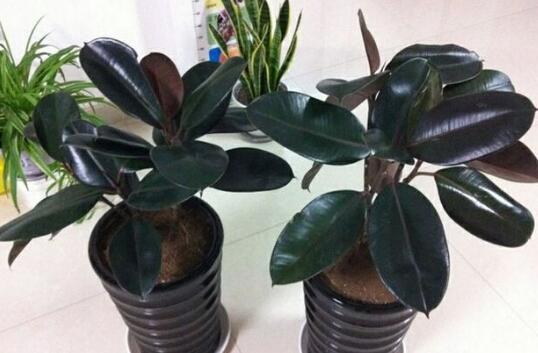
It likes high temperatures, humidity and plenty of light. The optimal growing temperature is 20-25°C, and the overwintering temperature must not fall below 5°C. As for soil, it likes fertile, loose, acidic soil and does not tolerate poor, thin soil. Its drought tolerance is weak, and it likes a humid environment, but it does not tolerate waterlogged soil. It likes light but fears direct strong sunlight.
II. Growing methods and precautions for the rubber plant
1. Choosing a flower pot
There are two requirements for the rubber plant's pot. The first is that the pot material should be fairly breathable; for example, plastic pots, porcelain pots and ceramic pots are all fine. The second is that the pot should not be chosen too large; about 25 cm is enough, depending on the size of the plant.
2. Choosing soil
The rubber plant does not tolerate poor, thin soil, so when choosing soil, slightly acidic soil should be the main type; for example, mix leaf mold, garden soil and river sand in a 1:1:1 ratio. It is best to mix some base fertilizer into the soil, such as cake fertilizer or livestock manure.
Precautions: No matter what soil is chosen, the minimum requirements are that it be loose, breathable and well-draining; next, it must be healthy and clean, without insect eggs or pathogens.
3. Light requirements
When it comes to light, how do you grow a rubber plant? The answer is to keep plenty of light. The most suitable spot is a place that gets sunlight, and it can also be placed in a bright spot, such as a balcony or beside a window. Only with enough light will the leaves grow broad and large.
Precautions: In summer or when temperatures are high, avoid exposing the rubber plant to direct strong sunlight, otherwise some leaves may wilt and turn yellow. At other times it can be grown in full sun.
4. Temperature control
The ideal temperature is 20-25°C, but in normal care it is very difficult to keep the temperature difference within this range; it is enough to keep the temperature between 18-28°C. It tolerates relatively high temperatures, and even above 30°C it can still grow rapidly.
Precautions: The rubber plant's drawback is that it is not cold-tolerant. In an environment below 5°C it may drop leaves or suffer cold damage, so during overwintering the temperature must be kept above 8°C.
5. How to water
The rubber plant likes a humid environment, so during normal care you should try to keep the soil moist rather than on the dry side; this is the opposite of some succulents. In spring and autumn, spray water frequently to maintain humidity, and in summer water it every day.
Precautions: Although watering is very important among the growing methods and precautions for the rubber plant, you must not let water accumulate in the soil, because the rubber plant is fairly afraid of waterlogging. If you find standing water, stop watering promptly and check whether the roots have rotted and whether the soil drains well.
6. Fertilizing method
Based on the experience of gardening enthusiasts, the rubber plant fairly likes fertilizer. During the seedling stage, apply rotted liquid fertilizer once every 20 days; after it has taken shape, apply fertilizer once every 2 months, and water promptly after fertilizing.
Precautions: Do not add too much nitrogen fertilizer, because it will cause the rubber plant's stem nodes to grow excessively, widening the distance between leaves and making the plant's shape unattractive.
III. Propagation methods for the rubber plant
For gardening enthusiasts, the most commonly used propagation methods for the rubber plant are cuttings and layering. They have a high survival rate and are also simpler to care for later. Besides these, there is also tissue culture and so on, but tissue culture is usually used to breed new superior varieties, so ordinary enthusiasts are not advised to use it.
How to grow a rubber plant, growing methods and precautions for the rubber plant
The rubber plant is a common indoor potted plant. Because of its unique appearance, a great many enthusiasts like to grow rubber plants, and the rubber plant has a unique ability to purify dust; it can absorb formaldehyde, carbon monoxide, carbon dioxide and hydrogen fluoride from the air, so keeping a rubber plant at home is a very beneficial thing. Let's take a look below at the growing methods and precautions for the rubber plant.
How to grow a rubber plant (daily growing methods) 1. Propagation time for the rubber plantThe rubber plant is generally best propagated in spring and summer.
2. Best growing soilTo grow a rubber plant, you should use loose, well-draining leaf mold. The usual ratio is garden soil: humus soil: sand 2:2:1. It is best to place moss on top of the pot that matches the pot's size; this is both attractive and plays a good role in drainage and aeration.
3. Growing humidity requirementsFeel the condition of the potting soil by hand, and you should follow the principle of “dry-wet cycle”. Do not water frequently, but when you do water, water thoroughly. Too much watering will cause the root system to rot and make it drop leaves. In midsummer, during dry periods, you can spray water on the leaves to keep them moist. In autumn and winter, watering should be reduced.
4. Best growing temperatureThe most suitable temperature for the rubber plant is 20-25°C. It tolerates high temperatures and can grow well even above 30°C. The rubber plant is not cold-tolerant, and its safe overwintering temperature is 5°C. Variegated varieties have slightly weaker cold tolerance; their overwintering temperature should preferably be maintained above 8°C, and at low temperatures they will drop a large number of leaves.
5. Best growing lightThe rubber plant likes bright, indirect light and has a certain shade tolerance. It does not tolerate harsh direct sunlight; when the light is too strong, the leaves can be scorched and turn yellow or develop burnt edges. It also should not be kept too shady, otherwise it will drop a large number of leaves and the beautiful variegation of variegated varieties will fade. From May to September, shade should be provided, or the plant should be placed in a spot with plenty of indirect light. At other times it should be given plenty of sunlight.
Precautions for growing the rubber plant 1. Applying fertilizerThe rubber plant grows rapidly, so nutrients should be supplied promptly to keep the plant growing vigorously. Apply a nitrogen-based fertilizer 2-3 times a month. Variegated varieties grow relatively slowly, so the number of fertilizer applications can be reduced while adding more potassium fertilizer to make the variegation on the leaves bright and colorful. If too much nitrogen fertilizer is applied, or only nitrogen fertilizer, the variegation will fade or even disappear. In September, nitrogen fertilizer should be stopped and only phosphorus and potassium fertilizers applied to improve the plant's cold resistance. In winter the plant goes dormant, so fertilizing should stop.
2. Key points for wateringThe rubber plant likes a moist soil environment, so during the growing period water should be supplied fully to keep the potting soil moist. In winter, watering needs to be controlled; at low temperatures with overly wet potting soil, the root system easily rots.
3. Key points for propagationThe rubber plant is commonly propagated by cuttings. Spring and summer are best. Choose a one-year-old branch from the upper part of the plant, 20 cm long; after cutting, roots form in 30 days and it can be potted in 50 days.
4. Key points for pruningWhen the rubber plant reaches 1 m in height, it needs to be topped to encourage branching and keep the tree shape attractive. When pruning in spring, remove the forked branches, inward-growing branches, dead branches and thin weak branches inside the canopy, and shorten the shoots sticking out beyond the canopy, so that the interior of the plant is well ventilated and lit and the tree shape stays rounded. If the canopy is too large, the outer branches can be shortened as a whole. During the growing period, remove overly dense branches at any time and shorten long branches.
5. RepottingAfter rubber plant seedlings are potted, they must be repotted every spring. Mature plants can be repotted once every 2-3 years, adding fresh fertile soil.
6. Pest and disease controlThe rubber plant is prone to anthracnose, whose pathogen is Gloeosporium elasticae. This disease mainly occurs in the high-temperature summer season, and the main affected part is the leaves. Its symptoms are round or oval gray spots appearing on both sides of the leaf veins; in severe cases the spots join together and spread to the whole leaf.
7. Control methodsIn combination with pruning, remove diseased branches, diseased leaves and dead shoot tips to reduce the pathogen. In the early stage of the disease, spray 50 percent carbendazim at 1000 times or 70 percent thiophanate-methyl at 1200 times solution.
How to grow a rubber plant? Growing methods and precautions for the rubber plant
The rubber plant is a common indoor potted plant, with long oval, bright green leaves and high ornamental value. At the same time, the rubber plant is also a versatile eliminator of harmful substances, with a certain ability to absorb harmful gases such as carbon monoxide and carbon dioxide from the air. In addition, the rubber plant can also eliminate respirable particulate pollution and has a very good air-purifying effect. So how do you grow a rubber plant? The growing methods and precautions for the rubber plant are introduced below.
Image: rubber plant
I. Growing methods for the rubber plant
1. Pot selection:You can use clay pots, plastic pots, porcelain pots or ceramic pots for growing; as for choosing the pot size, the rubber plant can be planted in a pot with a diameter of 20-30 cm.
2. Potting soil preparation:The rubber plant likes fertile, loose, sandy soil. The growing medium can be a potting soil mixed from leaf mold, garden soil and river sand at 1/3 each, with a small amount of cake fertilizer added as base fertilizer. During the seedling stage, it should be repotted once every other year.
3. Watering method:The rubber plant likes moisture but dislikes waterlogging and is not drought-tolerant. In spring and autumn, the potting soil should be kept moist, and water should often be sprinkled on its leaves and around it to increase air humidity. In summer, the rubber plant needs a lot of water, so it must be watered every day to keep the potting soil moist, while also increasing the frequency of sprinkling. When winter temperatures are low, it is better to water so that the potting soil is moist but on the dry side; however, if the winter temperature is around 10°C, the potting soil should be kept moist, because when the potting soil is fairly dry it easily drops leaves.
Image: rubber plant
4. Fertilizing method:The rubber plant likes fertilizer but dislikes nitrogen fertilizer; when there is too much nitrogen fertilizer, the stem nodes grow excessively, the distance between leaves widens, and the plant's shape becomes unattractive. During the growing season, apply rotted 10-times liquid fertilizer mixed with an equal amount of 500-times potassium dihydrogen phosphate solution once every 20 days to young plants, or 1000-times “Huaduoduo” general-purpose fertilizer twice. For established plants, to control height, apply mixed liquid fertilizer once every 2 months during the growing season.
5. Light and temperature requirements:The rubber plant needs plenty of light to grow, but it is also fairly shade-tolerant, so indoor care should place it near a south-facing window in a spot with plenty of light, and attention should be paid to air circulation. The overwintering temperature must be kept above 10°C. Prolonged low temperatures and wet potting soil easily cause root rot. In home cultivation, it is generally moved outdoors for care from late April to early October each year; in the heat of summer, simply provide shade at midday.
Image: rubber plant
6. Four-season management methods
(1) Spring management:Each spring, when the temperature stabilizes at around 15°C, repot it, and prune it appropriately before repotting. The rubber plant is naturally robust and simple to manage. In spring it should be placed in a spot with light, the potting soil kept moist, and water sprayed around it frequently to increase air humidity. Young plants can begin to be fertilized after new leaves emerge. When temperatures rise in late spring, move it to a semi-lit location or an indoor spot with indirect light for placement and cultivation.
(2) Summer management:The rubber plant tolerates high temperatures and strong sun, but when the light is too strong the leaf color easily loses its luster, which is not good for viewing. The rubber plant can be placed in a bright indoor spot. A dim indoor spot is not good for its growth. Because the rubber plant has many large leaves, it consumes a lot of water, so it should be watered promptly to keep the potting soil moist, while also spraying its leaves and surroundings frequently to meet its air humidity requirements.
(3) Autumn management:In autumn, the potted plant should be moved to a sunny windowsill or balcony for cultivation, the potting soil kept moist, and when the midday temperature is fairly high, water should be sprinkled around it and on its leaves to increase air humidity. In autumn, to strengthen its cold resistance, it can be left outdoors in low temperatures for a period of hardening, but it must not be exposed to frost; before frost, it should promptly be moved into a lit indoor spot.
(4) Winter management:The rubber plant is not cold-tolerant and can withstand short-term low temperatures of 0°C. But the indoor temperature should be kept at around 5°C; at this time the rubber plant's growth is at a standstill, so plenty of light should be ensured, the potting soil should be kept moist but on the dry side, since overly wet potting soil easily rots the roots, and when the midday temperature is fairly high, water should be sprinkled around it and on its leaves several times. When the indoor temperature is kept above 15°C, the rubber plant can grow normally, and care can refer to spring.
Image: rubber plant
II. Precautions for growing the rubber plant
1. The suitable growing temperature for the rubber plant is 25-30°C. In winter, if it falls below 3°C, the leaves will turn yellow and drop, so in winter it should be placed in a sunny indoor spot and the room temperature kept above 10°C. In summer, when it exceeds 35°C, the plant should be moved to a cool, ventilated spot for care, and water should be sprayed at the right time to lower the temperature.
2. The rubber plant is a plant in the mulberry family, and the whole plant contains milky sap. Therefore, after each pruning, immediately seal the cut with clay or apply charcoal powder, to avoid losing too much sap and causing dehydration and death.
3. During the seedling stage, the rubber plant needs to be rotated regularly, to avoid the plant growing toward one side, which would make the plant's shape improper and affect its attractiveness.
[Editor's concluding remarks]The rubber plant is not only a common potted foliage plant, but also has a unique ability to purify dust, making it one of the indispensable potted plants indoors. The growing methods and precautions for the rubber plant were introduced above. Has everyone learned them?