How to grow potted China aster (Callistephus chinensis)? Growing methods and precautions, avoid strong light
China aster is a fairly common flowering plant in people's daily lives, with high ornamental value, but growing this plant well is not simple, and there are many points to note. So how do you grow potted China aster? What exactly are the growing methods and precautions for China aster? Below, the editor will walk you through it.
I. How to grow potted China aster
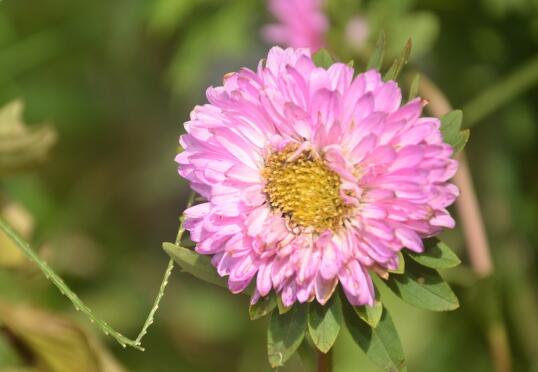
To know how to grow potted China aster, we first need to understand its growing environment. It is a plant that loves light but avoids high temperatures, so lighting needs to be suitable; besides that, watering and fertilizing also need attention. The details are covered below in the growing methods and precautions for China aster. Let's take a look.
II. Growing methods and precautions for China aster
1. Soil selection
When growing China aster, we first need to choose the soil. This is like laying the foundation when building a house; only by choosing suitable soil can it grow vigorously. Generally, we can choose relatively fertile humus soil. This kind of soil has good drainage and allows China aster to absorb nutrients better.
2. Temperature management
Among the growing methods and precautions for China aster, temperature control is also a fairly important part. The suitable temperature for its growth is between 15°C—25°C. If the temperature is too low or too high, it will have a certain impact on its growth. In winter, the temperature must not be lower than 3°C, and in summer it must not be higher than 30°C. If the temperature is too low, the plant is prone to frost damage; if the temperature is too high, it will delay its flowering time and also affect the number of blooms.
3. Watering requirements
Although China aster likes a warm and moist environment, because it is a shallow-rooted plant, it is quite afraid of waterlogging. When watering, we must do so in moderation. If too much water is given and water accumulates, it can easily cause root rot. In summer, when the weather is relatively dry, the frequency of watering can be appropriately increased, but the amount of water must not be large.
4. Light requirements
Among the growing methods and precautions for China aster, light is also a point that needs attention. In spring and autumn, if the sunlight is not too strong, we can let it receive light all day. In summer, when the sunlight is strong, it is best to move it indoors to a semi-shaded place to grow, to avoid the plant being scorched by strong light and causing the leaves to turn yellow.
5. Fertilizing requirements
China aster is a plant that likes fertilizer. Especially during the growing period, its demand for fertilizer is relatively high. Basically, it needs fertilizing once a month. Regular fertilizing can make the plant grow more vigorously and the flowers bloom more brilliantly.
6. Pest and disease control
During the process of growing China aster, if we are not careful enough, problems such as pests and diseases can easily take advantage of the situation. Such problems are extremely harmful to the plant, so once discovered, they must be dealt with promptly. For specific treatment methods, you can refer to the article on pest and disease control for China aster, which has detailed introductions.
Summary: After reading the above content, I believe everyone has a certain understanding of how to grow potted China aster. The editor will introduce the growing methods and precautions for China aster here. As long as everyone grows them according to the above methods, your China asters will definitely grow vigorously.
How to grow cineraria (Pericallis hybrida)? Growing methods and precautions for cineraria / afraid of high temperatures and also afraid of freezing
Cineraria, a very beautiful flower, has beautiful and rich flower colors and is deeply loved by flower lovers. In daily life, because cineraria has strong effects, many people want to grow it. So how do you grow cineraria? Below are the growing methods and precautions for cineraria carefully compiled by the editor, very detailed. Friends who want to grow it must take a look~
I. How to grow cineraria, understand its habits
Cineraria likes a warm, humid, and ventilated environment. It is not tolerant of high temperatures and is also afraid of cold. When growing it indoors, it should be placed in a place with good light, avoiding direct strong light, and cold protection measures should be taken in winter. As for the growing soil, it is best to use sandy soil with good drainage and rich in humus. So how do you grow cineraria? Very simple, just satisfy its growing habits.
II. Growing methods and precautions for cineraria
1. Soil
How to grow cineraria? First, you should reselect the potting soil. Nowadays, the potted soil bought by flower lovers online is mostly very cheap. Normal care can ensure plant growth, but if you want cineraria to grow well, it is best to reselect the soil.
Soil selection: According to the growing habits of cineraria, it likes sandy soil with good drainage and rich in humus. For this, the editor recommends using soil mixed with leaf mold, pure loess, and fine sand in a 3:1:1 ratio.
2. Light
Cineraria is a plant that likes light, so in the growing methods for cineraria, light is a very key part. Cineraria is suitable for growing in an environment with sufficient light, so when growing it indoors, it should be placed in a place with good light.
Precautions: After cineraria blooms, it can be enjoyed indoors, but it should still receive several hours of light every day; however, cineraria avoids direct strong light, so in summer it should be appropriately shaded. Otherwise, after being exposed to very strong light, the leaves of cineraria will curl, affecting its ornamental value.
3. Temperature
How to grow cineraria? Adjusting the temperature in a timely manner is also very important. Compared with other chrysanthemums, cineraria is relatively more cold-tolerant. Its most suitable growing temperature is 10-15°C. Flower lovers with the conditions should maintain this temperature.
Precautions: Although cineraria has good cold tolerance, it is afraid of frost. In the cold winter, attention should also be paid to cold protection and warmth. Otherwise, once the temperature is below 0°C, the plant will suffer frost damage; in addition, cineraria avoids high temperatures. Once the growing temperature is too high, it is prone to leggy growth, affecting its appearance.
4. Watering
Water is the source of life, so in the growing methods and precautions for cineraria, watering is a very important part. Cineraria likes a humid environment, and its leaves are very thin and large, with strong transpiration, so its water requirements are quite high. Usually, water frequently. When the potting soil is found to be dry, water immediately to keep the potting soil moist.
Precautions: Although cineraria likes water, it avoids water accumulation. Once the potting soil accumulates water, symptoms such as cineraria root rot and yellowing leaves are likely to appear. So to avoid this phenomenon, when watering cineraria, follow the principle of “do not water until dry, and water thoroughly when watering.” In addition, in high-temperature weather, we can appropriately spray the leaf surface.
5. Fertilizing
After watering, let's talk about fertilizing. It is also indispensable in the growth process of cineraria. Cineraria likes fertilizer. During the growing period, fertilize it once every 7-10 days. The fertilizer can be thin cake fertilizer or 1% nitrogen, phosphorus, and potassium compound fertilizer. Alternating use gives better results.
Precautions: When fertilizing cineraria, there is one point everyone must remember: it must not be sprinkled directly on the leaves. If it gets on them, rinse promptly with clean water. In addition, after cineraria develops flower buds, we can apply potassium dihydrogen phosphate, and after the flowers bloom, fertilizing can be stopped.
6. Pests and diseases
During the process of growing cineraria, due to reasons such as high air humidity, insufficient light, and poor ventilation, cineraria is prone to pests and diseases such as powdery mildew, verticillium wilt, aphids, and mite pests, which will seriously affect the ornamental value of the plant. For this, everyone should carry out timely prevention and control after discovery. For this, you can refer to pest and disease control for cineraria.
How to grow potted carnations? Growing methods for potted carnations
Carnations represent great maternal love and have the meaning of "Mother, I love you." They are the flower of mothers, representing deep family affection, kind and selfless maternal love. So how do you grow potted carnations? What are the growing methods for potted carnations? Below, the editor will introduce them to everyone.
Environmental requirements for potted carnations
1. Temperature requirements: Likes coolness. The most suitable growing temperature is 19°C to 21°C, and the night temperature is preferably 9°C to 10°C. If the day-night temperature difference is too high, the leaves will be narrow, the flowers small, and the branching weak. If the summer temperature is higher than 35°C, or the winter temperature is lower than 9°C, growth will slow or even stop, or abnormal performance will appear.
2. Light requirements: Likes sunlight. Except for the seedling stage and full flowering stage, try to maintain sufficient light. Carnations are cumulative long-day plants. The longer the cumulative sunlight time, the more it can promote flower bud differentiation, thereby advancing flowering, increasing flower quantity, and improving flowering uniformity. In winter, when low temperatures and weak light occur and during consecutive rainy days, artificial supplemental lighting can be appropriately added.
3. Water requirements: The soil water-holding capacity is preferably maintained at 70% to 80%. In winter, when the light duration is short and the intensity is weak, appropriately controlling water can prevent the plant from becoming too weak and spindly. Before watering, check the leaves. If they are fresh and crisp and easily break when folded, it indicates there is no water shortage; if the leaves can be folded over, it indicates insufficient water and timely watering is needed.
4. Soil and fertilizer requirements: Fertile and loose sandy loam is suitable. It is not suitable for continuous cropping or continuous cropping with chrysanthemums and the like. Fertilizer can be applied as half nitrate nitrogen and half ammonium nitrogen, which can advance flowering.
Growing methods for potted carnations
1. Repotting and soil changing:The potting soil used in commercial production is mostly materials such as peat and perlite that contain no nutrients. After purchasing a potted plant, it is best to immediately change it to a larger container and use garden soil. When repotting, please directly bury the entire root ball as it is into the new soil, and do not shake off the old soil. Do not bury the leaves, otherwise it is prone to disease.
2. Light:After repotting, keep it indoors for a week for care, and do not expose it to strong light. After that, strong light exposure is acceptable.
3. Fertilizing:During the flowering period, potassium fertilizer and phosphorus fertilizer should be the main ones, and there is no need to specifically apply nitrogen fertilizer. If conditions permit, boron fertilizer can be sprayed on the leaves.
4. Watering:Overwatering easily causes root rot, so the number of waterings must be controlled well. Avoid water accumulation. In the rainy season, pay attention to loosening the soil and draining water, except that during the peak growing and flowering seasons, water should be given in a timely manner. At ordinary times, water less to maintain the soil moist. If conditions permit, the air humidity can be kept at around 75%. Carnation watering principle: do not water until the soil surface is dry, and water thoroughly when watering, avoid waterlogging.
5. Care:Remove faded flowers and buds promptly, and remove dead branches promptly. If all the flowers have faded, all the flowering branches can be removed and care can continue, waiting for the next bloom.
6. Branch thinning:If there are too many flowering branches at the base, and the lowest stems are also exposed to high humidity and no light for a long time, they are prone to disease, yellow leaves, and weak flowering branches. It is necessary to actively remove some thin and weak flowering branches to improve ventilation at the lower part.
The above is the main content of the article on how to grow potted carnations and the growing methods for potted carnations. The most suitable growing environment temperature for carnations is 13-25 degrees, and the light conditions should be controlled at 6-8 hours per day. This can ensure the normal growth of potted carnations. Liking strong light is an important characteristic of carnations. Whether it is indoor wintering, potted summering, or greenhouse forcing cultivation, sufficient light is needed, and they should all be placed in a sunny position exposed to direct light.