What soil is best for growing Cymbidium sinense? Loose, airy, well-draining, slightly acidic soil
When growing Cymbidium sinense, the first step is choosing the soil, and this is also a very important step. It is like building a house: laying a solid foundation is crucial. So what soil is best for growing Cymbidium sinense? Below, the editor will walk you through it.
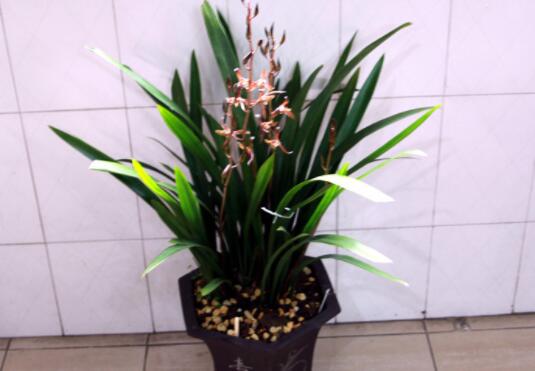
What soil is best for growing Cymbidium sinense
If you want to know what soil is best for growing Cymbidium sinense, there are many things to pay attention to, such as the soil's looseness, drainage, air permeability, and so on. In addition, how to mix the growing medium also requires care. The details are below, and interested friends can take a look.
1. Loose and airy
To serve as growing soil for Cymbidium sinense, it must first meet two conditions: looseness and air permeability, because only relatively loose soil with high air permeability can let Cymbidium sinense breathe smoothly, so that its roots can develop better.
2. Good drainage
Soil with good drainage is very important for Cymbidium sinense, because this plant is rather afraid of waterlogging. If poor soil drainage causes water to accumulate, it can easily lead to root rot.
3. Rich in humus
Humus soil refers to its nutrients. Only when the soil has sufficient nutrients will Cymbidium sinense grow more luxuriantly, so we can choose humus soil.
4. Slightly acidic
According to the plant's own characteristics, Cymbidium sinense does not like alkaline soil but prefers acidic soil. However, it should not be too acidic either. Generally, a pH between 6 and 6.5 is fine. If it is too high or too low, it will affect its growth, so everyone should also pay attention to this point.
5. Soil mixing
When mixing soil, there are three methods available. The first is that we can mix leaf mold, red soil, and river sand, with a ratio of 6:3:1. The soil mixed this way meets most of the requirements. Besides that, another method is to mix leaf mold, crushed red brick granules, river sand, and dried animal manure, with leaf mold accounting for 60% and each of the others accounting for 10%. This formula is a bit more complicated than the first, but the result will also be better.
In addition to the above two, there is another simpler one: we can mix leaf mold and sandy loam in a 1:1 ratio. The soil mixed this way is also quite suitable for the growth of Cymbidium sinense. However, no matter which soil-mixing method is used, everyone must not let it become alkaline.
Summary: After reading the above content, I believe everyone has gained some understanding of what soil is best for growing Cymbidium sinense. As long as everyone chooses soil according to the methods described above, it will certainly save you a lot of trouble in the process of growing Cymbidium sinense.
What soil is best for growing orchids
As people's quality of life improves, there are many more flower lovers who like to grow some flowers and plants at home, decorating their homes to be full of vitality and springlike charm. Orchid, plum blossom, chrysanthemum, and bamboo have become the "Four Gentlemen" and are deeply loved by flower lovers. Now let's learn with the editor about how to grow the orchid, one of the Four Gentlemen!
What soil is best for growing orchids
Orchids are fleshy-rooted plants. They require loose, fertile, well-draining, slightly acidic soil, and mountain soil is often used. However, when potting and planting, there should be more and thicker shards placed at the drainage hole at the bottom of the pot. On top of the shards, a layer of crushed mud granules should be spread, and then fine mud should be spread on top of the crushed mud granules before the orchid can be placed into the pot, after which mountain soil is added. This planting method is mainly based on the orchid's habit of fearing dampness and avoiding water accumulation, so as to keep drainage smooth. When using mountain soil, if 1/3 coarse river sand is added, it is even more conducive to drainage and better fits the orchid's growth habits. For cultivating orchids in the north, soil that contains a large amount of humus, is loose, well-draining, and neutral to slightly acidic is best.
Although it is beneficial to orchid growth, northern water is harder, so it must be replaced every two to three years, and long-distance transport makes the price relatively high. In recent years, people have tried using locally produced peat soil at 3 parts plus 1 part river sand, mixed with some organic fertilizer (which needs to be piled for a period of time), as potting soil for orchids, and the growth has also been fairly good. In northern mountainous areas, leaf mold from under broadleaf forests, leaf mold made by piling broadleaf tree fallen leaves, and culture soil containing 60% humus can all be used to grow orchids. Northern potted epiphytic orchids include Dendrobium, Cymbidium hookerianum, Duzhanchun, and others. For potting, soil cannot be used. The commonly used growing materials are sphagnum moss, fern roots (Polypodium roots or Osmunda roots) with a small amount of broadleaf tree leaf mold, small pieces of charcoal, and dried cow dung as the best, and in addition, broken pot pieces and crushed brick blocks can be used to pad the bottom of the pot.
Preparation of orchid soil
Growing orchids requires soil, and orchid soil cannot lack solid soil. Orchid soil must be prepared; mixed soil produces excellent orchids. The preparation of orchid soil should be based mainly on leaf mold, with red soil as essential, and then mixed with other materials. The basic principle is that for fine-leaved orchid types, the leaf mold component should be relatively heavier, while for broad-leaved orchid types, the solid soil component should be relatively heavier. To what degree the leaf and soil components should each be emphasized depends on the specific orchid-growing environment and should be increased or decreased accordingly. Suggested orchid soil formulas are as follows:
Leaf mold mixed with red soil and mountain base soil. Leaf mold accounts for 60%, and red soil and mountain base soil each account for 20%. For leaf mold mixed with red soil, leaf mold accounts for 70% and red soil accounts for 30%.
Leaf mold mixed with field soil and garden soil. Leaf mold accounts for 50%, and field soil and garden soil together account for 50%. Because field soil and garden soil are cooked soil and loose, their proportion can be increased.
Leaf mold mixed with rotten wood soil. Rotten wood mainly refers to two kinds: rotten oak wood and rotten willow wood. It is suitable for mixed preparation. It can also be prepared separately. In this preparation, soil must be added, with red soil especially good, and field soil, garden soil, or mountain base soil may be chosen. The added proportion should be more than 20%.
For leaf mold mixed with sandy loam, sandy soil can be used, and sea sand, river sand, or stone sand can be used. Choose coarse sand and use less fine sand. Leaf mold accounts for 60% to 70%, and sandy loam accounts for 40% or 30%.
Orchid soil can be prepared in advance or prepared just before use, and preparing in advance is better than preparing just before use. When preparing, use an iron basin or bucket basin to mix the materials together according to the ratio, pour an appropriate amount of water so that the prepared soil has moisture, then put it into a bag to ferment, allowing the soil ingredients to fully blend while also eliminating pests in the soil.
Under what circumstances do orchids need repotting
Repotting is an important measure in orchid care, because during the cultivation of orchid plants, there will always be some phenomena that hinder the growth of orchid plants, which must be solved by changing the growing medium. Generally, there are seven situations that require repotting:
1. After two to three years of potted orchid cultivation, because the nutrients in the growing medium have already been exhausted and cannot meet the needs of continued development of the orchid seedlings, the orchid seedlings appear thin, weak, and short;
2. After years of rain and sun exposure, the structure of the orchid mud has changed, and the growing medium has become compacted, affecting air permeability and water flow;
3. The orchid seedlings have multiplied too much, with tangled roots, leaving no space for new seedlings and new roots to continue developing, which also affects the normal growth environment of the old seedlings;
4. The growing medium has been infected by bacteria, fungi, or viruses, bringing a survival crisis to the orchid plants;
5. Repotting for the coordination and uniformity of pots and growing medium;
6. Repotting in order to produce more seedlings for separate planting;
7. Repotting for division and exchange or for sale. But one must never casually repot frequently. Repot when it should be done, and try not to repot when it should not be done.
At the same time, repotting cannot be done in a rigidly formulaic way. It is necessary to grasp the condition of the orchids and carry out different repotting treatments for different orchid conditions. Repot with purpose and targeting. For example: for diseased plants, the focus of "repotting" is sterilization and disinfection. The diseased plants must be strictly pruned, washed, disinfected, dried at the roots, and soaked in root-promoting solution. Then dry the roots again, pot them, and replace with fresh growing medium. Not a single step can be omitted. Although sterilization also kills the beneficial orchid fungi that live symbiotically with the orchid plants, leading to a temporary pause in orchid growth, namely the negative effect of the recovery period after potting, exchanging sterilization and pest elimination for the life of the orchid plants is completely worthwhile.
For disease-free weak plants, the focus of repotting is to supplement nutrient supply. In this case, there is no need to disinfect the substrate; only simple pruning, soaking in root-growth-promoting hormone, and replacing with nutrient-effective growing medium before potting are needed. After resting for two days, water with "settling water" and that is enough. This both supplements fertility and reduces damage to beneficial symbiotic bacteria, shortening the recovery period after potting.
Precautions for orchid planting
1. During orchid cultivation, withered yellow old leaves and diseased or insect-damaged leaves should be constantly pruned away to facilitate ventilation. After flower buds emerge from the soil, only one strong flower bud should be kept per plant, and the rest should be cut off to avoid consuming too many nutrients and affecting flowering the next year. After the flowers fade, they should be cut off.
2. For home orchid cultivation, natural rainwater, stream water, well water, and river water are best. If tap water is used, it should first be stored in a vat and exposed to the sun to remove bleaching powder before use. If tap water is used to water flowers for a long time, the growing substrate will gradually become alkaline. Ferrous sulfate can be applied once at intervals to increase soil acidity. In addition, fermented rice-washing water can be used to water orchids, which can also keep the soil in a slightly acidic state.
Through the above content, we have learned quite a lot about the techniques of growing orchids. Although orchids are noble, elegant, and endlessly beautiful, they are indeed a rather "delicate" flower. Master the techniques of growing orchids well, place one or two pots of orchids at home to decorate the interior, and you will instantly feel the breath of spring.
How to grow orchids? Orchid ecological habits and cultivation management techniques
How are orchids grown? Orchids have always had high ornamental value. To cultivate orchids, it is necessary to analyze the orchid's habits and growing environment, and at the same time pay attention to cultivation methods and later care. Let's learn orchid cultivation techniques together below.
1 Cultivation of orchids
1.1 Ecological habits of orchids
Orchids like warm and humid environments, especially warm winters and cool summers. When growing orchids, be sure to avoid high temperatures and dryness. The growing site for orchids requires deep upper soil rich in humus, with black-brown fertile soil being best, and it must have good water permeability and water retention.
1.2 Classification of orchids
There are very many orchid varieties, about more than a thousand, and common types include Cymbidium kanran, Cymbidium faberi, Cymbidium bicolor, Cymbidium sinense, Dongfeng orchid, Cymbidium floribundum, and so on. To cultivate orchids scientifically, it is necessary to distinguish orchid types and understand them in a targeted way. This article mainly discusses the cultivation techniques of Cymbidium bicolor, Cymbidium sinense, and Dongfeng orchid varieties.
1.3 Selection of orchid pots
Choosing a suitable orchid pot is very important for orchid growth. Glazed pots are finely made and very beautiful, fitting the temperament of orchids, and can be one of the choices, but their drawback is insufficient air permeability; plastic pots have the advantages of being cheap and light, but their air permeability is poor; clay pots have very good ventilation, and for orchid growth should be a very good choice of orchid pot. Overall, what kind of orchid pot to choose mainly still depends on the actual situation.
1.4 Soil preparation
Soil is the foundation of orchid growth. Scientifically prepared soil can let orchids grow healthily. Soil with good air permeability and water permeability, with a pH of 5.5 to 6.5, is most suitable for orchid growth. Orchid culture soil can be composed of one or more of the following substrates: 1) Leaf mold substrate: this kind of soil can be prepared manually. The main preparation method is to pile fallen leaves together, add fertilizer, mud, water, and other ingredients, and after the processes of sealing, decomposition, and sieving, leaf mold can be obtained; 2) Bamboo root soil substrate: obtained from the roots of main clumps that have grown for many years. This kind of soil contains bamboo rhizomes, bamboo roots, and rotten bamboo leaves, is rich in nutrients, and the soil is relatively loose; 3) Mountain soil substrate: generally obtained from mountain forests. Mountain forest soil contains the fallen leaves of various plants, and the soil is loose with good air permeability. After choosing the culture soil, before use, the culture soil must be sterilized and disinfected, and the soil pH adjusted to a range of 5.6 to 6.5.
1.5 Preparation of orchid seedlings
The most suitable preparation period for orchids is around Yushui. After the purchased orchids are pruned and disinfected, they can be cultivated. Replanting work should be combined with division propagation and repotting and other steps. Generally speaking, when taking out the orchids, ensure the soil has a suitable temperature of 20 to 28 °C, and try to keep the leaves from getting wet. After taking them out of the ground, prune the rotten roots, broken roots, and withered leaves. Place the pruned orchid roots in a 50% thiophanate-methyl 1000-fold disinfecting solution and let them sit for 10 to 15 min, then take them out and place them in a ventilated place to dry.
1.6 Cultivation of orchid seedlings
Cultivating or repotting orchids both require choosing a suitable season. Generally speaking, the Qingming period is the best time for cultivating and repotting orchids. The specific cultivation method is as follows:
1) Choose a flowerpot of appropriate size, cover the drainage hole at the bottom of the pot with a tile piece, then use relatively loose material such as ash residue to fill the flowerpot to a range between 1/3 and 1/2 of the pot, and cover the top with nutrient soil;
2) During transplanting, try to avoid the orchid roots touching the inner wall of the container, and ensure the root hairs are in a naturally spread state; 3) Hold the orchid leaves with your hand, slowly fill soil around the orchid roots, and lift the orchid slightly upward to ensure the orchid roots spread naturally, while also paying attention to adjusting the position and height of the orchid plant until the plant is slightly above the pot surface;
4) For a well-planted orchid, spread small stones or sphagnum moss, etc. on the soil surface, which is both attractive and able to regulate moisture;
5) After the orchid is planted, the first watering should be thorough. When using a spray bottle to spray the leaf surface, pay attention to applying force evenly, with small water droplets being best. Afterward, place the orchid in a water basin to soak, and a spray bottle can be used to moisten the leaf surface.
2 Management of orchids
2.1 Environment and planting site
Orchids like cool shade, and 10 to 25 °C is the most suitable temperature for orchid growth. Too high or too low a temperature will seriously hinder orchid growth. To avoid this situation, commonly used methods include building shade sheds and sprinkling water. The most suitable air humidity for orchid growth is 60% to 80%. Humidity in a greenhouse generally does not meet the requirements, and humidity can be increased by sprinkling water and appropriate shading. The orchid growing environment should be kept as far away as possible from industrial areas such as chemical plants. It is best to face the southwest direction and also have a sheltered position to avoid damage from strong light.
2.2 Water management
Spring water or clean water is the most suitable water source for orchid growth. In cities, spring water and clean water are hard to find, so tap water can be left standing for 2 to 3 d to remove chlorine before use. Watering should also depend on the orchid's specific growth condition and weather conditions, and should not be too frequent. In particular, watering in spring should especially prevent excessive moisture, while summer temperatures are relatively high and sufficient water must be ensured. In autumn, neither dry nor wet is most suitable, and in winter watering should be as little as possible, choosing sunny days as much as possible.
2.3 Fertilizer management
Orchids like fertile soil. If the quality of the base fertilizer is not good enough, topdressing is needed. Base fertilizer and topdressing both have fixed timing distinctions. Generally speaking, leaf mold and pig manure, etc. added during cultivation are base fertilizer, while topdressing is applied when growth is restricted because the quality of the base fertilizer is insufficient during orchid growth, so fertilizer must be added. The specific fertilization time depends on the orchid variety and climate. Because water evaporates slowly on cloudy days, it is not suitable to fertilize. At temperatures above 30 °C, water evaporates too quickly, so it is also not suitable to fertilize. Therefore, the best season for fertilizing is spring and summer, the least suitable season for fertilizing is winter, and a small amount of fertilizer can be applied in autumn. There are the following two ways to fertilize: 1) Mix fertilizer with base fertilizer; 2) Fill water-soluble fertilizer and apply the fertilizer to the flower roots by spraying, being careful not to let the leaf surface get fertilizer on it.
2.4 Prevention and control of pests and diseases
Compared with most ornamental plants, orchids have relatively fewer pests and diseases. The main orchid diseases are brown spot disease and anthracnose. The main causes are excessively wet potting soil and long-term lack of sunlight. To prevent orchid pests and diseases, the following aspects of work need to be done well: 1) When planting, choose disease-resistant varieties as much as possible; 2) When maintaining indoors, ensure a pot spacing of 10 to 15 cm; 3) Water appropriately, cut off diseased leaves in time, and appropriately spray 40% sterilizing agent 800-fold solution; 4) Once orchids develop disease, increase ventilation, and additionally spray 50% carbendazim 800 to 1000-fold solution.
2.5 Protection of flowers and leaves
Orchid leaves should also be protected in daily care. If pollution is found, it should be dealt with promptly, and withered yellow and diseased orchid leaves should be cut off in time. In addition, each orchid seedling does not need to keep too many flower buds; keeping one is enough. In the early stage after emerging from the soil, there are many flower buds, so pruning should be carried out and only one high-quality flower bud kept. To prevent orchids from being pollinated and setting seed, they must be cut off before the flowers wither. If the purpose of cultivation is hybrid breeding, orchids need to be artificially pollinated.
The above is all the content on orchid cultivation techniques to be discussed today. Interested flower grower friends are welcome to come to Huinong Network to learn!