Calendula leaves turning yellow is mostly due to improper watering and fertilizing or pest and disease infestation
Calendula (pot marigold) is a flowering plant native to western Europe with very high ornamental value, but even the most ornamental flowers will have their overall beauty affected if yellowing occurs. So what causes calendula leaves to turn yellow? And how should it be solved? Below, the editor takes you through it.
1. What causes calendula leaves to turn yellow: lack of water / improper fertilizing
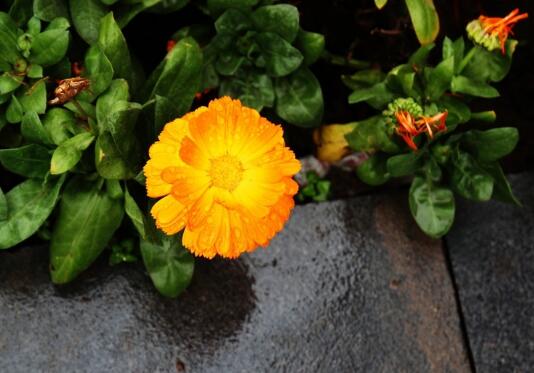
Regarding the problem of calendula leaves turning yellow, there are actually many causes of this phenomenon, such as lack of water, improper fertilizing, and too strong light, all of which are among the causes. Below are solutions for these phenomena; friends troubled by this can take a look.
1. The pot is too small; repot in time
Calendula is a flowering plant with a relatively large plant type, and its demand for water and fertilizer during cultivation is relatively high. If the pot chosen when planting is too small, it cannot meet these needs, and its growth will also be somewhat restricted.
Solution: If calendula leaves turn yellow because the pot is too small, we need to repot in time. When repotting, add 30% rotten soil to the soil; this will greatly help its flowering.
2. Too little fertilizing; apply light fertilizer frequently
During the growth of calendula, its demand for fertilizer is very great, especially during the growing period, when we need to fertilize once every half month; otherwise, yellowing easily occurs due to insufficient nutrients.
Solution: If calendula leaves turn yellow because of too little fertilizing, we should promptly restore the normal fertilizing frequency, and we must not directly apply too much, because then it cannot absorb it either. When fertilizing, everyone also needs to note one point: the fertilizer needs to be diluted with water before application, otherwise it easily burns the plant.
3. Too little watering; water frequently in dry climates
In the process of cultivating calendula, if we water too little, the plant's leaves will droop, especially when the weather is relatively dry and the environmental humidity is low, which easily causes the plant's leaves to turn yellow.
Solution: If calendula leaves turn yellow because of too little watering, we should not immediately pour water in heavily either; we should proceed gradually, because watering too much at once easily causes root rot in the plant. Generally, when the weather is relatively dry, watering once a day is enough.
4. Light too strong; shade in summer
Calendula is a light-loving plant. If the light in spring and autumn is relatively suitable, we can keep it outdoors to receive light all day. However, it is relatively afraid of strong light, so after summer arrives, shading is still needed; otherwise, too strong light easily scorches the plant and causes calendula leaves to turn yellow.
Solution: If calendula leaves turn yellow because of too strong light, we should promptly move it to a semi-shaded place indoors for cultivation; after cultivating it this way for a period, the plant's leaves will slowly turn green again.
5. Pests and diseases; deal with them promptly once discovered
During the growth of calendula, if we do not care for it properly, some adverse phenomena such as pests and diseases easily appear. Such problems are extremely harmful to the plant, not only affecting its ornamental value, but in severe cases also causing calendula leaves to turn yellow and dry up.
Solution: When problems such as pests and diseases appear, we must deal with them promptly. If the time is dragged out, the harm to the plant will be great, and handling it will also be more troublesome. For specific control methods, everyone can refer to the article on calendula pest and disease control; the editor will not repeat them here.
What causes calendula leaves to turn yellow? What to do when calendula leaves turn yellow
Calendula prefers a sunny, ample-light environment, has relatively strong adaptability, can tolerate a low temperature of -9°C, and is afraid of hot weather. It is not choosy about soil, with loose, fertile, slightly acidic soil being best; it can self-sow, grows fast, is relatively cold-resistant, and is not choosy about soil. So what causes calendula leaves to turn yellow? What should be done when calendula leaves turn yellow? Below, the editor of wed114 wedding website brings everyone the detailed content.
What causes calendula leaves to turn yellow
1. Large flowers, small pot
Some calendula varieties have relatively large flower types and many roots, and need relatively more water and fertilizer; a small pot cannot meet their growth needs, and at this time the old leaves will become dry, yellow, and lusterless, while the young leaves are thin and weak. Repot every few decades, and add 30% rotten soil to the soil to ensure normal flower growth.
2. Lack of water
Reduced watering will cause the plant's leaves to droop. At this time, immediately spray water on the leaves, then water into the pot. When watering, pay attention to proceeding gradually and do not water too much at once.
When the weather is dry and indoor humidity is relatively low, yellow leaves can also appear. Especially in winter, in areas where indoor coal fires or heating are used for warmth, the incidence is more severe. At this time, frequently spray and wash the branches and leaves with water close to room temperature to increase air humidity. In summer, frequently sprinkle water on the ground to make the local environment humid.
3. Improper fertilizing
During the growth period of calendula, not fertilizing for a long time or insufficient fertilizing will cause yellow leaves. When too much fertilizer is applied, the flower finds it difficult to absorb the excess fertilizer, which causes root burn and affects the absorption of water and nutrients.
In summer, fertilize once a week, and by all means avoid excessive fertilizing. If too much fertilizer is applied, water more to dilute the fertilizer in the soil. When fertilizer is lacking, the soil will become compacted; fertilize immediately, with effect within a week, then fertilize on schedule to keep the flower growing normally.
4. Cold damage
If calendula is moved outdoors relatively early and is struck by cold wind, or if it is not moved indoors in time when autumn turns cold, the flower freezes and yellow leaves result. Therefore, cold protection work should be done well in early spring and late autumn.
5. Harm from pests and diseases
The phenomenon of calendula leaves turning yellow is often caused by mosaic disease; when the leaves turn yellow, yellow-green mottled spots also appear. Pay attention to preventing diseases in time, spray medicine promptly, and provide sufficient light and ventilation.
Cultivation and care of calendula
When the seedlings have 3 true leaves, transplant once, and when the seedlings have 5-6 true leaves, plant them in 10-12 cm pots. 7-10 days after planting, pinch the growing tips to promote branching, or spray the leaf surface 1-2 times with 0.4% daminozide solution to control plant height. During the growing period, fertilize once every half month, or use "Huiyou" 20-20-20 general-purpose fertilizer. With sufficient fertilizer, calendula blooms more and larger. On the contrary, with insufficient fertilizer, the flowers visibly become smaller and degenerate. During the flowering period, do not keep seeds; cut off faded flowers, which helps the flowering branches sprout, bloom more, and extend the viewing period. To keep seeds, choose plants with large flowers, bright colors, and pure varieties; collect seeds on sunny days to prevent shedding.
During the growth period of calendula, the soil should be kept moist, and once every 15-30 days apply 10 times water-diluted decomposed urine, stopping fertilizing by the end of February. When calendula reaches the late seedling stage and has 4-5 leaves, carrying out tip pinching (that is, pinching the growing tips) can promote the development of side branches and increase the number of flowers; immediately after the first flush of flowers fades, pinch off the tops, which can also promote side branches to bloom again.
In addition, treat the seeds at low temperature before sowing: put the seeds in a 0°C refrigerator for 24 hours, take them out, and sow them in the open field. The seedbed should be shaded; they germinate in mid-August, and with a topdressing of thin decomposed manure water once a week, they can also bloom in late September.
The flowering period of calendula can be regulated by changing cultivation measures. The main regulatory measures are as follows:
1. After normal flowering in early spring, promptly remove the residual flower stalks to encourage it to send out new branches and bloom again; strengthen water and fertilizer management, and by September-October it can bloom again.
2. Sow in pots in late August
3. Direct sow in the courtyard at the end of March or the beginning of April. After the seedlings emerge completely, thin or transplant them appropriately, and give reasonable fertilizer and water conditions; they can bloom in early June. Because calendula needs a longer low-temperature stage to flower, spring-sown plants grow weaker and have smaller flowers than autumn-sown ones.
4. Sow in the open field in late August; when the lowest temperature rises to 0°C, immediately remove the straw curtain. At this time, water appropriately to keep the soil moist, and at the same time add thin cake fertilizer water once about every 15 days; thus by May Day, the calendula can bloom in full glory.
In addition, now place calendula seeds in a 0°C refrigerator for several days for low-temperature treatment, then sow in the open field in early August; they can also bloom in late September.
What causes calendula leaves to turn yellow
Cause one of calendula leaves turning yellow: large flowers, small pot
Some calendula varieties have relatively large flower types and many roots, and need relatively more water and fertilizer; a small pot cannot meet their growth needs, and at this time the old leaves will become dry, yellow, and lusterless, while the young leaves are thin and weak. Repot every few decades, and add 30% rotten soil to the soil to ensure normal flower growth.
Cause two of calendula leaves turning yellow: lack of water
Reduced watering will cause the plant's leaves to droop. At this time, immediately spray water on the leaves, then water into the pot. When watering, pay attention to proceeding gradually and do not water too much at once.
When the weather is dry and indoor humidity is relatively low, yellow leaves can also appear. Especially in winter, in areas where indoor coal fires or heating are used for warmth, the incidence is more severe. At this time, frequently spray and wash the branches and leaves with water close to room temperature to increase air humidity. In summer, frequently sprinkle water on the ground to make the local environment humid.
Cause three of calendula leaves turning yellow: improper fertilizing
During the growth period of calendula, not fertilizing for a long time or insufficient fertilizing will cause yellow leaves. When too much fertilizer is applied, the flower finds it difficult to absorb the excess fertilizer, which causes root burn and affects the absorption of water and nutrients.
In summer, fertilize once a week, and by all means avoid excessive fertilizing. If too much fertilizer is applied, water more to dilute the fertilizer in the soil. When fertilizer is lacking, the soil will become compacted; fertilize immediately, with effect within a week, then fertilize on schedule to keep the flower growing normally.
Cause four of calendula leaves turning yellow: cold damage
If calendula is moved outdoors relatively early and is struck by cold wind, or if it is not moved indoors in time when autumn turns cold, the flower freezes and yellow leaves result. Therefore, cold protection work should be done well in early spring and late autumn.
Cause five of calendula leaves turning yellow: harm from pests and diseases
The phenomenon of calendula leaves turning yellow is often caused by mosaic disease; when the leaves turn yellow, yellow-green mottled spots also appear. Pay attention to preventing diseases in time, spray medicine promptly, and provide sufficient light and ventilation. (?Calendula diseases and control methods)