What to do when the leaves of Polyscias guilfoylei turn yellow? The key cause lies in water and fertilizer
As a common indoor foliage plant, Polyscias guilfoylei should be familiar to flower lovers; its leaves look like a bellyband and appear extremely cute. However, indoor cultivation cannot compare with outdoor cultivation, especially for beginners, who often cause yellow leaves through improper care, thus affecting the plant's ornamental appeal. So, what should be done when the leaves of Polyscias guilfoylei turn yellow? For this, the editor has summarized 5 reasons for yellowing leaves. Let's take a look together.
1. When Polyscias guilfoylei leaves turn yellow, find the cause
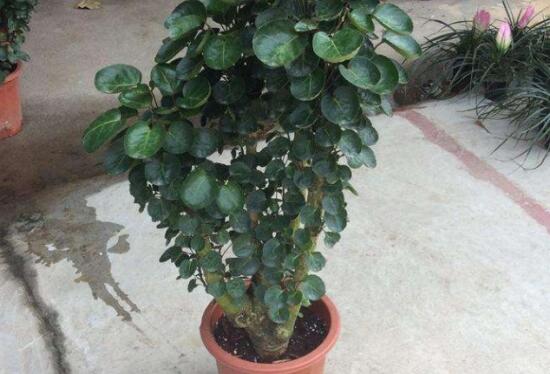
During the growth process, once Polyscias guilfoylei grows poorly, it will show it through various signs, among which yellow leaves are the most obvious. So what should be done when the leaves of Polyscias guilfoylei turn yellow? When encountering this situation, flower lovers should not panic, but should carefully recall and observe to find the cause of the yellow leaves, so that it can be solved accordingly.
2. Causes of Polyscias guilfoylei leaves turning yellow and solutions
1. Environmental problems
Regarding the causes of Polyscias guilfoylei leaves turning yellow, generally speaking there are many, but the first thing everyone should consider should be environmental problems:
① If Polyscias guilfoylei is kept indoors without ventilation, over time it will develop yellow leaves due to lack of oxygen. Solution: Place Polyscias guilfoylei in a ventilated place for care.
② In summer and winter, because air conditioning is often used, the indoor air is too dry, which can also cause yellow leaves. Solution: If the air causes dryness, you can often spray water around Polyscias guilfoylei and keep it away from the air conditioner.
2. Unsuitable soil
① Many flower lovers, after buying a potted Polyscias guilfoylei, never change the soil, resulting in soil compaction, which causes poor root respiration. Over time, the roots gradually rot, thus showing symptoms of yellow leaves. Solution: You can repot Polyscias guilfoylei with fresh potting soil once.
② Polyscias guilfoylei likes acidic soil. Once the soil is alkaline or the soil acidity is too high, it will also prevent Polyscias guilfoylei from absorbing enough nutrients and cause yellow leaves. Solution: When watering, mix in some vinegar or plant ash to neutralize it.
3. Insufficient light
Polyscias guilfoylei is a beautiful foliage plant, and its greatest ornamental value lies in its leaves. To make the leaves greener and more glossy, appropriate light is indispensable. Once light is lacking, the leaf color of Polyscias guilfoylei will gradually become lighter and yellow.
Solution: Place Polyscias guilfoylei in a spot indoors with diffused light, and every 3-5 days let it go outdoors to get some sun. Of course, when the outdoor light is strong, appropriate shading is needed. In addition, in winter do not move the pot frequently; simply place it in a sunny environment.
4. Improper watering
Improper watering is also one of the causes of yellow leaves in Polyscias guilfoylei. Too much watering will cause water to accumulate in the pot, leading to root rot and ultimately yellow leaves; in addition, lack of water, if each watering does not soak through, or if watering is insufficient, Polyscias guilfoylei will show yellow leaves due to lack of water.
Solution: When overwatered, promptly air-dry the potting soil and reduce watering frequency; if short of water, replenish water in time and spray the leaf surface to increase humidity, but do not water too frequently either.
5. Improper fertilizing
After talking about watering, let's talk about fertilizing, which is also one of the causes of yellow leaves in Polyscias guilfoylei:
① Too much or too concentrated fertilizer easily burns the roots and forms yellow leaves, and may even kill the plant. Its manifestations are: new leaves turn brown, old leaves become scorched yellow and fall off. Solution: Promptly flush the roots with plenty of water to wash away excess fertilizer. In severe cases, change the soil, wash the roots, and replant.
② When fertilizer is insufficient, the nutrients in the soil cannot keep up, the leaves will lack chlorophyll, which can also lead to signs of yellowing leaves. Solution: Fertilize appropriately to ensure sufficient nutrients in the soil.
Although Polyscias guilfoylei is easy to grow, if you want to appreciate its beauty, in addition to strictly following Polyscias guilfoylei cultivation methods for care, everyone should also pay attention to the above 5 points. Only in this way will your Polyscias guilfoylei not show symptoms of yellow leaves. Regarding yellow leaves in Polyscias guilfoylei, the editor has introduced this much, hoping to be helpful to everyone.
What to do when the leaves of Ficus microcarpa turn yellow? Pay attention to 5 points and do not fear yellowing / improper water and fertilizer is key
As a plant symbolizing wealth and with an extraordinary appearance, Ficus microcarpa should be familiar to flower lovers; it is evergreen in all four seasons, with broad and glossy leaves, and has excellent ornamental value. However, during cultivation, because there are many beginners, they often cause yellow leaves through improper care, thus affecting the plant's ornamental appeal. So, what should be done when the leaves of Ficus microcarpa turn yellow? Today the editor will solve this problem for everyone.
1. When Ficus microcarpa leaves turn yellow, find the cause
Ficus microcarpa is a plant with strong adaptability; it is cold-resistant and not afraid of direct strong light, so it rarely has problems. But no matter how easy a plant is to grow, if it is cared for blindly or basically not cared for, under some special circumstances it will also have problems, such as yellow leaves. As for what to do when Ficus microcarpa leaves turn yellow, everyone should first find the cause, so that it can be solved accordingly.
2. Causes of Ficus microcarpa leaves turning yellow and solutions
1. Environmental problems
Regarding the causes of Ficus microcarpa leaves turning yellow, generally speaking there are many, but the first thing everyone should consider should be environmental problems. If Ficus microcarpa is placed indoors, and the placement location happens to be unventilated, over time it will develop yellow leaves.
Solution: Very simple, move it to a ventilated place with good light, and after a period of time it will recover to health.
2. Improper watering
① Insufficient watering: When Ficus microcarpa leaves turn yellow, it is generally caused by excessive drought. Ficus microcarpa likes a moist environment. If it is not watered for a long time, or if the water is never soaked through, over time the leaves will turn yellow due to lack of water. Solution: Replenish water in time and spray the leaf surface to increase humidity, but the amount should not be too much.
② Overwatering: Plants like Ficus microcarpa relatively prefer a moist environment, but everything needs a limit. Too much watering causes water to accumulate in the pot, which can also rot the roots and cause yellowing leaves. In severe cases, it may also cause leaf drop in Ficus microcarpa. Solution: Promptly air-dry the potting soil and reduce watering frequency.
3. Improper fertilizing
After talking about watering, let's talk about fertilizing, which is also one of the causes of yellow leaves in Ficus microcarpa:
① Too much or too concentrated fertilizer easily burns the roots and forms yellow leaves, and may even kill the plant. Its manifestations are: new leaves turn brown, old leaves become scorched yellow and fall off. Solution: Promptly flush the roots with plenty of water to wash away excess fertilizer. In severe cases, change the soil, wash the roots, and replant.
② When fertilizer is insufficient, the nutrients in the soil cannot keep up, the leaves will lack chlorophyll, which can also lead to signs of yellowing leaves. Solution: Fertilize appropriately; applying more than 10 granules of compound fertilizer each month is sufficient.
4. Unsuitable soil
Many flower lovers, after buying a potted Ficus microcarpa, never change the soil, resulting in soil compaction, which causes poor root respiration. Over time, the roots gradually rot, thus showing symptoms of yellow leaves.
Solution: Very simple, you can repot Ficus microcarpa with fresh potting soil once.
5. Insufficient light
Ficus microcarpa likes light and needs sufficient light during growth, and it is not afraid of strong light, so the placement location is best in a spot with good light. Once light is lacking, the leaf color of Ficus microcarpa will gradually become lighter and yellow.
Solution: Place Ficus microcarpa in a spot indoors with good light, and every 3-5 days let it go outdoors to get some sun. If there is a courtyard, it can be placed directly outdoors for care.
Although Ficus microcarpa is easy to grow, if you want to appreciate its beauty, in addition to strictly following Ficus microcarpa cultivation methods for care, everyone should also pay attention to the above 5 points. Only in this way will your Ficus microcarpa not show symptoms of yellow leaves. Regarding yellow leaves in Ficus microcarpa, the editor has introduced this much, hoping to be helpful to everyone.
Analysis of the causes of Polyscias guilfoylei leaves turning yellow, and how to deal with them
Polyscias guilfoylei likes a warm, humid, and sunny environment, tolerates partial shade, is not cold-resistant, and is afraid of drought. At home it can be kept for a long time indoors in bright light; if it can see several hours of sunlight indoors every day, it will grow even more vigorously. In summer, be careful to avoid direct outdoor strong sunlight. For indoor potted plants, if the soil moisture is insufficient, the leaves will turn yellow and dry up due to lack of water. At this time, increase the amount of watering and ensure each watering soaks through. When hydroponically grown Polyscias guilfoylei develops yellow, dry leaves.
Causes of Polyscias guilfoylei leaves turning yellow
Analysis of yellowing leaves: unsuitable soil
The potting soil of Polyscias guilfoylei has not been changed for a long time, causing soil compaction, which leads to poor root growth. The roots remain in a state of poor respiration and no oxygen for a long time, and the roots will gradually rot.
Analysis of yellowing leaves: improper water and fertilizer
Watering varies from too much to too little, and fertilizing is too concentrated or too nitrogen-heavy. With such great changes in the soil environment, the roots of Polyscias guilfoylei are very unstable in absorbing nutrients and water, and cannot grow normally.
Analysis of yellowing leaves: improper environment
If there is air conditioning at home, placing it in an air-conditioned room in both summer and winter will cause yellow leaves because the air is too dry. In addition, improper ventilation is also an important cause of yellow leaves. Kept indoors for a long time, the environment is stuffy, and the plant will develop yellow leaves due to lack of oxygen.
Solutions for Polyscias guilfoylei leaves turning yellow
1. Cut off rotten roots
When yellow leaves are found on Polyscias guilfoylei, the first cause everyone thinks of is root rot. Promptly take Polyscias guilfoylei out of the pot, cut off the rotten parts, and replace part of the soil with loose soil such as peat soil and ceramsite. After changing the soil, water thoroughly and place it in a cool place for repotting. Once Polyscias guilfoylei grows roots, it will be fine!
2. Bright light
Polyscias guilfoylei is a foliage plant, and its greatest ornamental value lies in its leaves. Normal growth requires a certain amount of light. If Polyscias guilfoylei has turned yellow because it has been placed indoors for a long time and lacks light, cut off the leaves that have already turned yellow, then move it into the sunlight to receive sunlight exposure, but the intensity of the sunlight must not be too strong, and appropriate shading is needed in summer.
3. Ventilation and moisture retention
If a person is kept in a closed environment for a long time, they will face danger due to lack of oxygen. The same is true for plants. The most intuitive manifestation in plants is yellowing leaves. So remember, when the weather is warm, just place Polyscias guilfoylei directly outdoors for care; a naturally ventilated environment is more conducive to its growth. In addition, if kept indoors in an air-conditioned room, be careful to keep it away from the air outlet of the air conditioner, place a basin of water next to the air conditioner, or frequently spray water on Polyscias guilfoylei.
4. Apply dilute fertilizer frequently
When fertilizing Polyscias guilfoylei at home, you may choose granular fertilizer and bury it directly in the soil so that its fertilizer effect is slowly released. However, the amount of fertilizer is not easy to control, and it is very easy to overfertilize. In the case of overfertilization, promptly pick out the fertilizer that has not fully dissolved, then rinse the soil with a large amount of clean water, and ventilate to let the soil dry as soon as possible!