What to Do If a Money Tree Has Root Rot? The Remedy Is to Cut Away the Rotten Roots and Replant
The money tree, named for its coin-shaped leaves, is a beautiful foliage plant. In daily life, many people keep a pot of money tree at home, not only because it looks nice, but also because it carries an auspicious meaning. However, during cultivation, for various reasons, the money tree can develop root rot, which affects its ornamental value. So, what should you do if a money tree has root rot? Today, we will tell you the remedies.
I. What to Do If a Money Tree Has Root Rot: Find the Cause
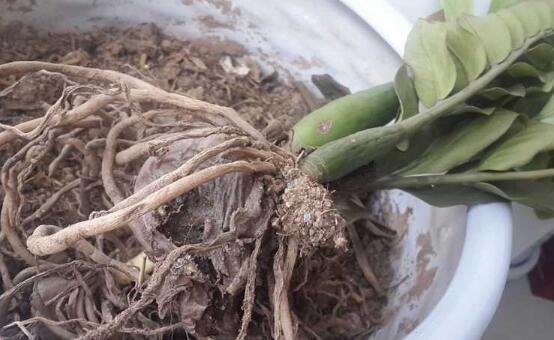
For beginners in cultivation, you should follow the money tree's cultivation methods to care for it, so that you can grow a beautiful money tree. Conversely, if you care for it however you like, it may develop root rot, and the result is naturally a complete loss of ornamental value. At this point, flower lovers should not panic, but calmly find the cause and then take targeted remedies. Below are 5 causes of money tree root rot; let's continue reading.
II. Causes of Money Tree Root Rot
1. Human factors
When it comes to the causes of money tree root rot, it may actually be caused by human factors. Many people buy their money trees online, and during transport, bumps and knocks are unavoidable. If the pot happens to be knocked, some roots may be damaged.
Remedy: If it is due to the above reason, flower lovers need not worry, because with normal care, its new roots will gradually emerge. Specific steps: control water and fertilizer, keep the pot as dry as possible, and it will recover after some time.
2. Overwatering
If human factors are ruled out, then the most likely cause of money tree root rot is overwatering. Because the money tree is highly drought-tolerant and has low water requirements, once we water too much, water will accumulate in the pot soil, its roots will find it hard to breathe, and over time root rot will occur, with the symptom being yellowing leaves on the money tree.
3. Too much or too concentrated fertilizer
The money tree likes fertilizer, and proper fertilization can make it grow better with greener leaves. However, the amount of fertilizer must be controlled, because once too much or too concentrated fertilizer is applied, the money tree's root system, when not well developed, is prone to root rot.
4. Temperature too low
Besides watering and fertilizing, temperature is also one of the causes of money tree root rot. The money tree likes a warm environment, and in winter, cold protection measures should be taken, because once the temperature is too low, cold damage is very likely to occur, causing the money tree plant to freeze and then develop root rot.
5. Pathogen invasion
In addition, pathogen invasion can also cause money tree root rot, and this situation is very likely to occur. If, during rain or watering, pathogens are accidentally introduced into the water, the plant will be infected by pathogens, which may lead to root rot.
III. Remedies for Money Tree Root Rot: Cut Off the Rotten Roots
After discovering money tree root rot, everyone should not panic, because timely treatment can remedy it. Specific method: cut off the rotten roots, then soak them in carbendazim solution or sprinkle on some charcoal to disinfect, then place the plant in a cool place to dry, and finally repot and plant it. In addition, you can also prune some branches and leaves to help it survive better.
The remedy for money tree root rot, simply put, is to cut off the rotten roots and replant. However, this is really troublesome, so everyone should still focus on prevention. In daily care, do not water too much, and avoid water accumulation; remember not to apply fertilizer too concentrated or too frequently, and it is best to apply thin fertilizer frequently. In this way, root rot can be avoided. We hope this helps everyone.
Camphor Tree Cinnamomum camphora (L.) Presl Camphor Tree Guide: How to Grow Camphor Tree / How to Propagate Camphor Tree
Camphor Tree ProfileCamphor Tree Cinnamomum camphora (L.) Presl
Camphor Tree Cultivation Methods and Precautions Camphor Tree Introduction
The camphor tree is a representative tree species of subtropical evergreen broad-leaved forests and an important timber and special economic tree species in subtropical regions (southwest China).
Evergreen tree. Leaves alternate, ovate, shiny above, slightly grayish white below, with three basal veins, glandular at the vein axils. Blooms in early summer, flowers small, yellow-green, in panicles. Drupe small and spherical, purple-black, with a cup-shaped fruit receptacle at the base. Widely distributed across areas south of the Yangtze River in China, with the most in Taiwan, China. The entire plant has a camphor aroma and can be used to extract camphor and camphor oil. The wood is hard and beautiful, suitable for making furniture and boxes, and it is also used as a landscaping tree and street tree. Because the whole plant emits the unique fresh fragrance of camphor, it is commonly called fragrant camphor among the people. In some areas, the camphor tree is even associated with gods and ghosts, so people generally do not cut down long-growing camphor trees.
Morphological Characteristics of the Camphor Tree
The camphor tree is an evergreen arbor belonging to the Lauraceae family. It can live for hundreds to thousands of years and can be called a towering ancient tree, making it an excellent landscaping tree. The bark is green and smooth when young; when old, it gradually becomes yellow-brown or gray-brown and longitudinally fissured. Winter buds are ovate. Leaves thinly leathery, ovate or elliptically ovate, 5-10 cm long, 3.5-5.5 cm wide, apex shortly pointed or nearly caudate, base rounded, with 3 basal veins, the first or second pair of lateral veins near the leaf base long and prominent, the underside slightly white-powdery, vein axils glandular-dotted. Flowers yellow-green, blooming in spring, in axillary panicles, small and numerous. Small spherical fruits become black-purple when mature, about 0.5 cm in diameter; flowering period April-May, fruiting period August-November.
The gray-brown bark has fine deep longitudinal fissures. The entire camphor tree has a camphor-like fresh fragrance, can repel insects, and it never disappears. Leaves alternate, papery or thinly leathery, the trunk has obvious longitudinal cracking, and it is very easy to identify. It is said that because the camphor tree's wood has many grain patterns, it seems to contain great literary meaning. Therefore, a wood radical was added beside the character "zhang" as the tree's name. The fragrant camphor tree has a wide range of uses and high economic value, and is highly favored in many places.
The camphor tree is an evergreen arbor. Its evergreen habit does not mean it does not shed leaves; rather, after the new leaves grow in spring, the old leaves begin to fall, so it presents a scene of lush greenery all year round... The camphor tree's small flowers are very unique. The outer flowers, whose calyx or petals are hard to distinguish, number 6, and the central part has 9 stamens, arranged in whorls of 3.
Ecological Habits of the Camphor Tree
The camphor tree likes light and is slightly shade-tolerant; it likes a warm and humid climate, is not very cold-tolerant, has low soil requirements, and is relatively tolerant of water and moisture, but when transplanting, care should be taken to maintain soil moisture, as waterlogging can easily cause root rot and death from lack of oxygen, but it is not tolerant of drought, barrenness, or saline-alkali soil. The main root is developed and deep-rooted, and it can resist wind. It has strong sprouting ability and tolerates pruning. Its growth speed is moderate, and its tree shape is huge like an umbrella, able to provide shade and coolness. It has a long lifespan and can grow into a towering ancient tree hundreds to thousands of years old. It has a strong ability to absorb smoke and dust, conserve water, fix soil and prevent sand, and beautify the environment. In addition, it is resistant to sea tide winds, tolerant of smoke and dust, and resistant to toxic gases, and can absorb a variety of toxic gases, making it relatively adaptable to urban environments.
[Adaptable altitude for fragrant camphor]: below 1800 m
[Absolute minimum temperature]: -10.00°C
[Light response]: likes light
[Moisture response]: likes moisture
[Adaptability to special soil conditions]: not tolerant of barrenness and saline-alkali; slightly acidic soil is best
[Types of air pollution tolerated]: many
[Terrain conditions]: hills, plains
[Soil type]: clayey soil
[Tree species distribution area]: Zhejiang, Fujian, Jiangxi, Taiwan, China, Hubei, Hunan, Guangdong, Yunnan, Jiangsu, Anhui
[Flowering period]: first time April-May, blooms in early summer, yellow-green, panicles
[Fruiting period]: first time August-November
[Tree height]: can reach 50 m
[Annual tree height growth]: 100 cm
[Annual DBH growth]: 2.40 cm
[Propagation method]: seed propagation.
The tree age can reach more than 500 years, and it is a common plant.
Distribution Area of the Camphor Tree
It mainly grows on fertile sunny slopes, valleys, and flat riverside land in subtropical zones; it is distributed south of the Yangtze River and in the southwest, and its growing areas can reach an altitude of 1000 m, especially with the widest growing area in the Yibin area of Sichuan Province. In 2006, the camphor tree was selected as the "city tree" of Yibin City, enjoys the reputation of being the "city tree" of Yibin City, and has become the main tree species in the Yibin area. Under the strong advocacy of the government, a large number of artificial camphor tree plantations have formed in the Yibin area, among which the Gangping Forest Farm in Yibin County has been the most successful in operation and development, making great contributions to beautifying the natural environment and increasing people's economic income! With the application of fragrant camphor trees in urban construction. The main cultivation and breeding bases include Shuyang, Jiangsu [3], Zhejiang, Anhui, and other places.
Medicinal or Dietary Therapeutic Value of the Camphor Tree
The medical information and health dietary therapy information on Huahua.com is for reference only and cannot be used as a basis for diagnosis or medical treatment. Any health issues should be consulted with professional medical staff, and the treatment of any disease should follow a doctor's advice.
Ultimate flower-protecting task: To love yourself, start from reality and strictly follow a doctor's advice. For illness, do not be careless, do not delay, do not give up hope, face it bravely, use love to warm the silent world, and use your heart to care for the flower field within.
Fruit Effects
[Source]: The fruit of the Lauraceae plant Cinnamomum porrectum; for the plant morphology, see the fragrant camphor entry.
[Collection]: Collected in autumn, dried in the shade.
[Nature and flavor]: Slightly pungent, warm.
[Functions and indications]: Relieves the exterior and reduces fever. Treats high fever and common cold, measles, whooping cough, and dysentery.
[Selected formulas]:
1. To treat high fever and common cold, measles: 1 to 2 fragrant camphor fruits. Grind into powder and take with boiled water.
2. To treat whooping cough and dysentery: 10 g fragrant camphor fruit, 10 g eucalyptus leaves, decoct in water and take.
Tree Root Effects
[Alternative names]: Xiangtong, Zoumatail, camphor tree root, soil agarwood, mountain agarwood.
[Source]: The root of the Lauraceae plant camphor.
[Collection]: Excavated from February to April. Wash clean, slice, and dry in the sun.
[Medicinal material]: Cross-cut or obliquely cut round slices, 4-10 cm in diameter, 2-5 mm thick. Hard in texture, with a camphor odor. Those with large, uniform slices, yellow-white color, and strong fragrant odor are considered best. Produced in Jiangxi, Sichuan, Guizhou, Guangdong, Hunan, and other places.
[Nature and flavor]: "Classified Herbal Properties": Pungent, non-toxic.
[Functions and indications - effects of fragrant camphor root]: Regulates qi and invigorates blood, removes wind-dampness. Treats vomiting and diarrhea, distending pain in the heart and abdomen, wind-dampness painful obstruction, traumatic injuries, and scabies with itching.
① "Classified Herbal Properties": Treats all qi pain, regulates painful obstruction, smooths qi, and also cholera vomiting.
② "Guizhou Folk Formulas and Medicines Collection": Treats wind-dampness pain and traumatic injuries.
③ "Guiyang Folk Herbal Medicine": Regulates qi, moves blood, strengthens the stomach. Treats stomach disease, muscle and bone pain, body odor, and sweaty feet.
④ "Sichuan Chinese Materia Medica": Wards off evil, removes wind-dampness. Treats cholera and abdominal distension, undigested retained food, wind-dampness painful obstruction of the hands and feet, and scabies with itching.
⑤ "Hunan Materia Medica": Induces sweating, disperses cold, moves qi, invigorates blood, reduces swelling, and relieves pain.
[Usage and dosage]: Internal use: decoct in water, 20-30 g; or soak in wine. External use: decoct in water and wash.
[Selected formulas]:
① To treat qi distension and qi pain: 25 g fragrant camphor root powder. Boil with sweet wine and eat.
② To treat wind-dampness, traumatic injuries, and muscle and bone pain: 25 g fragrant camphor root, 25 g Tiekuazi, 25 g Bailongxu, 25 g Yanchuanxiong (50 g each if fresh). Soak in wine and drink, once in the morning and once in the evening, 5 qian of wine each time.
③ To treat wind-dampness pain: decoct fragrant camphor root in water for external washing.
④ To treat facial paralysis: 100 g fresh fragrant camphor root, 25 g root bark of sweetgum. Mix and pound into a paste, apply externally (if the face is crooked to the left, apply on the right; if crooked to the right, apply on the left).
⑤ To treat body odor: grind fragrant camphor root into fine powder, add cooked rice and mix into a ball, then rub under the armpits.
⑥ To treat sweaty feet: pound fresh fragrant camphor root bark, wrap it on the soles of the feet overnight.
⑦ To treat toothache caused by worms: add a little table salt to the white bark of camphor root, pound into a paste, and apply to the painful area.
Medicinal Material Value
[Drug name] Camphor wood
[Aliases] Camphor material ("Supplement to Materia Medica"), fragrant camphor wood ("Compilation of Medicinal Material Data"), Chuifengsan ("Guangxi Chinese Materia Medica").
[Medicinal material base source] The wood of the Lauraceae plant camphor. Usually in winter, the trunk of the camphor tree is cut down, sawed into sections, split into small pieces, and dried in the sun.
[Characteristics] Irregularly shaped wood blocks, exterior reddish-brown to dark brown, annual rings visible on the cross-section, heavy and hard in texture, with a strong camphor aroma and a cooling sensation when tasted. Those with large, complete blocks and a rich aroma are considered best. Abundantly produced along China's coastal areas, and also found in Guangxi, Jiangxi, Fujian, Taiwan, China, Hunan, Hubei, Sichuan, Yunnan, and other places, with the largest output in Taiwan, China. In the Sichuan area, there are boat bottom boards made from this product; after years of soaking and rotting in water, they are taken out and used as medicine, called "Jia Chenxiang."
[Nature and flavor] Pungent, warm.
① "Supplement to Materia Medica": "Pungent in flavor, warm, non-toxic."
② "Materia Medica Renewed": "Bitter in flavor, warm in nature, non-toxic."
③ "Guangxi Chinese Materia Medica": "Pungent in flavor, warm in nature, slightly toxic."
[Meridian entry] "Materia Medica Renewed": "Enters the liver, spleen, and lung meridians."
[Functions and indications] Dispels wind-dampness, moves qi and blood, benefits the joints. Treats distending pain in the heart and abdomen, beriberi, gout, scabies, and traumatic injuries.
① "Supplement to Materia Medica": "Mainly treats heart and abdominal pain, cholera, abdominal distension, undigested retained food, and frequent vomiting of sour and foul water; take it boiled with wine. It can also be used as a bath decoction to treat beriberi and remove scabies and wind itching."
② "Materia Medica Renewed": "Warms the blood pathways, benefits the joints, treats fractures from falls and blows, qi counterflow and blood stagnation, and can also induce abortion."
[Efficacy classification] Wind-dispelling medicine
[Usage and dosage] Internal use: decoct in water, 10-20 g; grind into powder, 3-6 g; or soak in wine and drink. External use: appropriate amount, decoct in water and wash
[Caution] Pregnant women should not take it.
[Supplementary formulas]
① To treat stomach pain: 5 qian camphor wood, decoct in water and take. ("Jiangxi Herbal Medicine")
② To treat beriberi, phlegm congestion with vomiting and counterflow, fullness and oppression in the heart and chest, and inability to eat: 1 liang camphor wood (coated with ginger juice and roasted until yellow), pound and sift into a powder. Take 1 qian each time regardless of timing, mixed with congee liquid. ("Puji Fang" Camphor Wood Powder)
③ To treat gout and cold pain in the hands and feet like a tiger bite: 1 dou camphor wood shavings, boil in 1 dan of water until boiling, place the camphor wood shavings in a large bucket, have the person sit beside the bucket with one foot inside, and surround it outside with a straw mat; do not let the steam enter the eyes, for fear of damaging them. Its effect is very rapid. ("Medical Orthodox Tradition")
④ To treat centipede bites: fresh camphor tree branches, decoct and take 2 bowls. ("Collection of Proven Formulas")
[Discussions by various schools] "Compendium of Materia Medica": "For cholera and dry cholera that must be vomited, decoct camphor wood shavings into a thick juice and use it to induce vomiting, which is very good; also, for sudden death from noxious influences, burn camphor wood to fumigate with smoke, and only use medicine after the patient revives. This item is pungent, strong, fragrant, and penetrating, and can remove dampness and ward off evil, which is why it is so."
[Source]
1. "Essentials of Classified Materia Medica": Camphor, the tree is 4 to 5 zhang tall, with a diameter of about 1 zhang. The bark is like willow but firm and solid; the leaves resemble pear leaves, thick and large, greenish-blue on the surface, and red beneath like maple; the branches and trunk are spreading and shade the ground; in summer it opens white flowers, five-petaled like plum; in autumn it forms seeds, and by winter they become fruits like hazelnuts, brown and inedible, only usable for pressing oil to burn in lamps. It grows in deep mountain valleys of Luoyuan in Fuzhou Prefecture, Fujian, and in Zhangzhou Prefecture, and is also found by roadsides and in suburban fields.
2. "Compendium of Materia Medica": Camphor is found in mountain valleys everywhere in the southwest. The tree is more than 1 zhang tall, with small leaves resembling nanmu but pointed and long, with yellow-red down on the back, not shedding through the four seasons; in summer it opens fine flowers and bears small seeds. Large trees are several arm spans around, with fine and intricately patterned bark, suitable for
[Harvesting and Storage] After planting for 5-6 years and reaching maturity, the trunk is usually cut down in winter, sawed into sections, split into small pieces, and dried in the sun.
[Traditional Chinese Medicine Chemical Composition] Camphor wood contains camphor and aromatic volatile oil (called camphor oil). Vacuum fractional distillation of camphor oil yields 20% white oil (boiling point 160-165°C), containing 25-30% 1,8-cineole, α-pinene, camphene, limonene, etc.; 24% red oil (boiling point 210-250°C), containing safrole, α-terpineol, carvacrol, eugenol, etc.; 1% blue oil (boiling point 250-300°C), containing cadinene, bisabolene, α-camphorene, azulene. The roots of the camphor tree also yield neolitsine and reticulin. The wood also contains C16-25 n-alkanes, C17-33 isoalkanes, C16, 20, 22, 24, 26, 28 alkanols (of which C26 alkanol accounts for about 50%), β-sitosterol, polyols, ketols, etc. The bark also contains propionic acid, butyric acid, valeric acid, caproic acid, caprylic acid, capric acid, lauric acid, myristic acid, stearic acid, oleic acid, etc. The leaves also contain C16-33 n-alkanes. The seeds contain fatty oil, of which saturated fatty acids account for 93%; the ratio of tri-saturated acid, di-saturated acid, mono-saturated acid, and tri-unsaturated acid glycerides is 80, 17, 1, and 2%. Varying by season, the leaves contain 0.2-1.5% camphor. The safrole content in the leaves is 0.04-0.05%, unrelated to season.
The leaves of the camphor tree variety contain 0.83% heavy volatile oil and 0.26% light volatile oil. The heavy oil contains 80% safrole and 10% camphor; the light oil contains 70% linalool and 1% camphor.
The leaf oil of Yunnan camphor contains camphene, α-pinene, cymene, linalool, α-terpineol, camphor, citral, decanal, methylheptenone, 1,8-cineole, and eugenol.
One of the small varieties of woolly-leaved camphor, citronella camphor, has fresh leaves yielding 0.68-2% oil; the leaf oil contains about 50% camphor, about 42% citral and methylheptenone, and also contains 1,8-cineole, α-pinene, camphene, and dl-limonene. Another small variety of woolly-leaved camphor, woolly-leaved fragrant camphor, has leaf oil mainly containing terpenes and 1,8-cineole.
The leaves and small branches of Japanese-produced camphor tree yield about 1% volatile oil and camphor; the residual oil after removing camphor from the volatile oil accounts for about 10%, among which α-ylangene is about 3%, β-elemene about 8%, β-caryophyllene about 35%, humulene about 18%, selinene 14%, and nerolidol 1%. Another report states that the main components in the high-boiling fraction of camphor oil (boiling point >215°) are α-ylangene, α-santalene, β-santalene, and δ-cadinene, all with contents above 10%; it also contains γ-patchoulene, dihydrocalacorene, calacorene, cadinatadiene-9,11, 1,6-dimethyl-4-isopropyl-7,8-dihydronaphthalene, β-elemene, caryophyllene, humulene, etc. From the blue oil fraction, sesquiterpene components camphorenone, camphorenol, and kusunol have also been isolated. After the branches and leaves of Japanese-produced camphor tree are stored for a few days and then steam-distilled, they can yield 1-1.3% volatile oil; the oil contains 90% alcohols, mainly linalool, and 2.1% camphor.
[Processing method] Wash clean, dry in the shade, and store sealed
[Drug name] Camphor seed
[Aliases] Zhangkou, Zhangzi, camphor cardamom, camphor tree fruit
[Medicinal material base source] The mature fruit of the Lauraceae plant camphor.
[Nature and flavor] Pungent; warm
[Functions and indications] Dispels wind and disperses cold; warms the stomach and harmonizes the middle; regulates qi and relieves pain. Mainly treats cold pain in the epigastrium and abdomen; cold-dampness vomiting and diarrhea; qi stagnation and abdominal distension; beriberi
[Efficacy classification] Dispels wind and disperses cold; warms the stomach and harmonizes the middle; regulates qi and relieves pain
[Usage and Dosage] Internal use: decoct in water, 10-15g. External use: appropriate amount, decoct in water for washing; or grind into powder and apply to the affected area mixed with water.
[Harvesting and Storage] Pick ripe fruits between November and December, and dry in the sun.
[Chemical Constituents]
The seeds contain fatty oil, of which saturated fatty acids account for 93%; the molar percentage ratio of trisaturated acid, disaturated acid, monosaturated acid and triunsaturated acid glycerides is 80:17:1:2.
[Crude Drug Identification] Macroscopic identification: the fruit is spherical, about 5-8mm in diameter, brown-black to purple-black, with a wrinkled and uneven surface, or sometimes glossy; the base sometimes bears a persistent perianth tube; the pericarp is fleshy and thin, containing 1 large black seed. The odor is extremely fragrant, and the taste is pungent.
[Drug Name] Cinnamomum camphora leaf
[Aliases] Camphor leaf
[Medicinal Source] The leaves of the Lauraceae plant Cinnamomum camphora. Can be collected throughout the year, used fresh or dried in the sun.
[Nature and Flavor] "Luchuan Materia Medica": "Bitter and pungent in taste, warm in nature."
[Functions and Indications] Dispels wind, removes dampness, relieves pain, kills parasites. Treats rheumatic bone pain, traumatic injuries, scabies and tinea.
① "Luchuan Materia Medica": "Kills parasites, sterilizes, treats scabies and tinea."
② "Nanning City Drug Records": "Dispels wind, resolves phlegm, kills parasites. Treats cold-type rheumatic bone pain and stomach pain. For external use, treats traumatic injuries, dissipates toxins, promotes qi flow, and relieves pain."
③ "Guangxi Traditional Chinese Medicine Records": "Branches and leaves are used to wash for rheumatism."
[Efficacy Classification] Wind-dispelling drugs; dampness-removing drugs
[Usage and Dosage] Internal use: decoct in water, 3-10g; or pound for juice, or grind into powder. External use: decoct in water for washing or pound and apply.
[Cautions] "Nanning City Drug Records": "Contraindicated for pregnant women."
[Supplementary Formulas]
① To treat sallow complexion and deficient edema: Cinnamomum camphora leaves and Sargentodoxa cuneata. Grind into powder, take five fen each time, swallowed with boiled water. ("Hunan Materia Medica")
② To treat hookworm disease: Half a jin of tender tips of Cinnamomum camphora. Stir-fry until yellow, add two jin of water, decoct down to half a jin, take warm on an empty stomach the next morning. ("Jiangxi Herbal Medicine")
③ To treat sores on the feet, each sore as large as a small writing brush tube: Cinnamomum camphora leaves, pound thoroughly, mix in a little Badu Dan, apply Cinnamomum camphora leaves externally, replace repeatedly. ("Zhou Yisheng Family Treasured Formulas")
④ To treat deep-rooted yin abscess: Fresh Cinnamomum camphora leaves mixed with cold cooked rice grains, pound and apply to the affected area. It can resolve the swelling in the early stage, and if pus has already formed, it can drain the pus. ("Quanzhou Materia Medica")
⑤ To treat tinea manuum: Fresh Cinnamomum camphora leaves, decoct in water for fumigation and washing. ("Fujian Chinese Herbal Medicine")
④ To treat burns with blistering: Cinnamomum camphora leaves and bark, appropriate amount of each. Dry in the sun and burn to ash, mix with egg white and apply. ("Jiangxi Herbal Medicine")
[Discussions by Various Authors]
1. "Luchuan Materia Medica": Kills parasites, sterilizes, treats scabies and tinea.
2. "Nanning City Drug Records": Dispels wind, resolves phlegm, kills parasites. Treats cold-type rheumatic bone disease and stomach pain. For external use, treats traumatic injuries, dissipates toxins, promotes qi flow, and relieves pain.
3. "Guangxi Traditional Chinese Medicine Records": Branches and leaves are used to wash for rheumatism.
[Harvesting and Storage] Collect before late March and after early May when the oil content is high, use fresh or dry in the shade.
[Chemical Constituents] The leaves contain volatile oil, whose main component is camphor (54.54%), along with 1,8-cineole and a small amount of alpha-terpineol, beta-pinene, alpha-pinene, geranial, alpha-phellandrene, camphene, borneol, neral, etc.
[Drug Name] Cinnamomum camphora bark
[Aliases] Fragrant camphor tree bark ("Yuju Formula"), camphor bark ("Gangmu Shiyi"), camphor wood bark ("Fresh Herbal Medicine Manual").
[Medicinal Source] The bark of the Lauraceae plant Cinnamomum camphora. Can be collected throughout the year, used fresh or dried in the sun.
[Nature and Flavor] "Luchuan Materia Medica": "Pungent, warm, bitter in taste."
[Functions and Indications] Promotes qi flow, relieves pain, dispels wind-dampness. Treats vomiting and diarrhea, stomach pain, rheumatic arthralgia, beriberi, scabies and tinea, and traumatic injuries.
① "Gangmu Shiyi": "Treats epidemic warm diseases, damp-toxin streaming sores, bathing for scabies and tinea, washing for beriberi."
② "Luchuan Materia Medica": "Promotes qi flow, reduces swelling, relieves pain, stops diarrhea. Treats stomach pain, diarrhea, and swelling."
③ "Nanning City Drug Records": "Dispels wind and resolves phlegm, kills parasites. Treats cold-type rheumatic bone pain and stomach pain. For external use, treats traumatic injuries, dissipates toxins, promotes qi flow, and relieves pain."
[Efficacy Classification] Qi-promoting drugs; pain-relieving drugs; wind-dampness-dispelling drugs
[Usage and Dosage] Internal use: decoct in water or soak in wine, 10-15g. External use: appropriate amount, decoct in water for washing.
[Cautions] "Nanning City Drug Records": "Contraindicated for pregnant women."
[Supplementary Formulas]
① To treat cholera with vomiting and diarrhea: One handful of Cinnamomum camphora bark. Decoct in water, take warm. ("Yangsu Garden Trusted Formulas")
② To treat heart pain: Fragrant camphor tree bark, remove the black outer surface when collecting, use the second inner layer of bark, pound into pieces, decoct in water and take. ("Yuju Formula")
③ To treat rheumatic joint pain: Fresh second-layer bark of Cinnamomum camphora and fresh roots of Elephantopus scaber, one liang each. Decoct in water and take. ("Fujian Chinese Herbal Medicine")
④ To treat dampness with swollen feet: Camphor wood bark one jin, Piper hancei half a jin, Chinese fir bark one jin. Decoct in water for fumigation and washing. ("Luchuan Materia Medica")
⑤ To treat drunkenness: Cinnamomum camphora bark, decoct in water and take. ("Hunan Materia Medica")
⑥ To treat skin itching after measles: Fresh Cinnamomum camphora bark, decoct in water for bathing. ("Fujian Chinese Herbal Medicine")
[Discussions by Various Authors]
1. "Gangmu Shiyi": Treats epidemic warm diseases, damp-toxin streaming sores, bathing for scabies and tinea, washing for beriberi.
2. "Luchuan Materia Medica": Promotes qi flow, reduces swelling, relieves pain, stops diarrhea. Treats stomach disease, diarrhea, and swelling.
3. "Nanning City Drug Records": Dispels wind and resolves phlegm, kills parasites. Treats cold-type rheumatic bone pain and stomach disease. For external use, treats traumatic injuries, dissipates toxins, promotes qi flow, and relieves pain.
[Harvesting and Storage] Can be collected throughout the year; peel off the bark, cut into sections, use fresh or dry in the sun.
[Chemical Constituents] The bark contains L-epicatechin, D-epicatechin, procyanidins B1, B2, B7, C1 and cinnamtannin I, as well as propionic acid, butyric acid, valeric acid, caproic acid, caprylic acid, capric acid, lauric acid, myristic acid, stearic acid, oleic acid and myristoleic acid, etc.
[Crude Drug Identification] Macroscopic identification: the bark surface is smooth, yellow-brown, gray-brown or brown, with longitudinal fissures. It has a camphor odor, and a pungent and bitter taste.
Overview of the Variety Classification and Applications of Cinnamomum camphora
This species is an important timber and special economic tree species in subtropical regions (southwest China). The roots, wood, branches and leaves can all be used to extract camphor and camphor oil. The main components of the oil are camphor, terpinolene, camphene, limonene, eugenol, etc. Camphor is used in medicine, plastics, explosives, preservation, insecticide and other applications; camphor oil can be used as a raw material for pesticides, ore dressing, soap making, varnish and flavorings; the wood is of high quality, resistant to insect damage and tolerant of water and moisture, and is used for construction, shipbuilding, furniture, boxes and cabinets, boards, carving, etc.; the branches and leaves are dense, and the tree shape is attractive, so it can be used as a street tree for greening and as a windbreak forest. The wood of Cinnamomum camphora is rot-resistant, insect-proof, dense and fragrant. It is an excellent material for furniture and carving; besides being used to extract camphor or cultivated as a street tree and landscape tree, camphor also has cardiotonic, antipyretic and insecticidal effects. In summer, if you go outdoors, you can try this: pick the leaves of Cinnamomum camphora, crush them and apply them to the surface of your hands and feet, which has a mosquito-repellent effect. Scientific research has proven that the chemical substances released by Cinnamomum camphora, such as terpinolene, camphene, limonene and eugenol, have the ability to purify toxic air, have anti-cancer effects, and filter out fresh and clean air that refreshes the heart and mind. Long-term living in an environment with Cinnamomum camphora can help avoid many difficult and complicated diseases. Therefore, Cinnamomum camphora has become the preferred fine tree for landscaping in many cities and regions in the south, and is deeply favored by the landscaping industry.
Historically, it was once a major thoroughfare for boats and carts between the Central Plains and Lingnan in our country. It is a newly emerging city that was approved by the State Council on October 26, 1988 to be upgraded from a county to a city. Zhangshu City was historically called Qingjiang County and is one of the four great ancient towns of Jiangxi. It is renowned for its distinctive medicinal material production, processing, preparation and trade, and has long enjoyed the reputation of "medicines are not complete without reaching Zhangshu, medicines are not effective without reaching Zhangshu." It is a famous "Southern Medicine Capital" of our country. The name of Zhangshu City comes from the ancient legendary story of "Nie You shooting a deer," hence it is also called "Lujiang." It is listed alongside the "Porcelain Capital" Jingdezhen and others as one of the four great famous towns of Jiangxi Province, and in the Ming Dynasty it was one of the 33 major industrial and commercial towns in the country.
Camphor oil and camphor
Cinnamomum camphora is a specialty tree species of our country, and its roots, stems, branches and leaves all contain camphor and camphor oil. Processing camphor and camphor oil is one of the ways to become wealthy in rural areas. It is mainly obtained through distillation. The process flow and operation methods are as follows:
(1) Raw material selection. The trunk and root parts of Cinnamomum camphora each contain 2%-4% camphor and camphor oil, and the branches and leaves each contain 1%-3%. The older the tree, the higher the content. Those with a large area of bitter and astringent taste contain more camphor, while those with a spicy and astringent taste contain more camphor oil. Collection should preferably be done in autumn, when the camphor content in the leaves is high. When picking leaves, leave 1/6 of the leaves on each tree, and trees over 30 years old are preferable. After felling, the branches and roots should be split into thin pieces 2.5 cm wide, 1 cm thick and 10 cm long.
(2) Distillation in the pot. The distillation pot must not be made of iron; copper or stainless steel is preferable. A wooden distillation barrel is set on the steaming stove, with the same diameter as the pot, and fitted over the pot. During processing, put Cinnamomum camphora leaves or thin slices of camphor wood into the distillation barrel. The water in the pot should be 10 cm away from the raw material. After loading the material, immediately close the pot lid and the loading opening, then check the connection between the distillation pot and the condenser. Only if there is no air leakage can distillation begin. During distillation, maintain the water level in the pot to prevent burning dry or scorching. The water after oil-water separation should be returned to the distillation pot for reuse. (3) Cooling and separation. The steam carrying camphor and camphor oil passes through a guide pipe into a multi-ring disk-shaped condenser, and after condensation the camphor and oil float on the water surface. The separated water should be transparent; if not transparent, it should be separated again to increase the oil yield. Filter the camphor and camphor oil floating on the water surface with gauze to obtain crude camphor. The remaining camphor oil still contains most of the camphor, so it is called camphor oil.
(4) Re-distillation and purification. When extracting camphor from camphor oil, put the camphor oil into a distillation pot for secondary distillation, and collect the distillate at 155-200°C, which is called white oil. After the white oil cools, crystalline camphor precipitates out, then filter, and repeatedly distill the filtrate several times until no more camphor precipitates, and what remains is camphor oil.
(5) Finished product packaging. Camphor oil should be packed in black galvanized iron drums, and attention should be paid to sealing. Camphor is a soft, colorless, transparent crystal with a pungent and aromatic taste. It should be packaged with moisture-proof paper or film and placed in wooden boxes to prevent moisture.
Other Applications
In summer, if you go outdoors, you can try this: pick the leaves of Cinnamomum camphora, crush them and apply them to the surface of your hands and feet, which has a mosquito-repellent effect. You can also use Cinnamomum camphora to make mothballs to add fragrance. However, if you observe carefully, you will also find that Cinnamomum camphora can also be attacked by pests and diseases. In the natural world, it is always fair like this: everything has its natural predator.
Cultivation Techniques of Cinnamomum camphora: Seed Propagation
The fruit falls off by itself when ripe, and is pecked at by birds. For propagation by seeds, sow immediately after collection. Each kilogram contains 7,200-8,000 seeds, with a germination rate of 70-80%, and the sowing rate per mu is 10-15 kg. For afforestation, sprout regeneration can also be used. It is harmed by powdery mildew, black spot disease, camphor leaf bee, camphor shoot leaf-roller moth, camphor nest moth, camphor longhorn beetle and other pests and diseases.
Seedling Raising Techniques
I. Introduction: Cinnamomum camphora has excellent wood quality and fragrance, and is a superior material for construction, furniture and crafts. The camphor and camphor oil of Cinnamomum camphora are widely used in crafts, processing, medicine and the national defense industry. In addition, Cinnamomum camphora is also an excellent tree species for greening in the "Four Modernizations." Cinnamomum camphora is an evergreen tree, light-loving, with a strong taproot and a well-developed root system. It likes a warm and humid climate, has strong adaptability, grows relatively fast, and has a long lifespan. It grows best on deep, fertile flat land around villages, and on river beach alluvial soil.
II. Seedling Raising
1. Time. From October to December each year, collect the mature seeds, then store them mixed with sand, and by early March they can be germinated and sown.
2. Land preparation. Carry out the first plowing and harrowing in early winter, and the second plowing and harrowing before sowing, and apply sufficient base fertilizer. The base fertilizer is generally decomposed barnyard manure, 1500-2000 kg per mu, or 50 kg of ammonium bicarbonate, 50 kg of phosphate fertilizer, and 150 kg of rapeseed cake, then build raised beds, generally 35-50 cm high and 1.2 m wide.
3. Germination. In early March, the seeds of Cinnamomum camphora need to be germinated before sowing. They can be soaked in warm water at 50°C, and after the warm water cools, replace it with 50°C water and repeat the soaking 3-4 times, which can make the seeds germinate 10-15 days earlier.
4. Sowing. Drill sowing with a row spacing of about 20 cm, sowing rate per mu of 10-15 kg. After sowing, cover with soil and then with rice straw or plastic film, and keep the surface soil of the seedbed moist to facilitate seed germination.
5. Tending and management. After the seedlings emerge, promptly remove the rice straw or plastic film. When the seedlings grow several true leaves, thinning can begin. When the seedlings are about 10 cm tall, final thinning can be carried out. About 20,000 seedlings per mu should be retained for Cinnamomum camphora. After July, strengthen fertilizer and water management, and frequently loosen the soil and weed. Stop topdressing and irrigation in late autumn. Topdressing is generally done 2-3 times; for the first two times, 7-10 jin of urea can be used, and for the last time, 10 kg of urea and 7.5 kg of phosphate fertilizer can be used. One-year-old seedlings of Cinnamomum camphora can reach more than 50 cm in height and more than 0.7 cm in ground diameter.
III. Transplanting time is more suitable from mid-to-late March to early-to-mid April, and the transplanting density is about 1,500 plants per mu. Lift and transplant immediately. After transplanting, cut the stem at about 10 cm above the ground. When the buds grow to about 10 cm, the main stem can be determined, excess branches and buds removed, and one relatively thick and strong branch retained. In winter, apply 2,000 kg of barnyard manure on the bed surface. In this way, the breast-height diameter of 3-year-old seedlings can reach more than 3 cm.
Transplanting Techniques: Seedling Raising
Those cultivating large seedlings should undergo transplanting. The transplanting time is more suitable from mid-to-late March to early-to-mid April, and the transplanting density is about 22,500 plants/hm2. Lift and transplant immediately. After transplanting, cut the stem at about 10 cm above the ground. When the buds grow to about 10 cm, the main trunk can be determined, excess branches and buds removed, and one relatively thick and strong branch retained. During seedling cultivation, timely cultivation and management work such as intertillage, weeding, earthing up, topdressing, irrigation, and pest and disease control should be carried out. Seedling tending should be no less than 3 times in the first year, and 1-2 times in the second year. Cinnamomum camphora tends to produce many sprouting branches, and bud wiping should be carried out in the first 3 years, mainly removing the tender buds on the lower 2/3 above the ground. In winter, apply 30 t/hm2 of barnyard manure on the bed surface. In this way, the breast-height diameter of 3-year-old seedlings can reach more than 3 cm. When leaving the nursery, bring along a mud ball and properly prune branches and leaves to improve the survival rate of afforestation.
Transplanting
Select fragrant camphor trees with straight trunks, fresh bark color, robust tree vigor, and that have been transplanted within the last 2 years. Their newly grown fine roots are concentrated at the root collar, so the survival rate is relatively high. Use heeling-in seedlings as much as possible. After several months of heeling-in, fragrant camphor saplings begin to grow new roots at the root collar, and root activity is relatively vigorous, making them easier to survive even when planted in unsuitable seasons. For fragrant camphor saplings dug out from the nursery, if they are to be planted out of season, the soil ball should be somewhat larger than under normal conditions. The larger the soil ball, the more complete the root system, and the easier it is to plant successfully. If they are bare-root seedlings, they should also carry as much core soil as possible, and the retained roots should be long and have many fine roots. Use small seedlings as much as possible. Small seedlings have stronger root-generating ability than large seedlings and a higher transplanting survival rate. As long as there is no urgent need to quickly obtain a good greening effect, small seedlings should be used. Planting should be timely, that is, pruned fragrant camphor saplings should be planted immediately. If the transportation distance is relatively long, the root collar should be wrapped with wet grass, plastic film, etc. to maintain moisture. The best planting time is before 11 a.m. or after 4 p.m., while in winter it is enough to avoid the coldest days. The planting hole should be dug according to general technical procedures. Base fertilizer should be applied at the bottom of the hole and a fine soil cushion layer laid. The planting soil should be loose and fertile. Remove the wrapping from the fragrant camphor sapling, stand the sapling upright in the planting hole (pay attention to the ornamental side of the tree), then after filling with soil, compact the soil and continue filling to the top of the hole. Finally, make a water-retaining embankment around the sapling.
Irrigation
After the fragrant camphor saplings are planted, water them immediately. For camphor saplings with soil balls, while watering, also use an iron rod or wooden stick to stir the soil around the tree hole, so that through the action of water the soil around the tree hole can be filled in fully. When watering, be careful not to damage the soil embankment. The soil embankment should be filled with water so that the water slowly seeps into the planting hole. To further improve the survival rate of planting, auxin can be added to the irrigation water to stimulate new root growth. The auxin is generally naphthalene acetic acid. First dissolve the powdered naphthalene acetic acid with a small amount of alcohol, then mix it into clean water to prepare an irrigation solution with a concentration of 200 mg/kg, and use it as the first root-setting water for irrigation. For newly transplanted fragrant camphor, 2/3 of the crown has been pruned and the leaves reduced by 90%, and the root system has also been damaged to some extent, so its ability to absorb water is very weak. Therefore, it is enough to keep the soil moist. If the soil water content is too high, it will greatly affect soil aeration, instead inhibiting root respiration. If water accumulates for a long time, it will cause root rot and seriously affect root growth promotion. For this reason, during the planting process, attention should be paid to leaving ventilation and drainage holes. However, the first watering should be thorough. After that, water cautiously according to the weather and soil texture, following the principle of "do not water if not dry, and once watered, water thoroughly." At the same time, prevent too much ground water from dripping into the roots. On the other hand, prevent water accumulation in the tree hole after rain, that is, check drainage and ventilation facilities every day, and remove blockages or accumulated water in time to ensure that the roots of the tree do not accumulate water or become dry. When the temperature drops below 0°C, stop spraying water at the root of the soil ball. When conditions are suitable (when the maximum temperature rises back above 5°C), generally spray water on the leaf surface every 5-7 days at noon to moisten it.
Pruning
Before planting, the root system should be organized, cutting off broken roots, dead roots and rotten roots. Shorten the main root that has no fine roots; the crown should also be pruned, generally cutting off 1/3-1/2 of all branches and leaves, greatly reducing the transpiration area of the crown. Saplings with soil balls do not need root pruning, only crown pruning. When pruning, 1/3-1/2 of the crown can be cut off together with branches and leaves, greatly reducing the leaf area to lower the water loss of the whole tree, but the basic tree shape should be maintained to speed up landscape formation. Achieve the greening effect as soon as possible.
Insulation
Low-temperature weather is relatively common from November each year to February of the following year. This period coincides with the golden season for afforestation and planting greening trees. Because fragrant camphor has relatively weak cold resistance, taking insulation measures for fragrant camphor has become an urgent task. The main measures for freezing protection of seedlings are the protection of the trunk, branches and the soil ball roots. Because the transplanting of fragrant camphor is generally for greening effects, it is necessary not to affect the aesthetic degree of greening while preventing freezing. The "3-layer freeze protection" method can be used to protect fragrant camphor, that is, wrapping the trunk and branches of fragrant camphor with 3 layers of external materials (the 1st layer of straw rope, the 2nd layer of linen cloth, the 3rd layer of rice straw). Another meaning of "3-layer freeze protection" refers to using 100 mm thick loose mountain soil, plastic film, and then grass bags at the soil ball part for insulation. According to past experience, plastic film should not be used for trunk insulation. Because there are many rainy and snowy days in winter, once water enters the plastic film, it is easy to accumulate water, often causing the trunk to blacken and rot, while rice straw has good water release and does not have the problem of water accumulation.
Pest and Disease Control of Cinnamomum camphora
Leaf-roller moth occurs for several generations a year, and the larvae bore into and feed on tender shoots, causing the affected seedlings to die. Use 40% dimethoate 200-300 times solution to spray and kill the larvae. When the larvae are pupating in large numbers, combine tending with weeding and earthing up in the forest land to kill the pupae. The camphor longhorn beetle mainly harms the main branches and side branches. Use manual capture, or inject dichlorvos pesticide through the excretion holes. The larvae of the camphor leaf bee feed on the young shoots of the current year of Cinnamomum camphora, seriously affecting the growth of Cinnamomum camphora. This insect occurs for 1-2 generations a year in Henan Province, with the first and second larval stages in early May and early June respectively. Use 90% trichlorfon or 50% malathion emulsion at 2000 times solution for spraying and killing. A medicinal solution made by adding 0.5 kg of yellow azalea or Tripterygium wilfordii powder to 75-100 kg of water can also be used for spraying and killing. The larvae of the camphor nest moth gather in groups on new shoots to feed on leaf buds, and spin silk to roll the leaves into a ball shape, wrapping the terminal buds, causing the new shoots to die. This larva occurs for 2 generations a year. The first-generation larvae damage from the end of May to mid-July. When the second-generation larvae have not yet formed net nests, use 90% crystalline trichlorfon 4000-5000 times solution for spraying and killing. If the larvae have already formed net nests, they can be manually removed and burned.
Powdery Mildew
This disease mostly occurs on seedlings in nurseries. It is most likely to occur under conditions of high temperature, high humidity, overly dense seedlings and poor ventilation. Gray-brown spots appear on the main vein and its vicinity on the back of tender leaves, then spread over the entire leaf back, and a layer of white powder appears. In severe cases, white powder also appears on tender branches and trunks.
[Control Methods]:
1. Nurseries should always pay attention to environmental hygiene and properly thin seedlings; or if a small number of diseased plants are found, they should be immediately pulled out or burned.
2. When it occurs, use 0.3-0.5 degree Baume lime sulfur mixture, spraying once every 10 days, for three to four consecutive times.
Black Spot Disease
This disease is likely to occur when Cinnamomum camphora seeds germinate and emerge and grow 1-4 leaves. It turns dark brown from the tip of the seedling to the root and dies.
[Control Methods]: When sowing, do a good job of disinfecting seeds, soil and covering materials. At the time of onset, first pull out and burn the diseased seedlings, and spray with 0.5% potassium permanganate or formalin two to three times to prevent spread.
Camphor Leaf Bee
It occurs for many generations in a year and has a long damage period. When 1-year-old seedlings are seriously damaged, they die. After afforestation, the tender leaves on the upper part of the tree crown are often eaten up, and in severe cases it affects tree growth.
[Control Methods]: Use 0.5 kg of yellow azalea or Tripterygium wilfordii powder plus 75-100 kg of clean water to make a medicinal solution to spray the seedlings, or use 90% trichlorfon or 50% malathion emulsion at 2000 times solution for spraying and killing.
Camphor Shoot Leaf-roller Moth
It occurs for several generations a year. The larvae bore into and feed on branch tips, affecting the height growth of Cinnamomum camphora and causing the trunk shape to bend.
[Control Methods]:
1. After the new shoots of Cinnamomum camphora emerge in March, when the first-generation larvae hatch, use 90% trichlorfon, 50% naled emulsion, or 50% malathion emulsion at 10000 times solution for spraying, once every 5 days, for two to three consecutive times, which can kill the larvae. If the larvae have already bored into the new shoots, 40% dimethoate emulsion at 200-300 times solution can also be sprayed.
2. In nurseries or small-area forest land, collect dead branches and fallen leaves in winter and burn them to eliminate overwintering pupae.
Camphor Nest Moth
It occurs for two generations a year. The first-generation larvae damage from the end of May to mid-July. The second-generation larvae damage from August to September. The larvae gather in groups on new shoots to feed on leaf buds, and spin silk to roll the remaining leaves into a ball shape, wrapping the terminal buds, so that the new shoots die, and even the whole plant dies.
[Control Methods]:
1. When the larvae have just begun activity and have not yet formed net nests, use 90% trichlorfon 4000-50000 times solution for spraying, which can kill them.
2. If the larvae have already formed net nests, it is best to burn them.
Camphor Longhorn Beetle
1. During the adult egg-laying period (early May to early June), use a lead wire brush to brush the egg-laying scars, and pierce the eggs or newly hatched larvae.
2. Manually cut off the damaged branches, then inject dichlorvos and other pesticides through the excretion holes to kill the larvae inside.
Aphids
Aphid damage mostly occurs in spring, mainly harming tender leaves and tender shoots, sucking sap, causing irregular shrinkage, curling, discoloration and falling off on the back of leaves, and even the whole plant withering and dying. At the same time, aphids secrete a large amount of honeydew, contaminating branches and leaves and inducing sooty mold. When a large number of aphids are found, pesticides should be sprayed in time for control. The specific measures are as follows:
① Prepare tobacco leaf water at a ratio of 1:15, soak for 4 hours and then spray, or prepare chili water at a ratio of 1:6-8 (boil for about half an hour) and spray, or prepare washing powder water at a ratio of 1:20-30 and spray, or prepare a mixed solution of washing powder, urea and water at a ratio of 1:20:400 and spray, continuously spraying 2-3 times, all of which can achieve very good control results.
② The early hatching stage of aphids in spring (April and May) is the best time to control aphids. At this time, use 40% omethoate emulsion 1000 times solution, or 50% malathion emulsion 1000 times solution, or 50% fenitrothion emulsion 1000 times solution, or 50% dichlorvos emulsion 1000 times solution, or 50% phoxim emulsion 1000 times solution, or 50% monocrotophos emulsion 2000 times solution, or 50% pirimicarb wettable powder 3000 times solution, or 2.5% deltamethrin emulsion 3000 times solution, or 2.5% fenpropathrin emulsion 3000 times solution, etc., and spray the tree crown 1-2 times.
③ For aphids such as the peach powdery aphid that are themselves covered with wax powder, when applying any pesticide, add 0.3% soap water or washing powder to increase adhesion and improve the control effect.
Yellowing Leaves
After transplanting, fragrant camphor may show leaf yellowing, which can be remedied from the following two aspects.
First, apply more organic fertilizer to improve the physical and chemical properties of the soil. When transplanting, apply an appropriate amount of decomposed barnyard manure or compost as base fertilizer. When transplanting seedlings, they should be planted with soil balls at the roots and large holes dug. Plant with sufficient base fertilizer. The soil layer is loose and fertile, and the drainage and ventilation performance is good, which helps prevent and reduce the occurrence of iron-deficiency yellow leaves.
Second, during the growing period, spray the leaves with a ferrous sulfate solution. Generally, add 100 to 150 g of ferrous sulfate and 50 to 100 g of citric acid to every 50 kg of water, and spray the non-aged leaves on a sunny day with little wind. Be careful to spray both the front and back of the leaves. This method takes effect quickly. You can also irrigate the roots of the camphor tree with a ferrous sulfate solution. Generally, add 100 to 150 g of ferrous sulfate and 5[10]0 to 100 g of citric acid to every 5 kg of water, dig holes and apply the solution where the camphor tree's roots are densely distributed. Although the effect is slow, it lasts longer. When applying ferrous sulfate by irrigation, it is best to combine it with decomposed organic fertilizer liquid. This is because the decomposition products of the organic matter in organic fertilizer have a complexing effect on iron and can increase the solubility of iron. In addition, elements such as calcium, magnesium, manganese, and copper have an antagonistic effect on iron and can reduce the availability of iron, so when applying ferrous sulfate, it is best not to apply fertilizers containing these elements at the same time.
Canker disease
Symptoms: This disease is a whole-plant infectious disease. The damage mainly occurs on the trunk and main branches, harming not only seedlings but also large trees. Infected plants mostly form scattered, nearly round blistered canker spots at the edges of lenticels. They are small at first, then enlarge and appear as typical blisters. The blisters are filled with a light brown liquid. After the blisters rupture and the liquid flows out, they turn dark brown. Finally, the diseased spots shrink and sunken, with a small longitudinal crack in the center. In severely affected plants, the diseased spots on the trunk are dense and merge with one another. The bark in the diseased area turns brown and rots, and the plant gradually dies.
Time of onset: The peak periods of disease occurrence are from early April to May and in late September.
Control method: Promptly remove dead plants, and apply carbendazim or trichlorfon at 20-30 times dilution over the whole plant. Use the pesticide 3-4 times continuously within 1 week.
Uses and purposes of the camphor tree
The purpose of planting is to utilize resources. The purpose and utilization pathways of planting camphor trees are very broad and diverse. Greening the environment is one of those uses. Next, I will share with you the uses of the camphor tree:
1. Camphor is suitable for beautifying the environment, conserving soil and water, timber utilization, medicinal utilization, extracting camphor, raising camphor silkworms, raising blackbirds, making food spices, being used as tea for drinking, interplanting with tea trees to improve the aroma and quality of tea, repelling mosquitoes and warding off evil, stopping plagues, making sanitary incense, temple incense, mosquito-repellent incense, and making root-carving industrial products, etc.
2. The camphor tree has dense branches and leaves, a large crown with deep shade, and a majestic tree form. It can absorb smoke and detain dust, conserve water sources, and fix soil and prevent sand. It is an excellent tree species for urban greening and is widely used as a shade tree in courtyards, street tree, shelterbelt tree, and landscape forest tree. It is arranged beside ponds, by water, and on hillsides. In grasslands, it can be planted in clumps, in groups, as a solitary specimen, or as a background tree.
3. Camphor wood is a very good material for construction and furniture. It does not deform and is resistant to insect damage. In folk practice, camphor wood is often used to carve Buddha statues. Camphor is a granular crystal made from the roots, trunks, branches, and leaves of the camphor tree through distillation and processing.
Cultural background and folk legends of the camphor tree
It is said that in the late Qing Dynasty, a young couple lived in Heping Village, Longgou Township, Chongyi County. The man was named Xie Xiangui, and the woman was surnamed Lai. They lived in a thatched hut and wore tattered clothes, but they were kind-hearted and loved each other, and their days were considered sweet. One autumn evening, the couple, returning home from work, suddenly discovered something white flying down from the sky and landing in front of their home. When they walked over to look, they found it was a pair of white cranes fluttering and seeming to be injured, making painful cries. The couple looked at them, felt compassion, and carried them home. Then they immediately prepared medicine and gave them water. After their careful care, in less than half a month, the pair of cranes had recovered from their injuries. When people saw this, they all advised them to sell the cranes, saying they could exchange them for a large sum of money. The couple shook their heads and said, "Cranes are divine creatures of the sky and can only fly in the air. If we sell them, we will be struck by heaven's thunder." After saying this, the couple each held one crane and released them under the ancient camphor tree in front of their door. Unexpectedly, when the cranes flew into the air, they suddenly turned back, called three times to the couple as a farewell, and then flew east like arrows.
A few days later, at the place where the cranes had been released, two camphor trees miraculously grew. Although the weather was dry, the camphor trees grew fresh and green and full of vitality. The couple was overjoyed and watered and fertilized them every day. Several decades passed, and the once young couple had in the blink of an eye become white-haired old "immortals." By this time, the camphor trees had also grown into lush, towering trees. From then on, the old couple's household not only became well-off and prosperous, but they also had many children and grandchildren. When he was dying at the age of 96, the elderly Xie Xiangui looked at the descendants kneeling before his sickbed and said affectionately, "I have no demands of you in this life. I only hope that in the future you will take good care of the two camphor trees in front of the door." From then on, generation after generation of their family protected and loved the trees, and because of this the neighbors also became united, and the people became diligent and honest.
This year, the new rural construction was carried out here, and Xiewu became more beautiful and attractive. Under the tall and upright ancient camphor trees, not only were flower beds built and flowers planted, but stone tables and stone stools were also set up, making the environment more comfortable and natural. Now, this place has not only become a good place for people to cool off and relax, but also a good place for people to exercise and keep fit. Therefore, these two century-old camphor trees are now affectionately called by people the "tree of happiness" and the "tree of harmony."
Flower language of the camphor tree
Tenacious life, the state of sitting firmly on the lotus and watching the clouds roll and unfold, and watching flowers bloom and fall. It is also said to be related to love, and its unique fragrance makes people feel romantic.
Camphor tree pictures