How to water pot marigold? Methods to control watering frequency
Pot marigold is a highly ornamental flowering plant that can be seen in many gardens across our country. However, if we want it to be ornamental, we cannot be careless in the process of growing pot marigold, and watering is an indispensable part of it. So how do you water pot marigold? Let me walk you through it below.
1. How to water pot marigold, control watering frequency
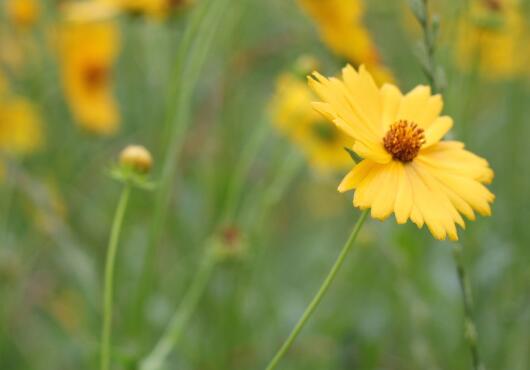
There are many things to pay attention to when it comes to how to water pot marigold, such as water quality requirements and watering frequency in each season. The details are introduced in the watering methods section for pot marigold below, and you can take a look.
2. Watering methods for pot marigold
1. Water quality requirements, add slightly acidic substances
This plant does not actually have very high requirements for water quality, but if you want it to grow better, the water needs some treatment. When watering it, we can appropriately add some slightly acidic substances to improve the plant's growing environment and help it grow better.
2. Watering frequency, depending on the climate
When watering pot marigold, we should pay attention to the interval, and the watering frequency should also be determined according to the situation. Different climates have different requirements. If the plant is cared for outdoors, the watering frequency is slightly higher, generally once every 3-12 days, while indoors it is once every 6-18 days.
3. Watering in summer, once every 9-15 days
Many people think that because summer temperatures are relatively high, more watering is needed. Actually, this is incorrect, because if the temperature is too high, the plant will enter dormancy, so we should reduce the number of waterings. If pot marigold is grown outdoors, we can water once every 9-15 days; if indoors, once every 12-21 days. When watering, it is best to choose evening or morning, because then the temperature difference between the water and the soil will not be too great.
4. Watering in winter, no more than twice a month
When watering pot marigold in winter, the interval needs to be longer. Generally, watering 1-2 times a month is enough, and the plant should be kept dry at all times to avoid frost damage. When watering it in winter, it is best to do so at noon, when the temperature is slowly rising, so the plant will not be frostbitten.
5. Precautions for watering
When watering pot marigold, be careful to control the amount of water. Remember not to water too much. If too much watering causes waterlogging, it is very unfavorable to its growth, and in severe cases root rot may even occur. Everyone should remember this.
Pot marigold potmarigold Pot marigold illustrated guide: how to grow pot marigold / how to propagate pot marigold
Pot marigold profilePot marigold potmarigold
Aliases: calendula, golden marigold, longevity chrysanthemum, sober-up flower, evergreen flower, golden cup
Classification: biennial herbaceous flower
Family and genus: Plantae, Angiosperms, Dicotyledoneae, Asterales, Asteraceae, Calendula
Full bloom period: summer and spring
Pot marigold, also known as calendula, is a plant in the genus Calendula of the Asteraceae family. It is an annual or overwintering herbaceous plant that likes light and is not strict about soil. It can grow well in arid, loose, fertile alkaline soil and tolerates poor soil. It is often used for flowerbed displays. In ancient Western cultures, calendula was used as medicine or dye, and also in cosmetics or as food; the leaves and petals are edible and used as garnish for dishes. It is native to southern Europe. It has medicinal value: anti-inflammatory and antibacterial, clearing heat and reducing internal heat, treating acne and pimples. The flowering period of pot marigold is December-June, with full bloom from March to June. The achene is boat-shaped or claw-shaped, and the fruit ripening period is May-July.
Cultivation methods and precautions for pot marigold Introduction to pot marigold
Pot marigold, also known as calendula, is a plant in the genus Calendula of the Asteraceae family. It is an annual or overwintering herbaceous plant that likes light and is not strict about soil. It can grow well in arid, loose, fertile alkaline soil and tolerates poor soil. It is often used for flowerbed displays.
In ancient Western cultures, calendula was used as medicine or dye, and also in cosmetics or as food; the leaves and petals are edible and used as garnish for dishes. It is native to southern Europe. It has medicinal value: anti-inflammatory and antibacterial, clearing heat and reducing internal heat, treating acne and pimples.
The flowering period of pot marigold is December-June, with full bloom from March to June. The achene is boat-shaped or claw-shaped, and the fruit ripening period is May-July.
Morphological characteristics of pot marigold
Pot marigold grows 30-60 cm tall and is a biennial herbaceous plant, with the whole plant covered in white downy hairs. The leaves are simple and alternate, elliptical or elliptically obovate, with entire margins; the basal leaves have petioles, and the upper leaves clasp the stem at the base.
The capitulum of pot marigold is solitary at the top of the stem, large, 4-6 cm, with one whorl of ligulate flowers, or multiple whorls spreading flat, golden yellow or orange-yellow, and tubular flowers yellow or brown. There are also cultivars with double flowers (actually multiple layers of ligulate flowers), curled petals, green centers, and deep purple flower centers.
The flowering period of pot marigold is December-June, with full bloom from March to June. The achene is boat-shaped or claw-shaped, and the fruit ripening period is May-July.
Ecological habits of pot marigold
Pot marigold likes a sunny, well-lit environment and has strong adaptability. It can tolerate low temperatures of -9°C and is afraid of hot weather. It is not choosy about soil, but loose, fertile, slightly acidic soil is best. It can self-sow, grows quickly, is relatively cold-tolerant, and is not choosy about soil.
Pot marigold tolerates poor, dry soil and cool environments, and grows well in sunny and fertile areas.
Growth patterns of pot marigold
For larger seeds that can be picked up with hands or other tools, place the seeds directly into the substrate and sow them at a spacing of 3 x 3 cm. After sowing, cover with substrate to a thickness 2-3 times that of the seeds.
After sowing, use a sprayer or a fine-holed watering can to moisten the sowing substrate. Later, when the potting soil is slightly dry, water again. Still be careful not to water too forcefully, so as not to wash the seeds out. After normal flowering in early spring, sow in pots in late August, move to 8-10°C for cultivation after frost, place outdoors in a wind-sheltered, sunny spot during the day, and place on an indoor sunny windowsill during severe cold.
Water about once a week to keep the potting soil moist, and apply a compound liquid fertilizer once a month, so that it can continue blooming even in deep winter. Sow in the open field in late August. Pot marigold likes sufficient sunlight, dislikes extreme heat, and is relatively cold-tolerant. Large seedlings can tolerate low temperatures of -9°C, while small seedlings are prone to frost damage. It likes loose, fertile soil with a pH of 6.5-7.5. The suitable temperature for seed germination is 20-22°C, and the suitable temperature for seedling growth is around 15°C.
Cultivation techniques for pot marigold Cultivation points
Pinching
Generally pinch twice before flowering to encourage more flowering branches to sprout:
One to two weeks after potting, or when the seedlings are 6-10 cm tall and have more than six leaves, remove the top shoot and keep the lower 3-4 leaves to encourage branching. Three to five weeks after the first pinching, or when the side branches grow to 6-8 cm long, carry out a second pinching, that is, remove the top shoots of the side branches and keep the 4 leaves below the side branches. After two pinchings, the plant shape will be more ideal and the number of flowers will also be greater.
Humidity management
It likes relatively high air humidity. If the air humidity is too low, individual flowers will fade faster. It also fears rain, and the leaves need to stay dry at night. The most suitable relative air humidity is 65-75%.
Temperature management
It likes a warm climate and dislikes extreme heat. When the summer temperature is above 34°C, growth is obviously poor. It is not tolerant of frost and cold, and enters dormancy or dies when the winter temperature is below 4°C. The most suitable growth temperature is 15-25°C.
Generally sown in autumn and winter to avoid high summer temperatures.
Light management
In spring, summer, and autumn, it needs to be cared for under shaded conditions. When the temperature is relatively high (daytime temperature above 25°C), if it is placed in direct sunlight, the leaves will noticeably become smaller, the internodes of the branches will shorten, the lower leaves will turn yellow and fall off, and growth will be very slow or it will enter a semi-dormant state.
In winter, because the temperature is not very high, it should be given direct sunlight to help it carry out photosynthesis and form flower buds, bloom, and set fruit.
After being kept indoors for a period during the flowering stage (10-15 days), it should be moved outdoors to a shaded (heat-preserving) place for a period (about one month), and alternated in this way to help the plant accumulate nutrients and continue blooming.
Fertilizer and water management
Like other herbaceous flowers, it has relatively high fertilizer and water requirements, but the fertilization (and watering) principle of "light fertilizer applied frequently, small amounts but many times, complete nutrition" should be followed, and after fertilizing, the leaves and flowers should be kept dry at night:
Spring and autumn
These two seasons are its peak growth periods. Fertilizer and water management follows the cycle of "Huabao" - "Huabao" - clear water - "Huabao" - "Huabao" - clear water (at least two "Huabao" applications per week). The interval is roughly: 1-4 days for outdoor care; 2-6 days for indoor care. The interval is shorter on sunny days or during high temperatures, and longer or no watering on rainy days or during low temperatures.
Summer
During the high-temperature period in summer, it often enters a dormant state and has low fertilizer and water requirements, and may even need fertilizer and water control. Fertilizer and water management follows the cycle of "Huabao" - clear water - clear water - "Huabao" - clear water - clear water. The interval is roughly: 3-5 days for outdoor care, and 4-7 days for indoor care. Watering should be arranged as much as possible in the morning when the temperature is lower, and the leaves should be kept dry at night. The plant should also be misted frequently.
Winter
During the winter dormancy period, the main task is to control fertilizer and water. The interval is roughly 7-10 days. Watering should be arranged as much as possible at noon on sunny days when the temperature is relatively high.
Pruning
Cut off branches with old and yellow leaves once every two months. As long as the temperature is suitable, it can bloom in all four seasons.
Growth patterns
Pot marigold plants are low-growing and dense, with flower colors including pale yellow, orange-red, yellow, and others, bright and eye-catching. It is a common herbaceous flower in early spring gardens, suitable for central squares, flowerbeds, and flower borders;
For larger seeds that can be picked up with hands or other tools, place the seeds directly into the substrate and sow them at a spacing of 3 x 3 cm. After sowing, cover with substrate to a thickness 2-3 times that of the seeds. After sowing, use a sprayer or a fine-holed watering can to moisten the sowing substrate. Later, when the potting soil is slightly dry, water again. Still be careful not to water too forcefully, so as not to wash the seeds out. After normal flowering in early spring, sow in pots in late August, move to 8-10°C for cultivation after frost, place outdoors in a wind-sheltered, sunny spot during the day, and place on an indoor sunny windowsill during severe cold. Water about once a week to keep the potting soil moist, and apply a compound liquid fertilizer once a month, so that it can continue blooming even in deep winter.
Cultivation methods for pot marigold Cultivation and care
When the seedlings have 3 true leaves, transplant once. When the seedlings have 5-6 true leaves, plant them in 10-12 cm pots. Seven to ten days after planting, pinch to encourage branching, or spray the leaves 1-2 times with a 0.4% daminozide solution to control plant height. During the growing period, fertilize once every half month, or use "Huiyou" 20-20-20 general fertilizer. With sufficient fertilizer, pot marigold blooms more and larger. On the contrary, with insufficient fertilizer, the flowers noticeably become smaller and degenerate. If seeds are not being kept during the flowering period, cut off faded flowers to help flower branches sprout, bloom more, and extend the viewing period. To keep seeds, select plants with large, brightly colored flowers and pure varieties. Seeds should be collected on sunny days to prevent shattering.
During the growth period of pot marigold, the soil should be kept moist. Apply diluted decomposed urine at 10 times water once every 15-30 days, and stop fertilizing by the end of February. When pot marigold reaches the late seedling stage and has 4-5 leaves, pinching the tips (that is, pinching) can promote side branch development and increase the number of flowers. Removing the tops immediately after the first flush of flowers fades can also encourage side branches to bloom again.
In addition, sow seeds after low-temperature treatment: place the seeds in a 0°C refrigerator for 24 hours, then take them out and sow directly in the open field. The seedbed should be shaded. They germinate in mid-August. Apply diluted decomposed manure water once a week, and they can also bloom in late September.
The flowering period of pot marigold can be adjusted by changing cultivation measures. The main adjustment measures are as follows:
1. After normal flowering in early spring, promptly remove the faded flower stalks to encourage new branches and flowers; strengthen water and fertilizer management, and it can bloom again in September-October.
2. Sow in pots in late August
3. Sow directly in the courtyard in late March or early April. After the seedlings emerge fully, thin or transplant appropriately, and provide reasonable fertilizer and water conditions. It can bloom in early June. Because pot marigold needs a longer low-temperature stage for flower formation, spring-sown plants grow weaker and have smaller flowers than autumn-sown ones.
4. Sow in the open field in late August. When the minimum temperature rises to 0°C, remove the straw curtain immediately. At this time, water appropriately to keep the soil moist, and at the same time apply diluted cake fertilizer water once every 15 days or so. In this way, by May Day, pot marigold can bloom beautifully.
In addition, place pot marigold seeds in a 0°C refrigerator for several days for low-temperature treatment, then sow in the open field in early August, and they can also bloom in late September.
Propagation methods for pot marigold
Pot marigold is generally propagated by seeds, and excellent varieties can also be expanded by cuttings. Pot marigold seeds vary greatly in size. For example, after 72 hours of germination promotion, the germination rate of large seeds is 62.5%, lower than that of small seeds at 22.5%, so use large seeds as much as possible when raising seedlings. After collecting seeds, they can be placed in a ventilated indoor area to dry in the shade, and must not be exposed to the hot sun.
Sowing propagation
Autumn sowing is often carried out after mid-to-late September: substrate disinfection Disinfect the substrate used for sowing. The best method is to put it in a pot and heat it until hot, which will scald all pests and diseases to death. In addition, sow seeds after low-temperature treatment: place the seeds in a 0°C refrigerator for 24 hours, then take them out and sow directly in the open field. The seedbed should be shaded. They germinate in mid-August. Apply diluted decomposed manure water once a week, and they can also bloom in late September.
Germination promotion
Soak the seeds in warm hot water (temperature similar to face-washing water) for 3-10 hours, until the seeds absorb water and swell. For very common seeds that germinate easily, this step can be skipped.
Sowing
For tiny seeds that are difficult to pick up with hands or other tools, you can moisten one end of a toothpick with water and stick the seeds one by one onto the surface of the substrate, cover with substrate 1 cm thick, then place the sowing pot into water with the water depth at 1/2-2/3 of the pot height, and let the water slowly soak up (this method is called the "pot soaking method");
so as not to wash the seeds out;
Management after sowing
After autumn sowing, if a cold wave or low temperature occurs, you can wrap the flower pot with plastic film to help keep it warm and moist. After the seedlings emerge, uncover the film promptly, and let the seedlings receive sunlight before 9:30 a.m. or after 3:30 p.m. each day, otherwise the seedlings will grow very weak. After most of the seeds have emerged, appropriate thinning is needed: pull out diseased and unhealthy seedlings so that the remaining seedlings have some space between them. When most of the seedlings have grown 3 or more leaves, they can be transplanted into pots.
Cutting propagation
Cutting substrate
This refers to nutrient soil, river sand, peat soil, and other materials used for cuttings. For home cuttings, it is difficult to obtain an ideal cutting substrate due to limited conditions. It is recommended to use the pre-mixed and sterilized cutting substrate provided by this site. Medium-coarse river sand can also be used, but it should be rinsed several times with clean water before use. Do not use sea sand or river sand from saline-alkali areas, as they are not suitable for the growth of flowering plants.
Selection of cutting branches
The branches used for cuttings are called cuttings. Usually, in combination with pinching, the thick, pest-free top shoots that are removed are used as cuttings, and the top shoots are used directly for cuttings.
Management after cutting
Temperature
The optimal temperature for rooting of cuttings is 18°C-25°C. Below 18°C, rooting of cuttings is difficult and slow; above 25°C, the cut ends of cuttings are easily infected by pathogens and rot, and the higher the temperature, the greater the proportion of rot. If low temperature occurs after cutting, the main measure to keep warm is to wrap the flower pot or container used for cuttings with film. If the temperature is too high after cutting, the main cooling measure is to shade the cuttings, blocking 50-80% of sunlight. At the same time, mist the cuttings 3-5 times a day. On sunny days with higher temperatures, mist more often; on rainy days with lower temperatures and higher humidity, mist less often or not at all.
Humidity
After cutting, the relative air humidity must be kept at 75-85%. Humidity can be increased by misting the cuttings 1-3 times a day. On sunny days, the higher the temperature, the more often you mist; on rainy days, the lower the temperature, the less often you mist or do not mist. However, excessive misting makes cuttings susceptible to infection by pathogens and rot, because many kinds of pathogens exist in water.
Light
Cutting propagation cannot do without sunlight, but the stronger the light, the higher the temperature inside the cuttings, the more vigorous the transpiration of the cuttings, and the more water consumed, which is not conducive to the survival of the cuttings. Therefore, after cutting, 50-80% of sunlight must be blocked. After the root system grows out, gradually remove the shading. On sunny days, remove the shade net at 4:00 p.m. each day and cover it again before 9:00 a.m. the next day.
Potting or transplanting
When potting small seedlings, first place a 2-2 cm thick layer of coarse substrate or ceramsite at the bottom of the pot as a drainage layer, sprinkle a layer of fully decomposed organic fertilizer on top as base fertilizer, about 1-2 cm thick, then cover with another layer of substrate about 1-2 cm thick, and then place the plant in, so as to separate the fertilizer from the root system and avoid burning the roots.
For the potting substrate, choose one of the following. Vegetable garden soil: furnace slag = 3:1; or garden soil: medium-coarse river sand: sawdust (mushroom residue) = 4:1:2; or one of paddy soil, pond mud, or leaf mold. Or peat + perlite + ceramsite = 2 parts + 2 parts + 1 part; vegetable garden soil + furnace slag = 3 parts + 1 part; peat + furnace slag + ceramsite = 2 parts + 2 parts + 1 part; sawdust + vermiculite + medium-coarse river sand = 2 parts + 2 parts + 1 part. After potting, water thoroughly once and keep in a slightly shaded environment for one week of care.
When transplanting small seedlings, first dig the planting hole, sprinkle a layer of organic fertilizer at the bottom of the planting hole as bottom fertilizer (base fertilizer), about 4-6 cm thick, then cover with a layer of soil and place the seedling in, so as to separate the fertilizer from the root system and avoid burning the roots. After placing the seedling in, backfill the soil to cover the root system, press the soil firm with your foot, and water thoroughly once.
Disease control of pot marigold
Pot marigold often suffers from fusarium wilt and downy mildew. It can be controlled by spraying with a 500-fold solution of 65% zineb wettable powder.
When the temperature rises in early summer, rust disease is often found on pot marigold leaves. Spray with a 2000-fold solution of 50% carboxin wettable powder. In early spring during the flowering period, it is easily damaged by red spiders and aphids, which can be killed by spraying with a 1000-fold solution of 40% omethoate emulsifiable concentrate.
Main varieties of pot marigold Variety classification
BonBon, plant height 30 cm, compact flowers, flower diameter 5-7 cm, flower colors include yellow, apricot yellow, orange, and others.
FiestaGitana, plant height 25-30 cm, early-flowering type, double flowers, flower diameter 5 cm, flower colors include yellow, orange, and bicolor, etc.
Kablouna series, plant height 50 cm, large-flowered type, flower colors include golden yellow, orange, lemon yellow, apricot yellow, etc., with dark flower centers. Among them, the 1998 new variety KablounaLemonCream has creamy ligulate flowers and a lemon-yellow flower center.
TouchofRed, plant height 40-45 cm, double flowers, flower diameter 6 cm, flower colors include red, yellow, and red/yellow bicolor, with the tip of each ligulate flower appearing red.
Gem series, plant height 30 cm, double flowers, flower diameter 6-7 cm, flower colors include lemon yellow and golden yellow. Among them, DwarfGem is more famous.
Shengri Jita, an extremely dwarf type, large flowers, double, flower diameter 8-10 cm.
Xiangrui, an extremely dwarf type, strong branching, large flowers, double, flower diameter 7-8 cm.
There are also LemonQueen and OrangeKing, etc.
Distribution area of pot marigold
Pot marigold is native to western Europe, the Mediterranean coast, North Africa, and West Asia, and is now cultivated all over the world.
Uses of pot marigold Potted plant uses
Pot marigold plants are low-growing and dense, with flower colors including pale yellow, orange-red, yellow, and others, bright and eye-catching. It is a common herbaceous flower in early spring gardens, suitable for central squares, flowerbeds, and flower borders;
Pot marigold is one of the main beautification materials for spring flowerbeds. With bright colors and dazzling golden light, it can be planted in flowerbeds or formed into colorful ribbons. It can also be potted and used as cut flowers.
Greening use
Calendula (pot marigold) has strong adaptability and a certain degree of cold tolerance. It can be sown in an open-field seedbed in early October of the previous year, and once it grows 3 true leaves and the weather turns colder, it can be covered with a small arch shelter to overwinter. Flowers can be seen in late March of the following year; after Qingming, it can be transplanted into open-field flower beds.
It can also be sown in a small open-field arch shelter from late February to early March, then transplanted into open-field flower beds in mid-to-late April. Flowers can be seen in early May. As nursery stock for landscaping, it can create a beautiful display. Two points should be noted when sowing: first, the soil covering should be thin, just enough that the seeds are no longer visible; second, the sowing rate should be generous.
Ornamental value
Suitable for planting in central plazas, flower beds and flower borders, and can also be used as an edging flower for lawns or grown in pots for ornamental display. Large-flowered varieties with long stems can be used as cut flowers.
Calendula has a very strong resistance to sulfur dioxide and also has some resistance to cyanide and hydrogen sulfide. It is an excellent pollution-resistant flower and a main material for spring flower beds, and can be used as a cut flower or potted plant.
Calendula is rich in a variety of vitamins, especially vitamin A and vitamin C; almost every part can be eaten; its petals have a cosmetic function. The flowers contain carotenoids, lycopene, flavoxanthin, rubixanthin, volatile oil, resin, mucilage, malic acid, etc. The roots contain bitter substances and arnidiol; the seeds contain glycerides, wax alcohols and alkaloids. Added to shampoo, it can lighten hair color.
Calendula's efficacy and effects, edible and cosmetic value
Calendula is rich in a variety of vitamins, especially vitamin A and vitamin C; almost every part can be eaten; its petals have a cosmetic function. The flowers contain carotenoids, lycopene, flavoxanthin, rubixanthin, volatile oil, resin, mucilage, malic acid, etc. The roots contain bitter substances and arnidiol; the seeds contain glycerides, wax alcohols and alkaloids. Added to shampoo, it can lighten hair color.
Lutein
In light of China's actual conditions, using marigold petals as a raw material to extract lutein oil and prepare lutein is a fairly promising development direction. Marigold petals are subjected to fermentation -> dehydration -> granulation -> drying to obtain dried flower granules, then extracted with n-hexane or another solvent to obtain an oleoresin. After removing the solvent, the product is dissolved in ethanol, then saponified with concentrated alkali, and the crystalline product is separated by centrifugation, then recrystallized to purify the product.
Calendula's dietary therapy or medicinal value
The medical information and health dietary therapy information on Hugarden Network is for reference only and cannot be used as a basis for diagnosis or medical treatment. Any health issues should be consulted with professional medical staff, and any disease treatment should follow a doctor's advice.
Ultimate flower-care mission: to love yourself, start from reality and strictly follow a doctor's advice. Toward illness, do not be careless, do not delay, do not give up hope; face it bravely, warm the silent world with love, and care for the flower field within your heart with care.
Medicinal value
Effects: anti-inflammatory and antibacterial, clearing heat and reducing internal heat, treating acne and pimples.
Calendula flowers and leaves have anti-inflammatory and antibacterial effects, especially with relatively good effects against Staphylococcus and Streptococcus. Its antibacterial components are soluble in alcohol but not in water.
Calendula works relatively well in an alkaline environment. Animal tests have shown that the flower extract has a sedative effect on the central nervous system and reduces reflex excitability; intravenous injection can cause a drop in blood pressure, enhance cardiac activity, increase heartbeat amplitude, slow heart rate, promote bile secretion in dogs, and accelerate wound healing.
In European folk medicine, calendula is applied externally for various inflammations of the skin and mucous membranes, and can also be taken internally to treat various inflammations and ulcers (such as gastric and duodenal ulcers, gastritis, hepatobiliary disorders, etc.). Used for digestive tract cancer, it can reduce toxic symptoms and improve appetite, sleep, etc.; it has also been used for irregular menstruation. The tincture has a killing effect on viruses in test tubes, but for viral pneumonia produced in mice by A2Frunzefluvirus, no therapeutic effect was shown. The aqueous extract of the leaves has the effect of accelerating blood coagulation (shortening prothrombin time), but this is related to the tannins and calcium salts it contains. Root: promotes qi and invigorates blood. Flower: cools blood and stops bleeding.
Pharmacological effects
Calendula used for digestive tract cancer can reduce toxic symptoms and improve appetite, sleep, etc.; it has also been used for irregular menstruation. The tincture has a killing effect on viruses in test tubes, but for viral pneumonia produced in mice by A2Frunzefluvirus, no therapeutic effect was shown. The aqueous extract of the leaves has the effect of accelerating blood coagulation (shortening prothrombin time), but this is related to the tannins and calcium salts it contains.
Nature and flavor
Mild, neutral.
Functions and indications
Root: promotes qi and invigorates blood. Flower: cools blood and stops bleeding.
Selected formulas
① To treat stomach cold pain: fresh calendula root 50-100 g. Decoct in water, or decoct in wine or water.
② To treat hernia: fresh calendula root 100-200 g. Decoct in wine or water.
③ To treat abdominal masses: dried calendula root 50-100 g. Decoct in wine or water.
④ To treat intestinal wind and bloody stool: ten fresh calendula flowers, with an appropriate amount of rock sugar added. Decoct in water. (From "Fujian Chinese Herbal Medicine" onward for nature, flavor, and below.)
Calendula's cultural background and cultivation history
Calendula was initially regarded by Europeans as a lawn weed, and later the British and Northern Europeans used it as a lawn accent flower for ornamental purposes.
Thompson & Morgan of the United Kingdom and Danziger Flower Farm of Israel are well known in Europe for calendula breeding and production.
Calendula's flower language
Calendula flower language: the meaning of reluctant parting and separation.
Calendula pictures
How to propagate calendula, calendula propagation methods / seed propagation / cutting propagation
Calendula is a plant with a relatively showy appearance and high ornamental value. Many people in China grow it. As more people grow it, questions about its propagation have also attracted concern. As for how to propagate calendula, it is mainly by seed sowing and cuttings. What exactly are calendula's propagation methods? Let us learn about them together below.
I. How to propagate calendula, sowing / cuttings
As for how to propagate calendula, it is mainly divided into two methods: seed propagation and cutting propagation. As long as the correct operating methods are mastered, the survival rate of both methods is very high. The details are introduced in the section on calendula propagation methods below. Let us take a look below.
II. Calendula propagation methods (seed propagation)
1. Seed collection
Calendula fruit generally matures successively around May to July each year. During this period, we can collect it. After collection, we should dry the fruit in the sun, then rub it apart to remove impurities, select the pure seeds and store them, and wait until autumn to sow.
2. Seed pre-sprouting
Before sowing and propagating calendula, we need to first soak the seeds in warm water for 3-10 hours to pre-sprout them. After the seeds begin to absorb water and swell, take them out and sow. This can make the seeds germinate more easily. Of course, seeds that germinate relatively easily can skip this step.
3. Sowing method
Because calendula seeds are relatively small, when sowing we can use a toothpick dipped in water to stick the seeds one by one and place them on the soil, then cover them with 1-2 cm of soil and water. When watering, we can place the flowerpot about halfway into water, then let the water slowly seep into the soil.
III. Calendula propagation methods (cutting propagation)
1. Substrate selection
Cutting propagation is one of the main propagation methods for calendula. Before propagating, we first need to choose a substrate. Generally, it is best to choose fertile, slightly acidic humus soil. This kind of substrate has relatively good drainage and aeration, allowing it to absorb nutrients better, and it is not prone to waterlogging.
2. Substrate disinfection
After choosing the substrate, we need to disinfect it to avoid carrying pests and diseases that could infect the plant. There are two disinfection methods. One is to break it apart and spread it flat in the sun to disinfect it. The other is more direct: we can put it in a pot and stir-fry it. If there are pests or diseases, they will also be completely eliminated by the high temperature.
3. Cutting selection
After choosing the substrate, we also need to choose cuttings. This has a great impact on the survival rate of cuttings. Generally, it is best to choose relatively robust branches, as the survival rate is higher. If you choose branches that already look weak and slender, then the cutting can basically be declared a failure.
4. Cutting method
Calendula's cutting method is very simple. First, we can use chopsticks to poke a hole in the substrate, then insert the cutting two-thirds of the way into it, after which we can water. Be careful to water thoroughly at one time, and after about 20 days it will take root.