How to Grow Fittonia? Detailed Guide to Cultivation Methods, Precautions and Tips for a Full, Bushy Plant
Because Fittonia has many benefits and effects, and its cultivation method is relatively simple, more and more people are growing it. This small, delicate plant is generally grown as a potted plant or in hanging baskets. So how do you grow Fittonia? How do you get Fittonia to grow into a full, bushy pot? We have put together the cultivation methods and precautions for Fittonia for your reference.
The Growing Environment of Fittonia
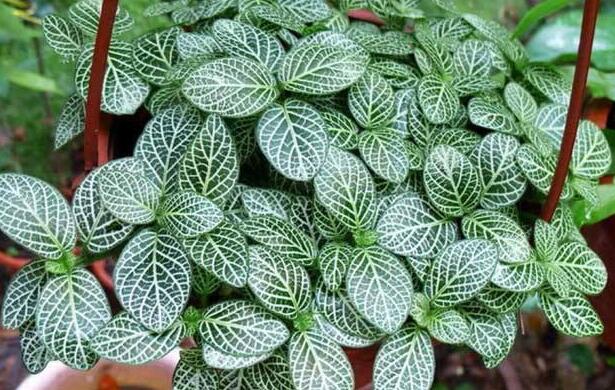
Native to the tropical regions of South America, Fittonia likes a hot, humid, semi-shaded environment. It is quite sensitive to temperature and cannot tolerate low temperatures. As for soil, it prefers sandy acidic soil; it has high water requirements and the soil must be kept moist; as for light, it is rather afraid of strong light, so it should be shaded appropriately in summer.
Fittonia Cultivation Methods and Precautions
1. What Kind of Pot to Use for Fittonia
The pot used for planting Fittonia should mainly be one that is fairly breathable, and preferably light in color so that it sets off the leaf veins and leaf color of the Fittonia to better effect. Suitable pots include colorful ceramic pots and the like. The size does not need to be too large; generally a diameter of 10 cm and a height of about 13 cm is enough.
2. Selection of Soil
As for soil, it is best to choose a sandy loam containing humus. When potting, you can first put some ceramic granules or tiles at the bottom of the pot as a drainage layer to prevent the water poured in from flowing out quickly through the drainage holes. Then spread on some base fertilizer, and afterwards add nutrient soil made by mixing peat soil, leaf mold and river sand in equal amounts.
3. Temperature Control
Since Fittonia is quite sensitive to temperature, you must pay attention to observing temperature changes when growing it. In this respect, how do you grow Fittonia? The answer is that the optimal growing temperature is 18-25°C, but you only need to ensure the temperature stays above 12°C; below 8°C it is very easily frost-damaged.
4. Adjusting Light
Fittonia likes a semi-shaded environment, so in terms of light you should try to avoid direct sunlight on it, but it must not lack light either. The ideal position is by a south-facing window, or under an eaves where it can receive scattered light; light but not too strong is the most suitable.
5. Appropriate Amounts of Fertilizer and Water
Fertilizing and watering are equally important for Fittonia. Too little watering will make the leaves thin and lusterless, while too much watering will make the leaves curl up and lose their ornamental value. Therefore, watering should follow the principle of keeping the soil moist; not waterlogged and not going a long time without watering are the most basic requirements. Fertilizing should follow the principle of light fertilizer applied frequently, and attention should be paid to balanced nutrition.
How to Get Fittonia to Grow into a Full, Bushy Pot
1. Key Points of Watering
As mentioned earlier, the principle of watering is not waterlogged and not going a long time without watering, while the key points are that watering is best done in the morning; when summer temperatures are high you should also spray water, while in winter you can water at noon when the temperature is relatively high, and in winter you should also pay attention to reducing watering as much as possible.
2. Propagation Techniques
Fittonia can be propagated in three ways: division, cuttings and tissue culture. Here we suggest using division or cuttings. Each spring, select robust branches on the Fittonia, cut off 10 cm and insert them into a sand bed. After keeping the soil moist they will root quickly; the operation is simple and survival is easy.
3. Pruning Methods
Fittonia is a plant that tolerates pruning fairly well, and since it grows quickly it needs timely pruning. So in terms of pruning, how do you grow Fittonia? Each spring, cut off its dense branches, thin and weak leaves, and withered, yellowed, old branches and leaves. In addition, remove yellow leaves promptly when they appear, and in summer you can also shape it according to your preference.
4. Repotting Methods
Among the cultivation methods and precautions for Fittonia, repotting is in fact also indispensable. Botanists advocate repotting once a year, but here we suggest that growers repot according to the condition of the soil. If the soil is fairly fertile, you can repot once every 2 years. Repotting can also be combined with pruning, which helps Fittonia grow into a full, bushy pot.
How to Grow Fittonia: Fittonia Cultivation Methods and Precautions
Fittonia Cultivation Methods. Fittonia is currently a very popular small potted variety in Europe and America. It has a light and graceful posture and a small, delicate plant, and is deeply loved by people. So how do you grow Fittonia?
Fittonia Cultivation Method 1: Light and TemperatureFittonia rather likes a semi-shaded growing environment and does not like direct sunlight. In summer, Fittonia needs to be shaded, blocking out most of the sunlight. In winter, Fittonia can be moved indoors to a place that receives sunlight for care.
The suitable temperature for Fittonia growth is between 18-24°C. It is fairly intolerant of cold, and the overwintering temperature in winter is best above 10°C, not lower than 8°C.
2. Soil SelectionWhen planting Fittonia, you can choose soil rich in humus. It requires strong breathability and also strong water retention capacity; peat soil can also be used.
3. Watering and FertilizingWatering Fittonia requires mastering certain techniques, because the root system of Fittonia is relatively shallow, so when watering, whether there is too much or too little water, the effects are both bad. Basically, the potting soil should be kept slightly moist; it must not be too dry or too wet. Too dry will cause the leaves to lack water, and too wet will cause the roots and stems of Fittonia to rot.
Fittonia has relatively high fertilizer needs, but fertilizing must follow the rule of light application frequently. During the period of vigorous growth of Fittonia, you can fertilize Fittonia once every half month. To make the leaves emerald green, you can spray some manganese sulfate solution on the leaves.
Fittonia Cultivation Precautions 1: Pests and DiseasesDuring the growth process of Fittonia, pests and diseases will often appear, including diseases such as leaf rot and root rot, as well as pests such as scale insects, snails and red spider mites.
2. Fittonia DiseasesFor leaf rot, spray with a 1000-fold dilution of 25% carbendazim wettable powder for control. For root rot, soak the roots in a 1000-fold dilution of streptomycin to sterilize them.
3. Pinching FittoniaDuring the growing season of Fittonia, in order to encourage it to branch more and to control the height of the plant, it needs to be pinched frequently; this is beneficial for vigorous growth of Fittonia.
4. Applying FertilizerWhen fertilizing, Fittonia also follows the fertilizing principle of “light fertilizer applied frequently, small amounts but many times, complete nutrition”. Applying a compound fertilizer once a month as a top dressing is enough.
5. Key Points of WateringWatering Fittonia should be arranged as much as possible in the morning when the temperature is lower. In summer, water in the morning or evening when the temperature is low, and also spray the plant frequently. In winter: during the winter dormant period, arrange the watering time as much as possible at noon on sunny days when the temperature is relatively high.
Fittonia Cultivation Methods
Light and Temperature
Fittonia rather likes a semi-shaded growing environment and does not like direct sunlight. In summer, Fittonia needs to be shaded, blocking out most of the sunlight. In winter, Fittonia can be moved indoors to a place that receives sunlight for care.
The suitable temperature for Fittonia growth is between 18-24°C. It is fairly intolerant of cold, and the overwintering temperature in winter is best above 10°C, not lower than 8°C.
Soil
When planting Fittonia, you can choose soil rich in humus. It requires strong breathability and also strong water retention capacity; peat soil can also be used.
Watering and Fertilizing
Watering Fittonia requires mastering certain techniques, because the root system of Fittonia is relatively shallow, so when watering, whether there is too much or too little water, the effects are both bad. Basically, the potting soil should be kept slightly moist; it must not be too dry or too wet. Too dry will cause the leaves to lack water, and too wet will cause the roots and stems of Fittonia to rot.
Fittonia has relatively high fertilizer needs, but fertilizing must follow the rule of light application frequently. During the period of vigorous growth of Fittonia, you can fertilize Fittonia once every half month. To make the leaves emerald green, you can spray some manganese sulfate solution on the leaves.
Propagation Methods
Fittonia is usually propagated by division, cuttings and tissue culture.