How to Grow Calendula (Pot Marigold): Fertilize Lightly, Avoid Strong Light
Calendula is a highly ornamental flowering plant that can be seen in many parts of China, but if you want to grow it well, there are many things to pay attention to. So how do you grow calendula? What are the methods and precautions for growing calendula? Let's take a look below.
1. How to Grow Calendula: Understand Its Habits
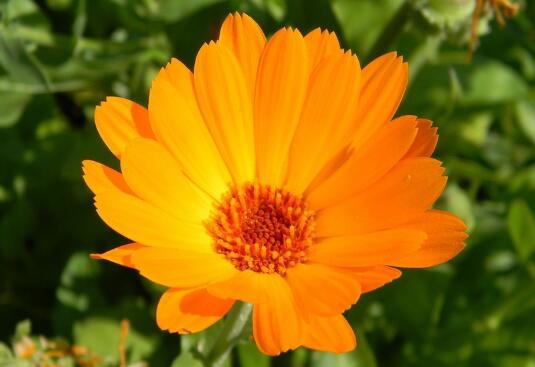
To know how to grow calendula, we first need to understand its growth habits. It is a plant that likes light, prefers slightly acidic soil, and is fairly cold-tolerant, but it is quite afraid of hot weather, so shading is still necessary in summer.
2. Methods and Precautions for Growing Calendula
1. Soil selection: slightly acidic
When growing calendula, choosing the soil is a very important point and is the step that lays the foundation. Calendula prefers slightly acidic humus soil. This kind of soil has very good drainage and aeration, allowing calendula to absorb nutrients better and grow more vigorously.
Note: Although calendula prefers slightly acidic soil, it should not be too acidic, otherwise it will affect its growth, so everyone needs to pay attention to this point.
2. Fertilization requirements: apply light fertilizer
During its growth, calendula has a fairly high demand for fertilizer. Especially after entering the growing period, it basically needs fertilizing once every half month. If too little fertilizer is applied, it will affect the number of flowers, the size of the flowers will also become smaller, and in severe cases it may even fail to bloom.
Note: When fertilizing calendula, be careful that the fertilizer needs to be diluted with water first before application, so that it can be absorbed better. If concentrated fertilizer is applied directly, it can easily burn the plant, causing the leaves to turn yellow and dry up.
3. Light requirements: provide shade in summer
Calendula is a light-loving plant. In spring and autumn, when the light is relatively suitable, we can grow it outdoors and let it receive light all day. However, it is quite afraid of hot weather, so after summer arrives, shading is still necessary.
Note: Summer is the hottest season of the year, so at this time it is best to keep calendula in a semi-shaded indoor spot, and the environment should be ventilated to avoid letting it grow under high temperatures.
4. Humidity requirements: 75-85%
Calendula likes to grow in high-humidity environments. During the growing period, it is best to keep environmental humidity between 75-85%. We can maintain humidity by misting the plant, generally once or twice a day is enough.
Note: On cloudy and rainy days, we do not need to mist it, otherwise excessive humidity may lead to some pathogen infections and cause adverse reactions in the plant. So we should manage environmental humidity according to the weather.
5. Regular pruning: once every two months
During the growth of calendula, we also need to regularly prune some dead branches and yellow leaves. This not only maintains the plant's shape but also promotes branching, helping the plant grow into a full pot. We can set the pruning interval at once every two months.
Note: Before pruning calendula, it is best to disinfect the pruning tools, so as to avoid bacteria on them infecting the plant, which would be very troublesome.
6. Pest and disease control: deal with problems promptly, do not delay
During the growth of calendula, if we care for it improperly, it is very easy for pests, diseases, and other problems to appear. These problems are extremely harmful to the plant, not only affecting its ornamental value, but in severe cases also causing the plant to dry up and die.
Control method: When problems such as pests and diseases appear, we must deal with them promptly. If delayed too long, the damage to the plant will be great and handling will become more troublesome. For specific control methods, you can refer to the article on calendula pest and disease control. I will not introduce them in too much detail here.
How to Grow Calendula? Methods and Precautions for Growing Calendula
Calendula, also known as golden cup, sober-up flower, everlasting chrysanthemum, etc., is an annual herbaceous plant of the genus Calendula in the Asteraceae family. Calendula flowers are gorgeous and varied, with high ornamental value, and are often planted indoors in courtyards. At the same time, calendula also has effects such as improving appetite and lowering blood pressure, so it is deeply loved. So, how do you grow calendula? The methods and precautions for growing calendula are introduced below.
Image: Calendula
1. Methods for Growing Calendula
1. Shade in spring, summer, and autumn:Calendula cannot be exposed to strong sunlight. In spring, summer, and autumn, shade it in time. If the daytime temperature exceeds 25°C, do not place it directly in sunlight, otherwise the leaves will noticeably become smaller, the internodal distance will shrink, the lower leaves will gradually turn yellow and fall off, and the plant's growth will gradually slow or even enter a semi-dormant state. In winter, because the temperature is not high, you can provide direct light to promote photosynthesis, which helps calendula form flower buds, bloom, and bear fruit. After the plant blooms, you can keep it indoors for 10-15 days, then move it to a shaded outdoor environment for one month. Alternating care like this helps the plant accumulate nutrients and extends the flowering period.
2. Needs warmth, avoid extreme heat:Calendula likes a warm climate and is afraid of extreme heat. When the summer temperature is above 34°C, growth will be poor; it is not tolerant of frost, and when the winter temperature is below 4°C, it will enter dormancy or even die. The most suitable growing temperature for calendula is 15-25°C. During year-round care, pay attention to controlling the temperature well, ventilate by opening windows in time, and control indoor temperature by misting to cool it down.
Image: Calendula
3. Pinching and pruning:Every two months, cut off branches with old and yellow leaves. As long as the temperature is suitable, it can bloom in all four seasons. Before flowering, generally pinch twice to encourage more flowering branches: one to two weeks after potting, or when the seedlings are 6-10 cm tall and have six or more leaves, remove the top shoot and keep the lower 3-4 leaves to encourage branching. Three to five weeks after the first pinching, or when the side branches grow to 6-8 cm long, perform the second pinching, that is, remove the top shoots of the side branches and keep the 4 leaves below the side branches. After two pinchings, the plant shape will be more ideal and the number of flowers will also be greater.
4. Control humidity and mist in time:Calendula likes a moist environment. Keep humidity at 75-85%, and mist in time during care to increase humidity, 1-3 times a day. On sunny days when the temperature is higher, appropriately increase the number of mistings; on cloudy and rainy days when the temperature is lower, appropriately reduce the number of mistings. However, if misted excessively, the heading stage is easily infected by pathogens and rots, so when misting, also pay attention to water quality.
Image: Calendula
2. Precautions for Growing Calendula
1. Pay attention to water control:Do not water too much during the growing period; just keep the soil moist. When the temperature is higher, mist in time to increase air humidity.
2. Pest and disease control:Common pests and diseases of calendula include fusarium wilt and downy mildew. Spray 500 times diluted zineb wettable powder in time for control. In early summer, as the temperature gradually rises, calendula often develops leaf spot disease. Spray 2000 times diluted carboxin wettable powder for control.
[Editor's Conclusion]Calendula likes a sunny environment and grows well in sunny and fertile areas, so attention must be paid during cultivation. The methods and precautions for growing calendula have been introduced above. Have you all learned them?
Methods and Precautions for Growing Calendula
Methods for Growing Calendula
Shade in spring, summer, and autumn
Calendula cannot be exposed to strong sunlight. In spring, summer, and autumn, shade it in time. If the daytime temperature exceeds 25°C, do not place it directly in sunlight, otherwise the leaves will noticeably become smaller, the internodal distance will shrink, the lower leaves will gradually turn yellow and fall off, and the plant's growth will gradually slow or even enter a semi-dormant state.
In winter, because the temperature is not high, you can provide direct light to promote photosynthesis, which helps calendula form flower buds, bloom, and bear fruit.
After the plant blooms, you can keep it indoors for 10-15 days, then move it to a shaded outdoor environment for one month. Alternating care like this helps the plant accumulate nutrients and extends the flowering period.
Needs warmth, avoid extreme heat
Calendula likes a warm climate and is afraid of extreme heat. When the summer temperature is above 34°C, growth will be poor;
it is not tolerant of frost, and when the winter temperature is below 4°C, it will enter dormancy or even die.
The most suitable growing temperature for calendula is 15-25°C. During year-round care, pay attention to controlling the temperature well, ventilate by opening windows in time, and control indoor temperature by misting to cool it down.
Pinching and pruning
Every two months, cut off branches with old and yellow leaves. As long as the temperature is suitable, it can bloom in all four seasons.
Before flowering, generally pinch twice to encourage more flowering branches: one to two weeks after potting, or when the seedlings are 6-10 cm tall and have six or more leaves, remove the top shoot and keep the lower 3-4 leaves to encourage branching. Three to five weeks after the first pinching, or when the side branches grow to 6-8 cm long, perform the second pinching, that is, remove the top shoots of the side branches and keep the 4 leaves below the side branches. After two pinchings, the plant shape will be more ideal and the number of flowers will also be greater.
Control humidity and mist in time
Calendula likes a moist environment. Keep humidity at 75-85%, and mist in time during care to increase humidity, 1-3 times a day. On sunny days when the temperature is higher, appropriately increase the number of mistings; on cloudy and rainy days when the temperature is lower, appropriately reduce the number of mistings. However, if misted excessively, the heading stage is easily infected by pathogens and rots, so when misting, also pay attention to water quality.
Precautions for Growing Calendula
Pay attention to water control
Do not water too much during the growing period; just keep the soil moist. When the temperature is higher, mist in time to increase air humidity.
Pest and disease control
Common pests and diseases of calendula include fusarium wilt and downy mildew. Spray 500 times diluted zineb wettable powder in time for control. In early summer, as the temperature gradually rises, calendula often develops leaf spot disease. Spray 2000 times diluted carboxin wettable powder for control.