What to Do When Selaginella uncinata Leaves Wilt? Six Methods to Keep the Leaves Green with a Blue Sheen
Many plant lovers are drawn to the emerald-green leaves of Selaginella uncinata with their blue tint, so they buy some from the flower market to grow at home. Sometimes, however, they find that within just a few days the leaves of the Selaginella uncinata have wilted, which makes some inexperienced plant lovers very nervous. So what should you do when the leaves of Selaginella uncinata wilt? Here are 6 tips to make the leaves green and vibrant again.
What to Do When Selaginella uncinata Leaves Wilt
1. Keep it in a cool, shady spot
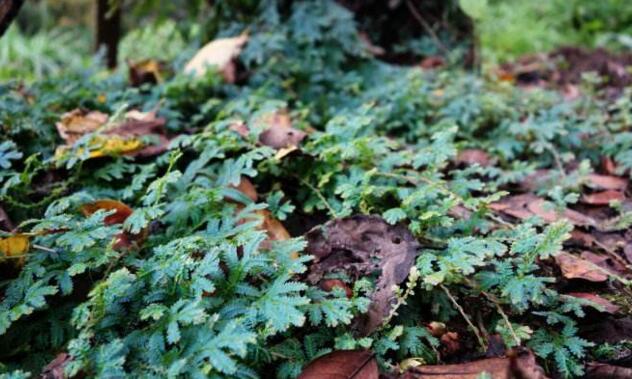
Selaginella uncinata should be grown in a semi-shaded environment, not in a sunny spot. It is rather afraid of direct sunlight. This is especially true for a newly purchased Selaginella uncinata: do not place it directly in outdoor sunlight, but instead keep it in a cool, shady place for a few days to let it adjust, and then let it receive some scattered light.
2. Increase air humidity
If the air is relatively dry, the leaves of Selaginella uncinata will wither and wilt. You need to raise the surrounding air humidity by misting the Selaginella uncinata, and normally you should keep the humidity above 60%, which can effectively prevent the leaves from wilting.
3. When watering, err on the side of wet rather than dry
In the cultivation of Selaginella uncinata, watering is a headache for many plant lovers, but as long as you grasp one principle, watering is actually not difficult. The principle is: err on the side of wet rather than dry, water thoroughly when you water, and do not let water accumulate. Try to keep the soil moist, but do not water too much each time and cause waterlogging.
4. The soil must be airy and fertile
A newly purchased Selaginella uncinata generally will not wither because of soil problems, but after we have grown it for 1-2 years, it may wilt if the soil is not changed. What should you do when the leaves of Selaginella uncinata wilt for this reason? Change the soil in spring, preferably using peat soil plus some leaf mold, and then apply some base fertilizer at the bottom of the flowerpot.
5. Control the temperature well
Selaginella uncinata is not strict about temperature, but if the summer temperature exceeds 30°C, you should pay attention to cooling it down, also by misting. And in winter, when the temperature is below 5°C, pay attention to keeping it warm, by covering it with insulating plastic film or keeping it in a warmer place.
6. Keep it away from appliance vents
Many plant lovers keep Selaginella uncinata indoors, and sometimes they overlook the placement and put them at the air outlets of electric fans, air conditioners and other appliances. As a result, the Selaginella uncinata is hit by strong airflow and the leaves slowly wilt. So try to keep it away from appliance vents.
What Causes Dry Leaves on Selaginella uncinata? Six Causes Need to Be Considered Together, with Solutions
Selaginella uncinata is an evergreen plant all year round. Its leaves grow densely in feather-like form along the stems. They are not only brilliantly colored but also give off a sapphire-like luster, making them truly beautiful. But sometimes plant lovers also encounter dry, withered leaves. What causes dry leaves on Selaginella uncinata? How should we deal with it? Here are several causes and solutions.
What Causes Dry Leaves on Selaginella uncinata
1. Soil too dry
Cause: Selaginella uncinata originally grows in rock caves, on moist stones or in stone crevices. It rather likes to grow in semi-shaded environments beside streams and rivers; it likes moist environments. If the soil of a Selaginella uncinata grown at home is always too dry, the leaves will dry out from lack of water.
Solution: There are two ways to avoid soil that is too dry. First, pay attention to reasonable watering in normal times, and water thoroughly each time so the soil stays slightly moist. Second, frequently mist the leaf surface and around the plant; the water on the stems and leaves flowing into the soil can also create a moist environment.
2. Direct sunlight
Cause: In the cultivation of Selaginella uncinata, we have emphasized that it likes semi-shaded environments and avoids strong direct light. If plant lovers always keep it in the sun, over time its leaves will be scorched and dry out.
Solution: Quickly move the Selaginella uncinata to a cool, shady place, cut off the dried leaves, and in subsequent care avoid direct sunlight, while also not letting too-strong scattered light shine on it.
3. Temperature too high
Cause: Some plant lovers keep the plant indoors, yet the leaves still dry and turn yellow. At this point, what causes dry leaves on Selaginella uncinata? It may be caused by too high a temperature. Selaginella uncinata is not a plant that tolerates high temperatures. It can survive briefly in a high-temperature environment, but if the ambient temperature stays high for a long time, the leaves will dry out because the temperature is too high.
Solution: Check whether the environment is too enclosed and the temperature is relatively high. Especially in summer, do not put Selaginella uncinata in a closed, sunny room. Although the room temperature is lower than outside, if there is no ventilation the temperature will be especially high, and Selaginella uncinata finds it hard to adapt to such an environment.
4. Soil on the alkaline side
Cause: As is well known, Selaginella uncinata likes weakly acidic and acidic soil, but some soils gradually become more alkaline during long-term cultivation. When Selaginella uncinata grows for a long time in highly alkaline soil, its growth becomes weaker and the leaves also dry out.
Solution: There are also two tips for avoiding soil that is too alkaline. One is to change the soil regularly, choosing acidic sandy soil, such as a mix of peat, plain sand and so on. The other is to use water that is not too alkaline when watering as much as possible.
5. Root damage
Cause: Most root damage is caused by overwatering or pests and diseases. Overwatering keeps the roots soaked in water for long periods, causing them to rot. And some pests attack the roots, causing poor root growth.
Solution: When watering normally, do not pour in too much water; the principle is that there should be no standing water in the soil. As for pests and diseases, do a good job of prevention and control, keep the environment clean and tidy, and pay attention to disinfecting the soil.
6. Sudden environmental changes
Cause: Selaginella uncinata has a certain air-purifying effect, but it finds it hard to adapt to sudden environmental changes and relatively strong stimuli. For example, if the temperature suddenly rises and falls, or if there are many harmful gases in the soil of its environment, the leaves will dry out.
Solution: Environmental changes are unavoidable, but plant lovers need to make sure they are not too severe. In particular, do not keep Selaginella uncinata in an especially harsh place; try to create a stable environment for it, which is beneficial for its growth.
Causes of Yellowing Leaves on Selaginella uncinata, and Solutions for Yellowing Leaves on Selaginella uncinata
People often find that the lower leaves of the Selaginella uncinata they grow turn yellow, and the upper leaves become more and more yellow too. They add water every day, yet it gets yellower day by day. Below, let us learn about the causes of yellowing leaves on Selaginella uncinata and the solutions for yellowing leaves on Selaginella uncinata.
Causes of Yellowing Leaves on Selaginella uncinata
Insufficient light.. standing water in the pot can cause root rot and yellowing leaves
Solutions for Yellowing Leaves on Selaginella uncinata
Water: Water regularly every day, and often use a spray bottle to spray moisture to keep the leaf surface humid, which helps it grow more vigorously.
Fertilizer: Fertile sandy soil or humus soil is fine.
Water: It likes moisture. During the growing period, pay attention to misting and maintaining relatively high air humidity to keep the leaves fresh and beautiful.
Soil: It requires loose, fertile, well-drained soil. Leaf mold is best.
Temperature: It likes warmth and grows well at around 20°C; the overwintering temperature is 5°C.
Light: It likes semi-shade. In midsummer, pay attention to shading; it cannot be exposed to the sun, otherwise the plant is prone to scorching and death.
Selaginella uncinata likes a warm, humid, semi-shaded environment. The potting soil should be loose, permeable and rich in humus. You can use equal parts of leaf mold or peat, loam and plain sand mixed together. During the growing period, pay attention to misting to maintain relatively high air humidity. In winter the temperature must not be below 5°C; the ideal growing temperature is 10-15°C at night and 21-26°C during the day. Pay special attention to shading; strong light will make its blue-green color disappear and affect its ornamental value. During the growing period, apply liquid fertilizer once a month.
Selaginella uncinata has a graceful form, and its blue-green fluorescence is pleasing to the eye. In the south it is an excellent ground-cover plant, and it is also suitable for potted display in the north. Planting it in patches in planting troughs gives an even better effect, and it is also an ideal material for covering the surface of orchid pots.