How to grow Selaginella uncinata? Cultivation methods and precautions, avoid direct strong light
We know that Selaginella uncinata has eight main effects and benefits. It can serve as an ornamental plant, and can also be used as a bonsai to beautify the environment. Keeping a few pots at home can also refresh the mind. So is it easy to grow? The answer is that it is easy to cultivate, and how do you grow Selaginella uncinata? Let me tell you the cultivation methods and precautions for Selaginella uncinata.
The living habits of Selaginella uncinata
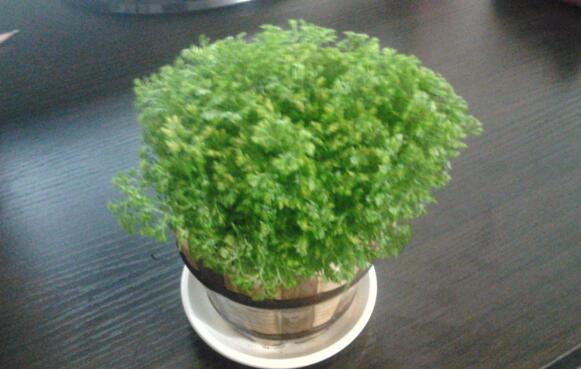
It likes a moist, warm, semi-shaded environment. As for soil, it likes fertile acidic soil. Its water requirements are relatively high, its light requirements are average, its cold resistance is relatively weak, and its high-temperature resistance is also average. It is grown in both the south and the north, and in the north it is mostly grown in pots.
How to grow Selaginella uncinata
1. Soil
Selaginella uncinata is relatively suited to growing in weakly acidic or acidic soil, so when planting, the soil should mainly be loose soil containing humus, such as a mix of leaf mold, peat, coarse sand, and so on, among which good drainage is very crucial.
2. Temperature
Selaginella uncinata can be grown in both southern and northern China. Its ability to adapt to temperature is relatively strong, but when overwintering, the temperature should be kept above 5°C, and in summer it should be prevented from exceeding 35°C. The ideal temperature is 10-26°C, with 10-15°C at night and 21-26°C during the day.
3. Light
Among the cultivation methods and precautions for Selaginella uncinata, it likes a semi-shaded environment, so the light must not be too strong, otherwise the leaves can easily wither and die from sun exposure. In summer, shade work must be done well, and even in spring and autumn it must not be placed directly in the sun for exposure.
4. Water
In a dry environment, the leaves of Selaginella uncinata easily turn yellow, so how should you water Selaginella uncinata? Usually you should pay attention to watering more often. Keeping the soil relatively moist is beneficial to its growth. At the same time, you can also often use a sprayer to spray water on the leaves, which can make the leaves even more deep green.
5. Fertilizing
Selaginella uncinata likes fertilizer, but fertilizing differs at different growth stages. For example, during the growing season it can be fertilized once every 15 days, and after it has taken shape, the number of fertilizer applications can be reduced. Each fertilization should mainly be nitrogen, phosphorus, and potassium fertilizer. If the branches and vines grow relatively quickly, the amount of nitrogen fertilizer needs to be controlled.
Precautions for growing Selaginella uncinata
1. Avoid direct sunlight
Although plant photosynthesis requires a certain amount of light, in the cultivation of Selaginella uncinata, direct sunlight is relatively taboo. From April to October, sun exposure can easily burn the leaves, and it may also dry out due to lack of water. It should be kept in a semi-shaded environment as much as possible.
2. Do a good job of pruning
In spring or autumn, the Selaginella uncinata plant can be pruned once, cutting off some old branches and vines and branches and leaves that have grown too long. On the one hand, this can beautify the plant shape, and on the other hand, it can also promote the sprouting of new branches.
3. Repotting and changing soil
Repot and change the soil once every 1-2 years. The flower pot can be about 20 cm in diameter. It is more suitable to have 5-7 Selaginella uncinata plants per pot, and the replacement soil should be prepared with leaf mold, garden soil, and so on, which can make the soil more breathable and drain better.
How to grow Selaginella uncinata? Cultivation methods and precautions for Selaginella uncinata
Selaginella uncinata, also known as dragon whiskers, blue grass, sword cypress, and so on, belongs to the grass species of the genus Selaginella in the family Selaginellaceae. Selaginella uncinata has a peculiar plant shape, with fronds like cloud patterns, evergreen in all four seasons, elegant and refined. It is a very good indoor potted ornamental plant. It can not only green the home environment and enhance home taste, but also play a very good decorative role. So, how should Selaginella uncinata be grown? Below, I will introduce the cultivation methods and precautions for Selaginella uncinata.
Image: Selaginella uncinata
1. Cultivation methods for Selaginella uncinata
1. Soil:The soil for growing Selaginella uncinata should preferably have good water permeability and looseness, and be rich in humus. In short, the closer the soil characteristics are to the soil of naturally shady and damp areas, the more favorable it is for its growth. If you want to mix and prepare the soil yourself, you can use equal amounts of leaf mold, loam, and coarse sand mixed together.
2. Watering:During the growing season, Selaginella uncinata needs a large amount of water and relatively high humidity, so choose the spraying method for watering, and you can also sprinkle water on the ground at the same time to increase the humidity of the soil.
3. Fertilizing:During the growing season, apply liquid fertilizer once every [period]. When it is not the growing season, as long as the soil is suitable, fertile humus soil can provide the nutrients needed for its normal growth.
4. Light:Selaginella uncinata loves a semi-shaded environment. In summer, shading treatment should be carried out, and it must not receive excessive light.
5. Temperature:Its most suitable growth temperature is between 21-26°C during the day and 10—15°C at night. Therefore, in summer and winter, appropriate treatment and protection should be given to it. Its minimum overwintering temperature is 5°C. If it is lower than this temperature, certain measures must be taken to keep it warm.
6. Propagation:Selaginella uncinata can be propagated by division and cuttings.
Image: Selaginella uncinata
2. Precautions for growing Selaginella uncinata
1. Avoid direct strong light:Selaginella uncinata likes a semi-shaded environment. Long-term strong light exposure will not only burn the leaves, but may even cause the plant to dry out and die due to lack of water. In summer, shading treatment must be carried out, whether you are in the south or the north. Summers are very hot and the light is very strong.
2. Prevent and control common diseases:The common disease of Selaginella uncinata is leaf spot disease. It can be sprayed with a 1000-fold dilution of 50% carbendazim.
Selaginella uncinata can grow naturally in the wild and can also be used as a potted ornamental plant. The above has introduced the cultivation methods and precautions for Selaginella uncinata. I hope it can help everyone!
How to grow Selaginella uncinata: cultivation methods and precautions for Selaginella uncinata
Selaginella uncinata is a plant very suitable for making bonsai, and making bonsai requires a certain amount of plant care knowledge, so that Selaginella uncinata can fully release its vitality in the bonsai. Therefore, before proficiently mastering the care techniques for Selaginella uncinata, it is better to do some basic cultivation to accumulate experience.
How to grow Selaginella uncinata
Selaginella uncinata grows at an altitude of 40-1000 m under valley forests, in humus-rich soil or in shady, damp weeds by streams, as well as in rock caves, on wet stones, or in rock crevices. It likes a warm and humid semi-shaded environment. When caring for it in pots, pay attention to the drainage of the potting soil and avoid long-term direct light.
Cultivation methods and precautions for Selaginella uncinata
1. Soil
The soil for growing Selaginella uncinata should preferably have good water permeability and looseness, and be rich in humus. In short, the closer the soil characteristics are to the soil of naturally shady and damp areas, the more favorable it is for its growth. If you want to mix and prepare the soil yourself, you can use equal amounts of leaf mold, loam, and coarse sand mixed together.
2. Water and fertilizer management
Watering: During the growing season, Selaginella uncinata needs a large amount of water and relatively high humidity, so choose the spraying method for watering, and you can also sprinkle water on the ground at the same time to increase the humidity of the soil.
Fertilizing: During the growing season, apply liquid fertilizer once every [period]. When it is not the growing season, as long as the soil is suitable, fertile humus soil can provide the nutrients needed for its normal growth.
3. Light and temperature
Light: Selaginella uncinata loves a semi-shaded environment. In summer, shading treatment should be carried out, and it must not receive excessive light.
Temperature: Its most suitable growth temperature is between 21-26°C during the day and 10—15°C at night. Therefore, in summer and winter, appropriate treatment and protection should be given to it. Its minimum overwintering temperature is 5°C. If it is lower than this temperature, certain measures must be taken to keep it warm.
4. Propagation methods
Selaginella uncinata can be propagated by division and cuttings.
5. Avoid direct strong light
Selaginella uncinata likes a semi-shaded environment. Long-term strong light exposure will not only burn the leaves, but may even cause the plant to dry out and die due to lack of water. In summer, shading treatment must be carried out, whether you are in the south or the north. Summers are very hot and the light is very strong.
6. Common diseases
The common disease of Selaginella uncinata is leaf spot disease. It can be sprayed with a 1000-fold dilution of 50% carbendazim.
The uses of Selaginella uncinata
1. Ornamental
Selaginella uncinata has a peculiar plant form, with fronds like cloud patterns, evergreen in all four seasons, and with a blue-green fluorescence, elegant and beautiful. It is a small foliage plant, and potted plants are suitable for display on desks, windowsills, and other places.
2. Home decoration
Selaginella uncinata is suitable for decorating and greening and beautifying family rooms. It is suitable for potted viewing in homes and rooms. As a small potted shade-loving foliage plant, Selaginella uncinata has branches and leaves as green as pieces of green cloud, layer upon layer of accumulated green, with fine branches densely bearing small leaves like green scales. Placed on a desk, coffee table, or on a tall flower stand in a corner of the room, it appears elegant and green, with a leisurely scene and a sense of vitality.
On a tall flower stand in a corner of the room, place a pot of medium-sized Selaginella uncinata. The dense branches and small leaves and creeping stems extend from the pot mouth and hang over the pot edge, swaying in the wind with elegant grace. It can not only regulate indoor air and eliminate pollution, but also refresh the mind and invigorate the spirit.
3. Garden use
Selaginella uncinata can also be applied in specialized gardens such as rock gardens and water gardens, and can also be used as decoration on bonsai. Arranged by lakesides, streams, rock crevices, and beside waterfall flows, it can bring vitality and energy, add wild charm, and improve the landscape effect.
Larger potted Selaginella uncinata can be placed on a relatively shaded windowsill or balcony. Especially during April-May each year, or in the plum rain season of early summer, potted Selaginella uncinata, after being combed by light rain, is like a beautiful woman's hair, fluttering and draped. At this time, potted Selaginella uncinata grows fresh and green, with green scales piece by piece. This is the best viewing period for Selaginella uncinata, and it is very worth appreciating.
4. Potted use
Selaginella uncinata has a beautiful posture, and its blue-green fluorescence makes people feel pleased and delighted. In the south it is an excellent ground cover plant, and it is also suitable for potted viewing in the north. Planting it in patches in planting troughs has an even better effect, and it is also an ideal covering material for the surface of orchid pots.
The combination of orchids and Selaginella uncinata brings out the best in each other. Flower friends who like growing orchids can give it a try.
The flower language of Selaginella uncinata: happiness
There are quite a lot of flower friends who have grown Selaginella uncinata, but very few have seen Selaginella uncinata bloom. Why is that? Because Selaginella uncinata flowers are white, and the flowers are extremely tiny. If you do not distinguish carefully, it is very difficult to make them out. Moreover, if it is grown by flower friends to protect orchid grass, it is better for Selaginella uncinata not to bloom, to avoid competing for nutrients and even causing some harm to the orchid grass.
However, it is precisely because it is rare that it feels precious, and because it feels precious, seeing it brings a feeling of happiness. The flower language of Selaginella uncinata probably comes from this.
It is very rare for Selaginella uncinata to bloom, but blooming causes a very large nutritional loss to Selaginella uncinata, so we do not need to be especially obsessed with why Selaginella uncinata does not bloom. However, once Selaginella uncinata blooms, it is certainly very rare, and at the same time, the work of supplying nutrients must also be done well.