How to prune Philodendron 'Imperial Green'? Four techniques and three key points to ensure a beautiful plant shape
When growing Philodendron 'Imperial Green', besides doing a good job with fertilizing and watering, there is another step that cannot be overlooked, and that is pruning, because Philodendron 'Imperial Green' grows quickly, and if you neglect pruning, it is very easy for leggy growth, densely crossing branches and leaves, and other such phenomena to appear, resulting in a plant shape that is not beautiful enough. So how do you prune Philodendron 'Imperial Green'? Let me tell you the pruning methods for Philodendron 'Imperial Green'.
How to prune Philodendron 'Imperial Green'
1. Cut off yellowing branches and leaves
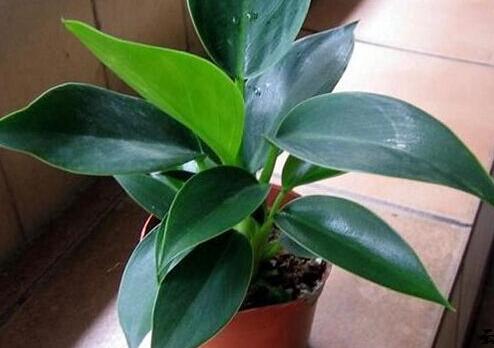
If yellowing leaves appear during cultivation, besides improving your cultivation methods, what you need to do is cut off the leaves. This is also one of the main methods for dealing with yellowing leaves on Philodendron 'Imperial Green', and it can prevent pathogens from using these leaves as a host, thereby triggering disease.
2. Cut off old and aged branches and leaves
The leaves of Philodendron 'Imperial Green' can live for as long as 30 months, but they will eventually fall off, so during routine care, you can cut off some old branches and leaves and those about to fall, to prevent these fallen leaves from dropping into the flower pot and easily breeding bacteria.
3. Cut off weak and small branches and leaves
The leaves of Philodendron 'Imperial Green' do not all grow at the same speed; some that receive more light and moderate nutrients will grow faster, while some branches and leaves may be relatively weak. At this time, how do you prune Philodendron 'Imperial Green'? You need to cut off these weak branches and leaves, which reduces nutrient consumption and also promotes the sprouting of new leaves.
4. Cut off dense branches and leaves
In a natural environment, some leaves of Philodendron 'Imperial Green' may cross densely together, making the light transmission between the plants very poor. Even with timely ventilation, some branches and leaves are prone to weakening in growth. You need to cut away part of the crossing branches and leaves, keeping the new and robust branches and leaves.
Precautions for pruning Philodendron 'Imperial Green'
1. The amount of pruning should not be too large
Do not carry out heavy pruning frequently, and do not cut off too many branches and leaves each time. Although it can save some nutrients, if you often prune heavily, it is unfavorable to the growth of Philodendron 'Imperial Green'. For example, when cutting off yellow leaves, you can first cut off the lower ones, then after an interval cut off the upper yellow leaves.
2. Diseased leaves must be pruned thoroughly
If leaves become infected with disease, you need to thoroughly cut off these diseased leaves, and you must do so promptly, to prevent pests and diseases from remaining on the leaves or spreading to other leaves.
3. Pruning tools must be sharp
When pruning, you should try to ensure a clean cut in one stroke, and not frequently create wounds on a single branch. Therefore, the tools should be relatively sharp, and you should rinse the tool with clean water before use, and it is best to disinfect it.
Philodendron selloum Koch Philodendron selloum Koch illustrated guide: how to grow Philodendron selloum / how to propagate Philodendron selloum
Philodendron selloum profilePhilodendron selloum Koch
Philodendron selloum cultivation methods and precautions, an introduction to Philodendron selloum
Philodendron selloum is a perennial evergreen herbaceous foliage plant.
The stem is extremely short, and the leaves extend from the top of the stem in all directions, densely and neatly arranged, forming a clustered shape. The petioles are firm and slender, reaching up to 1 m, and the leaf blades are huge, with thick, coarse pinnate deep lobes, deep green and glossy.
The stem is upright and woody, producing many aerial roots; the plant is tall, reaching over 1.5 m.
The leaves are clustered in type, borne at the stem tip; the leaves are broadly heart-shaped, with the whole leaf deeply pinnately lobed like a palm shape, up to 60 cm long and 40 cm wide, leathery, deep green and glossy; the petioles are firm and slender, reaching 80-100 cm.
Morphological characteristics of Philodendron selloum
Philodendron selloum is a perennial evergreen herbaceous foliage plant. The stem is extremely short, and the leaves extend from the top of the stem in all directions, densely and neatly arranged, forming a clustered shape. The plant height can reach 1 m, the stem is thick and upright, with a diameter reaching 10 cm, and the stem has obvious leaf scars and wire-like aerial roots. The leaves extend from the stem tip in all directions, with petioles about 40-50 cm long, and the leaf blade is bright and glossy, ovate-heart-shaped, up to 60 cm long and 40 cm wide, but potted ones are generally only about half that size, with the whole leaf deeply pinnately lobed and leathery. The leaves of seedling plants in the juvenile stage are relatively thin and triangular, and as growth proceeds the leaves gradually become larger, with more numerous and deeper pinnate notches.
Ecological habits of Philodendron selloum
Philodendron selloum prefers a high-temperature, humid environment. It is not strict about light, is not cold-tolerant, and tolerates shade. It can be pot-grown in indoor places where the light is not too weak. It prefers fertile, loose, well-drained, slightly acidic soil, and the winter temperature should not be lower than 5°C.
It is a perennial evergreen herbaceous plant. It is relatively shade-tolerant. It is one of the more cold-tolerant species in this genus, with an optimum growth temperature of 18-25°C, and in winter it can withstand a low temperature of 2°C, but above 5°C is better. It requires sandy soil.
Cultivation techniques for Philodendron selloum
It is a perennial evergreen herbaceous plant. It is relatively shade-tolerant. It is one of the more cold-tolerant species in this genus, with an optimum growth temperature of 18-25°C, and in winter it can withstand a low temperature of 2°C, but above 5°C is better. It requires sandy soil and is commonly propagated by cuttings. May-September is best; cut robust stems with 2-3 nodes and insert them directly into sphagnum moss or coarse sand, keeping them moist, and they can root in about 20 days. Household plants should be renewed after 3-4 years. Common leaf spot disease and scale insect damage. For leaf spot disease, spray with a 50% carbendazim 1000-fold solution for control, and for scale insects, spray with a 50% omethoate emulsifiable concentrate 1000-fold solution to kill them.
Pot and soil: You can choose a clay pot for planting, and it can be covered with another pot on the outside, which is both attractive and breathable. Since Philodendron selloum prefers fertile, loose, well-drained, slightly acidic soil, household cultivation can use a mix of leaf mold, peat soil, garden soil, etc., with a small amount of river sand added. Depending on the plant's growth, repot once every 2 years in spring.
Light and temperature: Philodendron selloum prefers warmth, tolerates shade, is not cold-tolerant, and avoids direct strong light. In hot summer it should be kept in a shaded place for care. In winter, it can be placed in a sunny spot. Its optimum growth temperature is 18-25°C, and the overwintering temperature is best above 8°C.
Water and fertilizer: Philodendron selloum likes a humid environment, and you can usually water it with some rice-washing water, and during the growing season take care to keep the potting soil moist. In summer, you can spray water on the leaves or around the flower pot every day to maintain a fresh and humid microclimate.
In winter, as the temperature gradually drops, the frequency of watering should be reduced. Although Philodendron selloum likes warmth and humidity, it has a relatively strong ability to adapt to the dry indoor environment of northern winters. When potting or repotting, place some horn and hoof pieces or oil residue at the bottom of the pot as base fertilizer, and afterward apply liquid fertilizer once a month (such as dilute cake fertilizer water, etc.). In winter, apply less or stop fertilizing.
Propagation is by division or cuttings. Generally, robust plants can send up offshoots at the base, and after they root, they can be removed and planted separately. Alternatively, cut off the upper part of the plant and root it as a cutting to form a new plant; the base of the old plant will sprout several young shoots, and these young shoots can be used for propagation. In tropical regions, fresh seeds can also be used for propagation, with an optimum germination temperature of 25-30°C. The potting medium is commonly made of leaf mold, peat soil, and river sand. Each time you repot, apply sufficient base fertilizer. During the growing season, apply some light fertilizer appropriately, but not too much. Usually spray water on the leaves more often, and in winter watering should be appropriately controlled. Outdoor care should place it in a shaded spot; indoors it can grow in any position, but a bright light location is better. Pests and diseases are relatively few. In dry climates it ** has a certain tolerance to both high and low temperatures. It is not cold-tolerant, and in the north it is overwintered indoors in pots; move it indoors before the first frost and place it in a sunny spot. As long as the room temperature stays above 8°C, it can overwinter safely. Winter management should control moisture, watering when the potting soil looks dry. For mature plants, before bringing them out each year, change to loose and fertile nutrient soil, and place horn and hoof pieces or oil residue in the pot as base fertilizer. In late April, move the flower pot outdoors to a sheltered, sunny place for care. In summer high temperatures, avoid hot, strong direct sunlight and take shading measures. Philodendron selloum has a high water requirement; in summer water thoroughly twice a day, frequently spray the leaves, clean the leaf surfaces, and maintain a fresh and humid microclimate. Usually water with rice-washing water or light chicken or fish blood water to increase soil fertility and prevent the potting soil from compacting. Philodendron selloum grows quickly; with water, fertilizer, light, and temperature well adjusted, it can grow 375 leaves in a year.
Planting key points
Mainly the soil or the plant's root system.
First, watering should not be too frequent; excessive waterlogging will cause this.
Second, check whether the drainage hole at the bottom of the pot drains effectively; if it cannot, you need to change the soil and re-cover it with a small tile piece or window screen.
Third, if the number of earthworms in the soil is too large, this will also happen.
Fourth, the growing environment: is it too closed and stuffy, and the light too dim?
If the upper part has not completely rotted, you can cut it off, remove the rotted part, and replant it in new sandy soil. Also remove most of the lower leaves, keeping only the upper 2 leaves, and cut all the leaves into "half leaves" to reduce water transpiration. Place it in a semi-shaded spot, frequently spray water on the leaves or the growing environment, but the potting soil is best watered by the dry-wet cycle, not too frequently.
Management
The overwintering temperature should not be lower than 5°C, and strong light should be avoided. The optimum growth temperature is 20°C-30°C, and it begins to grow at around 10°C. It should be placed in a semi-shaded spot, and in summer direct blazing sunlight should be avoided to prevent scorching the leaves. During the growing season, keep the soil moist frequently, and avoid excessive dryness. Use frequent leaf spraying and ground sprinkling to increase environmental humidity, and try to maintain a ventilated, warm, semi-shaded environment. In addition, Philodendron 'Imperial Green' is best placed away from radiators and air conditioning vents, because the air in these places is too dry and water evaporates quickly, which very easily causes the leaves to dry up. When the air is dry in summer and autumn, you should also spray the plant to retain moisture and lower the temperature. It likes fertilizer; during the peak growing season from May to September for Philodendron 'Imperial Green', apply fertilizer water 1-2 times a month, and avoid applying too much nitrogen fertilizer alone, otherwise the petioles will become slender and weak and will not stand upright easily, thus affecting the ornamental effect. In other seasons, apply as little fertilizer as possible. Watering should be handled flexibly; in the dry spring and summer seasons, keep the soil moist, while in autumn and winter follow the dry-wet cycle. On a well-cultivated Philodendron 'Imperial Green', some brown-red roots will appear at the rhizome and quickly grow new shoots; at this time you can divide the plant in time. During the division process, be sure to be careful and meticulous to avoid injuring the main roots. Plant the divided young seedlings separately in loose, fertile sandy soil, then place them in a semi-shaded indoor spot, and take care to spray water frequently to prevent the seedlings from wilting; after a week gradually reduce the frequency of spraying. In about half a month the seedlings will roughly be able to survive, and normal care can then be carried out.
Precautions
The temperature needs to be maintained at around 20°C, not lower than 10°C, and it should also avoid being hit by radiators, air conditioning, and cold drafts.
The air humidity needs to be maintained between 50-75%; below 50% the leaves easily turn yellow and the edges dry, and humidity is often increased by spraying and sprinkling water.
It likes light but avoids strong direct light; the growing environment is best maintained under semi-shaded or diffused light conditions, and it should not be placed in a shaded environment for a long time, otherwise the leaves very easily turn yellow.
Fertilizing should follow the principle of light fertilizer applied frequently, and mainly nitrogen fertilizer is sufficient.
Watering is best done when the surface of the potting soil looks dry; during the high-temperature period in summer it can be kept moist, and in winter if the environmental temperature is below 15°C, watering needs to alternate between dry and wet.
Diseases are mainly those caused by improper care or an unsuitable environment, and can generally be prevented through good care and management; when disease occurs, spraying carbendazim, chlorothalonil, etc. for control is sufficient. Pests mainly include red spider mites, generally caused by dry air; frequent spraying and wiping of the leaves can effectively prevent them, and when pests are present, you need to spray specialized pesticides for control, such as dicofol, etc.
Cultivation methods for Philodendron selloum
Philodendron 'Imperial Green' prefers a warm, humid, semi-shaded environment, fears severe cold, and the overwintering temperature should not be lower than 5°C;
Light: avoid strong light; the optimum growth temperature is 20°C-30°C, and it begins to grow at around 10°C;
Soil: requirements are not strict; it grows best in sandy loam rich in humus and well-drained. For potting, a nutrient soil mixed with peat and perlite is often used.
It should be placed in a semi-shaded spot, and in summer direct blazing sunlight should be avoided. During the growing season, keep the soil moist frequently, avoid excessive dryness, and place it away from radiators and air conditioning vents.
Prevent leaf yellowing and pests and diseases. Diseases are mainly caused by improper care or an unsuitable environment, and can generally be prevented through good care and management; for pests such as red spider mites, frequent spraying and wiping of the leaves can effectively prevent them. Spraying specialized pesticides can provide control.
Common leaf problems and causes. The main causes of leaf yellowing in Philodendron 'Imperial Green' are unsuitable temperature, low humidity, unsuitable light, excessive fertilization, too frequent watering, and damage from pests and diseases.
Philodendron selloum has lush plants and large, unusual leaves, with emerald green and glossy leaf color, and relatively strong shade tolerance. It is currently one of the most commonly used indoor foliage plants in homes and public places. It can be potted and placed in spacious places such as living rooms and lobbies, or small plants can be grown hydroponically and placed on desks, windowsills, and other places.
Philodendron selloum has relatively large leaves, and the petiole plus leaf can reach more than 1 m long. Its flowering period is mostly in spring, in the form of a spathe, with low ornamental value, and it is mainly grown for its foliage. It is not strict about soil requirements, but grows best in loose, fertile, well-drained, slightly acidic soil.
Philodendron selloum is native to the tropical rainforests of Brazil in South America. It prefers a warm, humid, semi-shaded environment, and is not strict about light, but it cannot tolerate long-term shaded conditions, otherwise the leaf color becomes lighter, the petioles become longer, and the leaves droop, reducing its ornamental value. It also fears strong direct light; after exposure to strong light, the leaves very easily develop dry leaf tips, scorched leaf margins, and whitened leaf color that loses its gloss, so it is best maintained under semi-shaded or diffused light. In winter it can be cared for with ample light to help it overwinter safely.
Philodendron selloum is a tropical plant and is not tolerant of severe cold and low temperatures. In winter the temperature is best kept above 10°C to prevent cold damage. The optimum growth temperature is between 18-30°C; when the temperature is above 30°C growth is inhibited, and you need to ventilate and cool it and increase the frequency of spraying water to increase the relative air humidity. Generally during the growing period, maintaining humidity at around 50% is enough to meet its needs; when the temperature is above 25°C, the air humidity needs to be raised to around 70%.
The leaves of Philodendron selloum are large and thin, with relatively high water requirements. During the growth cycle the potting soil needs to be kept moist, especially during the high-temperature period in summer when it cannot lack water. When the temperature is below 15°C, the frequency of watering needs to be reduced, and the potting soil can alternate between dry and wet. It can tolerate brief waterlogging, but long-term standing water easily rots the root system and causes the plant to die.
In late spring Philodendron selloum enters its peak growing period, and it needs to be supplemented with fertilizer mainly based on nitrogen fertilizer to make it grow quickly and recover its vitality. Fertilizing should follow the principle of light fertilizer applied
frequently, and it should not be applied all at once in full amount, which would cause fertilizer damage. If during the growing period you can use dilute light fertilizer water instead of clean water to water the potting soil, it will grow even better. After entering autumn, the amount of nitrogen fertilizer applied should be controlled, otherwise it is unfavorable for overwintering, and the petioles will also become longer, so the plant shape cannot be effectively controlled. When the winter temperature is below 20°C, fertilizing should be stopped. The propagation methods of Philodendron selloum mostly use cuttings, sowing, and division. At home it is best to use cuttings and division, as the operations are relatively simple. For cutting propagation, May-September is suitable; cut robust stems with longer branches, insert them directly into clean river sand and place in a semi-shaded spot, maintain relatively high air humidity, with a temperature of around 25°C being suitable, and they will root in 20-25 days. Division propagation requires that small plants have grown at the base of the old plant; it can be done in conjunction with changing the soil and repotting, carefully separating the small plants from the old plant, trying not to injure the old plant or its roots. You can also pinch off the side plants in advance, which can both dwarf the plant and produce more side plants; when the new side plants are about 15 cm, cut them off with aerial roots and plant them separately.
Propagation methods of Philodendron selloum
Propagation is by division or cuttings.
Generally, robust plants can send up offshoots at the base, and after they root, they can be removed and planted separately. Alternatively, cut off the upper part of the plant and root it as a cutting to form a new plant; the base of the old plant will sprout several young shoots, and these young shoots can be used for propagation. In tropical regions, fresh seeds can also be used for propagation, with an optimum germination temperature of 25-30°C. The potting medium is commonly made of leaf mold, peat soil, and river sand. Each time you repot, apply sufficient base fertilizer.
During the growing season, apply some light fertilizer appropriately, but not too much. Usually spray water on the leaves more often, and in winter watering should be appropriately controlled. Outdoor care should place it in a shaded spot; indoors it can grow in any position, but a bright light location is better. Pests and diseases are relatively few.
Disease control for Philodendron selloum
Common diseases of Philodendron selloum include leaf spot disease, anthracnose, etc., which can be controlled with wettable powders such as carbendazim, thiophanate-methyl, and zineb, with obvious effects. If leaves are yellow, withered, or scorched, they need to be pruned in time to reduce nutrient loss. Pests mainly include red spider mites and scale insects, which can be controlled by spraying specialized pesticides. In addition, red spider mites can be prevented by increasing air humidity, and scale insects can be prevented by strengthening ventilation.
Control methods
The main causes of leaf yellowing in Philodendron 'Imperial Green' are: unsuitable temperature, low humidity, unsuitable light, excessive fertilization, too frequent watering, and damage from pests and diseases.
Potting soil causes
1. The potting soil lacks nitrogen: the leaves are small, the leaf color is pale yellow, the lower leaves turn yellow first, and gradually the whole plant loses its green color, with the lower part becoming more yellow and pale;
2. The potting soil lacks phosphorus: the leaves curl, the leaf color is dark green, and the areas between the veins of the lower leaves turn yellow;
3. The potting soil lacks potassium: the margins of the lower leaves turn brown and the plant easily lodges;
4. The potting soil lacks magnesium: from bottom to top, the leaf margins and centers lose their green color and turn white;
5. The potting soil lacks iron: scorched brown spots appear and dry up.
Other causes
1. In most cases it is yellowing caused by improper water and fertilizer, that is, watering too much leads to long-term waterlogged and wet soil, poor breathability, and even partial rotting of the fibrous roots. It shows as dark yellow, lusterless tender leaves and shrunken new shoots;
2. Fertilizer yellowing, that is, too much fertilizer, shows as the tips of old leaves and branches turning yellow and falling off, while the new leaves, although thick and glossy, are generally uneven and not smooth. If it is a valuable flower, you can scatter a layer of bok choy or radish seeds, and after the seedlings emerge for a few days, pull them out to consume nutrients;
3. Drought yellowing: due to not watering thoroughly or dehydration over a long period, although the new leaves have a normal color, the lower leaves gradually dry, yellow, and fall off from the bottom upward, aging;
4. Alkaline yellowing: especially for some southern flowers that prefer acidic soil, when the water quality in the north is somewhat alkaline, the leaves gradually fade, turn yellow, and even fall off. The simplest solution is to water with fermented rice-washing water or rainwater.
Distribution area of Philodendron selloum
Native to Brazil, Paraguay, and other places. It is cultivated in the subtropical evergreen broad-leaved regions of South China.
Adapted regions: South China southern subtropical evergreen broad-leaved forest region (main cities: Fuzhou, Xiamen, Quanzhou, Zhangzhou, Guangzhou, Foshan, Shunde, Dongguan, Huizhou, Shantou, Taipei, Liuzhou, Guiping, Gejiu)
Tropical monsoon forest and rainforest region (main cities: Haikou, Sanya, Qionghai, Kaohsiung, Tainan, Shenzhen, Zhanjiang, Zhongshan, Zhuhai, Macao, China, Hong Kong, China, Nanning, Qinzhou, Beihai, Maoming, Jinghong)
The role and uses of Philodendron selloum: ornamental value
Philodendron selloum has huge leaves with thick, coarse pinnate deep lobes, deep green and full of gloss, and long, thick, sturdy petioles. Its aerial roots are extremely developed and hang down, and the plant shape is graceful, giving a good overall ornamental effect. At the same time, it is shade-tolerant and is an excellent indoor shade-loving foliage plant. It is suitable for decorating hotel lobbies, indoor gardens, offices, and home living rooms, studies, and other places. In rooms with relatively strong light it can be placed for several months, and the plant's growth will not be affected too much; in darker rooms it can also be enjoyed for 2-3 weeks. It is also often used as a large potted plant, and looks very spectacular when displayed in halls.
Decorative applications
Philodendron selloum has unusual leaf forms and is very shade-tolerant. It is suitable for indoor hall display, and is especially suitable for decorating music tearooms and hotel rest lounges.
Philodendron selloum pictures
[Flower Time] Common indoor flower cultivation methods
AnthuriumFeatures: the flowering period can reach 6 weeks, it is evergreen all year round, and can bloom throughout the year.
Care: note that you should not mist the leaf surface in the evening; be sure to ensure that there are no water droplets on the anthurium leaf surface at night. In hot seasons, water once every 2-3 days, and at noon also use a spray system to spray water on the leaves to increase indoor relative humidity. In cold seasons, watering should be done between 9 a.m. and before 4 p.m. to avoid freezing the root system.
Radermachera sinica
Alias: Radermachera sinica
Temperature: Radermachera sinica prefers a warm, hot environment, with an optimum growth temperature of 20-30°C. During overwintering, the minimum must not be lower than 5°C, to avoid cold damage to the leaves or leaf drop.
Light: Radermachera sinica is a light-loving plant, and can also tolerate shade somewhat; full sun and semi-shaded environments are both acceptable. During indoor display it should be placed by a window with ample light or indoors.
Water: for potted plants displayed indoors, besides keeping the potting soil moist, in hot seasons the plant should also be sprayed with water 2-3 times a day. For plants placed indoors in winter, every 2-3 days around noon on clear days, spray the plant once with slightly warm clean water, to maintain its fresh appearance and also increase environmental humidity.
Phalaenopsis
Growing medium: the common growing media for Phalaenopsis are mainly sphagnum moss and moss.
Temperature: for growing Phalaenopsis at home, the first thing to ensure is temperature. Phalaenopsis likes a high-temperature, high-humidity environment, and the suitable growth temperature is 16°C to 30°C.
Watering: Phalaenopsis is native to primeval forests, where there is more mist and higher temperatures, and it is suitable for cultivation and care in a ventilated, high-humidity environment. The suitable air humidity for Phalaenopsis growth is 50% to 80%. In summer the plant grows vigorously; water once each at 9 a.m. and 5 p.m. every day. In winter the light is weak and the temperature is low, and watering once every other week is enough, preferably before 10 a.m. But note that when spraying water during the flowering period, do not spray water mist onto the flowers. Tap water should be stored for more than 72 hours before being used for watering.
Light: although Phalaenopsis is relatively shade-loving, the orchid plant still needs to receive some light; generally it should be placed in a spot with diffused light indoors, and do not let sunlight shine directly on it.
Ventilation: the normal growth of Phalaenopsis requires flowing fresh air, especially during the high-humidity period in summer, when good ventilation must be used to prevent heat stress, and it can also avoid infection by pests and diseases.
Fertilizing: Phalaenopsis should be fertilized throughout the year. Winter is the flower bud differentiation period for Phalaenopsis, and stopping fertilizer easily leads to no flowers or few flowers. Spring and summer are the growing period, and a dilute liquid fertilizer can be applied once every 7 to 10 days. In autumn and winter, during the flower stem growth period, phosphate fertilizer can be used, but it should be dilute, applied about once every 2 to 3 weeks.
Areca palm
Alias: Zi kui, Arecaceae, Dypsis. Native to Madagascar; cultivated in Guangdong and Guangxi in China, mostly planted among flower clusters in courtyards.
Propagation: at home it can be propagated by division in spring, summer, and autumn. Garden soil mixed with some sand can be used as potting soil.
Cultivation: it prefers warmth and has fairly good shade tolerance, but indoors it grows better if placed in a bright light spot. Its cold tolerance is not strong, and in winter the temperature should preferably be kept above 8°C. Usually keep the soil moist; water as soon as the surface soil is dry. In winter you can wait until 2/3 of the potting soil is dry before watering. During dry weather it is easy to spray water on the leaves. In spring, summer, and autumn, apply a compound fertilizer mainly based on nitrogen fertilizer once a month. In addition, when kept as an indoor potted plant, the flower pot needs to be rotated regularly, because the plant has phototropism, so that the plant grows evenly and beautifully on all sides.
Cultivation key points:
1. Temperature. The minimum winter temperature is 16-18°C; below this temperature the leaves turn yellow and fall off; below 10°C it easily dies.
2. Light. Areca palm is a strongly sun-loving plant, and in places such as Hainan Island it is planted in the open field. But this plant has relatively strong shade tolerance and can be enjoyed indoors in a low-light spot for 2-4 weeks in a row. Afterward, place it in a spot with strong light.
3. Water. During the high-temperature growing season, it needs plenty of water; but it is fairly drought-tolerant, and going several days without watering will not harm it. However, waterlogging in the pot must be avoided. Reduce watering in winter.
4. Air temperature. During the growing period it prefers higher air temperatures; a small amount of water can be sprayed on the leaves from time to time.
5. Repotting. Repot in spring as needed.
Money Tree
The Money Tree, commonly known as the hand tree, is an evergreen shrub or small tree of the genus Pachira in the Araliaceae family. This plant originated in Australia and some islands of the Pacific, and is suited to a warm, humid, well-ventilated environment. It likes sun and also tolerates light shade, and grows best in loose, fertile, well-drained soil.
Potted hand trees should be repotted once every 1-2 years, done in spring when they are moved outdoors, and necessary pruning should be carried out on yellow leaves and weak, thin branches to encourage new shoots to sprout.
Watering: Watering should follow the principle of alternating dry and wet; in spring and autumn, adjust the frequency of watering according to whether the weather is sunny or rainy and whether conditions are dry or humid. Generally, water once a day; when the temperature exceeds 35°C, water at least twice a day. During the growing season, apply fertilizer twice a month, and for newly grown leaves, also pay attention to spraying water to maintain relatively high environmental humidity; from June to September, shade is needed, maintaining a light transmission rate of 60%-70% or placing it in a spot with bright scattered light. After moving indoors in winter, the temperature should not be lower than 5°C, and keeping it around 10°C is better; water once every 5-7 days, and make sure it receives fairly ample light.
Ventilation: During the growing season, if ventilation is poor, red spider mites and scale insects are likely to cause damage, so observe carefully. If pests are found, remove them promptly by hand or spray pesticide.
African Jasmine
African Jasmine is an evergreen (climbing) shrub or small tree of the genus Fagraea in the Loganiaceae family, native to southern China and countries such as Southeast Asia.
African Jasmine is an evergreen shrub or small tree. It likes warmth and sunshine, but requires avoiding direct strong summer sunlight; it prefers an environment with high air humidity and good ventilation, and does not tolerate cold, dry freezing, or sharp drops in temperature; it grows best in loose, fertile, well-drained loam; it has strong sprouting and suckering ability and is especially tolerant of repeated pruning.
Light: African Jasmine likes sunlight, and its native environment is mostly semi-shaded. In spring and autumn it can receive full light, while in summer it requires a shade frame or being moved under the dense shade of a large tree, and at least avoiding direct sunlight for several hours around noon;
Water: Whether planted in the ground or in a pot, it requires ample water, but the roots must not be waterlogged, otherwise root rot easily occurs. In spring and autumn, water just enough to keep the potting soil moist; during the plum rain season, be careful to prevent waterlogging; in the scorching summer, spray water once in the morning and once in the afternoon to increase humidity and lower temperature; in winter, for potted plants indoors, it is appropriate to keep the potting soil slightly moist, and around noon when the temperature is relatively higher, spray an appropriate amount of water on the leaves
Soil: Use fertile loam or sandy loam as the growing medium.
Ventilation: Maintaining good ventilation can help avoid pest damage
Queensland Umbrella Tree
Other names: Queensland umbrella tree, Queensland shade tree, Australian ivy palm, commonly known as the fortune tree
Family and genus: A woody foliage plant of the genus Schefflera in the Araliaceae family, native to Australia. It is suited to a warm, humid, and well-ventilated environment, likes sun and also tolerates shade, and grows well in loose, fertile, well-drained soil.
Soil: For potted umbrella trees, a mixture of garden soil and leaf mold can be used as the substrate. March to October is its vigorous growing period, with a relatively large amount of growth; generally apply fertilizer once a month, while keeping the soil moist and ensuring ample water, and frequently spray the leaves to prevent the air from drying out and the leaves from fading green and turning yellow.
Light: When placed indoors, it should be put in a spot with some diffused light, and attention should be paid to ventilation.
In late autumn and winter, reduce the amount of watering and control the amount of fertilizer; in late autumn, foliar fertilization can be carried out by spraying 0.3-0.5% phosphorus and potassium fertilizers such as monopotassium phosphate, to promote the maturation of branches and leaves and improve cold resistance in winter. Under conditions of high temperature and high humidity and poor ventilation in greenhouses and indoors, anthracnose or damage from scale insects and red spider mites may occur, so observe carefully and control promptly.
Sacred Fig
The Sacred Fig is a plant of the genus Ficus in the Moraceae family, with a straight trunk and gray bark. Its crown is wavy and rounded, with hanging aerial roots. The Sacred Fig has many aliases: Sal tree, Aridara, Indian bodhi tree, yellow horn tree, thinking tree, pippala tree, and enlightenment tree, and it has deep ties with Buddhism. The original Sanskrit name of the Sacred Fig is "pippala tree"; because the founder of Buddhism, Shakyamuni, attained enlightenment under the bodhi tree, it came to be called the bodhi tree, and "bodhi" means "enlightenment." Buddhism has always regarded the bodhi tree as a sacred tree; in jungle temples across India, Sri Lanka, and Myanmar, bodhi trees are widely planted, and India has designated it as its national tree.
The Sacred Fig is native to India and is regarded as a sacred tree of Buddhism. According to legend, in the first year of the Tianjian era of Emperor Wu of Liang (502), the Indian monk Zhiyao Sanzang introduced the bodhi tree from India and planted it in front of the altar at Guangxiao Temple in Guangzhou. Since then, bodhi trees have grown in Guangdong and Yunnan in China.
Cultivation methods: The care methods for the Sacred Fig are basically the same as those for ordinary flowers and trees, with nothing special. It requires fertile soil, good aeration, and ample sunlight. Watering should follow the principle of watering when dry and allowing to dry between waterings, watering thoroughly each time. In summer, water again after the soil has dried out for two or three days; in winter, water once a week, and repot potted plants once every two years. For the soil, field soil, leaf mold, and pine needle soil can all be used.
Calathea
Calathea orbifolia, also known as round-leaved calathea, is a perennial evergreen herbaceous plant of the genus Calathea in the Marantaceae family. It gets its name because its leaves are large, the leaf color is clear green, and the leaf shape is round and resembles an apple.
It is native to tropical American countries such as Brazil, and was selected and bred by Europeans (Belgians and Dutch) from the original species of round-leaved calathea. It likes a hot, humid, semi-shaded environment, fears cold, and avoids strong light. The optimum growing temperature is 18°C to 30°C, and it requires relatively high relative air humidity and avoids dry potting soil and environment.
Temperature: Calathea orbifolia likes a warm and mild environment, does not tolerate intense heat, fears high temperatures, and has poor cold tolerance; its optimum growing temperature is 18°C to 30°C.
Light: Calathea orbifolia likes semi-shade and avoids strong sunlight exposure. Ordinarily, potted plants placed indoors for display and viewing should be put in a spot with ample scattered light or in front of a window.
Water: Calathea orbifolia likes moisture and avoids drought; dry air easily leads to scorched leaf edges and poor growth. During the growing season, in addition to watering once a day, leaf and environmental misting should also be strengthened to keep relative air humidity at 85% to 90% or above.
Soil: Calathea orbifolia likes well-drained, loose, fertile, slightly acidic to acidic leaf mold or potting soil. The potting soil should preferably be prepared by mixing humus soil and compost with one third river sand or wood shavings, and the pH value should preferably be maintained between 5.5 and 7.2. When the pH value is above 7.5, its leaves are prone to iron-deficiency chlorosis or yellowing and scorching at the leaf edges.
Fertilizer: During the growing period, Calathea orbifolia can be watered with dilute organic fertilizer once a week.
Large-flowered Cymbidium
Other names: hybrid tiger orchid, tiger orchid, Cymbidium hybrid, cicada orchid
Large-flowered Cymbidium is a ground-planted and semi-ground-planted strain of the large-flowered and medium-flowered lines in the genus Cymbidium. It likes a mild, highly humid, well-lit, and well-ventilated environment.
1. Temperature. Large-flowered Cymbidium likes mild winters and cool summers. Large-flowered Cymbidium has strong adaptability to temperature and can grow at 10-35°C, and can withstand short periods of ultra-high temperatures of 48°C and short periods of low temperatures of 0°C. The optimum growing temperature is 10-25°C.
2. Humidity. During the vigorous growing season, Large-flowered Cymbidium requires ample water and relatively high air humidity; generally it requires air humidity to reach 75%-90% for good growth..
3. Light. Light is an important factor affecting the growth and flowering of Large-flowered Cymbidium. The shading level is about 70%.
4. Water. Large-flowered Cymbidium has relatively high requirements for water quality and likes slightly acidic water; regarding calcium in the water,
5. Keep the room ventilated.
Western Azalea
Western Azalea, also known as Belgian azalea, or Western azalea for short. Western Azalea is one of the excellent varieties of azalea and was first bred in Western Europe. It has many varieties, bright flower colors, rich variation, abundant flowers, and a long flowering period, with extremely high ornamental value.
Its flower characteristics are: it likes cool, humid conditions; fertilizing should be light rather than concentrated; and it tolerates cold but fears stuffiness and heat.
Its flowers are best repotted in spring and autumn, once every two years, using ordinary clay pots; the soil should preferably be high-quality mountain soil, and watering (tap water) is sufficient. Shanghai's water and soil tend to be alkaline, so it is best to apply ferrous sulfate once a month to keep the flowers and leaves evergreen throughout the four seasons. Fertilizing must be done in spring and autumn: in spring after the flowers have bloomed, in April and May; in autumn before flowering, in October to December. In spring, fertilizing should mainly use nitrogen fertilizer; in autumn, it should mainly use phosphorus fertilizer. The main thing in managing Western azaleas is to be careful in summer, especially in high-temperature weather; it must be placed in a cool, ventilated place, watered once or twice a day, and kept from drying out.
Snake Plant
Snake Plant, also known as tiger skin plant or thousand-year orchid, is a perennial herbaceous foliage plant of the genus Sansevieria in the Liliaceae family. Snake Plant is relatively drought-tolerant. No matter what kind of flower it is, watering must adhere to the principle of "do not water until dry, and when watering, water thoroughly."
Its optimum growing temperature is 20-30°C, and its overwintering temperature is 10°C.
Snake Plant can be propagated by division and cuttings. For gold-edged and variegated varieties, the young seedlings produced by leaf cuttings are green seedlings, and the gold edges and spots disappear, reducing ornamental value. For potted Snake Plant, equal parts leaf mold and garden soil mixed with a small amount of decomposed base fertilizer can be used as the substrate. It grows well under conditions of ample light; apart from avoiding direct sunlight in midsummer, it should receive more sunlight in other seasons; if it has been placed indoors for a long time, it should not suddenly be moved directly into sunlight, to avoid scorching the leaves.
Watering should be moderate, and the principle of preferring dry over wet should be mastered. It does not have high fertilizer requirements; during the growing season, apply dilute liquid fertilizer 1-2 times a month to ensure the leaves remain dark green and thick.
Alocasia
Alocasia is a commercial name; its original name is taro -- a perennial evergreen herbaceous plant of the genus Alocasia, native to the subtropics, liking a warm, humid, and semi-shaded environment, and not tolerant of cold.
Soil: Alocasia does not have high soil requirements, but it grows best in well-drained sandy loam or humus loam containing organic matter. Generally, the potting soil mostly uses a mixture of leaf mold, peat soil, and coarse sand in a ratio of 2:2:1. During the growing season of Alocasia, be sure to keep the potting soil moist, and apply dilute liquid fertilizer of N, P, and K mainly consisting of N once or twice a month. In summer, place it in a semi-shaded, ventilated spot, and frequently spray water around it and on the leaves to increase air humidity, lower leaf temperature, and keep the leaves clean.
Temperature: Alocasia likes a warm, humid, and slightly shaded environment, but during the flowering period it needs ample sunlight and must receive 3-5 hours of light per day, otherwise the leaf stalks will elongate and affect ornamental value.
Fertilizing: Alocasia likes moist, fertile soil, that is, what is often called "heavy fertilizer and heavy water." For topdressing, liquid fertilizers such as decomposed bean cake water can be applied alternately with chemical fertilizers (compound fertilizer or diammonium phosphate), applying topdressing once every 2 weeks. When applying liquid fertilizer, never let the fertilizer water pour into the leaf sheaths, to avoid rot.
Philodendron 'Golden Diamond'
Philodendron 'Golden Diamond' and peperomia belong to the same genus, and their care methods are similar. It likes a warm, humid environment, but the potting soil must not be too wet. In winter, water once every two weeks; in summer, water daily. Do not let the summer sun scorch it, otherwise the leaves are prone to scorch marks. Also, if watered too frequently in winter, it easily drops leaves and rots stems; remember this. Philodendron 'Golden Diamond' is an evergreen plant of the Araceae family.
In winter, for care, it needs to be placed in a spot with ample light, and the room temperature must be kept above 10°C! It also requires relatively good humidity. When spraying water on the leaves in winter, the water needs to be at a certain temperature; do not spray cold water! The temperature should preferably be close to room temperature or slightly higher!
Watering should preferably be done after the surface soil has dried, and not too frequently! One or two days after watering, if the surface of the potting soil looks slightly dry, you can loosen the soil! In winter, fertilizer is generally not needed; if the room temperature can be kept around 20°C, it still needs fertilizing about once every half month! Normal care can be carried out!
Philodendron 'Golden Diamond' likes a warm, humid, semi-shaded environment, fears cold, and avoids strong light. It is suitable for growing in sandy loam rich in humus and well-drained. Frequently spray water on the leaves and sprinkle water on the ground to increase environmental humidity, and try to maintain a ventilated, warm, semi-shaded environment. In addition, Philodendron 'Golden Diamond' is best placed away from radiators and air conditioning vents, because the air in these places is too dry and water evaporates quickly, which can very easily cause the leaves to dry up.
During the peak growing season of Philodendron 'Golden Diamond' from May to September, apply fertilizer water 1-2 times a month; the frequency and dosage must not be too much, otherwise the leaf stalks will become slender and weak and will not stand upright easily, thus affecting the ornamental effect. In other seasons, fertilizer should also be applied as little as possible. Watering should be managed flexibly; in the dry seasons of spring and summer, the soil needs to be kept moist, while in autumn and winter, water when dry and allow to dry between waterings.
Cornflower
+
Cornflower is robust, relatively cold-tolerant, likes sunlight, and requires fertile, loose, well-drained soil. Generally it is sown directly in the seedbed in September. South of central China, it can overwinter in the open field, and no cold protection is needed in winter; it is transplanted in November or early March of the following year. During the growing period, apply liquid fertilizer once every 20 days, but note that too much nitrogen fertilizer should not be applied; appropriately apply more phosphorus and potassium fertilizer to make the stems firm and the flower colors bright. At the same time, watering should be moderate and not excessive; during the rainy season, be sure to drain promptly, otherwise root rot will occur and affect the normal growth of the plant.
Cornflower likes ample sunlight and a cool climate, avoids summer heat, and prefers fertile, loose soil. Because it has a taproot, direct sowing is preferable. For autumn sowing to bring flowering earlier, it can overwinter in a cold frame and can bloom in late spring. Because cornflower does not tolerate transplanting, it must be transplanted with a soil ball, otherwise it will not recover easily. The potting soil should be loose and fertile; preferably use a mixed soil of garden soil, leaf mold, and plant ash. In winter, it can be continuously buried in soil to overwinter, then taken out in early March; fertilize frequently, and stop fertilizing when flower buds appear.
It has strong cold resistance; in East China it can be planted in the open field, while in North China it must be covered to overwinter; it likes fertile and loose soil; it likes ample sunlight; it can self-sow; it has strong adaptability and is easy to cultivate. When grown as a cut flower, greenhouses are usually used to force flowering: sow in August, plant out in September, and flowers can be produced in February of the following year. In warm areas within the passes, it is generally sown in August-September, overwintered in the open field with cover, planted out in early spring of the following year, and blooms in early summer. In Northeast China, it is sown in spring in greenhouses. Because cornflower has a taproot and very few lateral roots, transplanting must be done when the seedlings are small and with soil; larger seedlings do not survive easily, so it is often sown directly in spring.
Spider Plant
Spider Plant likes warm, humid, and semi-shaded places and is not tolerant of drought. For home-grown Spider Plant, in summer it should avoid sunlight, and during the day it should be placed indoors for viewing. If conditions permit, place it outdoors at night in a wind-sheltered spot (but it must be ventilated). According to growth conditions, in April of spring, carry out division propagation together with repotting, and after repotting place it in a semi-shaded spot. The soil should be loose, rich in humus, and well-drained; soil that is too wet or too dry will cause the branches and leaves to turn yellow and wither. Ordinarily, clean water can often be sprayed on the leaves to keep them clean and moist. In winter, it should be kept indoors at around 15°C to protect it from freezing damage.
For potted Spider Plant, under ordinary circumstances, phenomena such as dry leaf tips and leaves gradually losing their luster often occur. To care for and manage Spider Plant well, the following measures should be taken.
Appropriate light. Spider Plant likes a semi-shaded environment. In spring and autumn, avoid direct strong sunlight; in summer the sunlight is especially strong, so it can only receive some slanting light in the morning and evening, and during the day 50%-70% of the sunlight needs to be blocked, otherwise the leaf tips will dry up. Variegated varieties especially fear strong sunlight; gold-edged Spider Plant grows more beautifully in places with weak light, with the yellow gold edges more obvious and the leaves more glossy. But in winter it should receive more sunlight to keep the leaves tender and fresh green. Household potted Spider Plant should be placed in front of a south-facing window, otherwise the leaves will lose their luster or even wither.
Appropriate watering. Spider Plant likes a humid environment, and the potting soil should often be kept moist. In summer, watering should be ample; around noon and in the evening, water should also be sprayed on the branches and leaves to prevent the leaves from drying up. Indoors there is often a lot of dust; if a lot of dust accumulates on the Spider Plant, it not only affects its growth but also damages the fresh, bright appearance of the branches and leaves, so the branches and leaves should often be sprayed and washed to keep them bright and beautiful. Dead leaves and yellow leaves at the lower part should be removed at any time, and normal humidity should be maintained at ordinary times; it should be neither too dry nor too wet. Changing soil and repotting. In managing potted Spider Plant, in order to achieve luxuriant stems and leaves, the soil and pot should be changed once every year in March.
Asparagus Fern
Care: Asparagus Fern is a perennial evergreen herbaceous plant that likes warm, humid, and semi-sunny environments, fears severe cold, and is afraid of exposure to the sun. To make an Asparagus Fern bonsai verdant throughout the four seasons and highly ornamental, attention should be paid to the following points.
Location: An Asparagus Fern bonsai can be cared for indoors or on an enclosed balcony throughout the four seasons. Pay attention to air circulation.
Light: Asparagus Fern likes warm, humid, and shaded environments and is not tolerant of direct strong light. In early spring, late autumn, and winter it can receive sunlight. At other times it should be shaded or receive scattered light.
Temperature: Asparagus Fern can grow throughout the four seasons in an environment of 10°C-25°C. In winter, it can overwinter safely as long as the minimum temperature is above 5°C.
Watering: During the growing periods of late spring, summer, and early autumn, the potting soil can be appropriately on the wetter side; in winter, water evaporates less, so watering should be appropriately reduced, and it is enough to keep the potting soil moist.
Fertilizing: During the growing period, apply dilute organic liquid fertilizer once a month. Too much fertilizer will cause the branches and leaves of Asparagus Fern to grow excessively, instead ruining its shape. Do not fertilize in winter.
Pruning: Asparagus Fern grows quickly, and during the growing period new branches often grow from the roots. Over time, old stems and leaves turn yellow. To keep the Asparagus Fern's stems and leaves emerald green and its posture graceful, frequently cut off old branches, excessive-growing branches, and leaves that affect the shape.
Parlor Palm
When potted, the Parlor Palm does not exceed 1 m in height. Its stem is slender, upright, unbranched, dark green, with irregular ring patterns on it. The leaves emerge from the top of the stem, are pinnately compound, fully cleft, with broad lanceolate segments; the pinnate leaflets number 20-40, sickle-shaped, dark green, and glossy. The plant blooms in spring, with spicate inflorescences growing from the leaf axils, dioecious; the male flowers are slightly upright, and the female inflorescences droop slightly when nutritional conditions are good; the flowers are yellow and bead-like; the small berries produced are mostly orange-red or yellow.
Habits: It likes warm, humid, and semi-shaded environments. The suitable growing temperature is 20-30°C; at 13°C it enters dormancy, and the minimum overwintering temperature in winter is 3°C.
Soil: For the Parlor Palm, the growing medium is best a well-drained, moist, fertile loam. For potting, a substrate can generally be prepared by using leaf mold and peat soil plus 1/4 river sand and a small amount of base fertilizer.
Fertilizing: It does not have high fertilizer requirements; generally during the growing season, apply liquid fertilizer 1-2 times a month, and in late autumn and winter apply a little fertilizer or none. Repot once every 2-3 years in spring.
Watering: Watering should follow the principle of preferring dry over wet, and it is enough to keep the potting soil often moist. In summer and autumn when the air is dry, frequently spray water on the plant to increase the air humidity of the environment, which is beneficial to its growth and at the same time can keep the leaves dark green and glossy; in winter, appropriately reduce the amount of watering to help it overwinter.
Sunlight: Parlor Palm likes semi-shaded conditions and fears direct sunlight. Under intense sunlight, its leaf color will fade or turn yellow, and scorched leaves and black spots will appear, losing ornamental value.
Pests and diseases: Under high temperature and high humidity, Parlor Palm is prone to brown spot disease. If brown spot disease is found, promptly use 800-1000 times diluted thiophanate or baijunling for control. When the air is dry and ventilation is poor, scale insects are also likely to occur. If scale insects are found, besides scraping them off by hand, they can also be controlled by spraying 800-1000 times diluted omethoate.
Golden Barrel Cactus
Golden Barrel Cactus, also known as yellow-spined golden barrel, is the most charming species of globe cactus in the genus Echinocactus of the Cactaceae family. Among cultivated palms there are also several main varieties, such as white-spined golden barrel, wild-spined golden barrel, short-spined golden barrel, golden barrel variegata, and golden barrel cristata.
Origin and habits: Golden Barrel Cactus is native to the desert regions of Mexico, and has now been introduced and cultivated in both southern and northern China. Golden Barrel Cactus likes ample sunlight and mostly prefers fertile, well-drained sandy loam. During the hot high-temperature period in summer, it should be appropriately shaded to prevent the body from being scorched by strong light.
Management techniques: Golden Barrel Cactus likes sandy loam containing limestone, and can be prepared by mixing equal amounts of coarse sand, loam, leaf mold, and a small amount of old wall ash. Once a year, it should be repotted with new soil and old roots should be cut off.
Temperature: Golden Barrel Cactus likes ample sunlight, but in summer it should be semi-shaded; when the temperature reaches above 35°C, it should be shaded around noon to avoid strong sunlight scorching the body. The overwintering temperature should be kept at 8-10°C, and the potting soil should be kept dry. When the temperature is too low, yellow spots will appear on the body.
Watering: Summer is the peak growing season for Golden Barrel Cactus, and its water demand increases. If drought occurs, water frequently, preferably in the early morning and evening; never water with very cold water at the hot noon, as it easily causes "chilling" and disease. If the potting soil is too dry at noon, a little spray can be used to moisten the pot surface; do not spray water on the top of the globe or on grafted parts, to avoid water accumulation and rot.
Fertilizing: During the growing period, apply dilute fertilizer liquid containing nitrogen, phosphorus, potassium, and other components 1-2 times about every half month, applying it together with watering. Organic fertilizer must be fully decomposed, and the concentration should be appropriate.
Pest and disease control: For red spider mites, use 40% dimethoate or 90% trichlorfon diluted 1000-1500 times for spray control. When damage from scale insects, whiteflies, and the like is found, they can be wiped off by hand.
Black Prince
Black Prince is a new variety derived from the rubber tree and is a common foliage plant. The rubber tree Black Prince has graceful and substantial leaves, is robust by nature, and can grow throughout the four seasons. The name Black Prince sounds somewhat masculine, but its red leaf sheaths are like a shy young girl, so fresh red they seem about to drip, revealing charm within its masculinity.
The rubber tree Black Prince grows quickly and has good adaptability; ordinarily, simple watering and fertilizing are enough, and no special management is needed. Because the rubber tree Black Prince has only recently been introduced, compared with ordinary rubber trees, farmers also have an advantage in price when growing it.
The rubber tree Black Prince can be potted or grown in the ground, and in the north it is more suitable for indoor care.
Temperature: Shade it during high temperatures; if the light is too strong, it easily scorches its leaves. The temperature must not be below zero; after falling below zero it will suffer freezing damage.
Watering: When watering ordinarily, try to keep the wet area a bit larger and water more.
Philodendron Selloum
Philodendron Selloum, also known as spring feather or split-leaf philodendron. It is a perennial evergreen plant of the genus Philodendron in the Araceae family, and is an excellent shade-loving indoor foliage plant. In care, attention should be paid to the following aspects:
Pot and soil: A clay pot can be chosen for planting, and other pots can be placed outside it, which is both attractive and breathable. Because Philodendron Selloum likes fertile, loose, well-drained, slightly acidic soil, for home cultivation it can be prepared by mixing leaf mold, peat soil, garden soil, and the like with a small amount of river sand. Depending on the plant's growth, repot once every 2 years or so in spring.
Light and temperature: Philodendron Selloum likes warmth, tolerates shade, is not cold-tolerant, and avoids direct strong sunlight. In hot summer it should be kept in a shaded place. In winter, it can be placed in a spot with ample sunlight. Its optimum growing temperature is 18°C to 25°C, and the overwintering temperature is preferably above 8°C.
Water and fertilizer: Philodendron Selloum likes a humid environment; ordinarily it can be watered with some rice-washing water, and during the growing period care should be taken to keep the potting soil moist. In summer, water can be sprayed on the leaves or around the flowerpot every day to maintain a fresh and moist microclimate. In winter, as the temperature gradually decreases, the frequency of watering should be reduced. Although Philodendron Selloum likes warmth and humidity, it has fairly strong adaptability to the dry indoor environment of northern winters. When potting or repotting, place some hoof and horn pieces or oil residue at the bottom of the pot as base fertilizer, and afterward apply liquid fertilizer once a month (such as dilute bean cake water). In winter, apply less fertilizer or stop fertilizing.
Propagation: For home cultivation, the division method is commonly used. When the tillers sprouting from its base grow larger and develop adventitious roots, they can be separated and planted separately together with repotting. The stem tip can also be cut off in spring to encourage axillary buds to sprout, as propagation material. Using this method, the propagation rate is relatively high.
To make its plant shape compact, supports can be set up for tying and guiding, or by taking advantage of the phototropism of new leaves, rotate the flowerpot to let the new leaf blades face the sun.
Pothos
For potted Pothos, fertile, loose, well-drained leaf mold should be chosen, preferably slightly acidic. Pothos is extremely shade-tolerant and can be placed in a sunny spot indoors throughout the four seasons; in a room with dim light, it should be moved every half month to an environment with strong light to recover for a period. Pothos likes a hot and humid environment; the overwintering temperature should not be lower than 15°C, the potting soil should be kept moist, and water should often be sprayed on the leaves to increase air humidity and benefit the growth of aerial roots.
In care, attention must be paid to the following aspects:
Habits: It likes a humid, semi-shaded environment, is not cold-tolerant, and the suitable growing temperature is 15°C to 30°C.
Soil: For potting, choose loose, breathable, well-drained soil; leaf mold can be used as the main component, mixed with 20%-30% planting soil, or prepared by mixing peat soil and perlite.
Water and humidity: Midsummer is the growth peak; when the potting soil turns white, water thoroughly. It is appropriate to keep the potting soil moist often, and never let the potting soil dry out, otherwise it easily causes yellow leaves and a poor plant shape. If too much watering causes waterlogging in the potting soil, it easily causes root rot and withered leaves.
Fertilizer: Fertilizing should mainly use nitrogen fertilizer, with potassium fertilizer as a supplement. In spring, apply a 0.3% urea solution once every 15 days or so, and use a 0.5‰-1‰ urea solution for foliar fertilization once. During the growing season from June to August, apply liquid fertilizer once every 2 weeks; before winter begins, apply or spray the above urea solution once. After winter begins, when the room temperature is above 15°C, fertilize mainly by spraying a 0.5‰ urea solution on the leaves; the fertilizer is absorbed through the stomata on the leaves, and the fertilizer effect can act directly on the leaves.
Light: Placed indoors in a bright place with very little direct sunlight, it can be kept there for a long time. Put Pothos in the spot indoors with the best light, or move it to a sealed balcony to bask in the sun at noon. At the same time, when the temperature is low, try to open the windows as little as possible; in an extremely short time, the leaves may be frostbitten.
Temperature: Pothos likes hot and humid conditions, and the best growing temperature is between 20°C and 25°C; in the north, when the room temperature is above 10°C, Pothos can overwinter safely, and when the room temperature is above 20°C, Pothos can grow normally.
Peperomia
Habits: It likes warm, humid, semi-shaded environments, fears high temperatures, avoids strong light, and fears cold. The optimum growing temperature is around 25°C, and the overwintering temperature should not be lower than 10°C. It requires light, fertile, well-drained soil. The growing soil is best prepared by mixing peat, river sand, and leaf mold in a ratio of 1:1:1.
Cultivation and care: Peperomia likes a cool, humid environment and grows better under scattered light. In spring and autumn the climate is mild and the sunlight is not too strong, so the plant can be placed outdoors. But in summer it avoids direct strong light, and especially must not be placed in a spot with western sun exposure, otherwise the branches and leaves will turn yellow. Therefore, after being moved outdoors in spring, it should be placed in cool places such as a balcony or corridor, and in midsummer it needs appropriate shading.
During the spring and autumn growing periods: apply fully decomposed 20% bean cake water once about every half month; when fertilizing, try to avoid contact with the leaves. In summer, when temperatures are high, avoid fertilizing to prevent fertilizer damage and root rot. Spring and autumn are its peak growing seasons; the soil should be kept moist and there should be sufficient air humidity, so the amount of watering can be greater. When temperatures are high in summer, Peperomia grows slowly; water once each morning or evening, and do not water frequently, otherwise high temperature and high humidity easily cause stem and leaf rot; the specific situation depends on the weather and the potting soil.
-Generally, the potting soil can be kept on the dry side, because the stems and leaves are thick and fleshy, and excessive moisture easily causes root rot, especially during the dormant state in winter, when the amount and frequency of watering should be controlled even more, and the potting soil is best kept slightly dry. Potted plants placed indoors should be put in a sunny spot in winter, and generally only need watering once a month.
Kalanchoe
1. The pot should be small and well-ventilated, and loose sandy loam is ideal for planting
Kalanchoe grows best when planted in a well-ventilated ceramic clay pot, but this looks unattractive indoors, so it can be slipped into a plastic or porcelain pot, or planted directly in a small purple clay pot or plastic pot. When planting, put a layer of crushed charcoal pieces or crushed hard plastic foam pieces at the bottom of the pot to improve its ventilation.
Although it is not very particular about soil, it easily rots in heavy clay, and grows best in loose, fertile, slightly acidic sandy loam. For home potting, it is best to use leaf mold mixed with an equal amount of garden topsoil, then add 5% to 8% sand as the growing medium. When planting, add a little bone meal or nitrogen-phosphorus-potassium compound fertilizer as a base fertilizer.
2. Moderate water control brings lush leaves, and plenty of phosphorus and potassium makes the flowers brightly colored
Kalanchoe is a succulent plant with a fairly high water content in its tissues, so it is relatively drought-tolerant and afraid of waterlogging, and it grows well under the dry air conditions of high-rise buildings. In spring and autumn, water thoroughly about once every 3 days after the potting soil dries, and just keep it slightly moist at ordinary times. In summer, water less, preferably once every 5 to 7 days; kalanchoe placed outdoors must be sheltered from rain during the rainy season, as too much water easily causes root rot and leaf drop and can even kill the plant. With proper water control and the potting soil alternating between dry and moist, the branches will be luxuriant and the flowers plentiful. After being brought indoors in winter, it is best to water at noon with water close to room temperature, about once a week.
Kalanchoe likes fertilizer. Half a month after young seedlings are potted and planted, or half a month after old plants are divided, a nitrogen-based liquid fertilizer can be applied 2 to 3 times to promote stem and leaf growth, and after flowering a nitrogen-based liquid fertilizer can be applied once to help it regain vigor. At other times, apart from stopping fertilization in summer, only nitrogen-phosphorus-potassium compound fertilizer should be applied. When fertilizing, do not get fertilizer on the leaves, otherwise the leaves easily rot; if the leaf surface is accidentally soiled, rinse it off with water. Kalanchoe has a long flowering period, so the rule of not fertilizing during flowering should be broken: apply a dilute nitrogen-phosphorus-potassium fertilizer or a 0.2% potassium dihydrogen phosphate solution once a month, so that the later flowers do not become smaller and paler from lack of fertilizer.
3. It likes sunlight and tolerates partial shade, fearing summer heat and winter cold
Kalanchoe likes a sunny environment. Apart from light shading at noon in midsummer, it should be placed in a sunny spot the rest of the time, and it needs at least 4 hours of direct light per day to grow vigorously. On a building balcony, the flower pot should be turned 180 degrees every half a month so that it receives light evenly, avoiding a lopsided crown that reduces its ornamental value. Although it can also grow in partial shade, the stems are thin, the leaves are sparse, and the flowers are few and pale, far less luxuriant than in a sunny spot. If it is too shady, it not only easily drops its leaves and fails to bloom, but even a plant that has already flowered will have its flower color fade when placed in shade, and then the flowers will drop and wither.
The most suitable temperature for kalanchoe growth is 15°C to 25°C. Above 30°C growth slows and it enters a semi-dormant state; below 10°C growth stalls; below 8°C the leaves turn red and the flowering period is delayed; below 0°C it easily freezes to death. Therefore, to grow kalanchoe well, you must create a small environment for it that is warm in winter and cool in summer. At noon in midsummer, avoid strong direct sun and place it in partial shade with plenty of scattered light, such as under a large tree, under the eaves, or on a north-facing balcony, and pay special attention to ventilation and cooling; you can sprinkle water on the nearby ground, but not on the plant itself. After the Start of Autumn, from late August to early September, it can gradually be exposed to sunlight, and from October it should receive more sunlight to promote its transition from vegetative growth to reproductive growth. When the minimum temperature drops to around 10°C, move it indoors and place it in front of a south- or west-facing windowsill so it gets more sunlight, keeping it at 10°C at night and 15°C to 18°C during the day; it can then bloom in December.
ZZ plant
ZZ plant, also known as Zamioculcas zamiifolia and golden pine. There is no main stem above ground; adventitious buds sprout from the tuber to form large compound leaves, and the leaflets are fleshy with short petiolules, firm and deep green; the underground part is a swollen tuber. Pinnate compound leaves emerge from the top of the tuber, the leaf rachis is sturdy, and the leaflets are opposite or nearly opposite on the rachis. The base of the petiole is swollen and woody; each compound leaf has 6 to 10 pairs of leaflets, with a lifespan of more than 5 years, constantly being renewed by new leaves.
How to grow the ZZ plant:
1. Pay attention to the temperature and planting depth when dividing the plant. Division is best done when the temperature is above 18 degrees. You can pry open one spot at the weak junction of the tuber and plant it in a prepared pot. Do not bury it too deep; burying the top of the tuber 1.5 to 2 cm below the soil surface is enough. It is best to coat the broken spot with sulfur powder or plant ash.
2. The growing temperature is best at 20 to 32 degrees. When the summer temperature is high, move it indoors to a cool place and spray more water on the plant's leaves to lower the temperature. In winter, when the indoor temperature is below 5 degrees, it will harm the plant's growth, so antifreeze measures should be taken promptly.
3. It must not be exposed to overly strong sunlight. The ZZ plant is a plant that likes light and tolerates shade, and is not suitable for growing under strong light. It is best placed by a window where there is something to screen the light, so that it can fully receive sunlight without the leaves being scorched by intense exposure. The shading effect is best at 60%; too dark and the leaves will turn yellow.
4. It needs good soil for its growth. The soil should not only be loose and fertile with good drainage, but also rich in organic matter and acidic to slightly acidic. When choosing soil, you can mix coarse sand, peat, washed coal cinder and a little garden soil, and adjust its pH to between 6 and 6.5 to make it slightly acidic.
5. Keep the soil slightly dry. Because the ZZ plant is fairly drought-tolerant, it is best to keep the potting soil on the dry side at ordinary times. When the temperature is above 34 degrees, it is best to water once a day; in autumn and winter, water as little as possible, and you can spray the plant's leaves instead of watering.
6. When the temperature is above 15, fertilize twice a month. Because the ZZ plant likes fertilizer fairly well, you can fertilize twice a month during the growing season. The most convenient fertilizer choice is to buy fertilizer specially made for ZZ plants, which is sold in flower markets. If using chemical fertilizer, choose a mixture of 0.2% urea plus 0.1% potassium dihydrogen phosphate.
Precautions:
1. At noon, or at the end of spring and beginning of summer when it clears up after a long rain, pay attention to sun protection and give the plant appropriate shading.
2. In winter, the potting soil must not be too moist, otherwise under low-temperature conditions it will cause the plant's root system to rot, so it is best kept on the dry side.
3. When the temperature is below 15 degrees, all forms of fertilization must be stopped, otherwise under low-temperature conditions the fertilizer will harm the roots and stems.
4. In winter, when it is especially freezing, pay attention to protecting the plant from the cold; at night you can put double-layer plastic bags over the plant, and once the temperature rises, take the plastic bags off again. 5. In summer, listen to the weather forecast in time and prepare early to shade the plant.