Can pothos and spider plant be grown in water? The one-cut, one-bottle, one-insert water-growing method
Everyone is surely familiar with pothos and spider plant. Not only can they absorb formaldehyde, but more importantly, they look beautiful, with evergreen leaves that hang down softly, looking absolutely lovely. Compared with soil culture, hydroponic plants look even more beautiful. So can pothos and spider plant be grown in water? Below is the water-growing method for pothos and spider plant. It is very simple, so follow along with the editor and take a look.
I. Pothos and spider plant can be grown in water
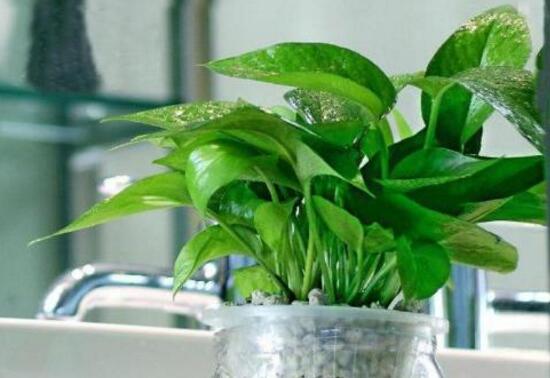
Pothos and spider plant like warm, humid environments, and a single cut stem inserted into water can survive, so can pothos and spider plant be grown in water? Obviously yes, and this is also one of the cutting methods for pothos and spider plant. In daily life, many flower lovers surely want to grow pothos and spider plant hydroponically. So that new flower lovers know how to grow them, let us take a look at the water-growing method for pothos and spider plant.
II. Water-growing method for pothos and spider plant
Materials: scissors, a drink bottle (or another pretty transparent container), one pot of pothos and spider plant
1. Cutting selection
From 1-2 year old pothos and spider plant, choose a healthy vine free of pests and diseases and with aerial roots, and cut it off with scissors to use as a cutting. It can be cut into several sections, as shown in the picture.
2. Container selection
In the water-growing method for pothos and spider plant, there can be many choices of container: if you are just cutting for fun, a plastic bottle is enough; but if you plan to grow it for a long time, then it is best to prepare a pretty transparent glass container.
3. Starting the water insertion
Pour water into the container so that the water level is at two-thirds of the bottle. Then insert the cut pothos and spider plant cuttings so that the aerial roots touch the water surface. After inserting, place the glass bottle in a ventilated, breathable place with plenty of light but no direct sunlight.
4. Water quality/water temperature
Room-temperature water is fine, but if it is tap water, you need to leave it in the sun for two days in advance to remove the chlorine from the tap water. Of course, cooled boiled water also works; no need to sun it, just use it directly.
5. Rooting/care
For the water-growing method for pothos and spider plant, once the above steps are done, it is basically more than half complete, and next comes daily care. After about a week or so, the aerial roots will grow root hairs. After that, once the plant has fully survived, place it on a balcony to grow, and be sure to change the water often and keep the air humid.
Switching from hydroponics to soil culture
If you are only using water insertion as a transition, then after the aerial roots grow root hairs, you can transplant it into soil. Find a flowerpot and coil the pothos and spider plant vine with root hairs into the soil. Then place it in a ventilated, breathable place with scattered light, avoiding direct sunlight. Water by the principle of dry-wet alternation, and water thoroughly when watering. Never water lightly or overwater.
Similar function, big difference in appearance: the difference between pothos and spider plant
Pothos and spider plant are both common household plants that can purify the air, but many people confuse pothos with spider plant. This is because they are both greenery plants and are easy to keep alive. So is there any difference between pothos and spider plant? Let us take a look together!
Category
Pothos belongs to the vine family of plants and does not bloom. Spider plant belongs to the Agave family of plants and does bloom with small flowers.
Stem
The main stem of pothos is relatively long and can keep extending, and it is accompanied by green leaves, while the stem of spider plant is shorter, with the leaves being its prominent feature.
Leaves
The difference between the leaves of pothos and spider plant is fairly obvious. The leaves of pothos are oval, similar to a heart shape, while the leaves of spider plant are slender.
Growth direction
Pothos mostly grows by climbing, and can reach up to 20 m in height, while spider plant spreads out in the pot and is generally hung up, growing downward.
Propagation method
Pothos belongs to asexual propagation. Just cut off a section at random and put it directly in water, and pothos can take root and survive, while spider plant needs root division and transplanting to survive in soil.
Pothos and spider plant both belong to green plants that purify the air, and both can be grown in water and in soil. Although they are common, it still seems easy to confuse the two, but there are still differences between them. If you still cannot distinguish between pothos and spider plant, the editor's notes above may be of some help to you!
Hydroponic methods for spider plant and pothos: hydroponic tips for 10 common plants
Hydroponic methods for spider plant and pothos: hydroponic tips for 10 common plants
Flower Bonsai Network introduction: Today the Flower Bonsai Network editor will introduce an article about hydroponic tips for 10 common plants. Do you want to know how to grow spider plant and pothos hydroponically? Let us take a look.
Because hydroponic plants are cleaner, more elegant, and better for viewing, they are favored by many flower lovers. If any step such as transplanting, rooting, changing water, nutrients, or pruning is not paid attention to, the plants will wilt or die. Today Huahua has compiled the care experience for 10 common hydroponic plants. Come and take a look.
1 Aloe
1. Because aloe plants have thick, fleshy leaves and are relatively heavy, special consideration should be given when choosing a container. The bottle mouth should match the size of the plant, or a planting basket should be added to secure it.
2. Wash the roots of an entire pot, or of divided side shoots when repotting, and grow them in clean water. New roots can sprout in about 20 days.
3. During the rooting process, provide scattered light and ventilation (do not expose it to the sun), pay attention to changing the water, and it is best to shade the bottle. Shading it dark helps rooting.
2
Spider plant
1. For water-grown spider plant, only one third of the root system needs to touch the water surface. Do not submerge all of the spider plant's fleshy roots in water, otherwise water accumulation can easily cause root rot.
2. For spider plant newly placed in water, change the water once a day, and reduce the frequency of water changes after it roots. If residual plant fragments or residual substrate, nutrient solution sediment, and so on remain in the water and cause the water quality to deteriorate, root rot can easily occur.
3. The roots of spider plant are very sensitive. When changing water normally, make sure the water temperature is close to room temperature, avoiding too cold or too hot.
4. Often check the growth of the root system, and promptly cut off rotted roots. After root rot, just grow it in clean water. Wait until the roots adapt to the environment and grow new roots before adding nutrient solution.
3
Anthurium
1. It is difficult to wash off the substrate residue on the root hairs of anthurium all at once, so remove it slowly during the care process.
2. Generally, do not prune the anthurium root system. According to the situation after hydroponic growing, only appropriately shorten overly long roots.
3. Anthurium likes relatively high air humidity and a semi-shaded environment, and you can often spray water on the leaves.
4. When changing water, the water temperature must not differ too much. It is not cold tolerant, so in winter it needs heating to keep warm.
4
Pothos
1. For pothos grown hydroponically from stems, the cuttings must be healthy and free of pests and diseases, and it is best if they have aerial roots. The stem inserted into the hydroponic container must not have leaves, so as to avoid rot that pollutes the water quality and spreads pathogens.
2. For hydroponic pothos, change the water frequently in the first few days, once every one or two days. The water temperature should not differ much from the indoor temperature. After new roots grow, the frequency of water changes can be reduced, to once a week.
3. The issue of cleaning the root system of hydroponic pothos is very important. If you only change the water without cleaning, bacteria will accumulate at the roots and cause root rot. When cleaning the root system, promptly cut off overly long roots, rotted roots, and decayed roots, and disinfect them with potassium permanganate before resuming normal care.
4. Pothos is not cold tolerant. On winter nights, use foam plastic board to wrap the container, and use a plastic bag to cover the hydroponic plant, which can achieve a heat-preserving effect. Open it again during the day.
5
Lucky bamboo
1. After the cuttings are inserted into the bottle, change the clean water once every 3-4 days. You can add a few small pieces of charcoal to prevent decay. Do not move the position or change the direction within 10 days. The most suitable time for bottle insertion is April to September, because roots and survival are easiest during this period.
2. Hydroponic lucky bamboo cannot be grown directly with tap water. It is best to store it for a day before use, so as to ensure the normal growth of the lucky bamboo.
3. After rooting, promptly add a small amount of culture liquid or compound fertilizer to ensure thick, strong stems, but do not add too much, otherwise it will cause root burn. Fertilize once a month.
4. About every 3 weeks, add a few drops of brandy to the bottle, or dissolve half a tablet of aspirin crushed into powder or one tablet of vitamin C in 500 g of water, then drip a few drops in when adding water. This can keep the leaves green.
5. Do not place lucky bamboo next to a television or in places often blown by an air conditioner or electric fan, so as to avoid dry leaf tips and leaf edges, which affects the ornamental effect.
6
Asparagus fern
1. Use a planting basket and fix the asparagus fern with ceramsite.
2. The water level in the bottle should not be too high. Keep the water height at one third to one half of the bottle height. Too high can easily cause rot and disease of the asparagus fern's main stem.
3. Change the water once every 7-10 days or so in summer and once every 20 days or so in winter, and replenish nutrient solution each time you change the water. The nutrient solution can be used at a proportion of six drops per liter.
7
Hyacinth
1. The mouth of the hydroponic cup should not be too large; it must be able to hold the bulb. A professional hydroponic bottle is of course best, and a hydroponic basket is also good.
2. Hyacinths rot fairly easily, so when growing hydroponically the water should not cover the bulb. There must be a 5 mm gap between the bulb and the water surface.
3. When the pot is first planted, the hyacinth should be kept away from light, that is, put the bulb together with the vase in a dark place where it cannot see sunlight. You can use a plastic bag, newspaper, and so on to wrap the transparent part of the bottle. It is recommended to keep it shaded for 15-20 days, keep the temperature at around 9-10 degrees, change the water once every 5 days, and once every 7 days after roots grow.
4. After the shading period is over, it needs sufficient sunlight to promote leaf growth. Otherwise the plant is prone to leggy growth, and in severe cases it will not bloom.
8
Narcissus
1. Change the clean water once a day, otherwise the water quality will be unclean and affect the growth of the narcissus. In addition, narcissus bulbs contain a large amount of nutrients, so the fertilizing step can be omitted. Just change the water frequently.
2. Ripe fruit must not be placed next to narcissus plants. Gases such as ethylene released by various fruits will accelerate flower withering and shorten the flowering period.
3. If the phenomenon of "dumb flowers" appears, you can look for the cause in the water quality, sunlight, and water-changing behavior. It may be that the narcissus roots and flower scapes were accidentally damaged when changing the water.
9
Pennywort
1. Add water in time, and the water in the pot must never dry up. Pennywort likes water and sunlight, and only with plenty of water and plenty of sun can it grow large leaves. It needs more than 4 hours of sunlight per day to grow vigorously and green.
2. It is no problem at all for the whole plant to sink in water. Add mud, sand, and nutrient soil, press it down with stones, and it can still sprout and produce flower spikes.
3. If you keep goldfish at home, you can pour the water from changing the goldfish water into the pennywort's water basin, which can make the pennywort grow better.
4. Pennywort grows vigorously and can spread over the whole water basin in one month. Prune and divide it in a timely manner, and transplant overly dense pennywort into other water basins, so as to avoid mature leaves shading the light of young leaves and affecting normal plant growth and metabolism.
10
Ivy
1. Hydroponic ivy can use a whole plant or cuttings, and it is best done in spring and autumn. After the root system grows roots in the cutting bed, it can be put on a planting basket for root forcing and induction.
2. The water poured into the cultivation container should not be too full, and space for ventilation and air passage should be left. Set a metal or hard plastic mesh support at the mouth of the container to prevent lodging or drifting when moved.
3. It is best to use the method of rooting stem cuttings in water, because the roots grown this way are not only good in color, but also avoid the root damage that occurs when washing roots.
4. Ivy stems inserted in water can produce roots in less than 1 week. During the rooting process, do not give light; place the hydroponic ivy in scattered light or a shaded place. One week after the ivy roots grow, it can gradually be exposed to light, and a small amount of nutrient solution can be added once a month.
Whether potted or hydroponic, growing flowers is not easy. It requires the enthusiasm and careful care of raising a child to look after them as they grow. When the day comes that branches are lush, leaves are green, and fragrance fills the house, all the flower owner's efforts are worthwhile.