How do you prune pothos and spider plant? Just cut them in half at 20 cm from the pot
As common indoor plants, everyone must be familiar with pothos and spider plant. They are beautiful in appearance and highly effective, making them very suitable for growing at home. However, pothos and spider plant grow very quickly. To ensure their beautiful appearance, proper pruning is very important. So how do you prune pothos and spider plant? For experienced growers, pruning is not difficult, but if you are a beginner, you must master the pruning methods for pothos and spider plant. Next, let's take a look together.
1. How to prune pothos and spider plant, timing/methods
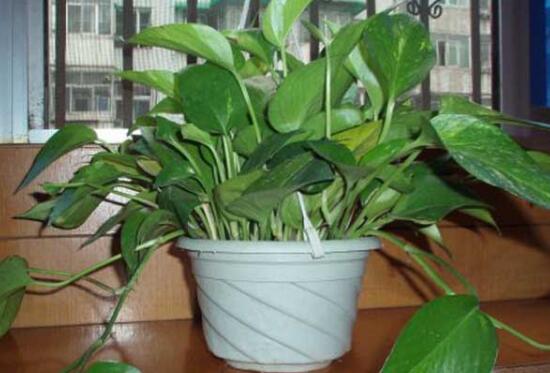
When it comes to pruning pothos and spider plant, there is actually no fixed standard. Pruning is only to create a shape and make them look more beautiful. So how do you prune pothos and spider plant? You can prune according to your own ideas, but pruning as you please is not something just anyone can do. If you are not careful, you might even prune the plant to death.
Therefore, when pruning pothos and spider plant, it is best to cut off the excess parts that have grown out, just like cutting a person's hair, to create a good shape. In addition, as they age, the branches and leaves at the base of pothos and spider plant will gradually age and turn yellow. If not pruned in time, your plant may look very unsightly. So for flower growers who still do not know how to prune, you can follow the pruning methods for pothos and spider plant below.
2. Pruning methods for pothos and spider plant
(1) Pruning timing and methods
To prune pothos and spider plant, you first need to know when to cut. For this, the pruning methods for pothos and spider plant are divided into two situations: with a moss pole and without a moss pole, as follows:
1. Pothos and spider plant without a moss pole
① When pothos and spider plant have grown very long, you can cut off the branches about 20 cm from the potting soil to let them sprout new branches and leaves;
② When the new branches and leaves are 20 cm long, then cut off the other old leaves. This can renew all the branches and leaves, making pothos and spider plant look more beautiful.
2. Pothos and spider plant with a moss pole
Timing: When the stems and vines of pothos and spider plant have covered the moss pole and grown about 20 cm beyond it, it is time to prune.
Method: Cut directly in half. First cut off about 40 cm of half the stems and leaves, and after this part grows new leaves, cut the other half.
Note: In winter, if poor growth is caused by environmental reasons, the pruning length can be appropriately shortened, cutting off 1/2 and 2/3 of the stems and vines respectively. After pruning in this way, new leaves of pothos and spider plant will soon grow out and cover the entire moss pole.
(2) Pruning precautions
1. Cutting propagation
Pothos and spider plant grow quickly and do not easily produce side branches, so pruning cannot solve the problem of growing taller. In addition, as they age, yellowing of the lower leaves of pothos and spider plant is unavoidable. Therefore, in order to always enjoy beautiful pothos and spider plant, everyone should develop the habit of propagating pothos and spider plant by cuttings. The cutting methods for pothos and spider plant were introduced in detail earlier, and interested flower growers can take a look.
2. Care after pruning
After pruning the branches and leaves of pothos and spider plant, more care should be given, as this benefits plant growth; otherwise, it will affect the appearance. In addition, pothos and spider plant should not be pruned too heavily, because if pruning is too severe, it will not only affect the degree of beauty but also have a certain impact on the plant.
Pruning flowers and plants is very necessary. In the hot summer, help your flowers and plants reduce their burden too
Whenever the weather is hot, people want to cut off thick hair to cool down. Sometimes, the various branches and leaves on flowers and plants also make them "uncomfortable." Some plants do not look very good, especially when they are poorly grown and in a half-dead state, or when they have suffered greatly from pests and diseases. In such cases, proper pruning for them is very necessary. Today, let's talk about how to prune some common flowers and plants.
Spider plant
Some friends have spider plants at home that grow too luxuriantly, with leaves hanging too long and needing pruning. When pruning, cut off the dead branches and yellow leaves on the outer edge, and also cut off the scorched parts at the leaf tips. To make the hanging leaves of spider plant more natural, do not cut straight across; cut diagonally, preferably with one diagonal cut on each side. Usually, whenever yellow leaves are seen, they can be pruned at any time. In March each year, the pot can be repotted once, cutting off old roots, rotten roots and excess fibrous roots.
Pothos
Hanging pothos has no moss pole, so pruning is based on the potting soil as the standard. Generally, cut off the branches and leaves 20 cm from the potting soil, and after new leaves of equal length grow out, cut off the old leaves at the bottom. Pruning should ensure that all branches and leaves are renewed. Potted pothos generally also has a moss pole. When the stems and vines of pothos have covered the moss pole and grown about 20 cm beyond it, it is time to prune. When pruning, note that it should be cut in half. First cut off about 40 cm of half the pothos stems and leaves, and after this part grows new leaves, cut the other half.
Money tree
If the branches and leaves of a money tree turn yellow and wither, but the root system is still intact, it can also be pruned to let it be reborn. Use scissors to cut off all the branches of the money tree, and you can appropriately leave nodes on the branches to promote renewed growth of the plant.
Asparagus fern
Asparagus fern grows very quickly. To make the whole asparagus fern grow well and look beautiful, it is also necessary to cut off overly dense, withered and yellow branches and leaves as well as weak stems, so as to improve ventilation and light transmission, promote growth and benefit ornamental value. If grown from a young seedling, once the tender green branches reach a certain height, the top can be removed to make the plant short and sturdy and promote branching. When an adult asparagus fern enters the growing period, the leaves at the tips of the branches may grow unsatisfactorily due to differences in the care environment. If the top leaves are missing at this time, the main branches can be shortened. Pay attention to the lateral buds on the branches and do not cut them off at will.
February home flower-growing guide
February is the last month of winter and also the cold period second only to January in the year, with average monthly temperatures between -2.5°C (Beijing) and 4.7°C (Shanghai). In the north, potted ornamental plants that can be displayed in courtyards must be quite cold-tolerant species. Among woody ornamental plants are: lacebark pine, Yunnan pine, Huashan pine, Japanese fir, Japanese white pine, black pine, Japanese black pine 'Nishiki', large-leaf euonymus, Chinese juniper, Chinese arborvitae, Chinese juniper, dragon juniper, firethorn, wintersweet, plum blossom, ginkgo, Butia capitata, European dwarf palm, Chilean wine palm, Washington palm, leatherleaf mahonia, Chinese elm, trident maple, crape myrtle, etc.; in southern regions, plants such as banyan, Canary Island date palm, long-spike palm, silver date palm, palm bamboo, silver wattle, silver banksia, mahonia, Japanese fatsia, Buddhist pine, bamboo-leaf podocarpus, gold-dusted Japanese aucuba, cabbage palmetto, heavenly bamboo, sago palm, golden mountain palm, etc. can be displayed. In the less cold areas south of the Yangtze River, some herbaceous flowers can also be displayed, such as ornamental kale, daisy, pansy, pot marigold, Reineckea carnea, Aspidistra, Ophiopogon, dwarf lilyturf, etc. This month, when displaying ornamental plants in the courtyard, various measures should be taken to prevent freezing injury to plant roots or frost cracking of flower pots.
Propagation of courtyard flowers
1. Sowing: In a double-layer plastic greenhouse in the courtyard with good insulation performance, the herbaceous flowers that can be sown include: pot marigold, cyclamen, dwarf sunflower, asparagus fern, gloxinia, tuberous begonia, cornflower, blanket flower, strawflower, scarlet sage, marigold, globe amaranth, French marigold, petunia, California poppy, phlox, calceolaria, snapdragon, nasturtium, pansy, etc. Note that the greenhouse temperature should be kept no lower than the minimum germination temperature for the seeds of different herbaceous flower species. In addition, tubers of tuberose and amaryllis can also be potted in the greenhouse at the end of February.
At the end of this month, in southern regions, as long as the nursery soil is not frozen, woody ornamental plant species that can be sown in the open field in the courtyard include: magnolia species, Michelia species, photinia species, maple species, crabapple species whose seeds have been stratified in sand to promote germination and have cracked and become white, as well as tree peony, goldenrain tree, red camellia, horse chestnut, camphor tree, privet, soapberry, small-leaf privet, Elaeocarpus, palm, Chinese parasol tree, firethorn, osmanthus, etc. Wisteria, lilac, wintersweet, summer sweetshrub, tulip tree, etc. that have not been stratified in sand can also be sown at the end of February. Seeds of wintersweet, summer sweetshrub and tulip tree with thicker seed coats should be soaked in cold water for 24 to 36 hours before sowing, and sown after the seeds have absorbed enough water.
2. Cuttings: This month, ornamental plant species that can be propagated by cuttings in the open field in the courtyard or with plastic film cover include: plum blossom (referring to one-year-old branches of easy-to-root cultivars such as Gongfen and Lüe), heavenly bamboo, cotton rose (south), paperbush, pomegranate, forsythia, winter jasmine, jasmine, serissa, hibiscus, Hypericum patulum (peach), spiraea, mahonia, boxwood species, Lespedeza, wintersweet (with heel), red-leaf plum, rose (Elizabeth, floribunda, climbing, miniature and other cultivars), Japanese ternstroemia, silver bud willow, snowbush spiraea, gardenia (south), golden-leaf privet, purple-leaf barberry, fig, etc. The cutting medium can be ordinary sandy loam, or a mixed medium of half vermiculite and half river sand.
This month, as long as a simple or double-layer plastic greenhouse with good insulation performance can maintain a temperature of no less than 5°C to 7°C, the following ornamental plants can be propagated by cuttings: jasmine, chloranthus, geranium, fuchsia, Belgian azalea, Chinese hibiscus, Lantana montevidensis, Lantana camara, gem flower, jade plant, jade leaf, finger citron, echeveria, Epiphyllum, orchid cactus, Pilea, shrimp plant, nasturtium, kalanchoe, clerodendrum, ixora, silver-haired Brazilian glory tree (Brazilian glory tree), Schefflera, dwarf coconut palm, rubber tree, wax begonia, cane begonia, gray thistle (commonly known as African jasmine), banyan, gold-dusted Japanese aucuba, red-back excaecaria, scarlet sage, Rieger begonia, Guangdong evergreen, dreamy cordyline, pothos, etc. The cutting medium can be mud or a medium mixed half and half with rice husk ash and fine sand.
3. Grafting: In late February, indoors, use one-year-old robust black pine seedlings as rootstock, and side-graft Japanese white pine, Osaka pine, Japanese black pine 'Nishiki', etc. onto the rootstock medium, covering with plastic film to retain moisture and heat, resulting in a relatively high survival rate; use one-year-old seedlings of apricot or wild peach as rootstock, and cleft-graft red-leaf plum, plum blossom, ornamental peach, longevity peach, purple-leaf peach, etc.; in the Jiangnan region, when the leaf buds on 2-year-old wintersweet seedling rootstocks grow to the size of wheat grains, cleft grafting can be carried out to propagate fine cultivars of wintersweet such as 'Suxin', 'Xinkou' and 'Huti'; by adopting adequate bagging measures to retain moisture, the survival rate is high; indoors, use 1- to 2-year-old purple magnolia as rootstock, cleft-graft Michelia, then plant in the ground and cover with plastic film to retain moisture warmth, and the survival rate is also relatively high; use Elizabeth rose or wild rose as rootstock, and cleft-graft or split-graft fine cultivars of rose, with good results; use 1- to 2-year-old green maple seedlings as rootstock, and graft red maple, feather maple, etc. with inflated bagging; in southern regions, if the greenhouse temperature can be maintained above 20°C, use oil tea and red camellia as rootstock, and carry out trunk-cut single-bud scion bark-tearing veneer grafting for camellia, adding plastic bag covering for warmth, resulting in a particularly good survival effect.
4. Layering: This month, ornamental plant species suitable for low layering propagation include: plum blossom, wintersweet, Chaenomeles speciosa, Hall crabapple, Midget crabapple, purple magnolia, gardenia, osmanthus, camellia, weigela, Buddhist pine, Chinese cypress, snowball, Chinese snowball, winter jasmine, forsythia, Hypericum, hydrangea, Sabina chinensis, bridal wreath spiraea, snowbush spiraea, red maple, Michelia, etc.; species suitable for air layering include: red maple, camellia, rubber tree, white orchid, Aglaia odorata, etc., but the latter three can only be carried out in greenhouses with relatively high room temperature.
5. Division: This month, woody ornamental plant species that can be divided include: heavenly bamboo, cotton rose, Hypericum, mahonia, hydrangea, Chaenomeles speciosa, paperbush, winter jasmine, forsythia, Caragana, snowbush spiraea, red-flowered spiraea, jasmine, chloranthus, tiger thorn, purple magnolia, four-season osmanthus, Phoenix bamboo, Pleioblastus fortunei, palm bamboo, bush cherry, gardenia, sisal, French holly, sago palm, etc.
This month, herbaceous ornamental plant species that can be propagated by division include: autumn zephyr lily, dwarf lilyturf, silver-striped Ophiopogon, Reineckea carnea, hosta, purple hosta, Jianlan orchid, Chunlan orchid, Huilan orchid, Rudbeckia, lily of the valley, Oxalis species, Aspidistra species, Iris species, Bromeliaceae species, Sansevieria species, clivia, money tree, Maranta species, little angel, Anthurium species, Monstera, Philodendron species, kidney fern, oxalis, spider plant species, bird of paradise, aloe, canna, arrowhead plant, etc. Note that less cold-tolerant species should be kept in greenhouses with good insulation performance to avoid cold injury or freezing injury.
Management of flowers planted in courtyard ground beds
1. Transplanting: This month, most flowering shrubs and courtyard landscaping trees can be transplanted and planted, such as hibiscus, pomegranate, redbud, crabapple species, ginkgo, maple species, wintersweet, plum blossom, white magnolia, purple magnolia, soapberry, goldenrain tree, silk tree, horse chestnut, red-leaf plum, purple-leaf cherry, purple-leaf peach, cherry blossom, ornamental peach, crape myrtle, wisteria, Chinese trumpet creeper, linden, tulip tree, Chinese tallow, elm-leaved spirea, paperbush, rose, pearl bush, dragon-claw pagoda tree, etc.
This month, because the weather is still quite cold, some evergreen courtyard trees, such as camphor tree, French holly, privet, Elaeocarpus, southern magnolia, osmanthus, etc., can be transplanted by conventional methods in the Jiangnan region; between the Jianghuai region, measures such as heavy pruning, carrying large soil balls, sealing cut surfaces with wax, wrapping trunks with rope or bundling them should be adopted, or the south trees moved north should best be postponed to mid-to-late March.
This month in the Jiangnan region, herbaceous flower species that can be transplanted and planted include: Dianthus species, ornamental kale, pot marigold, daisy, etc.; in the colder northern regions, Dianthus, primrose, pot marigold, snapdragon, pansy, daisy, etc. can first be potted and placed in a greenhouse, and after spring returns and the weather warms, they can be removed from pots and planted in the courtyard.
Bonsai enthusiasts can, in conjunction with forestry winter afforestation and land preparation, collect wild tree stumps, such as trident maple, horned holly, Chinese elm, plum yew, wisteria, Elaeagnus, oak, red azalea, Vitex, Euonymus, red nanmu, heavenly bamboo, etc. After heavy pruning, shallow burying and high mounding, covering with straw curtains for cold protection and moisture retention, good stump material can be cultivated.
2. Pruning: For hedges, topiary balls and ground-planted flowering shrubs that were not pruned in January, continue to seize the favorable opportunity before the trees sprout and send out shoots to carry out comprehensive pruning. For hedges, green walls, courtyard color blocks, etc., prune according to the requirements of straight lines, flat surfaces and clear edges and corners; for topiary balls and other geometric plants, prune according to the requirements of smooth curved surfaces and neat flat surfaces; for ground-planted flowering shrubs, cut off diseased and pest-infested branches and misshapen branches so that the plants tend to look beautiful and the interior is well lit. The cut branches and leaves should be gathered and burned, which can reduce the occurrence of pests and diseases in the current year.
3. Watering: For ornamental plants such as flowering shrubs transplanted in the courtyard in late autumn and early winter, special attention should be paid to watering management. If the soil mounded around the roots becomes dry, water should be replenished in time; if a lot of dust adheres to the leaf surface, water can be sprayed on the branches and leaves at noon on a clear day to prevent frost or freezing on the leaf surface early the next morning. For the small number of trees transplanted in the courtyard, after thorough watering, straw or plastic film can be spread within a radius of 1 to 1.5 m near the tree base, which can both retain warmth and moisture and help protect the root system.
4. Fertilizing: For ground-planted flowering shrubs in the courtyard that have not yet received winter fertilization, such as osmanthus, camellia, plum blossom, wintersweet, rose, crape myrtle, redbud, pomegranate, crabapple species, Michelia species, magnolia species, winter jasmine, forsythia, Hypericum, leatherleaf mahonia, heavenly bamboo, firethorn, etc., seize the time in early and mid-month to dig ring-shaped trenches around the outer edge of the root base and bury an appropriate amount of cake fertilizer or compound fertilizer. Generally, apply 1 jin per plant to meet the needs of continuous growth in the current year; in the Jiangnan region, for ground-planted herbaceous flowers transplanted in late autumn and early winter, such as Dianthus, verbena, phlox, pansy, pot marigold, hollyhock, mallow, etc., a thin fertilizer solution can be applied once at the end of the month to promote normal vegetative growth.
5. Pest and disease control: Seize the time to clean and sweep up weeds and fallen leaves in the courtyard and burn them in a concentrated manner, which can significantly reduce the occurrence of pests and diseases in the current year; inspect the trunks of courtyard flowers and trees, and if egg masses, pupae, etc. are found, scrape them off and destroy them in time; inspect plants, and if branches and leaves infected with pests or diseases are found, cut them off and burn them in time; for aphids found on plants, wood ash or tobacco powder can be spread to eliminate them.
6. Digging the soil: In early this month, seize the time to dig and turn the plots in the courtyard prepared for cuttings, sowing or planting in the current year, and at the same time apply cake fertilizer, pond mud, barnyard manure, etc. (except for cutting plots). After freezing and weathering, trenches can be drawn and beds made in March, which can significantly reduce the harm of underground pests to seedlings in the current year. In addition, idle plots under courtyard trees should also be dug and turned, which can both reduce pests and diseases and benefit the growth of flowers and trees in the current year.
7. Preparing fertilizer: In early this month, put rapeseed cake, soybean cake, tea seed cake, chicken manure, pigeon manure, etc. into vats or ponds, add water, seal and ferment, and it can be used for watering ground-planted trees and potted plants in spring and summer. Mix pig manure, chicken manure, cake fertilizer, etc. with pond mud and garden soil, seal and compost, and it can be used to prepare potting soil and for topdressing flowers and trees. Dry the dead branches, fallen leaves and weeds cleaned up from the courtyard, then pile and burn them in layers with garden soil. The resulting burned soil can be used both for covering seeds after sowing and for preparing potting soil.
8. Seed collection: There are not many seeds that can be harvested in February, only those flower and tree species whose fruits can persist on the branches for a relatively long time, such as firethorn, precious seeds, heavenly bamboo, holly species, small-leaf privet, privet, red maple, chicken-claw pepper, etc.; after harvesting, they should be processed in time and stratified in sand to promote germination, so as to sow from late March to early April. In greenhouses, seeds of asparagus fern, winter cherry, palm bamboo, precious coconut, clivia, etc. can also be collected, and should be sown as soon as they are collected.
9. Inspection: This month, frequently inspect seeds stored in sand, such as magnolia species, Michelia species, Manglietia species, photinia species, winter jasmine species, privet species, osmanthus species, to see whether any seeds have moldered. If moldy seeds are found, rinse the seeds in time and replace the wet sand for re-storage; if the seeds are dry, spray an appropriate amount of water to increase humidity; if the seeds have cracked and become white, sow them in the ground in time and cover with plastic film to retain warmth and moisture. In addition, also inspect dahlia tubers and canna rhizomes stored indoors in sand to prevent mold and rot.
Management of courtyard potted flowers
1. Watering: For some relatively cold-tolerant potted ornamental plant species placed in the courtyard, such as pines and cypresses, wintersweet, plum blossom, crape myrtle, Vitex, ornamental peach, Hall crabapple, etc., water once every half month around noon, just keeping the potting soil moist without freezing; for plum blossom, camellia, sasanqua, Daphne, crabapple species, Belgian azalea, etc. placed in greenhouses, because their flower buds are in the swelling stage or just beginning to open, in addition to keeping the potting soil moist, water should also often be absorbed by the branches to create a relatively humid small environment for them; for foliage plants placed in greenhouses, watering should be well controlled, and the plants can be sprayed once a week around noon, with the water temperature basically consistent with the greenhouse temperature, and the leaf surface should not retain water at night, so as not to damage the root system and leaves.
2. Fertilizing: This month, the vast majority of potted flowers and trees in the courtyard are still in a dormant state and do not need topdressing, but for some tall potted plants, if repotting is not planned in spring, a ring-shaped trench can be dug around the potting soil and a small amount of composted cake fertilizer powder or multi-element slow-release compound fertilizer granules can be buried; for plum blossom, peach blossom, tree peony, camellia, sasanqua, Belgian azalea, Daphne, crabapple species, etc. placed in greenhouses, if the greenhouse temperature exceeds 10°C, a 0.3% potassium dihydrogen phosphate solution can be applied; for bromeliads, Cymbidium, cyclamen, Cymbidium sinense, cineraria, hyacinth, Christmas cactus, calla lily, bird of paradise, etc. placed in greenhouses, as long as the temperature is not lower than 15°C, low-concentration potassium dihydrogen phosphate solution can continue to be applied; for foliage plants placed in greenhouses, if the temperature is lower than 10°C, their root systems are still dormant, and all forms of topdressing should be stopped.
3. Pruning: This month is the last month of winter. For potted ornamental plants placed in the courtyard that have not yet completed pruning, seize the time to prune; for potted plants that have been styled for more than a year but have not yet been tied, first remove the tying materials, and for branch layers that have not yet been pulled and tied into place, change the angle and position again for pulling and training, so as to avoid branch layer death caused by too long a binding time. For potted foliage plants placed in greenhouses, promptly cut off dead branches and yellow leaves on the plants.
4. Cold protection: For potted flowers placed in greenhouses, if an especially strong cold wave moves south and causes a large temperature drop, add 1 to 2 far-infrared electric heating films in the greenhouse, which can raise the greenhouse temperature by 2°C to 3°C. For large tree-stump bonsai placed in the courtyard, in especially cold weather, cover the pot surface and surroundings with sawdust, straw, gunny bags, plastic film, etc. for warmth.
5. Pest and disease control: For potted ornamental plants placed in greenhouses, special attention should be paid to controlling aphids, scale insects and whiteflies; for greenhouses with relatively high humidity, pay attention to ventilation around noon when the temperature is relatively high, to prevent large-area gray mold, such as on Rieger begonia, tuberous begonia, Chinese hibiscus, etc. For potted plants that had pests or diseases last year, clean up the dead branches, fallen leaves and weeds around them and on the pot surface and burn them in a concentrated manner; for large stumps with part of the trunk xylem exposed, apply lime sulfur mixture to the exposed parts to prevent trunk rot or insect borers.
6. Soil preparation: In early this month, seize the time to prepare potting soil. You can use 5 parts garden soil, 2 parts leaf mold, 1 part river sand, 2 parts composted sawdust or tobacco powder, plus 5% decomposed cake fertilizer and 3% multi-element compound fertilizer. Mix thoroughly and pile it up, then cover the top with plastic film for use in spring repotting or potting.
Balcony flower care arrangements
Bonsai suitable for balcony display
This month the weather is cold. On open balconies north of the Huai River, it is still not suitable to place potted ornamental plants, unless they are species that are very cold-tolerant, drought-tolerant and resistant to cold wind, such as Chinese arborvitae, dragon juniper, Chinese juniper, pomegranate, ginkgo, etc. Open balconies south of the Huai River can display plant species that have been hardened over a long period, have strong resistance and are quite cold-tolerant, such as black pine, trident maple, Chinese elm, plum yew, water poplar, wintersweet, plum blossom, winter jasmine, forsythia, Euonymus, etc., but the potting soil should also be prevented from freezing. In southern regions, if the temperature on the balcony is not lower than 5°C, then sago palm, aucuba, leatherleaf mahonia, Butia capitata, palm bamboo, European dwarf palm, golden mountain palm, Chinese ash, horned holly, Hall crabapple, Chaenomeles speciosa, etc. can be displayed.
Propagation of balcony flowers
1. Sowing: On an enclosed balcony, use a large flower pot filled with potting soil to sow sago palm, palm bamboo, asparagus fern, clivia, Buddhist pine, bamboo-leaf podocarpus, osmanthus, Michelia, Ardisia crenata, ginkgo, etc., and seedlings can emerge in spring.
2. Cuttings: On an enclosed balcony, use a wide-mouthed large flower pot as the container, use vermiculite or peat plus 1/5 river sand mixed as the cutting medium, carry out fully enclosed moisture-retaining cuttings, and maintain a temperature of no less than 5°C. You can take cuttings of finger citron, Chinese hibiscus, Schefflera, rubber tree, Lantana camara, geranium, jasmine, chloranthus, aucuba, kalanchoe, jade plant, jade leaf, Epiphyllum, orchid cactus, etc.
Management of balcony potted flowers
1. Watering: For those plant species placed on fully enclosed balconies that bloom around the Spring Festival, such as cineraria, primrose, kalanchoe, camellia, sasanqua, Belgian azalea, pot marigold, etc., and fruit-viewing plants such as firethorn, heavenly bamboo, bitter orange, finger citron, kumquat, precious seeds, winter cherry, etc., not only should the potting soil be kept moist, but the leaves, flower buds and fruits must also be sprayed with water. Only in this way can the leaves be emerald green, the flower buds swell rapidly and the fruits be brightly colored. For purchased Cymbidium, poinsettia, etc. cultivated in greenhouses, because the temperature and humidity in their original environment differ greatly from those at home, if the leaf surface is not frequently sprayed with water, the leaves will often shrink and dry up. For various bromeliads, if the room temperature is lower than 10°C to 15°C, not only should watering be controlled, but excessive water should not be poured into the leaf cups, to prevent heart rot. For potted ornamental plants kept on balconies in southern regions, it is suitable to keep the potting soil moist.
2. Fertilizing: For potted ornamental plants placed on fully enclosed balconies, such as camellia, sasanqua, Belgian azalea, Daphne, clivia, plum blossom, cyclamen, calla lily, Cymbidium, Cymbidium sinense, bromeliads, calceolaria, cineraria, bird of paradise, primrose, hyacinth, tulip, etc., as long as the room temperature is not lower than 15°C, low-concentration potassium dihydrogen phosphate solution can continue to be applied. For tree-stump bonsai and potted foliage plants that have entered dormancy, all forms of topdressing should be stopped.
3. Pruning: For potted ornamental plants placed on fully enclosed balconies, cut off dead branches, yellow leaves and branches and leaves infected with pests or diseases and destroy them; for tree-stump bonsai placed on balconies, such as plum yew, Chinese elm, Distylium, trident maple, etc. in the north, and Fujian tea, orange jasmine, banyan, small pyracantha, bougainvillea, pepper tree, fragrant wood, etc. in the south, seize the time to carry out a comprehensive and thorough pruning to make the crown shape graceful and the layers distinct; for those plants that have been trained and styled for 2 years, first remove the binding materials. If the expected fixed styling effect has not yet been achieved, change the angle and position again and then carry out further training.
4. Cold protection: Determine whether potted plants placed on the balcony should be moved into an ordinary room to avoid the cold, placed in an air-conditioned room for care, or directly covered with a double-layer plastic shed on the balcony for cold protection, according to the lower limit temperature that different ornamental plant species can tolerate. For potted plants placed on balconies in southern regions, it is best to cover and tie the pot surface and the surroundings of the flower pot with gunny bags at night.
5. Pest and disease control: Exposed xylem on the trunk and large branches of tree-stump bonsai should be coated with lime sulfur mixture to prevent mold and borers. For scale insects, whiteflies, etc. appearing on potted plants, promptly wipe them off with a damp cloth; for aphids appearing on potted plants, soak tobacco powder (or tobacco shreds) in water to kill them.