What to Do When Fittonia Leaves Wilt? Learn Four Tricks to Bring the Leaves Back to Verdant Green
The most distinctive feature of Fittonia is the red or white network pattern on its leaves, but if you don't know how to grow Fittonia, you may run into some headache-inducing problems, such as wilting leaves. So what should you do when Fittonia leaves wilt? Below are several main causes and solutions.
What to Do When Fittonia Leaves Wilt
1. Nutrient deficiency
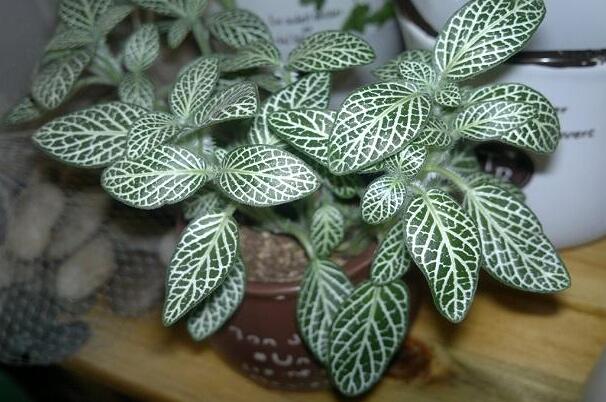
Cause: Although Fittonia has a low demand for fertilizer, the nitrogen, phosphorus, potassium and other elements essential for its growth should still be sufficient. If you rarely fertilize Fittonia, and the soil used is not fertile enough, the leaves will wilt due to nutrient deficiency.
Solution: If it is nutrient deficiency, you can solve it in two ways. One is to add some organic fertilizer to the soil as a base fertilizer when potting. The second way is to pay attention to reasonable fertilization in normal times, mainly with thin organic fertilizer.
2. Temperature too low
Cause: Fittonia has a very weak ability to adapt to low-temperature environments. When growing it, you generally need to keep the temperature above 12 degrees, and the lowest temperature must not fall below 8 degrees, otherwise the leaves will be frostbitten, and the result is wilting and dropping, which is very distressing.
Solution: What to do when Fittonia leaves wilt due to temperature problems? Pay attention to temperature changes through the weather forecast. If the temperature drops, do the warming work in advance, but it is best to keep Fittonia indoors, because it can avoid the situation of too large a temperature difference between day and night.
3. Long-term lack of water
Cause: Flower lovers who understand the growth habits of Fittonia should know that it prefers a moist environment. If it lacks water for a long time, the plant will look listless, and some leaves will wilt due to lack of water. The direct cause of the lack of water is, naturally, not watering often.
Solution: Water Fittonia as soon as possible. It can noticeably improve the wilting of some leaves, but in normal care and management, you still need to water reasonably, at least ensuring the temperature is moist and not too dry. If flower lovers don't understand the watering method, they can refer to how to water Fittonia.
4. Dim light
Cause: Fittonia likes a semi-shady environment, but that does not mean it likes a place that is dim for a long time. If the room always lacks light and the growing environment is on the dark side, over time some leaves will wilt due to lack of photosynthesis.
Solution: Move Fittonia to an environment with some light, as long as it can see some scattered light. If it is in a room with relatively weak light, you can turn on some lights to supplement light for it.
What to Do When Fittonia Withers
Besides the four causes above, there is another less common cause that can also cause Fittonia to wither, namely pests and diseases. Pests and pathogens are only likely to breed in relatively extreme environments, or when the soil has not been disinfected. Usually, just do a good job of prevention.
What to Do When Fittonia Leaves Wilt
Fittonia is a relatively popular green plant nowadays, with a unique name and elegant, beautiful leaf colors. When planting Fittonia, the leaves are very prone to problems such as wilting and softening, so what should you do when Fittonia leaves wilt?
What to Do When Fittonia Leaves Wilt1. How to grow Fittonia——Light
This herbaceous plant, Fittonia, actually likes light very much. Warmth and sufficient light are beneficial to the growth of Fittonia. If you place Fittonia indoors for growing, you must choose a position near the window so that light can shine on the Fittonia. At the same time, Fittonia also has a certain ability to tolerate shade. When the light is too strong in summer, appropriate shading treatment should be done. Fittonia grows best in an environment of 18 to 25 degrees.
2. How to grow Fittonia——Water and fertilizer
When growing Fittonia, pay attention to water and fertilizer. Although the demand for water and fertilizer is not large, you still need to water enough to ensure root growth. Too much watering will cause the leaves of Fittonia to start curling up, so if the leaves are curled, it means the Fittonia has been watered too much. Fertilizer is also very important for the growth of Fittonia. Usually, it cannot do without fertilizer during the growth cycle. You can fertilize Fittonia every half month, using compound fertilizer or nitrogen fertilizer.
3. What to Do When Fittonia Leaves Wilt
If the leaves of Fittonia wilt, it may be because it has been watered too much or too little. Both of these situations will cause the leaves of Fittonia to become soft and wilted, and we just need to reduce or increase watering.
What to Do When Fittonia Leaves Wilt
Lack of water as a cause of Fittonia leaf wilting
Lack of water is a major cause of Fittonia leaf wilting. When Fittonia is not watered enough, it will become short of water. Insufficient water easily causes the leaves of Fittonia to wilt and look very listless, so you need to replenish water for Fittonia.
Generally speaking, when Fittonia wilts due to lack of water, replenishing water immediately will restore it quickly. However, in order to prevent the phenomenon of Fittonia leaves wilting, you still need to do a good job in daily management and water correctly. When watering, you need to do it according to the plant's demand for water. Generally, look at the surface soil, water alternately when dry and wet, and be sure to water thoroughly.
Waterlogging as a cause of Fittonia wilting
When Fittonia is watered relatively frequently, it is very easy to cause this phenomenon: water accumulates in the pot soil, and the soil is too moist, so the roots of Fittonia cannot breathe well, which leads to root rot and makes the leaves wilt.
In fact, if Fittonia has root rot, it is very difficult for it to grow again. You can pull it out and replant it, but the effect is not great. The best method is still to water reasonably and prevent root rot.
Too low temperature as a cause of Fittonia wilting
Temperature is a major important factor for good plant growth. Only a suitable temperature can ensure normal plant growth. Once the temperature is too low or too high, it will cause various problems in the plant. If the temperature is too low, it will cause Fittonia leaves to wilt.
When the temperature is below 13°C, it will make Fittonia leaves turn yellow and wilt, so a suitable temperature must be ensured.
In addition, if you want to prevent Fittonia leaves from curling, drooping and wilting, you can place Fittonia in a place with bright light for care, and maintain a certain air humidity. When the temperature is too high, shading is needed.