How to Grow Kapok (Bombax ceiba) and Key Points to Note: It Needs Plenty of Water
Kapok (Bombax ceiba) is a very beautiful flowering plant. Its flowers are vividly red yet never gaudy, and its trunk is sturdy and robust, standing tall and upright like a hero, which is why people also call it the "hero tree." In daily life, many people want to grow kapok, so how do you grow it? Below is a carefully compiled guide to kapok growing methods and key points to note, very detailed. Anyone who wants to grow it should definitely take a look~
I. How to Grow Kapok: Understand Its Habits
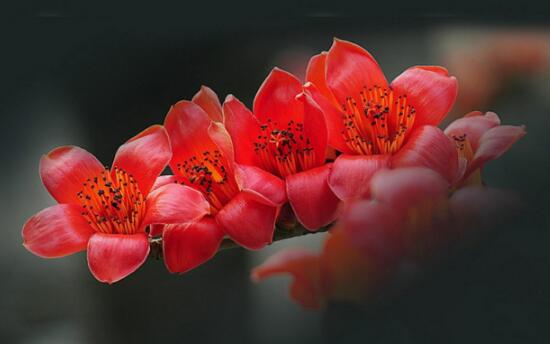
Kapok likes high temperatures and dry conditions, and has strong adaptability, so when grown in pots it is not fussy about soil. It is best placed in a spot with ample sunlight, good ventilation and good drainage. So, as for how to grow kapok, you just need to meet its growing requirements. Let's look at the specific requirements below.
II. Kapok Growing Methods and Key Points to Note
1. Soil
When growing kapok in pots, the first thing is of course choosing soil. However, it has strong adaptability and does not demand much from soil; ordinary sandy soil or heavy clay soil will both do. But if you want kapok to grow well, it is best to prepare an acidic soil with medium fertility and relatively high phosphorus and potassium content.
2. Light
In kapok growing methods and key points to note, light is naturally indispensable, but it is also an aspect that needs attention. In terms of requirements, kapok likes light and is fairly flexible about it, growing well in either full sun or partial shade; in terms of precautions, kapok is exposed to blazing sun, so in the strong summer sun we should give it appropriate shading.
3. Temperature
Plant growth is closely tied to ambient temperature. Because kapok is a specialty of the south, it is not cold-tolerant, so during winter care you should pay attention to keeping it warm, and the temperature must not drop below 5°C.
4. Watering
When it comes to how to grow kapok, watering is naturally essential. Because kapok likes a high-temperature, high-humidity environment, during growth we should give it plenty of water, but note that you should not water too much; everyone surely understands the principle that extremes reverse themselves.
Note: To satisfy kapok's preference for a moist environment, when choosing soil you must choose one with good drainage, otherwise the roots will easily rot. Alternatively, plant it directly in a pot that does not leak water, which saves you the trouble of watering every day.
5. Fertilizing
Having covered watering, let's look at fertilizing, which is also indispensable in kapok growing methods. If the soil is fertile enough, you can apply a mixed fertilizer of organic fertilizer and compound fertilizer once every 40 days; if the soil is average or rather poor, you can fertilize once every 20 days. This ensures kapok grows while also looking more beautiful.
6. Pruning
Apart from its powerful medicinal value, what flower lovers value most about kapok is its ornamental quality. Kapok plants are relatively large, so to make them look more beautiful, proper pruning is very important. You should promptly remove dead branches and spent flowers, and for leggy branches, pinch out the growing tips to control length and encourage new branches, making the plant full and well-shaped.
7. Repotting
When growing kapok, you should also repot it once a year. As for the timing, when the roots begin to grow again (usually in spring), you can start. Repot into an acidic soil with good drainage, medium fertility and relatively high phosphorus and potassium content. After repotting, place it in a shady spot for a week, pause watering, and after a week resume normal care.
8. Pest and Disease Control
During kapok's growth, for various reasons it will inevitably suffer from pests and diseases, such as alder leaf beetles and pistachio looper larvae. Once they appear, they will seriously affect the plant's growth, thus reducing kapok's ornamental quality. For this, you should carry out control immediately; for the specific methods, see kapok pest and disease control, and those interested can take a look.
What to Do When Money Tree Leaves Turn Yellow: Money Tree Growing Methods and How Often to Water
What to do when money tree leaves turn yellow? How often should a money tree be watered? Today wed114 wedding website brings you money tree growing methods. The money tree, also known as Guazui, is an evergreen small tree in the Malvaceae family. It is suited to a warm, humid, well-ventilated environment, likes sun and also tolerates some shade, and grows best in loose, fertile, well-drained soil!
What to Do When Money Tree Leaves Turn Yellow
The money tree has split petals, with flower colors in red, white or pale yellow, and vivid hues. It generally blooms from April to May and fruits from September to October. The money tree likes a high-temperature, high-humidity climate and has poor cold tolerance; it will suffer cold damage at low temperatures of around 5-6°C, and its optimum growing temperature is 20-30°C. The money tree likes fertile, loose soil and acidic soil, is very sensitive to alkaline soil, and is fairly tolerant of waterlogging.
What to Do When Money Tree Leaves Turn Yellow
Yellow Leaves
First, water yellowing: caused by watering too frequently. Its characteristic is that old leaves show no obvious change while young leaves turn yellow. In this case, watering should be stopped immediately.
Second, drought yellowing: caused by lack of water and drought. Its characteristic is that old leaves turn yellow first from the bottom up; if the water shortage lasts a little longer, the whole plant's leaves will turn yellow, or it may even die. Water promptly.
Third, fertilizer yellowing: caused by fertilizing too frequently or at too high a concentration; its characteristic is that young leaves are thick and fleshy, glossy, and uneven; you should reduce fertilizing, cultivate the soil, and water.
Fourth, starvation yellowing: caused by insufficient fertilizer, too low a fertilizer concentration, and too long an interval between fertilizing; its characteristic is that yellowing starts at the young leaves and tender stems. If no fertilizer is applied promptly after seeing this, it can also cause the whole plant's leaves to turn yellow or even die; for nutrient-deficient flowers and plants, never apply a large amount of concentrated fertilizer at one time, to avoid burning the roots.
Fifth, iron-deficiency yellowing of leaves. In greenhouses, woody flowers and plants, etc., often show yellow leaves due to large changes in soil fertility conditions. The characteristic is that young leaves are clearly affected while old leaves are less so, the leaf tissue is yellow and the veins are green, forming a typical network; this can be solved by applying ferrous sulfate solution, with the method being: mix 7 parts rapeseed cake fertilizer, 5 parts ferrous sulfate, and 200 parts water into a diluted solution and water with it.
What to Do When Money Tree Leaves Turn Yellow
Because the money tree is a feng shui item for the home, many people choose it as a home decoration. However, how should it be placed to best reflect the home's style?
1. Place it in the living room and study to reflect a serene Chinese style.
Chinese ornamental plants emphasize "observing its leaves, admiring its form." It is suitable to place potted plants with soil at home. Placing a pot of an old, gnarled-rooted Chinese pistache bonsai trunk at a screen partition, or placing a winter plum at the entrance hall, can both bring the Chinese style to the extreme. Chinese people value squareness and stability, and the money tree exactly embodies this charm.
2. Place it in the bedroom to reflect the owner's dream of striving toward a goal. The money tree carries the meaning of wealth, and a person spends the most time of the day in the bedroom. Facing the items in the bedroom, just imagine: if a person sees the money tree for a long time every day, how much would he want to fulfill his wish for wealth? He probably wouldn't not want it!
What to Do When Money Tree Leaves Turn Yellow
The following points must be noted when growing a money tree:
1. Water: When temperatures are high, the money tree's growth requires sufficient water. But because the money tree is highly drought-tolerant, not watering for many days will not harm the plant.
2. Temperature: During its growing period, the money tree very much likes hot weather. When the winter temperature drops below 16-18°C, the plant's leaves will turn yellow and fall off; the temperature must not drop below 10°C, otherwise the plant will die.
3. Light: The money tree is a sun-loving plant and is highly shade-tolerant. Therefore, it can be placed in a dim spot indoors, and after 2-4 weeks, put back in a bright spot, and the plant will not be harmed.
What to Do When Money Tree Leaves Turn Yellow
The biggest impression the money tree gives us is the meaning of wealth. In fact, it also plays a big role in the home environment.
1. The money tree creates a low-carbon home life. Low carbon has become the hottest environmental topic at present. From advocating environmental protection to reducing carbon emissions, the low-carbon lifestyle is being pursued by more and more Chinese people. Home life is an important part of low-carbon living. Using green plants as the best home decorations can both make a good home display and absorb excess carbon dioxide and purify the air. In daily life, just making a little change can lay a good foundation for a "low-carbon" life. Low-carbon living and trendy styles are not contradictory at all. Just as accessories of different styles match clothes of different styles, plants also need to match the home's style to add the finishing touch to a small home.
2. The money tree can beautify the home. The money tree is an evergreen tree with large flowers and split petals, in red, white or pale yellow, with vivid colors. A plant with green leaves is a delight to the eyes, and with flowers it is a fine choice for appreciation. Placing it at home undoubtedly adds a touch of charm to the home.
3. The money tree is especially good at purifying indoor air. Even under weak light or high carbon dioxide concentrations, the money tree can carry out photosynthesis efficiently, effectively eliminating carbon monoxide and carbon dioxide pollution in the air. In addition, the money tree has strong transpiration, which can effectively regulate indoor temperature and humidity, and can also resist harmful gases produced by cigarettes. If the money tree is combined with Buddhist pine, the effect will be even better, truly a perfect pairing, unmatched in the world.
How to Grow Oncidium (Dancing Lady Orchid), with Oncidium Photo Appreciation
Oncidium flowers are very vividly colored, and many are combinations of multiple colors, especially the leopard-print oncidium, which is particularly unique and beautiful. The petals are dotted with spots like leopard print. It must be said that this is a very cool flower. Let's appreciate oncidium photos together and see the beauty of oncidium.
How to Grow Oncidium, with Oncidium Photo Appreciation
——————————————————————————————————————————————
[Plant Profile]
——————————————————————————————————————————————
Chinese name:Oncidium
Scientific name:Oncidium
Alternative names:Dancing Lady Orchid, Golden Butterfly Orchid, Tuberculate-lipped Orchid, Dancing Girl Orchid
Family:Orchidaceae
Genus:Oncidium
Origin and distribution:The original species are native to the tropical regions of the Americas, with the greatest species distribution in countries such as Brazil, the United States, Colombia, Ecuador and Peru. However, their distribution range is relatively wide, including tropical, warm temperate, high-mountain temperate and cold temperate zones.
Morphological characteristics:Morphology varies greatly. Some species have only 1-2 flowers per flower stem, while some species can have as many as several hundred. Oncidium flower colors are mainly yellow and brown, and also include green, white, red and magenta. Their sizes range from extremely small, such as miniature oncidiums, to extremely large, with flower diameters reaching over 12 cm.
Oncidium Growing Methods
——————————————————————————————————————————————
● Growth habits: Likes humid and semi-shady environments. Original-leaf type (also called hard-leaf type) oncidiums like warm environments, while thin-leaf type (also called soft-leaf type) and sword-leaf type oncidiums like cool climates. Hard-leaf varieties have strong drought tolerance.
● Propagation methods: Oncidium propagation methods include tissue culture and division propagation.
● Growing medium: The medium required for oncidium must be airy, breathable and well-drained. Commonly used media include bark, fern roots, sphagnum moss and charcoal.
● Temperature management: During the seedling recovery stage, daytime temperature is 25-28°C and nighttime temperature is 23-25°C. Oncidium's flowering period is relatively short; to extend it, the temperature can be appropriately lowered. The suitable growing temperature for oncidium is 12-33°C; below 12°C it stops photosynthesis. If low temperature lasts more than 6-8 hours, cold damage will occur, and above 33°C growth and development will also be hindered.
● Humidity management: Relative humidity should be controlled at 60-80%, and for newly planted seedlings the humidity should be around 80%. Note in particular that you should not pour large amounts of water into the pot to raise humidity, otherwise root rot is very likely; humidity should also not change too drastically, otherwise it will not only hinder growth but also very easily cause bud drop.
● Water and fertilizer management: The general watering principle is alternating dry and wet. Each watering should soak through, and the next watering should wait until the medium is slightly dry. Water less in spring when divisions have just been made; in summer the plant grows vigorously and evaporates water quickly, so water more. The type and amount of fertilizer should be adjusted according to the plant's growth conditions, generally one fertilizing then one watering, or two fertilizings then one watering.
● Pest and disease control: Common pests of oncidium include snails, scale insects and whiteflies. Keep the growing environment clean and hygienic, promptly inspect and remove yellow leaves and diseased plants to prevent them from becoming sources of infection, and spray pesticide without leaving any dead corners, especially the leaf undersides, greenhouse corners and the ground, all of which must be fully sprayed. Disinfect the greenhouse once a month.
[More Plant Encyclopedia]
Agave Canna Red Spider Lily Forget-me-not Dandelion Dendrobium officinale Chinese Yew Kapok Osmanthus Crabapple Hydroponic Plants
Home Feng Shui Plants Bedroom Feng Shui Plants Plum Blossom Aloe Jasmine Anti-radiation Plants Copper Grass Potted Plants Bonsai Making Drug Plants
Mistletoe Indoor Flowers Money Tree Lucky Bamboo Potted Plant Making Anthurium Mint Living Stones Geranium Garden Christmas Cactus Peace Lily