Watering the yew (Taxus) is best done by alternating between dry and moist conditions; rainwater is ideal, while tap water needs to sit for 1-2 days
Although the yew has strong adaptability, soil with relatively high alkalinity will affect its growth, so when watering, the water quality chosen, the frequency of watering, and so on are all very important, and this is also the most important point in yew cultivation: you must neither let it lack water nor allow waterlogging to occur. So how do you water a yew? Let me tell you the watering methods for yew.
What water to use for watering yew
1. Rainwater / river water / well water
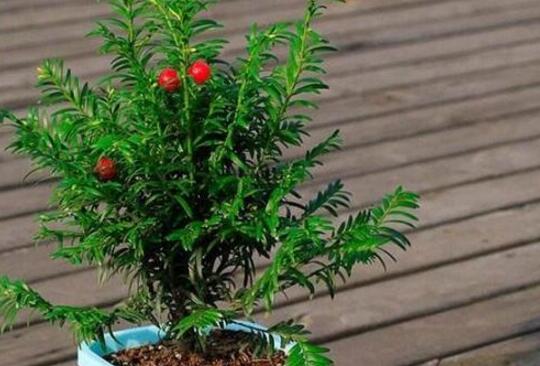
Generally speaking, rainwater is the most suitable water quality for irrigating yew, but rainwater is not always available, so when it rains you can collect some in a container. Secondly, we can also use clean river water or lake water, and some gardening enthusiasts also use well water, but I must remind gardening enthusiasts in the north that well water in northern regions has relatively high alkalinity, which is not conducive to yew growth, so it should be used with caution.
2. Tap water
In particular, most gardening enthusiasts who grow yew find it not easy to get clean river water, so they usually use tap water for irrigation. Here is a little tip for everyone: after tap water is placed in a container, it is best to let it sit for 1-2 days, which can filter out some of the gases or substances harmful to yew, so that when it is used for irrigation again it will not cause physiological wilting.
How to water yew
1. Watering in spring
In spring, generally water the yew once every 2-3 days, but there is no strict limit on the watering time; the principle is to keep the soil moist, and you must not let water accumulate in the soil. Each time you water, stop once the water has thoroughly penetrated.
2. Watering in summer
When the temperature is relatively high, water once every 1-2 days, and it is best to water in the morning. If by noon or afternoon you find the soil relatively dry, you can spray water around the plant with a watering can in the evening, which not only helps lower the temperature but also allows the excess water to flow into the soil for the roots to absorb.
3. Watering in autumn
In autumn the temperature gradually decreases, so watering will slowly be reduced. How do you water yew at this time? Generally watering once every 3-4 days is enough. If there is relatively more rain, you can water once a week; the principle is simply not to let the soil dry out too much.
4. Watering in winter
In winter, watering is basically very infrequent, but you also cannot completely stop watering the yew. You can use water to rinse the leaves once every half a month to keep them clean and tidy. In addition, you need to pay attention to the water temperature, and at least ensure the water temperature is above 5°C, which is more suitable; water that is too cold may damage the leaves and trunk.
Precautions for watering yew
Because yew likes a moist environment but is also afraid of waterlogging, the soil chosen must have good drainage, so that when there is more rain, water can drain out as quickly as possible and avoid the roots rotting from being soaked in water. In winter, when the leaves turn purple-green, you can stop watering after one thorough watering, and in early spring you can water once in advance, which can help the yew revive and resume growth as soon as possible.
How to water yew
Watering methods for yew
During the yew's growing period it needs sufficient moisture, so water more at this time. During the winter dormant period, water less, because the plant's growth has basically stopped and its water-absorbing capacity will decline. In spring and autumn, generally water about once every 7 days; in summer, water about once every 2-3 days, and in addition to watering, frequently spray mist on the leaves, especially when summer temperatures are high.
Signs of yew lacking water
Leaf color is wrong
Under normal conditions, yew leaves are glossy and bright. If you find the leaves dull and lusterless, or wilting, you need to replenish water. When the leaf surfaces droop, it indicates extreme water shortage.
Pot soil color and sound are wrong
If you find the pot soil color turning white and lighter, it indicates the yew is short of water. Tap the flower pot, and if it makes a very hollow sound, it means the soil is very dry and needs watering.
Precautions for watering yew
During the winter dormant period, watering should follow the principle of preferring dryness over moisture. The watering temperature should be similar to the ambient temperature; do not let the temperature difference be too large. Never water too frequently or in large amounts, as this will cause root rot.
How to grow yew, yew cultivation methods and precautions / avoid strong light and waterlogging
We know that yew has a great many functions and effects, and it is also a very precious potted plant. If cultivation techniques are improper, it will not only easily cause the plant to wither and die, but may also bring economic losses to gardening enthusiasts. So how do you grow yew? Today we will take a detailed look at yew cultivation methods and precautions.
Growth habits of yew
Before understanding how to grow yew, we can first become familiar with its growth habits. Yew is a shade-loving plant; it needs a certain amount of light but cannot have too much. Its drought tolerance is relatively strong, so it does not need frequent watering. At the same time, its cold resistance is outstanding, so it can also be planted in the north.
Yew cultivation methods and precautions
1. How to grow yew
1. Soil requirements
Yew's requirements for soil are loose, fertile, breathable and well-drained, so when cultivating it, clay should not be used, because its breathability is relatively poor. The most suitable soil is a mix of peat soil, perlite and loam, etc. You can also use garden soil, peat and sand mixed in a ratio of 50%, 25% and 25%, and it is best to add 1% decomposed organic fertilizer to it.
2. Light conditions
Yew is a shade-loving plant, but its growth cannot lack light, otherwise it will grow slowly and have sparse leaves. The correct lighting should be to maintain 4 hours of sufficient light each day. In summer, shade protection needs to be done well. In spring and autumn, the lighting time can be appropriately increased, but avoid direct sunlight when the sun is strong at noon.
3. Suitable temperature
Yew's cold resistance is very strong. It can survive at low temperatures of -25 to -15°C, and can also grow in a 32°C environment, but the most suitable temperature is 20-30°C. Therefore, each year it may spend half the year in a slow-growth stage, while March to November is the suitable growth period, among which April to October is the most vigorous growth period.
4. Watering techniques
In yew cultivation methods and precautions, watering is a very important part, because yew is drought-tolerant but afraid of waterlogging, so watering can be neither too much nor too little. Generally in spring you can water once every 3 days, and in summer you can water once in the morning and once in the evening. For watering, you can use a fine-nozzle watering can, which can both rinse the leaves and increase humidity.
In autumn, the frequency of watering is generally once every 3-4 days. When the temperature is lower in winter, watering should be reduced; spraying some water on the leaf surface about once every 15 days is enough, letting the excess water flow into the flower pot to moisten the soil. If it is the rainy season, then watering should be postponed, and drainage and waterlogging prevention should be done well.
5. Fertilization methods
Before planting, base fertilizer can first be applied to the soil. The base fertilizer can be replaced with decomposed organic fertilizer, or decomposed livestock manure can be used. During the growing period, nitrogen, phosphorus and potassium fertilizer needs to be applied, with an amount of 100-200 grams per plant. After fertilizing, water promptly, which can bring the fertilizer concentration to an appropriate range and help the yew absorb nutrients.
2. Precautions for cultivating yew
1. Do not over-fertilize
Yew is a plant with a very long lifespan but relatively slow growth, so fertilizers should mainly be slow-acting ones. When fertilizing, the concentration and amount must not be too much, otherwise fertilizer damage is likely to occur, resulting in yellowing, curling and so on of the leaves, which is unfavorable to the health of the yew.
2. Avoid water accumulation when watering
Normally, the water quality suitable for watering yew is best rainwater, followed by groundwater, river water and so on. So when it rains ordinarily, we can collect some rainwater for later use. If tap water is used for irrigation, then it is best to add some alum fertilizer water, which can control the pH of the soil and avoid the soil alkalinity being too high and affecting yew growth.
3. Timely pruning
Although yew does not grow fast, timely pruning is still needed to ensure its appearance. Gardening enthusiasts often say that pruning is an easily overlooked part of yew cultivation methods and precautions. In fact, pruning can both promote the sprouting of new branches and benefit yew growth; it is a very useful maintenance technique.
When pruning, branches should be cut off from the base. Afterwards, it is best to apply charcoal or plant ash to the wounds to play a sterilizing role and prevent the wounds from rotting. When carrying out large-scale pruning in summer, some carbendazim can be sprayed to prevent the wounds from becoming infected and reduce the occurrence of pests and diseases.
4. Scientific propagation
Generally, when propagating yew, sowing and cuttings are used. For sowing, you can choose autumn sowing in October or spring sowing in March. Cuttings are suitable to be carried out in May. After propagation, pay attention to keeping the soil moist and the environment semi-shaded and ventilated; only with correct care can the propagation success rate be improved.