How to Grow and Care for the Yew Plum Pine (Taxus chinensis): Methods and Precautions, Avoid Strong Light and Waterlogging
We know that the yew plum pine (Taxus chinensis) has a great many uses and benefits, and it is also a very precious potted plant. If growing techniques are improper, it will not only easily cause the plant to wither and die, but may also bring financial losses to gardening enthusiasts. So how do you grow the yew plum pine (Taxus chinensis)? Today we will take a detailed look at the methods and precautions for growing the yew plum pine (Taxus chinensis).
Growth Habits of the Yew Plum Pine (Taxus chinensis)
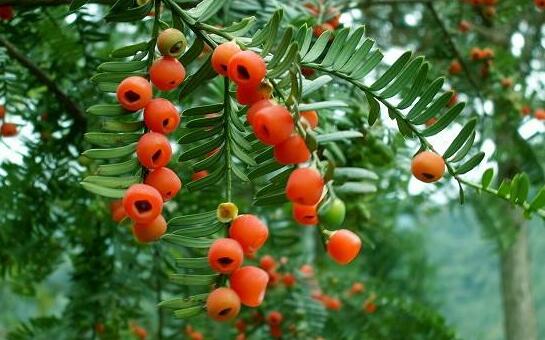
Before learning how to grow the yew plum pine (Taxus chinensis), we can first familiarize ourselves with its growth habits. The yew plum pine (Taxus chinensis) is a shade-loving plant; it needs a certain amount of light but cannot tolerate excessively strong light. Its drought tolerance is relatively strong, so watering does not need to be too frequent. At the same time, its cold resistance is outstanding, so it can also be planted in the north.
Methods and Precautions for Growing the Yew Plum Pine (Taxus chinensis)
I. How to Grow the Yew Plum Pine (Taxus chinensis)
1. Soil Requirements
The yew plum pine (Taxus chinensis) requires loose, fertile, well-aerated and well-drained soil, so clay should not be used when growing it, because its aeration is relatively poor. The most suitable soil is a mixture of peat soil, perlite and loam, etc. You can also use garden soil, peat and sand mixed in a ratio of 50%, 25% and 25%, and it is best to add 1% decomposed organic fertilizer to it.
2. Light Conditions
The yew plum pine (Taxus chinensis) is a shade-loving plant, but its growth cannot lack light, otherwise it will grow slowly and have sparse leaves. The correct lighting should be maintaining 4 hours of sufficient light each day. In summer, shade protection needs to be done well. In spring and autumn, the light duration can be appropriately increased, but it should be avoided from being exposed to direct sunlight when the sun is strong at noon.
3. Suitable Temperature
The cold tolerance of the yew plum pine (Taxus chinensis) is very strong. It can survive at low temperatures of -25 to -15°C, and can also grow in a 32°C environment, but the most suitable temperature is 20-30°C. Therefore, each year it may spend half the year in a slow-growth stage, while March to November is the suitable growing period, among which April to October is the most vigorous growth period.
4. Watering Techniques
In the methods and precautions for growing the yew plum pine (Taxus chinensis), watering is a very important part, because the yew plum pine (Taxus chinensis) is drought-tolerant and afraid of waterlogging, so watering should be neither too much nor too little. Generally in spring, water once every 3 days; in summer, water once in the morning and once in the evening. A fine-nozzle watering can may be used, which can both rinse the leaves and increase humidity.
In autumn, the watering frequency is generally once every 3-4 days. When the temperature is relatively low in winter, watering should be reduced; spraying a little water on the leaf surface about every 15 days is enough, letting the excess water flow into the flower pot to moisten the soil. If it is the rainy season, watering should be postponed, and drainage and waterlogging prevention should be done well.
5. Fertilization Methods
Before planting, base fertilizer can first be applied to the soil. The base fertilizer can be replaced with decomposed organic fertilizer, or decomposed livestock manure can be used. During the growing period, nitrogen, phosphorus and potassium fertilizer needs to be applied, with an amount of 100-200 grams per plant. After fertilizing, water should be given promptly, which can bring the fertilizer concentration to an appropriate range and help the yew plum pine (Taxus chinensis) absorb nutrients.
II. Precautions for Growing the Yew Plum Pine (Taxus chinensis)
1. Do Not Overfertilize
The yew plum pine (Taxus chinensis) is a plant with a very long lifespan but relatively slow growth, so fertilizers should mainly be slow-acting ones. When fertilizing, the concentration and amount must not be too much, otherwise fertilizer burn is likely to occur, resulting in yellowing, curling and other leaf problems, which is harmful to the health of the yew plum pine (Taxus chinensis).
2. Avoid Water Accumulation When Watering
Under normal circumstances, the water quality suitable for watering the yew plum pine (Taxus chinensis) is best rainwater, followed by groundwater, river water, etc. So when it rains normally, we can collect some rainwater for later use. If tap water is used for irrigation, then it is best to add some alum fertilizer water, which can control the pH of the soil and avoid the soil alkalinity being too high and affecting the growth of the yew plum pine (Taxus chinensis).
3. Timely Pruning
Although the yew plum pine (Taxus chinensis) does not grow quickly, timely pruning is still needed to ensure its beauty. Gardening enthusiasts often say that pruning is an easily overlooked part of the methods and precautions for growing the yew plum pine (Taxus chinensis). In fact, pruning can both promote the sprouting of new branches and benefit the growth of the yew plum pine (Taxus chinensis). It is a very useful maintenance technique.
When pruning, branches should be cut off from the base. Afterward, it is best to apply charcoal or plant ash to the wounds to play a sterilizing role and prevent the wounds from rotting. When carrying out large-scale pruning in summer, some carbendazim can be sprayed to prevent wound infection and reduce the occurrence of pests and diseases.
4. Scientific Propagation
Generally, when propagating the yew plum pine (Taxus chinensis), sowing and cuttings are used. For sowing, you can choose autumn sowing in October or spring sowing in March. Cuttings can suitably be carried out in May. After propagation, attention should be paid to keeping the soil moist and the environment semi-shaded and ventilated. Correct care is the only way to increase the success rate of propagation.
Methods and Precautions for Growing Potted Yew Plum Pine (Taxus chinensis)
The potted yew plum pine (Taxus chinensis) is an ornamental plant that many people most like to grow at home. It has a graceful tree shape, emerald-green leaves, and particularly high ornamental value. This plant is known as a national treasure in the plant world and belongs to the national first-class protected plants. To make it into a potted plant and grow it at home, you need to understand its growing methods in advance and know what to pay attention to when growing potted yew plum pine (Taxus chinensis).
Methods for Growing Potted Yew Plum Pine (Taxus chinensis)1. Preparation of Potting Soil
For growing potted yew plum pine (Taxus chinensis), the preparation of potting soil is very important. It likes slightly acidic soil that is loose and high in organic matter, and the soil should have strong water and fertilizer retention and relatively excellent aeration. It is best to choose materials such as garden soil, peat and river sand to prepare the potting soil yourself, and apply sufficient base fertilizer before planting.
2. Growing Environment
The yew plum pine (Taxus chinensis), as a plant, likes a warm and humid environment, and it is a strongly shade-tolerant slow-growing tree species. When it is usually made into a potted plant and grown at home, it can be placed indoors, away from strong light. It grows fastest when the outside temperature is between 20 and 30°C, and its low-temperature tolerance is relatively poor. In winter, it should be placed in an environment above 10°C.
Precautions for Growing1. Fertilizer Selection
When growing potted yew plum pine (Taxus chinensis), fertilization is often needed, because it is a fertilizer-loving plant. However, when choosing fertilizer for the yew plum pine (Taxus chinensis), everyone must pay extra attention. During its peak growing season, thin cake fertilizer water should be applied. After entering autumn, a base fertilizer can be used once, and the fertilizer can be livestock manure. In spring, the yew plum pine (Taxus chinensis) needs sufficient nitrogen fertilizer, phosphorus fertilizer and potassium fertilizer, and at the same time sufficient calcium phosphate should also be supplemented.
2. Control of Moisture
To grow potted yew plum pine (Taxus chinensis) well, moisture control is very important. Although the yew plum pine (Taxus chinensis) likes a humid environment, it is afraid of waterlogging. During normal growing periods, watering once every 2 to 3 days is enough. In summer, during high-temperature weather, water once every morning. After entering autumn, the weather turns cooler, the growth of the yew plum pine (Taxus chinensis) slows down, and its water needs become smaller, so at this time it can be watered once every 4 to 5 days. Moreover, when watering, water accumulation must not be allowed in the flower pot, otherwise the roots of the yew plum pine (Taxus chinensis) will rot, and in severe cases the yew plum pine (Taxus chinensis) will die.
Podocarpus macrophyllus (Thunb.) D. Don: Podocarpus Illustrated Guide: How to Grow Podocarpus / How to Propagate Podocarpus
Podocarpus ProfilePodocarpus macrophyllus (Thunb.) D. Don
Methods and Precautions for Growing Podocarpus: Introduction to Podocarpus
Podocarpus is a type of pine tree, also known as Luohan pine, evergreen Luohan pine, soil pine, money pine, immortal cypress, Luohan cypress and Jiangnan cypress. It is an evergreen tree that can reach 18 m in height and is usually pruned to keep it low. Its leaves are alternate and arranged in a spiral shape. It is also dioecious. The female cone is larger than the seed and turns red when mature. Together with the green seed, it looks like a bald monk wearing a red monk's robe, hence the name Luohan pine. Podocarpus is commonly found in southern China, including the Hong Kong, China area. Because potted Podocarpus can be used for viewing, and its wood is used for construction, medicine and carving, its value is very high. Therefore, this has led to many incidents of Hong Kong, China Podocarpus being illegally felled by illegal immigrants from the mainland.
Morphological Characteristics of Podocarpus
The crown is broadly ovate. Leaves are linear-lanceolate, with pointed tips and wedge-shaped bases; the midrib is raised on both sides; the surface is dark green, the underside is grayish green, sometimes covered with white powder, densely arranged and spirally alternate. Dioecious or occasionally monoecious. Seeds are ovate, with a black aril, borne on a fleshy and enlarged seed receptacle; the receptacle is dark red, sweet and edible. Flowering period is May, and seed maturity period is October. Common cultivated varieties include narrow-leaved Podocarpus, with narrower leaves whose tips gradually narrow into a long point; columnar-crowned Podocarpus, with small leaves and blunt or rounded tips; small-leaved Podocarpus, with leaves densely clustered at the tips of small branches, arranged spirally, relatively narrow, with blunt-rounded tips; short-pointed-leaf Podocarpus, with extremely short and small leaves; and spotted-leaf Podocarpus, with white spots on the leaf surface. Based on morphological characteristics, it can be judged that Podocarpus belongs to the Taxopsida. Podocarpus is a national second-class protected plant, but what the state protects is the germplasm of wild Podocarpus in primary forests. Podocarpus in cities is basically artificially bred offspring and has little biological significance. Just like dawn redwood and ginkgo, the artificially bred offspring are no longer within the scope of protection. Of course, they still play an ecological role as landscaping trees and cannot be cut down at will. Transplanting Podocarpus as a landscape tree has no illegal tendency.
Ecological Habits of Podocarpus
Podocarpus is produced in Jiangsu, Zhejiang, Fujian, Anhui, Jiangxi, Hunan, Sichuan, Yunnan, Guizhou, Guangxi, Guangdong and other provinces and regions, and is cultivated in all provinces south of the Yangtze River. It is also distributed in Japan. At present, it is mainly used for potted viewing in both northern and southern regions. It likes sufficient sunlight and is also slightly shade-tolerant. It requires mild and humid climate conditions, with no severe summer heat and humidity in summer and no severe cold or frost in winter. If it encounters light frost, the tender leaves and autumn shoots will all turn yellow and withered. Therefore, except for the subtropical regions of South China and Southwest China, it is not tolerant of severe cold, so in North China it can only be potted. It requires slightly acidic culture soil rich in humus, loose and fertile, and well-drained. In alkaline soil, the leaves turn yellow and growth is slow. It has a long lifespan, reaching several hundred years, or even more than a thousand years.
A semi-sunny tree species. It grows well in a semi-shaded environment. It likes warm, humid and fertile sandy loam, and can also grow on coastal plains. It is not tolerant of severe cold, so in North China it can only be potted. It has a long lifespan.
Cultivation Techniques for Podocarpus
It likes a warm, humid and semi-shaded environment, has slightly poor cold tolerance, and is afraid of waterlogging and direct strong light. It requires fertile, well-drained sandy loam. Transplanting is best done in spring from March to April. Small seedlings need to be with soil, and large seedlings with soil balls; they can also be potted. After planting, water thoroughly. Keep the soil moist during the growing period. In the hot midsummer season, it needs to be placed in a semi-shaded place for care. Fertilize once every 2 months. In winter, pay attention to cold protection for potted plants; the pot can be buried in the soil, and watering should be reduced.
Key Management Points
I. Light
Podocarpus is a neutral-to-shade-tolerant tree species. It can accept relatively strong light and can also grow in a relatively shaded environment. Although summer temperatures are high and sunlight is strong, because large Podocarpus trees under high temperature and strong light are conducive to maintaining tree posture and leaf shape, it is not necessary to shade large Podocarpus trees in summer. However, because Podocarpus seedlings have tender tissues, they should not be exposed to strong light for a long time. It is recommended to place them under tree shade for care.
II. Watering
Podocarpus is not a plant of the Pinaceae family and is not drought-tolerant. On the contrary, Podocarpus is tolerant of shade and moisture, and attention should be paid to frequent watering during the growing period, but it should not be waterlogged. In the Shunde area, on sunny summer days, attention should be paid to frequent watering. Generally, water once in the morning and once in the evening. In addition, leaf surface water should also be sprayed frequently to keep the leaf color fresh green and growth good. Summer rainfall is usually relatively heavy, and Podocarpus is not tolerant of waterlogging, so attention should be paid to preventing long-term water accumulation.
III. Fertilization
Podocarpus likes fertilizer and should be given thin fertilizer frequently. The fertilizer should mainly be nitrogen fertilizer, and an appropriate amount of black alum can be added and composted into alum fertilizer water. During the growing period, fertilize once every 1-2 months. Fertilization can be carried out simultaneously with watering (water-to-fertilizer ratio of 9:1). For large-area block planting of Podocarpus, the semi-circular trench application method can be used, applying 300-500 grams of quick-soluble compound fertilizer each time. For potted plants, a water fertilizer containing 0.5%-1.0% compound fertilizer or thin cake liquid fertilizer water can be sprayed each time.
IV. Pest and Disease Control
Podocarpus has relatively few pest and disease occurrences, but in the high-temperature and dry summer season, attention should be paid to controlling red spider mites. Red spider mites gather as adult mites, nymph mites and larval mites near the veins and leaf edges of Podocarpus leaves and on tender branches to suck sap. The affected leaf surfaces show many powdery green spots, which later become grayish-white small spots and lose their original luster. In severe cases, the entire leaf becomes grayish white. The control method is to spray some acaricides for treating red spider mites during the high-incidence period of red spider mites (May to September), such as pyridaben, hexythiazox, fenbutatin oxide, etc., once every 10 days, with the concentration used according to the instructions.
Styling Techniques
The purpose of artistic styling of Podocarpus is to "shape according to the tree" and "apply techniques according to the material", using superb artistic expression techniques to excavate the highest artistic realm from ordinary tree shapes and maximize ornamental value.
Styling Methods
Commonly used methods include clipping, tying, pressing, binding and hanging. Pruning and styling are relatively simple, while styling methods such as tying, pressing, binding and hanging are more difficult and require higher artistic imagination, operational skills and conditions of the tree's trunk and branches. During the styling process, artistic processing must be carried out according to the natural beauty of the seedling itself, that is, it must be adapted to the tree and made even more beautiful, so that the styling is strong and powerful with clear layers.
1. Clip: The characteristics of Podocarpus being tolerant of pruning and having small leaves can be used to create various shapes, such as spherical, conical and multi-layered spherical shapes, simply by pruning according to a pre-designed figure. For example, when pruning a three-layered spherical shape, first select a seedling with an obvious trunk and relatively good upright form. If the pruning design is a three-layered spherical shape with a total height of 2 m, then the lower layer is about 50 cm high, the middle layer is about 40 cm high, and the top layer is 30 cm high. It is necessary to cut off all branches on the trunk between the first and second layers of 45 cm and between the second and third layers of 35 cm, and then prune the three spherical shapes. It is advisable for the three spheres from top to bottom to gradually increase in size to seek coordinated proportions and better ornamental value. Generally, pruning is suitable when new shoots have grown 20-30 cm, and multiple prunings are needed to make each layer's sphere round, full and compact.
2. Tie: For tie-method styling, sturdy bamboo sticks and strong hemp rope can be selected. Use hemp rope to tie the bamboo sticks and branches tightly and bind them firmly, then fix one end of the bamboo stick on the trunk, thereby adjusting the direction of the bamboo stick so that the branches grow in a specific direction according to the stylist's wishes, achieving the purpose of styling. It should be noted that tie-method styling is suitable for younger Podocarpus, while older Podocarpus, because its branches are thick, makes styling difficult and the effect poor.
3. Press: Press-method styling mainly uses the method of bending and tilting the trunk so that the tree body presents an artistic beauty on an inclined plane completely different from that of an upright plane. Because the branches of Podocarpus resemble human arms, and the clustered hemispherical leaves growing at the top of the branches look like human palms, combined with the bent tree body, it is like a greeter bending forward and bending the arms to welcome guests, very vivid and lifelike. It should be noted that after bending the tree body, wooden stakes must be used to support the inclined end to prevent the tree body from lodging due to excessive tilting, and straw of moderate thickness should be placed between the contact surface of the wooden stakes and the tree body to avoid injury to the tree body.
Current Market Situation
Although Podocarpus is native to China, due to historical reasons, there are very few large Podocarpus trees old enough, and the number of large-specification Podocarpus landscaping seedlings is also extremely limited. As a slow-growing tree species, Podocarpus itself cannot be rapidly replicated, and the existing quantity is far from meeting the needs of courtyard landscaping and high-end residential landscapes. In particular, large-specification, beautifully shaped Podocarpus is even harder to find. It is understood that engineering seedlings with a diameter at breast height of more than 10 cm on the market now mainly rely on imports.
In Guangdong, China, family consumption is the main part. It is understood that in Guangdong, families have become the main force in Podocarpus consumption, with a purchase proportion of about 30%, tending to choose mid-to-high-end products, followed by landscaping units at about 20%, enterprises and institutions at about 20%, collectors at about 15% for Podocarpus, and other uses at about 15%.
Industry insiders analyze that the proportion of household consumption will become larger and larger, and price consumption will become more rational. With the economic development of the Pearl River Delta region, having a garden for leisure in the city's reinforced concrete "forest" is no longer the privilege of the top tier of the pyramid, and more and more private gardens are quietly emerging. Podocarpus has an elegant and upright charm, with a vigorous and powerful proud momentum, and in addition fits the meanings of "longevity" and "keeping wealth and good fortune" in Chinese culture. Owners pursuing high-grade courtyard beautification often like to plant one or two Podocarpus trees, adding a finishing touch to creating their own "garden-style story."
Gradually opening up markets in other provinces. The northern China market is mainly based on government consumption. Municipal key greening projects and road projects clearly drive demand for engineering seedlings, and there is a large demand for landscape seedlings and engineering seedlings. Podocarpus operating enterprises in Guangdong seize this business opportunity and open up markets in other provinces. But overall, the Pearl River Delta market still has great development potential. "Longyan Horticulture exported 90% of its total sales of Podocarpus to other provinces in 2012, and the situation of other Podocarpus operating enterprises is roughly the same.
Propagation Methods of Podocarpus
Sowing and cuttings are commonly used for propagation.
For sowing, sow immediately after collecting seeds in August, and they germinate after about 10 days. For cuttings, carry out in spring and autumn. In spring, select dormant branches; in autumn, select semi-lignified tender branches, 12-15 cm, insert them into a seedling bed of half sand and half soil, and they take root in about 50-60 days.
Disease and Pest Control of Podocarpus
The main damage is from leaf spot disease and anthracnose, sprayed with 500-times dilution of 50% thiophanate-methyl wettable powder. Pests include scale insects, red spider mites and bagworms, which can be killed by spraying with 1500-times dilution of 40% omethoate emulsifiable concentrate.
Variety Classification of Podocarpus
1. Small-leaved Podocarpus (Podocarpus macrophyllus (Thunb.) Sweet. var. maki Siev. & Zucc.), also known as sparrow-tongue Podocarpus, sparrow-tongue pine and short-leaved soil pine, is shrub-like, with short and densely growing leaves, mostly borne at the tips of small branches, with white powder on the underside.
2. Short-leaved Podocarpus (Podocarpus brevifolius.), also known as small Podocarpus and soil pine, is often shrub-like, with leaves in spiral clustered arrangement. The single leaf is short-strap-shaped lanceolate, with a blunt-pointed tip and a rounded or wedge-shaped base. The leaf is leathery, dark green, with an obvious midrib and an extremely short petiole. It is cultivated in Jiangsu and Zhejiang, and is best for potting.
3. Narrow-leaved Podocarpus (Podocarpus macrophyllus var. angustitolius B1.), with linear and slender leaves, usually 5-9 cm long and 3-6 mm wide, with the tip gradually narrowing into a long point and a wedge-shaped base. Produced in Sichuan, Guizhou and Jiangxi.
4. Dali Podocarpus (Podocarpus forrestii), shrub-like, with relatively large leaves. Produced in Cangshan, Dali, Yunnan, and used in Kunming for courtyard viewing and can be made into bonsai.
5. Hainan Podocarpus (Podocarpus annamiensis NEGray), with leaves arranged spirally and spreading radially, 4-10.5 cm long and 5-10 mm wide, with rounded or blunt-pointed tips. Seeds are nearly spherical or ovate, symmetrical on both sides. The seed receptacle is columnar-elliptic, longer than the seed or equal in length to the seed. It is sporadically distributed in southern Hainan.
6. Lanyu Podocarpus (Podocarpus costalis), with leaves borne at branch tips, lanceolate, with rounded and blunt tips, hard leathery, dark green and glossy. Native to Lanyu, Taiwan, China. Lanyu Podocarpus has clustered leaves, is evergreen all year round, and has a simple and elegant posture. Young plants can be potted, and mature trees are high-grade tree species for courtyard beautification, and can also be shaped into round, conical or high-grade bonsai.
Distribution Area of Podocarpus
Produced in Jiangsu, Zhejiang, Fujian, Anhui, Jiangxi, Hunan, Sichuan, Yunnan, Guizhou, Guangxi, Guangdong and other provinces and regions, and cultivated in all provinces south of the Yangtze River. It is also distributed in Japan.
At present, the largest Podocarpus base in the country is located in Baishitong Zhaobao, Nanchang, Jiangxi. It is a precious tree species planting base mainly promoted in Nanchang, Jiangxi by the Fujian Zhaobao Ecological Farm. It covers an area of more than 2,000 mu, with various postures and a value of several billion yuan. It is currently the largest Podocarpus cultivation base in the country.
Cultural Background of Podocarpus Greening News
At the end of July and the beginning of August 2010, Zhuhai spent 8 million yuan to plant 31 Podocarpus trees beside two roads. As soon as the trees were planted, doubts arose from all sides. When the Podocarpus land was involved, some citizens demanded that officials of the relevant departments give an explanation.
The person in charge of the Zhuhai Municipal Urban Management, Landscape and Forestry Bureau said that Shenzhen, Zhongshan and other cities all use huge funds to create urban greening landscape avenues, and Zhuhai is not the first to plant Podocarpus. The person in charge said that the "Big Trees Welcome Spring" project, to which the Podocarpus planting belonged, went through project approval by the development and reform department and public bidding procedures. Before implementation, opinions were solicited from the People's Congress and the Chinese People's Political Consultative Conference. The Podocarpus introduced this time was also kept within the approved budget estimate of the development and reform department.
It is understood that the 31 Podocarpus trees cost an average of 260,000 yuan each, and the relevant departments will carry out GPS positioning for these precious large trees to prevent theft.
Mysterious Legends
1. In the campus of Shiqiutou Village Primary School in Tiepu Town, Chao'an County, there is a Podocarpus tree that is deeply cherished by the villagers. Several times in history, construction plans were changed because of protecting the Podocarpus. Flower and tree buyers came to the door many times and offered large sums to buy this Podocarpus, but were ultimately refused. Mentioning this unremarkable Podocarpus, the elderly in the village say it is their "treasure of the village."
This Podocarpus is about 6 m tall, with a not-large crown. Seen from a distance, it looks like a palm-leaf fan extending above the roof. The tree's appearance is somewhat unique, bent to one side, with the outer bark severely peeling off, and there are also traces of termite damage. Fortunately, the leaves are still relatively green and dense.
This Podocarpus was transplanted from Kaiyuan Temple in 1851, 154 years ago. At that time, in order to encourage students to study diligently and become successful, the school obtained this tree with the help of a monk from Kaiyuan Temple. It was previously called the auspicious tree, implying that teachers and students would be auspicious and wishful, and the school would be run better and better.
In fact, the reason this Podocarpus is regarded as a village treasure is not only because of its long tree age and pleasant name, but more importantly, after the Podocarpus was planted, whether it was the old-time school or the later school, talents emerged in large numbers, making the local people feel proud.
According to Chen Senlan, a retired principal now 75 years old, after this tree was planted in the first year of the Xianfeng reign of the Qing Dynasty, 30 people from ten imperial examinations in the village passed the examinations. During the Republic of China period, more than 50 university students emerged, some entering the naval academy, some Huangpu Military Academy, and some Beijing Tsinghua University. After liberation, in Shiqiutou Village, with a population of two to three thousand, more than 360 people were admitted to university.
The elderly say that although the theory that planting trees and the flourishing of imperial examinations are connected is not credible, after the Podocarpus was planted, the village indeed greatly promoted the culture of valuing literature and education. Perhaps this was the original intention of the ancestors in planting the tree.
2. To the west of Lujiazhou Village, less than 500 m from the village, is an ancient water transport dock. On the dock, ancient camphor trees stand in abundance, with green shade covering several mu. Among them stands a vigorous, upright and flourishing Podocarpus.
According to an investigation by garden scholars, the tree is 28 m tall, with a circumference of 5.20 m, and a tree age of more than 1,500 years.
Legend says that when the founding ancestor of Lujiazhou established the village, he cut the branches and leaves of the Podocarpus and found that a pale red blood-like thick sap flowed from the cut. He therefore believed that the tree had blood and spirit like a human, regarded it as an immortal tree among humans, held it in extreme awe, and called it the "old divine tree." Generations of Lu descendants took extra care of the old divine tree and revered it as a deity.
According to legend, the "old divine tree" was protected by a divine snake. The divine snake was as thick as a bowl mouth, more than one zhang long, and had a fiery red "cockscomb" on its head. Whenever the wind blew and rain fell and lightning flashed and thunder roared, the divine snake would dance around the Podocarpus in the air, protecting the Podocarpus from being damaged by lightning.
Two elderly people in the village, both over 70 years old, claimed that they had both seen the divine snake with their own eyes. The difference was that one of the elderly people became seriously ill for a full 3 years because of it, while the other had a child in old age because of it. They themselves said that this was because each person's "flame" was different, and fortune and misfortune were unpredictable.
Podocarpus Pictures